
Issue 78 – President on brink of bailout for bitcoin
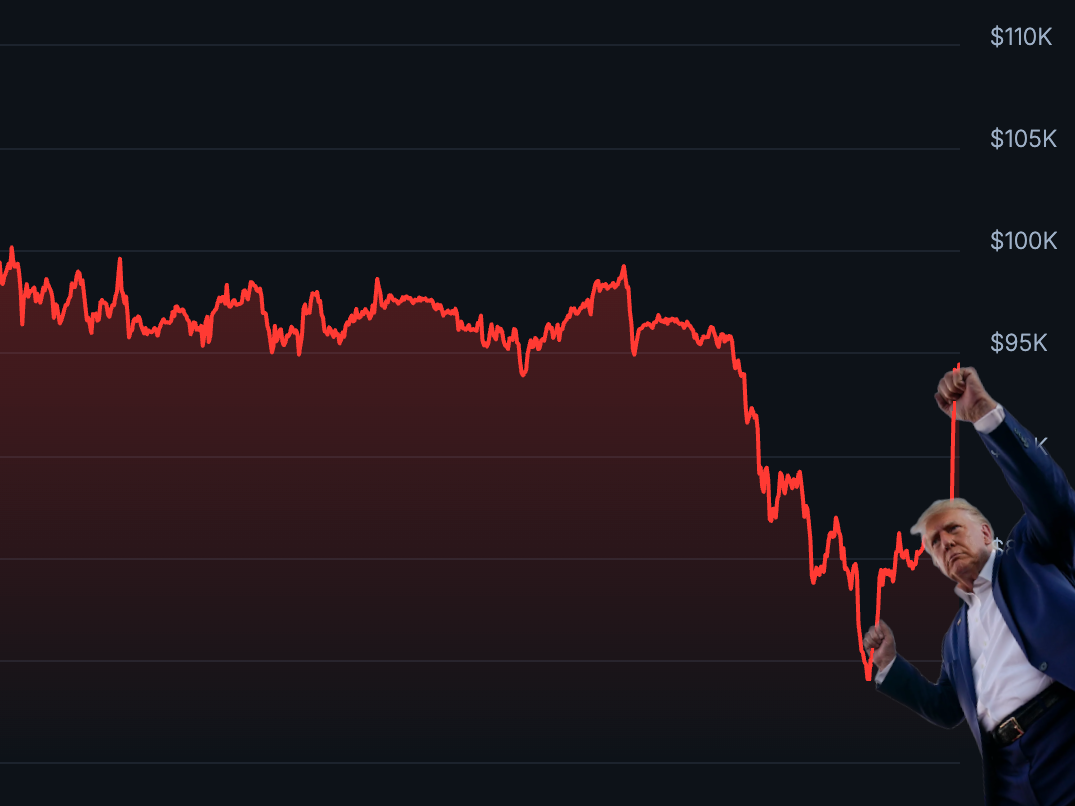
Despite securing seemingly every possible advantage following the recent US elections, the digital currency market has experienced a significant downturn. The price of Bitcoin has plummeted, shedding over a quarter of its value since its previous peak on January 20th. A notable 12% drop in the past week marked the most substantial three-day decline since the collapse of FTX in November 2022.1 Although the crypto sector celebrated the new administration as a savior and was promptly granted its policy goals, digital asset values have decreased since the new leader assumed power.
While cryptocurrencies were originally conceived as a revolutionary financial tool designed to operate independently of governments, banks, and traditional finance – a narrative still echoed by some when convenient – it has become evident that the digital asset space relies significantly on external support. Earlier this week, the crypto news outlet CoinDesk ran a story with a headline that may have astonished even Satoshi Nakamoto: “Crypto Market Needs Demand, Trump Actions Needed, JP Morgan States.”2 (Nakamoto famously embedded the headline “The Times 03/Jan/2009 Chancellor on brink of second bailout for banks” into the very first Bitcoin block, a statement widely seen as a reflection of Bitcoin’s foundational principles: a rejection of traditional banks and intervention by government.)
Although Bitcoin is frequently referred to as “digital gold” and is intended to serve as a safe haven during economic uncertainty, it, like other crypto assets, is once again demonstrating that it’s among the first assets dumped amidst broader market instability. Economic factors, including looming tariffs from the administration on goods from Canada, Mexico, and China, Federal Reserve concerns about how that will affect inflation, plus instability in the job market are prompting investors to reduce exposure to volatile assets like cryptocurrency to better navigate the upcoming economic challenges. Bitcoin ETFs saw new lows in total outflows on February 25, when investors withdrew a combined total in excess of $1 billion from the 11 available funds.3
Appearing to respond to the cryptocurrency industry’s increasing distress, the president stepped in to stabilize Bitcoin’s price, which had fallen below $80,000. A message posted on Truth Social on Sunday reiterated his intentions to establish a “U.S. Crypto Reserve,” further stating it would be composed of “XRP [Ripple], SOL [Solana], and ADA [Cardano]”. Further anxieties [I74, 75]from those deeply invested in Bitcoin then seemed to inspire him to add, two hours later, that “And, obviously, BTC and ETH, as other valuable Cryptocurrencies, will be the heart of the Reserve. I also love Bitcoin and Ethereum!”. A well-timed amendment.4
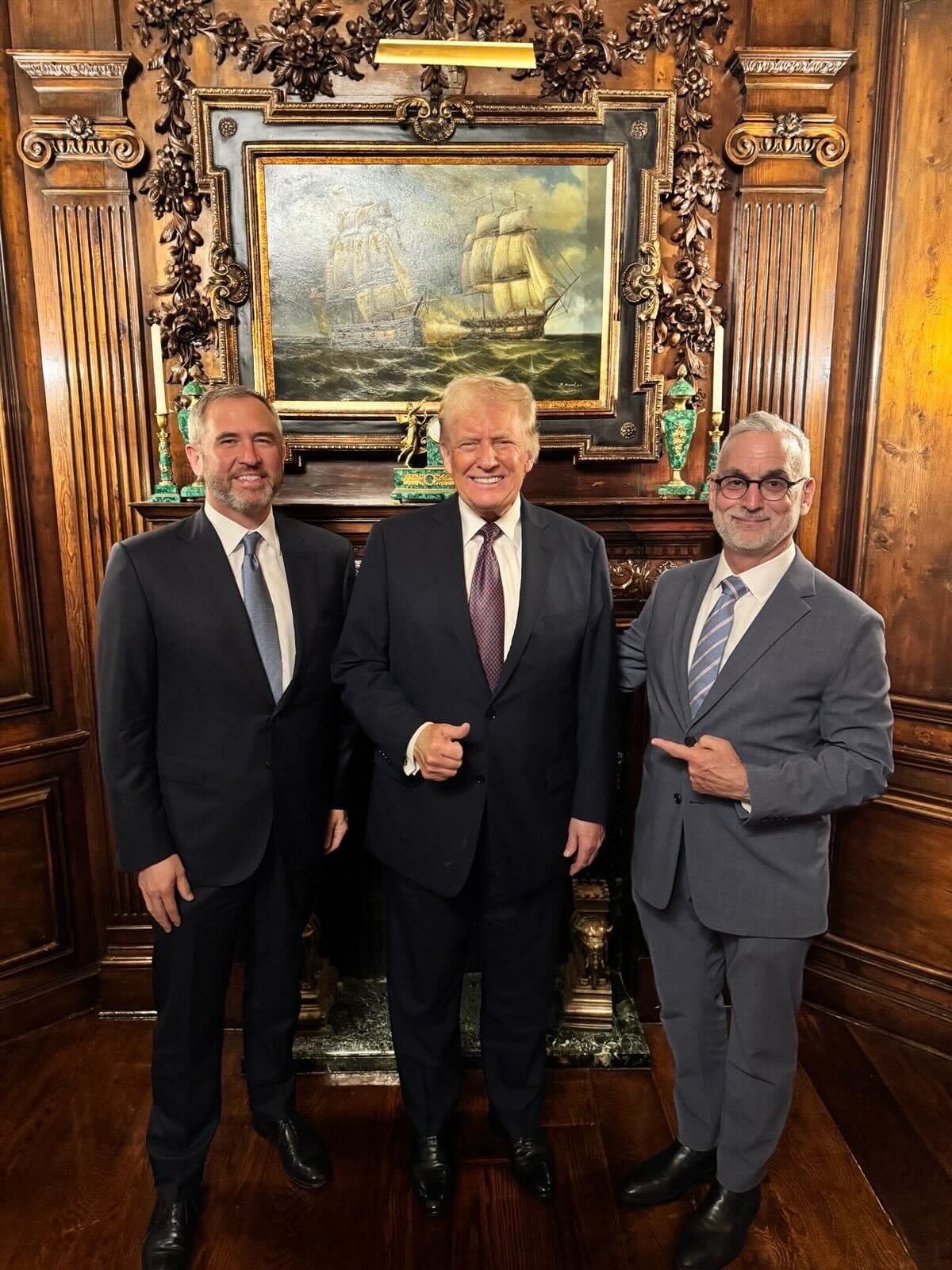
These specific digital assets were certainly not selected randomly. They offer insights into who currently has the president’s attention. This partially involves the administration’s insistence on prioritizing assets “made in the USA,” but there’s more to the story. Ripple’s XRP token is a contentious choice. The asset is divisive within the digital currency space, however, Ripple invested $48 million to crypto-focused super PACs and an additional $5 million in the current president’s inauguration. Ripple’s CEO, Brad Garlinghouse, is reportedly on a shortlist for the soon-to-be-formed crypto advisory board,5, and he and the company’s legal counsel ate with the president in January.
The president’s “Crypto Czar” David Sacks is an avid proponent of Solana. Andreessen Horowitz has also significantly invested in Solana, both directly and through Solana-based projects, as well as in the Trump government. Cardano’s founder, Charles Hoskinson, has also been trying to appeal to Trump, stating shortly after the election that he plans “to be spending quite a bit of time working with lawmakers in Washington DC and quite a bit of time with members of the administration to help foster and facilitate with other key leaders in industry the crypto policy”.6 Hoskinson continues to vaguely imply meetings with influential figures, joking about a “VIP dinner” featuring “diet coke.” There’s been no evidence to suggest he’s enjoyed access to the White House, though the inclusion of his ADA token suggests he’s been successful in his efforts to some degree.
Besides naming specific assets, the president’s statement does not introduce new information, but reiterates that his “Executive Order on Digital Assets directed the Presidential Working Group to move forward on a Crypto Strategic Reserve” [I75]. (The EO does not direct the working group to “move forward,” but to “evaluate the potential creation and maintenance of a national digital asset stockpile”). Following this, Bitcoin recovered to around $93,000. This rally was moderate, bringing Bitcoin back to around its February 25 value and making one wonder how many other announcements the administration has to keep prices up. Without direct government capital being poured into the crypto market through this “strategic reserve” scheme – something that is still uncertain, is subject to further revision, and may never materialize – words alone may not be enough.
Compounding the market’s existing worries, a record-breaking hack of the cryptocurrency exchange Bybit recently took place. Bybit is not well-known in the U.S., not serving customers there, and the hack has not received the same level of media coverage as other industry disasters. However, Bybit is the second-largest global exchange, ahead of Coinbase and behind Binance. On February 21st, hackers stole over 400,000 ETH (around $1.5 billion) from one of its “cold wallets.” Cold wallets are typically offline, which is intended to protect them from theft. Crypto exchanges often store considerable funds offline, moving only small amounts online to “hot wallets” to conduct transactions. The transfers can still be exploited, as was the case when North Korea’s Lazarus cybercriminals were able to hack in.7 The Lazarus group used a flaw in Bybit’s Safe Wallet multisignature system to access the cold wallet. After the criminals initiated a standard transfer of funds from the company’s cold wallet to its hot wallet, employees inadvertently approved the transactions, which drained the funds. Bybit and Safe are blaming one another. Bybit claimed Safe’s framework was breached, and an attacker used the transaction interface. While Safe stated that an employee was socially engineered, they fault Bybit for “blind signing” the transaction, or approving the transfer without fully vetting it.8
The Lazarus group is an elite cybercrime organization that has stolen hundreds of millions of dollars from cryptocurrency exchanges and crypto projects. Lazarus was behind earlier incidents of large scale theft, including the $625 million hack of the game Axie Infinity in March 2022 [W3IGG], and the hacks of the exchanges DMM [W3IGG] and WazirX [W3IGG] in May and July 2024 for $300 million and $235 million. This expertise has allowed them to use advanced methods to launder the funds without causing serious ripples to the ETH price. More than half of the funds have been successfully laundered, through various chain swaps. 9 mETH Protocol was able to freeze and recoup $43 million in funds, and another $181,000 was stopped in Tether, but that is still less than 3% of the funds.10
The $1.5 billion Bybit theft exceeds the total North Korean cyberattack profits from 2024: $1.34 billion from 47 attacks. It’s more than double the amount from a year prior.11 The United Nations and U.S. claim that these cybercrimes have funded North Korea’s ballistic missile programs.1213
Bybit CEO Ben Zhou attempted to assure investors that “Bybit is Solvent even if this hack loss is not recovered, all of clients assets are 1 to 1 backed, we can cover the loss.”14 Investors were unsatisfied by these claims, and withdrew a combined amount of more than $5.5 billion from Bybit after it was announced. The exchange was able to meet these demands, and stated that they “closed the gap” in ETH with a combination of OTC purchases and loans.15
Bybit’s solvency raises questions. Given that 400,000 ETH was just stolen, Zhou’s claim that assets were 1:1 backed appears to be untrue. Bybit stated that the assets had been “Fully Backed Within 72 hours” later, confirming that customer balances were affected for three days.16 As with Genesis in 2022, covering the loss with loans doesn’t make the problem disappear. While Bybit’s proof-of-reserves shows the amount of ETH needed to support customer balances, reports do not review Bybit’s ability to pay the loans back.
Legal Updates
Seychelles-based crypto exchange OKX pled guilty and will pay $500 million in fines as part of a US Justice Department investigation for providing services to US customers without a transmitting license. According to the DOJ, the company actively pursued US customers in spite of policies prohibiting them from accessing services.
The penalties include an $84 million fine, and an additional $420 million in fees from US clients. For three years, OKX will work with a consultant to ensure compliance.17 Around the settlement, a “crisis management” document outlined how the company planned to delay journalists by offering to schedule interviews if contacted. They also planned to contact “friendly publications” to seed a complimentary story.18
Aleksei Andriunin, co-founder of Gotbit market firm has been extradited by the DOJ. Gotbit, along with other market makers, were charged with market manipulation in October [I68], and Andriunin was charged shortly after [I69]. Gotbit promoted wash trades in order to inflate numbers. Andriunin personally earned millions in illicit profits.19
US law enforcement has seized $31 million in crypto assets connected to the Uranium Finance hack [W3IGG] from April 2021.20 At the time, the total amount stolen was valued at $50 million, indicating that it was only a portion of the original theft. The thief converted the funds into Magic: The Gathering cards to launder them, in what was considered an unusual method [W3IGG].
A federal judge dismissed the SEC’s case against Hex founder Richard Heart. The agency failed to prove he had sufficient presence within the US to be subject to its jurisdiction. He took it as a victory, using the opportunity to thank Trump (even though neither had influence over the judge’s decision).21 Heart is still on Europe’s Most Wanted list following charges of evading taxes and physical assault in Finland [I72].
While Nigeria released Binance executive Tigran Gambaryan, who had been imprisoned for eight months, the suit against Binance is ongoing [I52, 54, 56, 60, 64]. Nigeria claims that Binance evaded taxes, weakened the Nigerian currency, lacked a license, and allowed money laundering on their exchange. The country is now demanding $71.5 billion in damages, and $2 billion in back taxes.22
US Regulatory Action
SEC
Trump’s selection for SEC Chair, Paul Atkins [I71], has not been approved yet, but the agency is still pushing forward with policies promised to the crypto space.
The SEC case against Coinbase was dismissed. CEO Brian Armstrong stated his gratitude on Twitter. He said “I have to give credit here to the Trump administration, for winning the election”. While he said he thought “we would have won in the courts anyway”, he noted that Trump’s election “certainly helped accelerate the process”.23 Coinbase has spent millions on political donations, some violating federal law, and donated $1 million to Trump’s inauguration.
The case against Justin Sun and Tron, opened in March 2023 for fraudulent market manipulation has been halted, because parties are “considering a potential resolution”.24 He has spent $75 million to purchase World Liberty Financial’s WLFI tokens, and Trump is receiving a 75% cut of that project’s earnings.
Consensys expects their case to be dropped, according to the company.25 They have donated $800,000 to crypto focused groups.
Investigations of Gemini, OpenSea, Robinhood, and Uniswap have been shut down, in spite of previous indications of impending action. The Winklevoss twins, part of Gemini, contributed $4.9 million to crypto groups and $2.6 million to Trump; Robinhood gave $2 million to Trump’s inauguration.
Cameron Winklevoss is still unsatisfied. He thinks the government should pay 3x his legal expenses, and any member of the SEC who was involved in the investigation should be publicly shamed on the SEC website.26
| Organization | Result | Political Donation |
|---|---|---|
| Coinbase | Case dismissed | $75 million to crypto-focused super PACs $1 million to Senate super PACs $1 million to Trump’s inauguration fund $300,000 to the Democratic National Convention |
| Justin Sun and Tron | Case halted | $75 million purchase of Trump-affiliated WLFI tokens |
| Binance | Case halted | |
| Gemini | Investigation dropped | $4.9 million to crypto-focused super PACs $2.6 million to Trump |
| Consensys | Expects to be dropped | $800,000 to crypto-focused super PACs |
| OpenSea | Investigation shut down | |
| Robinhood | Investigation shut down | $2 million to Trump’s inauguration fund |
| Kraken | SEC case still ongoing Restarted services previously shut down |
$1 million to Trump $1 million to Trump’s inauguration fund $1 million to crypto-focused super PACs |
| Circle | IPO still under review | $1 million to crypto-focused super PACs $1 million to Trump’s inauguration fund |
| Ripple | SEC case still ongoing | $48 million to crypto-focused super PACs $12.6 million to Harris $5 million to Trump’s inauguration fund $3 million to the Democratic National Convention ~$1 million to House and Senate Democrat super PACs |
Although the Winklevoss twins declared victory over the SEC, changes to the SEC’s ongoing case are unclear. Depositions are scheduled ahead of a jury trial, however there has been no further activity.27 Cases against Kraken and Ripple, are also ongoing. It is unlikely any will remain for much longer.
The SEC stated memecoins are not under their purview. The agency also notes that fraud in the memecoin world can be prosecuted, just by someone else.28 The FTC will likely shoulder more of the burden, though the FTC has been mentioned in Trump’s plans to “rein in” such agencies (along with the FCC and SEC). This change may require agencies to submit draft regulations for White House review.29
Democratic Representative Sam Liccardo has proposed a bill called the “MEME Act”. The bill would prohibit elected officials from creating or sponsoring crypto assets, and would require Trump to return his earnings from the $TRUMP token.30
Other US Regulators
Christy Goldsmith Romero, a Biden-nominated Democratic CFTC Commissioner, has announced she will resign following the confirmation of Brian Quintenz as chairman [I77].3132
Her exit will leave only one democrat at the agency.
It is worth considering that the cryptocurrency industry has complained about regulators for stifling innovation. Now that the industry has its most favorable regulatory environment, the industry has lost the excuse as to why their promise to reinvent finance, democratize wealth, or create a fairer internet has failed to come to fruition.
In a CoinDesk op-ed, Renato Mariotti argued that the crypto industry is still a victim. Federal oversight isn’t enough, because state Attorneys General will continue to sue crypto businesses.33
US Politics
Sam Bankman-Fried has resurfaced. Following rumors that his parents were trying to secure a pardon for him [I76], Bankman-Fried gave an interview to the New York Sun. Bankman-Fried now claims that he is a victim of “prosecutorial abuse” and “politicization of the DOJ”, because he was “giving to” and “working with” Republicans more than was previously known.34 The shift is an attempt to gain favor with Trump, as Bankman-Fried is facing 25 years in prison.
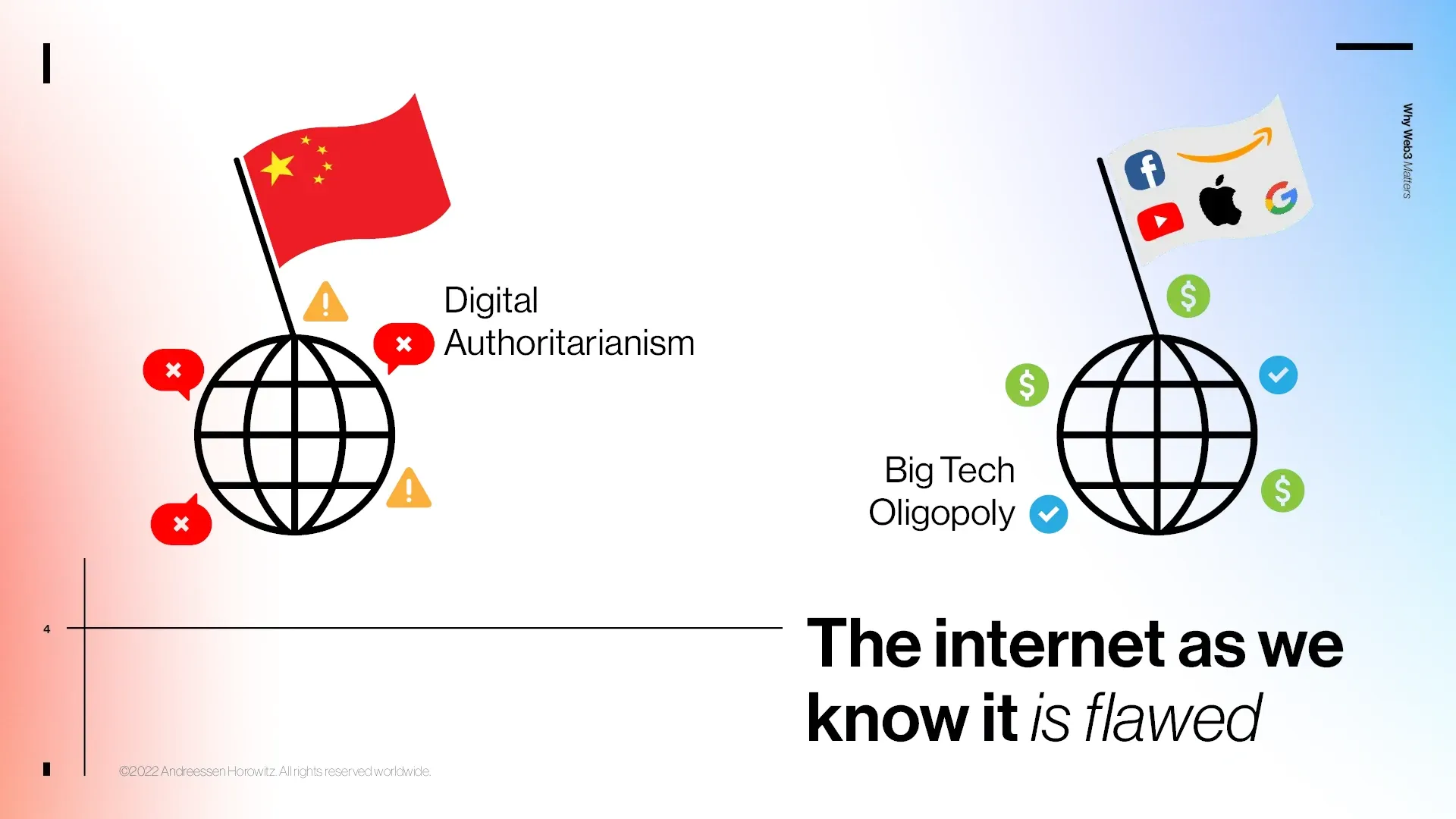
Patrick McHenry has been spun back out into three industry positions, after working to champion crypto. He will be joining Andreessen Horowitz as a senior advisor, where he will “help innovators navigate the policy landscape”. He wrote that “It’s time to level the playing field and ensure that Little Tech—the next generation of builders—gets a fair shot.”36 (“Little Tech” referring to a VC firm, which was able to blow $83 million on political contributions). McHenry’s statements did not include how this might help everyday Americans.
McHenry also revealed he will be joining Stripe as an advisor, as well as vice chairman of the advisory board to Ondo Finance. Ondo Finance is a “tokenized real-world asset” firm that is seeking to put US stocks and bonds on the blockchain, and McHenry will be valuable in making sure that Ondo is heard in DC and helping them create new relationships.37 Ondo contributed $1 million to Trump’s inauguration in December;38 in February, Trump’s project purchased $500,000 worth of ONDO tokens.39
The Web3 is Going Just Great Summary
Four items were logged between February 18 and March 2, adding $1.51 billion to the fraud counter.
Infini “stablecoin neobank” experiences $50 million theft
[link]
Infini is a “stablecoin neobank”. It promises to increase financial freedom and democratize banking. Almost $50 million was extracted after a thief drained USDC stablecoins, and swapped them to DAI stablecoins. Infini’s $50 million in total value locked has largely been affected.
Despite the hack, they claim that operations are unaffected. When asked how that was possible, they stated: “We’ve got solid runway to operate. No worries.”
Other Theft
- Founder of the Mask Network loses more than $4 million to a wallet hack [link]
- $1.5 billion taken from Bybit crypto exchange [link]
- Around 9,000 wallets used with Cardex fantasy trading card game compromised [link]
Worth Reading
In the News
In Closing
I will be speaking at South by Southwest this week. I will be speaking with Brian Merchant of Blood in the Machine about Share.