

In August 2026, the cryptocurrency market began to witness notable uptrends, and the ETF sector mirrored this optimism. On September 3rd, Bitcoin [BTC] ETFs attracted an impressive $730.8 million in net inflows, marking the highest single-day influx since January 14.
On that particular day, BlackRock’s IBIT led the charge with approximately $454 million, followed closely by ARK 21Shares’ ARKB at around $137.7 million and Fidelity’s FBTC with $74.4 million. Other funds saw smaller inflows, while both VanEck and WisdomTree experienced minor outflows.
Is September 2026 Different from Past Years?
September has historically been regarded as a challenging month for the crypto sector, particularly for Bitcoin. Yet this year, it has so far favored BTC.
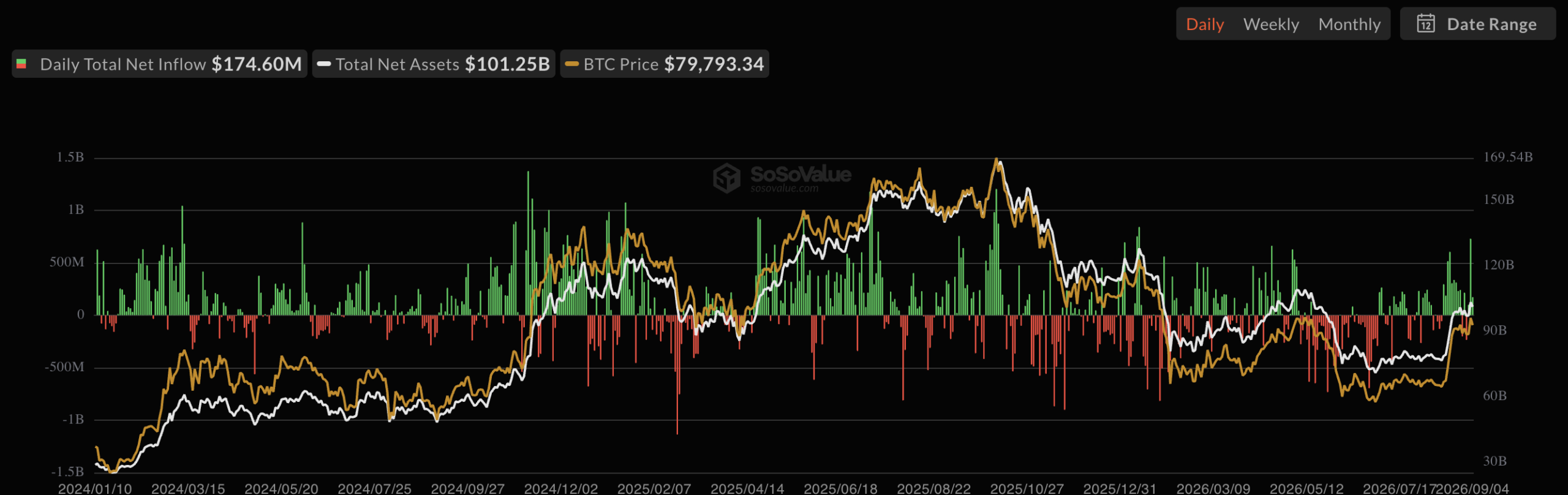
On September 1, BTC ETFs had a notable withdrawal of about $236.5 million. However, the tides turned on September 2, with the ETFs registering $101 million in inflows, leading to that remarkable $730.8 million influx on September 3.
The upward trend continued on September 4, as the ETFs gained another $174.6 million, pushing the total inflows over four days to approximately $770 million, despite the previous day’s withdrawal.
What Factors Contributed to This Significant Influx?
The shifting macroeconomic landscape, particularly perceptions around U.S. monetary policy, seems to be the primary driving force.
Notably, on September 3, Federal Reserve Governor Christopher Waller made remarks that the market interpreted as dovish.
He stated,
I would lean toward maintaining the federal funds rate at its existing level.
Simultaneously, Bitcoin experienced a significant price increase. Interestingly, it is now crucial for the $80K price point to serve as a support level rather than a resistance level.
Although the RSI currently indicates bullish sentiment, confirming the upward trend, the expanding Bollinger Bands suggest ongoing volatility.
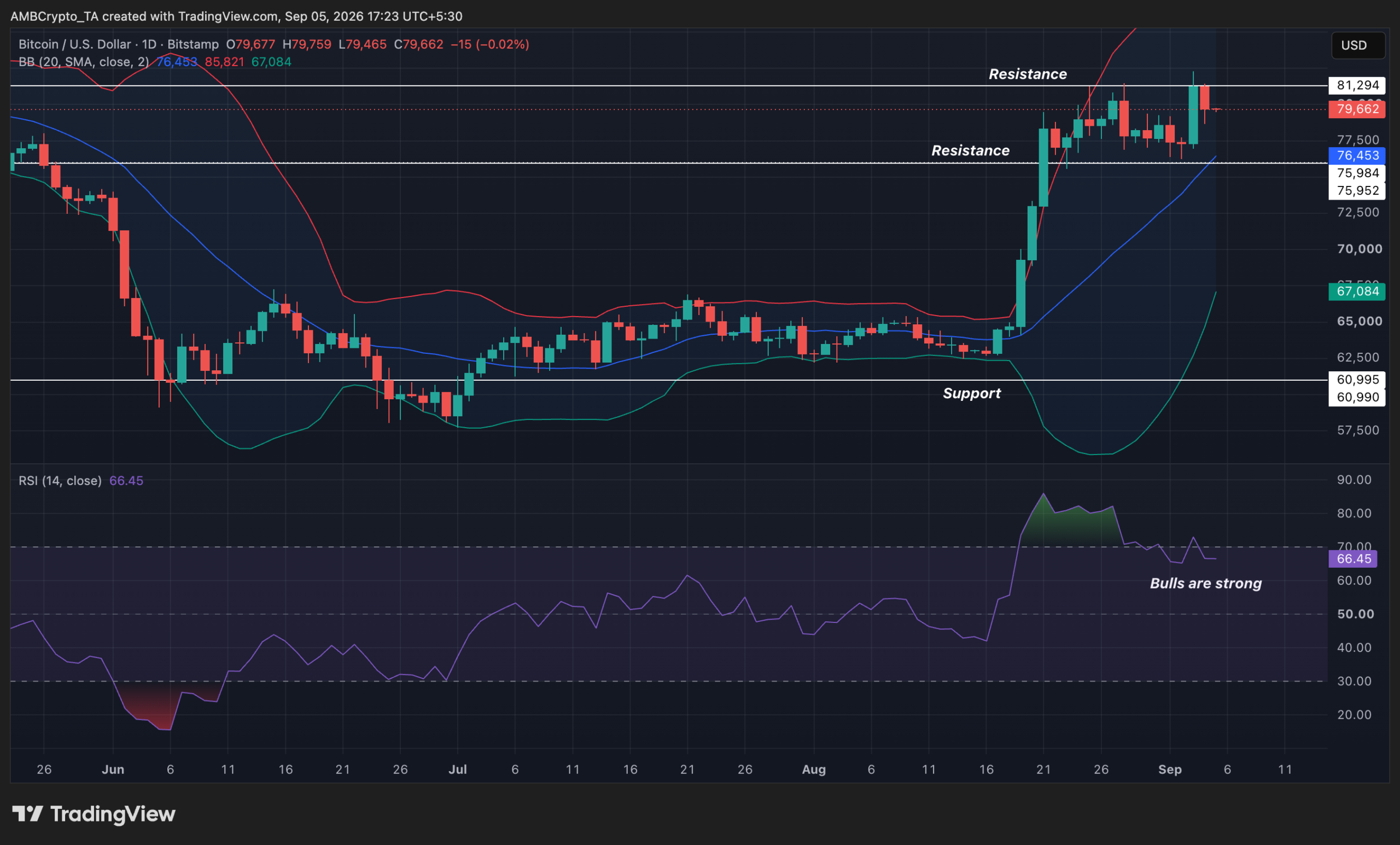
A recent report from MSB Intel further emphasized that Bitcoin has historically spent limited time trading above $70,000.
Per AMBCrypto’s earlier analysis, Bitcoin has 4,364 days of records in daily closing prices, and just 12.7% of those closes exceeded $70,000. As of the current moment, BTC was trading at $79,622.23, reflecting a 2.1% decline over the last 24 hours.
Are Altcoin ETFs Mirroring Bitcoin’s Trends?
Meanwhile, Ethereum [ETH] ETFs showed a somewhat analogous trend to Bitcoin ETFs. According to Farside Investors data, ETH ETFs reported a modest $8.6 million net inflow on September 1, but the next day saw negative flows totaling $48.2 million.

However, on September 3, a strong rebound occurred, with Ethereum ETFs garnering $141.4 million, marking the most significant day within this timeframe. On September 4, the inflow decreased to $25.9 million, yet ETH ETFs continued to demonstrate a steady inflow trend.
Other altcoins also experienced inflows, with Solana [SOL] ETFs reflecting mixed market sentiments.
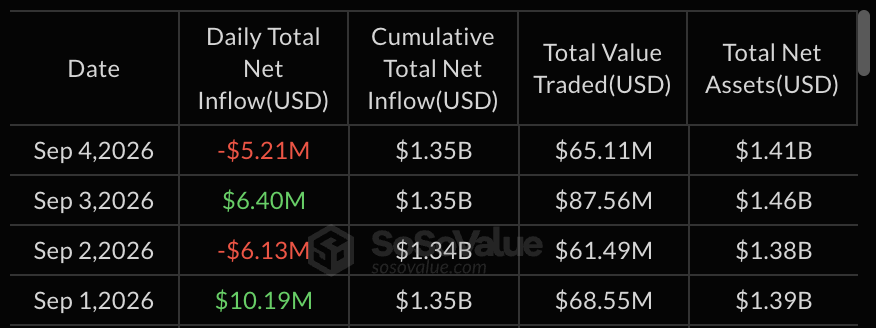
This surge in activity coincided with Hashdex’s NCIQ ETF incorporating HYPE with a 3.4% allocation valued at around $14.7 million, creating a new source of institutional interest.
Conclusion
- Despite significant inflows, Bitcoin ETFs have not yet propelled the BTC price above the $80k threshold.
- Other ETFs are following similar trends as BTC ETFs, with some variations.