
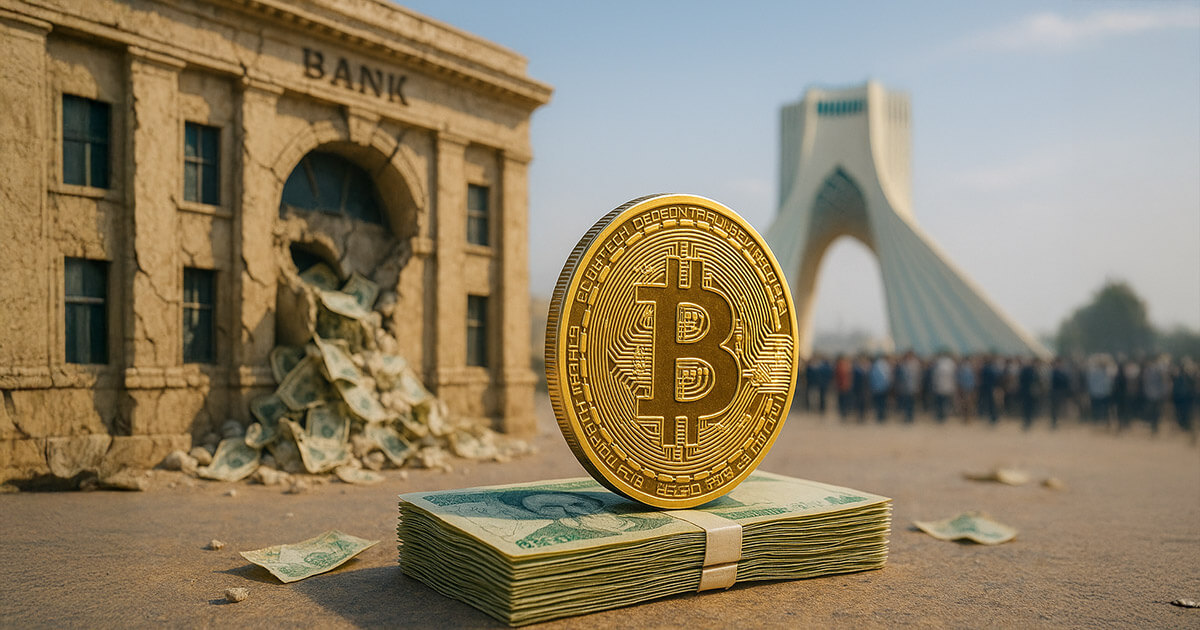

Iran’s banking sector is reeling from a significant setback. Ayandeh Bank, a prominent private lender, has been declared insolvent by the nation’s central banking authority, leading to the nationalization of its assets.
Established in 2012 and operating a network of over 270 branches across the country, Ayandeh Bank had amassed staggering losses of $5.2 billion and debts nearing $3 billion, reports indicate. Melli Bank, a state-owned institution, has taken control of Ayandeh’s holdings, assuring depositors that their funds are “safe.” However, past experiences have made Iranian citizens wary of such assurances.
Economic pressures are mounting in Iran, with the country grappling with hyperinflation and a deep recession, as reported by Reuters. The reimposition of UN sanctions and the plummeting value of the rial are exacerbating the situation. Reports depict long queues forming outside closed Ayandeh branches in Tehran, mirroring scenes from prior economic downturns.
The primary concern for ordinary Iranians is not the bank’s financial woes but rather their ability to access their savings. Deposit insurance in Iran is capped at approximately $930 (1 billion rials), and the reimbursement process can extend for years. Depositors with larger sums may face the possibility of losing their money entirely.
A Reoccurring Theme of Financial Instability
Iran’s situation is not unique. Across the globe, central banks have intervened to mitigate financial instability, often arriving too late for depositors caught up in failing institutions. In the United States, the notable collapses of Silicon Valley Bank, Signature Bank, and First Republic Bank in 2023 represented the most significant cluster of bank failures since 2008. Despite assurances from the FDIC and Treasury regarding deposit guarantees, numerous startups, small businesses, and uninsured clients were left in a precarious situation.
A Morningstar report from October 2025 indicates that US regional banks continue to exhibit increasing financial strain, even after increasing reserves and stabilizing deposits after the 2023 crisis. Rising delinquency rates and loan defaults are occurring amid persistent inflation, elevated borrowing costs, and losses related to lower-income borrowers.
While balance sheets may appear stronger on paper, confidence remains fragile. Market volatility in the recent quarter pushed bank stocks downward before a partial recovery driven by better-than-anticipated earnings. Analysts are now anticipating a fresh wave of mergers and acquisitions among regional banks, with larger institutions absorbing weaker competitors.
The Ayandeh Bank failure is attributed to years of mismanagement and opaque lending practices involving politically connected ventures, including the heavily indebted Iran Mall mega-complex. It is alleged that over 90% of the bank’s assets were channeled to affiliated companies that failed to repay their debts.
Ayandeh Bank Highlights the Need for Independent Assets
These financial crises share a common thread: the vulnerability of trust. Whether in Tehran or San Francisco, depositors face counterparty risk whenever they entrust their funds to a system reliant on state intervention.
Bitcoin offers a fundamentally different approach. It eliminates the need to trust a central authority by operating in a decentralized manner. There is no bank to freeze assets, and no government to erode savings through inflation. It transcends borders and political boundaries, facilitating transactions where traditional finance cannot. While bank failures can instantly erase account balances, holding Bitcoin directly eliminates counterparty risk, relying solely on mathematical principles. And mathematics, unlike governments or banks, operates with unwavering consistency.
The collapse of Ayandeh Bank serves as a global warning, not just a local tragedy. Bank failures, capital controls, and confiscations are inevitable consequences of financial repression, regardless of where it occurs. For countless individuals witnessing their savings vanish through no fault of their own, Bitcoin is no longer merely a speculative asset; it represents a form of insurance against the system itself.