

Securing the Bitcoin network, a digital asset praised for its scarcity, is a function of Bitcoin miners; however, this endeavor is fraught with financial uncertainties.
Globally, the Bitcoin mining community ranges from 5,000 to 10,000 participants, from individuals to expansive corporations. Solo miners typically spend over a decade to discover a block, suggesting their involvement stems from enthusiasm or a lottery-like expectation of success.
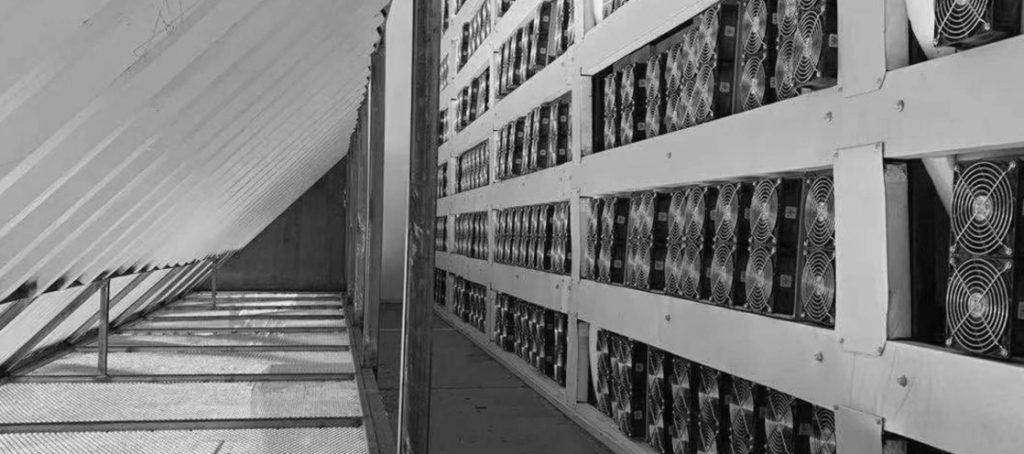
Some mining organizations manage extensive operations, utilizing hundreds of thousands of specialized Antminer machines.
Analyst General Kenobi from Demand Pool estimates a Bitcoin miner needs to manage 200 to 1,000 mining units, contingent on energy costs, to earn a viable income. Marathon Digital, the world’s leading miner, operates approximately 385,000 units and boasts a hashrate of 57 exahash per second.
Bit Digital, once a smaller player with a peak hashrate of 2.43 EH/s, ceased its Bitcoin mining activities in June of last year. Today, the company ranks as the fourth-largest corporate holder of Ethereum.
According to CEO Sam Tabar, the decision to exit Bitcoin mining was influenced by several factors:
“The business model guarantees a halving of profits every four years,” Tabar explained. “The increasing hashrate difficulty, combined with the unpredictability of Bitcoin mining returns, makes responsible debt management impossible and necessitates extensive equity dilution to fund the acquisition of new-generation hardware.”
“It’s a fundamentally flawed business,” he asserted.
While some Bitcoin advocates may dismiss Tabar’s comments, Bit Digital has achieved considerable success. They founded an AI infrastructure firm, WhiteFiber, shortly after ChatGPT’s launch in 2023. With $100 million in annual revenue, WhiteFiber raised $183.3 million in an August Nasdaq listing following its spin-off from Bit Digital.
Read more: Bit Digital CEO forecasts Bitcoin mining industry’s demise within two years.
The top problem facing Bitcoin mining: Location Restrictions
Driven by the pursuit of affordable electricity, Bit Digital initially based its operations in China’s Sichuan province, known for its abundant hydroelectric power from 1,400 rivers, which offered energy costs as low as one cent per kWh during the rainy season.
However, CEO Tabar viewed a potential Chinese ban on Bitcoin mining as an imminent threat, leading to the complex logistical effort of relocating tens of thousands of mining machines to North America during the COVID-19 pandemic.
“Many considered the move foolish and unpopular, questioning the financial implications of taking machines offline, migrating to North America, and incurring higher electricity costs,” he stated.
Six months later, China officially banned Bitcoin mining. Tabar expedited the removal of the remaining machines, shipping them from the country.
“Our colleagues with equipment remaining in China were left in a difficult situation,” Tabar remarked.
The European Union considered, but ultimately rejected, a Bitcoin mining ban in 2022. In June of this year, Norway’s government announced a temporary prohibition of proof-of-work mining, effective from Autumn, affecting a country that accounts for 1.6% of the global hashrate and stands as Europe’s largest mining hub.
Bitcoin mining faces a second problem: Continuous Hardware Improvements
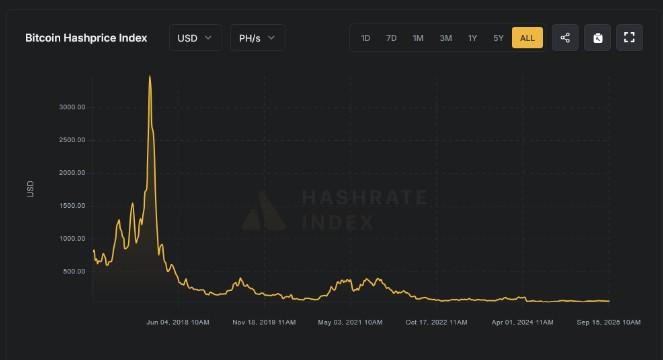
Miners are compelled to upgrade to more powerful equipment due to the ever-rising hashrate and mining difficulty, which recently peaked at 134.7 trillion.
“Upgrades must occur every few months to stay competitive,” he stated. “Without these new machines that increase mining efficiency, profitable mining is not possible.”
Tabar describes the costs as “significant, in the millions.” Failure to invest in this technology quickly makes the older machines costly and impractical.
Third Major Issue: Debt is Hazardous to Miners
Businesses commonly take loans for large investments, like purchasing mining hardware, paying them off over time through profits. But Bitcoin’s volatile price makes it risky to service that debt.
“Predicting future income for Bitcoin mining is near impossible,” said Tabar, “since the future price of Bitcoin is unknown.”
“For many who took loans, it led to major problems,” he concluded. “They vanished quickly.”
Read More: Features
The untamed world of ICOs in China
Features: The movement from risky Ponzi farms to real yield.
Problem Number Four: Profits Are Slashed By Halving
It’s expected Bitcoin prices rise to balance lower mining rewards in halving cycles.
That idea assumes that Bitcoin’s price will go up enough and soon enough.

Kenobi explains how less profitable miners exit after each halving and how some are determined to keep going based on their deep faith in the future of Bitcoin.
He explains that smaller miners are priced out due to declining earnings based on the increasing hashrate and efficiencies. This, in turn, allows bigger companies to become more powerful.
Tabar explains why he no longer believes in the model.
“Of course Bitcoin’s price might go up. But what some people didn’t understand was that the difficulty to mine Bitcoin was harder and harder. And the price did not compensate for the hashrate difficulty.”
Bitcoin mining has a fifth problem: Diluting shareholders
Since Bit Digital decided against borrowing, it had to find other means to upgrade. It was necessary to sell shares to raise money for equipment.
“Basically, we have to dilute our existing shareholders, and then use the money to buy new machines. You can see how that could be a problem,” said Tabar.
Problem number six: Not much competitive room
Tabar notes it is tough to differentiate a Bitcoin mining firm. There are really only two things that matter: capital and the best machines.
“Anybody overnight can build a Bitcoin mining company. It just requires capital. That’s not a business you really differentiate yourself in.”
Read Also: Features The blockchain project bringing renewable energy into reality Features NFT failures are discussed in Murakami’s recent exhibition.
The seventh issue: Mining pools eat up too much profit
Mining pools began to become more prevalent beginning in 2010. The system evolved to FPPS or Full Pay Per Share.
Miners in FPPS gain compensation on hashrate not only the blocks a pool discovers. Pools must then retain capital to cover miner fees if there are not enough blocks.
Kenobi says fees from pools are 10% even though they are often advertised as 0.5 to 2%.
Kenobi leads business development for Demand Pool, which has a goal of being the top Stratum v2 Bitcoin mining pool. De La Torre also founded BTC.com and Poolin, and the company looks to keep mining costs low by paying miners with a proportion of profits.
Kenobi says the increase in gains and lower fees mean miners have the ability to earn up to 15% more.
The Future of Mining Bitcoin
In Part one of this series, Tabar said that it would be almost impossible for mining businesses to be profitable because national governments would take the power with free power.
Kenobi counters by saying the bigger threat is utility companies using surplus power to mine.
Neither outcome is guaranteed but both parties agree that smaller miners are under threat as margins are down and bigger mining companies are dominant.
The integrity of the Bitcoin network is important and both experts hope the network remains decentralized.
“Miners are paid to join the movement” said Kenobi, “a peaceful revolution.”
Subscribe for engaging news related to blockchain, delivered once a week!
Email address
Subscribe!