


Bitcoin (BTC) is currently experiencing a period of consolidation within a price range lacking significant trading activity, specifically between $110,000 and $116,000. The market is anticipating a resurgence of buying interest to establish a more stable footing for the cryptocurrency.
A report published on
August 6th
by
Glassnode
indicates that Bitcoin’s price retreated to around $113,000 after reaching a new peak exceeding $123,000 in mid-July. This price fluctuation has resulted in many recent investors finding themselves with holdings valued at less than their purchase price. It also created a concentration of Bitcoin with an average cost exceeding $116,000.
The lower boundary of this concentration had consistently acted as a support level until July 31st, when Bitcoin’s price dropped into the aforementioned low-liquidity range. Historically, these types of ranges can potentially transform into accumulation zones as investors begin buying the dips, believing they are getting a good price.
The Glassnode report analyzed entity-adjusted Unspent Realized Price Distribution (URPD) snapshots from July 31st and August 4th to assess the level of dip-buying activity.
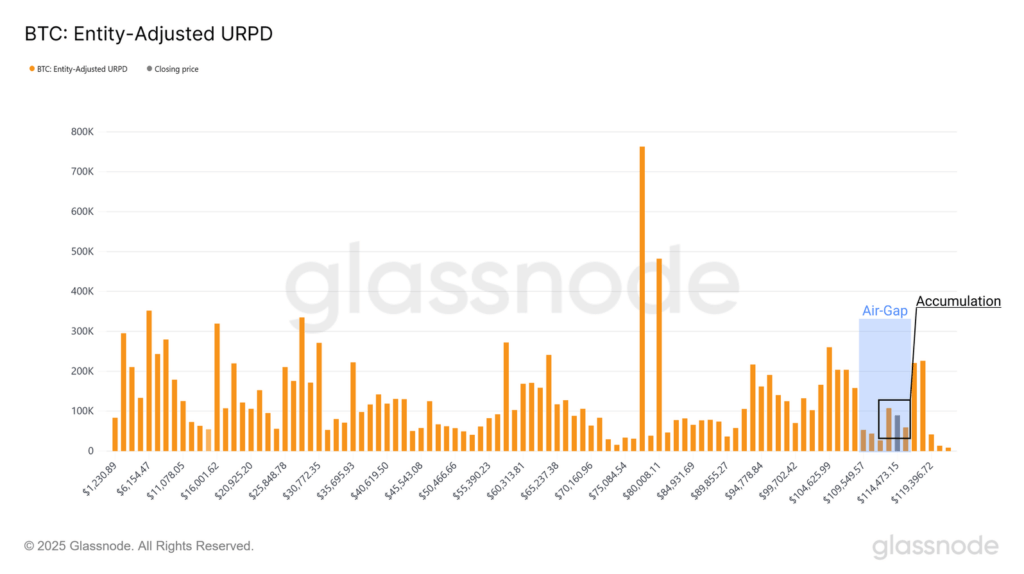
Following a bounce from around the $112,000 level, investors acquired approximately 120,000 BTC, pushing spot prices
back above $114,000. This demonstrates a level of opportunistic demand in the market.
Despite this, the $110,000 to $116,000 range remains relatively thin in terms of overall supply. A period of accumulation within this zone could potentially build a solid foundation for a subsequent upward price movement.
Emerging Resistance and Balanced Metrics
The recent price increase has yet to overcome the average cost basis of holders who have held Bitcoin for one week to one month, which now presents a notable resistance level near $116,900. A sustained move above this level would suggest that buyers are regaining control of the market. Failure to break through could increase the likelihood of a test of the previous all-time high range near $110,000.

According to the report, the current price level is considered “warm” but not excessively inflated. It remains above the short-term holder (STH) cost basis, which is around $106,000. Historically, this price point has served as a dividing line between bullish and bearish trends within Bitcoin bull markets.
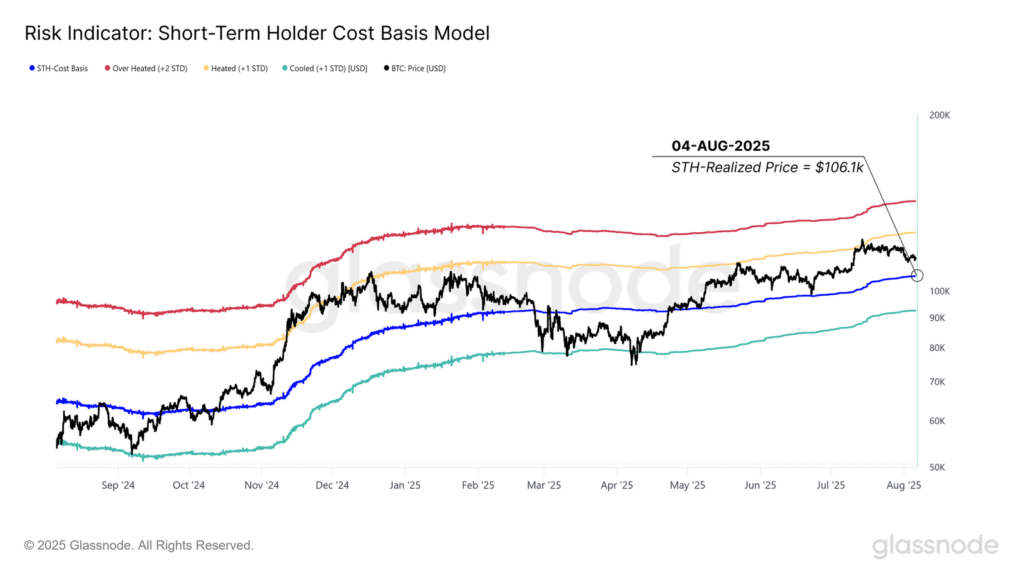
The percentage of STH supply that is currently in profit has decreased from 100% to 70% during the recent price decline. This is consistent with the mid-range observed in previous bull market cycles. Additionally, the proportion of STH spending volume that is profitable has fallen to 45%, which is below a neutral level. This suggests a balanced market where neither buyers nor sellers have a dominant position.
ETF Movements and Leverage Levels
On August 5th, US-based spot Bitcoin exchange-traded funds (ETFs) experienced a net outflow of 1,500 BTC. This represents the most significant instance of ETF selling pressure since April 2025. While these episodes have historically been brief, it is essential to monitor whether this trend persists.
In the derivatives market, perpetual funding rates have decreased to below 0.1%, indicating a neutral zone. This suggests a weakening of speculative interest and reduced confidence in near-term price increases.
Overall, Bitcoin appears to be range-bound between $110,000 and $116,000, consolidating supply and waiting for sufficient demand to surpass $116,900 and resume its upward trend.