

Key Points to Consider:
-
Unprecedented expansion of the global money supply presents a powerful advantage for Bitcoin’s value.
-
Bitcoin ETFs, traded on the spot market, are on track to exceed gold’s holdings, solidifying Bitcoin’s status as a primary reserve asset.
-
While individual investor participation is currently muted, a surge in mainstream appeal could trigger a significant price increase.
After briefly reaching $120,000 on July 23, Bitcoin (BTC) has left investors wondering if it can reach a new record high within the year.
Persistent global economic instability and the long-term viability of the AI industry are seen as the primary hurdles.
However, three significant factors in the near to medium term could propel Bitcoin well beyond its current market capitalization of $2.3 trillion.
Some market observers predict Bitcoin will eventually surpass gold’s $23 trillion valuation, while others contend that a complete separation from technology stocks will require more time, given Bitcoin’s relatively early adoption stage.
Even without a shift in general investor sentiment, the increasing global money supply is establishing the foundation for a potential sea change, and the performance of Nvidia (NVDA) may be indicative of this trend.
Bitcoin’s Correlation with Nvidia, Plus Corporate Strategies from Strategy and Metaplanet
Nvidia’s valuation dramatically increased from $2.3 trillion in March to $4.4 trillion, despite its recent quarterly net income remaining consistent with the previous six months.
Market participants might be anticipating substantially larger future profits, or traditional valuation metrics may be becoming less relevant as governments are projected to increase monetary easing in response to rising national debt.
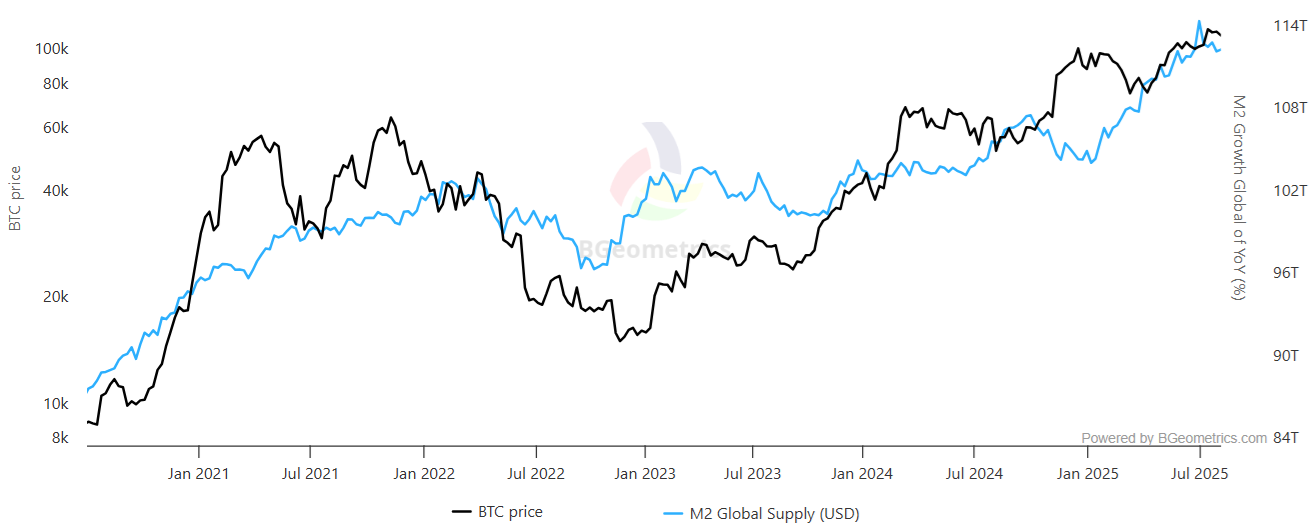
The collective M2 money supply among the top 21 global central banks achieved a record $55.5 trillion in July. At the same time, the US federal budget deficit reached $1.3 trillion in a mere nine months.
These conditions reinforce the bullish case for Bitcoin, even if Bitcoin’s established correlation with technology stocks continues.
However, retail investor involvement remains notably low, despite Bitcoin’s impressive 116% growth over the past year. This is widely anticipated to change.
The difference compared to the S&P 500’s 22% annual growth could attract new investment, particularly as Bitcoin gains prominence in mainstream news, with companies like Strategy (MSTR) and MetaPlanet (MTPLF) making headlines.
Related: Metaplanet, a company focused on Bitcoin, starts August with a significant purchase.
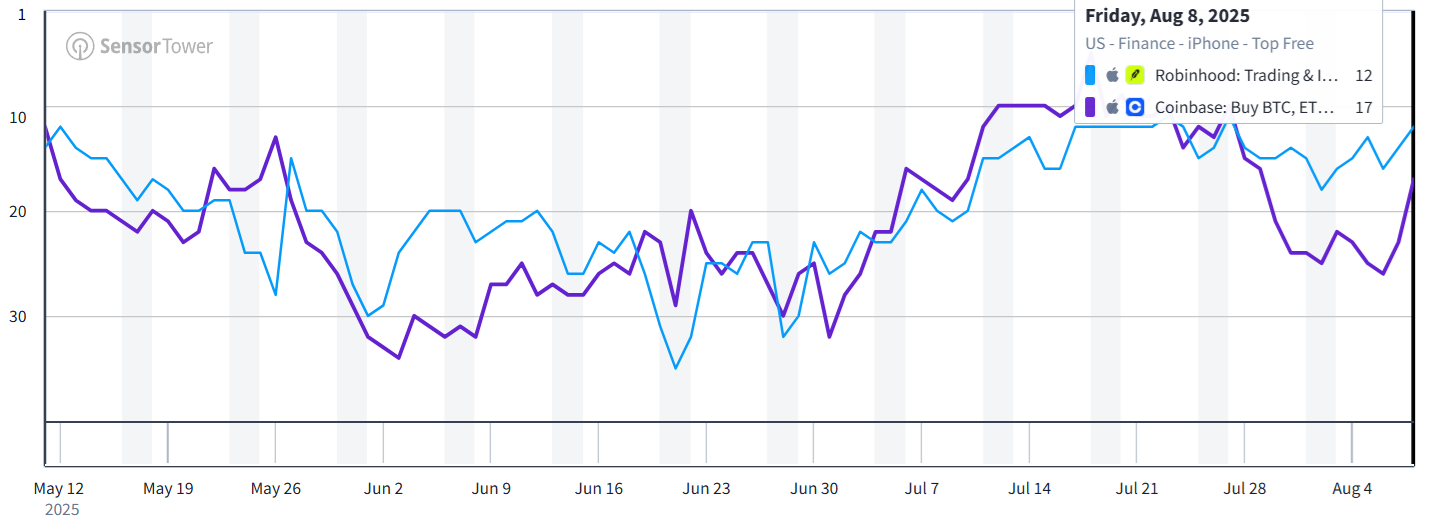
Presently, crypto platforms like Coinbase and Robinhood indicate limited retail investor activity, as evidenced by their positions outside of the top 10 apps—a situation not seen since November 2024.
While the exact catalyst for a renewed surge in retail interest remains uncertain, considerable potential remains for a retail-driven market advance in 2025, particularly as both conventional financial institutions and the US government increasingly embrace Bitcoin.
Regulatory Approval for Bitcoin in 401(k) Plans
US President Donald Trump issued an executive order on Thursday allowing for cryptocurrency and other alternative investment options within 401(k) retirement accounts.
Michael Heinrich, Co-founder and CEO of 0G Labs, stated that this 401(k) policy change could “unlock trillions of dollars in retirement funds for Bitcoin.”
Bitwise’s Chief Investment Officer, Matt Hougan, suggested this change could be transformative for the entire crypto industry.
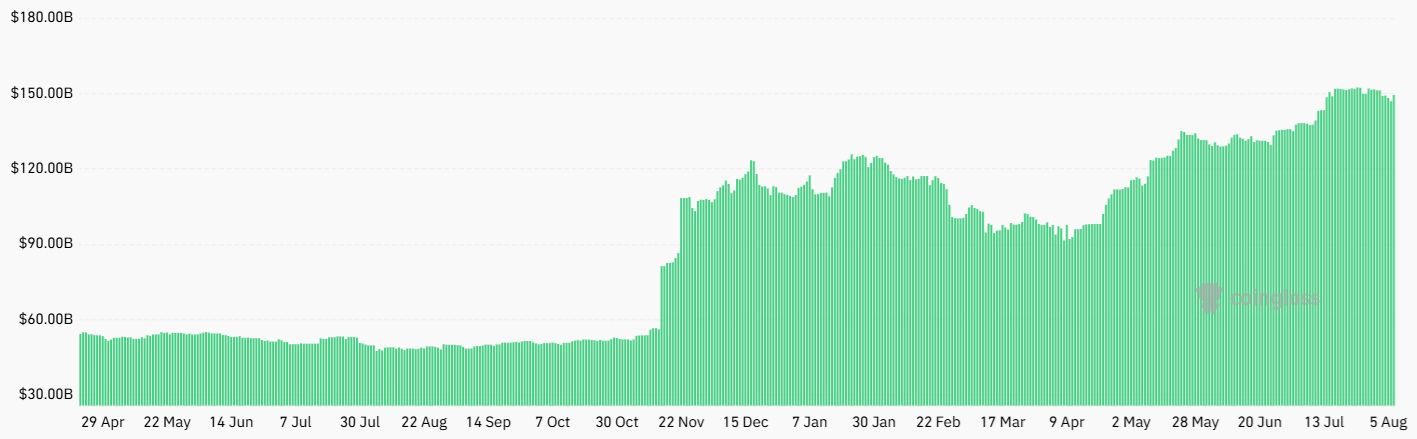
Currently, US spot Bitcoin ETFs collectively hold $150 billion in assets, while gold instruments hold $198 billion as of July 2025, according to a Forbes report.
If Bitcoin ETFs surpass gold in total holdings, it could solidify Bitcoin’s perception as a true reserve asset, rather than solely an investment tied to high-risk markets.
Over time, it is likely that an increasing number of institutional investors will allocate capital to Bitcoin as its relevance grows as a reserve asset for public companies, sovereign wealth funds, and national governments. While the specific timeline is uncertain, the overall trend suggests Bitcoin is on a path toward a new peak value in 2025.
This article is provided solely for informational purposes and does not constitute legal or investment advice. The views, thoughts, and opinions expressed are solely those of the author and do not necessarily reflect or represent the views and opinions of Cointelegraph.