

Key Points
Why Bitcoin May Sidestep a Leverage Cascade Like July’s
Several factors are aligning in Bitcoin’s favor. The BTC dominance rate is holding steady around 59%, Bitcoin ETFs continue to attract investment, and long-term holders are increasingly confident, effectively reducing the power of short-term speculators.
What’s Driving Bitcoin’s Potential to Break Above $124,000?
Significant capital inflows from institutional investors via spot markets, limited movement of funds into alternative cryptocurrencies, and a robust underlying demand are creating favorable conditions for Bitcoin to reach new price highs.
Bitcoin [BTC] is currently trading just slightly below its all-time peak of $124,000, with investors keenly watching for a potential breakthrough. Historically, this price level has presented significant resistance, potentially dampening enthusiasm among some traders.
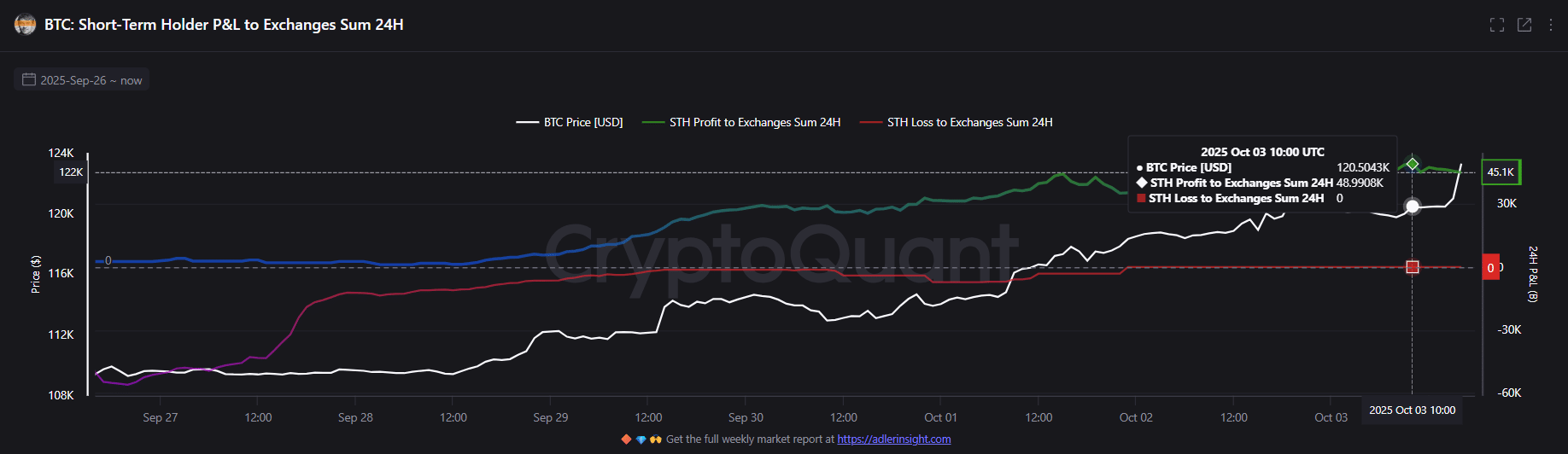
Adding to the cautious sentiment, total Open Interest (OI) in Bitcoin futures has soared to a record $90 billion, a 7% increase from its previous high. Concurrently, approximately 46,000 BTC have moved from short-term holders to exchanges, potentially setting the stage for increased price swings.
However, there are significant countervailing forces. Bitcoin’s dominance in the crypto market remains stable at 59%, unlike during the August peak when capital shifted towards altcoins. Bitcoin ETFs continue to draw investment, with $985 million entering on October 3rd, providing strong support for BTC prices.
Bitcoin Faces Resistance: The Battle is On
Bitcoin’s Q4 performance has started positively, aligning with investor expectations.
In a little over a week, Bitcoin’s price increased from $108,000 to $122,000, boosting the percentage of the Bitcoin supply in profit from 84% to 99.5%. It also surpassed the on-chain cost basis of $111,000 for short-term holders (those holding for less than 155 days).
The movement of 48,000 BTC by short-term holders at around $120,000 was a significant event. It marked the largest single-day transfer of Bitcoin from short-term holders to exchanges, signaling a potential shakeout of weaker hands as Bitcoin approaches a crucial resistance area.
Source: CryptoQuant
The presence of overheated derivatives adds to the classic characteristics of a potential bull trap.
For example, on July 14th when Bitcoin reached its all-time high, Open Interest peaked at $87 billion, while the Short-Term Holder NUPL (Net Unrealized Profit/Loss) reached 0.15, indicating strong short-term holder optimism. However, when Bitcoin reached $122,000, excessively leveraged long positions were liquidated.
Consequently, Open Interest decreased to $80 billion, and the Short-Term Holder NUPL fell to 0.05 within two weeks, aligning with Bitcoin’s 8%+ drop to $107,000. Given the current bullish skew in the Long/Short Ratio, the question arises: are we witnessing another classic long liquidity sweep?
Supporting Factors Suggesting Continued Bitcoin Strength
To sustain its upward momentum, Bitcoin needs to outperform its performance around previous all-time highs.
Encouragingly, Bitcoin dominance remains strong, holding 59% of the total cryptocurrency market capitalization, which translates to approximately $2.48 trillion. In contrast, Ethereum dominance remains significantly below the 15% peak observed in late August.
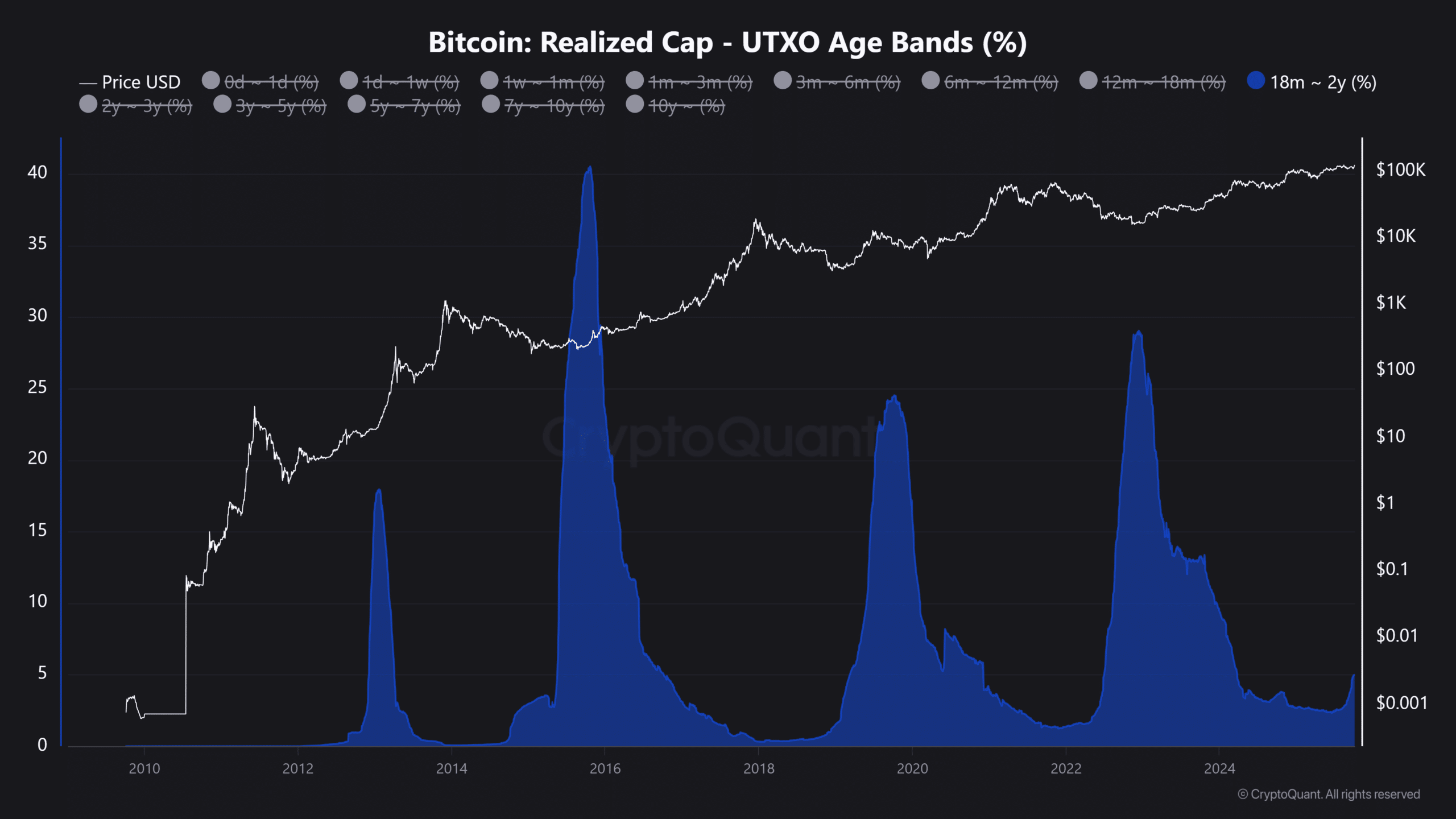
Furthermore, the proportion of Bitcoin held for 18–24 months has risen to 5%, the highest level since March 2024. This indicates a growing trend of coins moving into long-term storage, reflecting increasing confidence in Bitcoin’s future growth potential.
Source: CryptoQuant
In summary, these positive divergences suggest that a leverage-driven crash similar to that experienced in July is unlikely.
Bitcoin’s retesting of the $124,000 level is supported by substantial institutional inflows through spot markets, limited shift towards alternative cryptocurrencies, and strong conviction among long-term holders, creating a path for potential price discovery and lessening the likelihood of a bear trap.