

Key Points to Remember
Bitcoin’s price is at a crucial point, with significant buy and sell orders concentrated around $123,000 and the $112,000 to $115,000 range. Macroeconomic factors and government spending policies are both playing a role.
As financial markets anticipate a change in the Federal Reserve’s approach, a reduction in tariffs is introduced. Is this a coincidence, or part of a larger plan?
Regardless, Bitcoin (BTC) appears ready for a significant price swing. It could either break through resistance levels or face rejection, potentially falling back to the $112,000-$115,000 demand area to test buyer interest.
With substantial buy and sell orders now clustered around key price levels, the conditions are set. Bitcoin’s next major direction will likely depend on which of these levels breaks first, all while broader economic uncertainties resurface.
Market Focus on Powell’s Remarks
As July concludes, macroeconomic risks are heightened. Federal Reserve Chairman Powell is set to begin the next Federal Open Market Committee (FOMC) meeting with an economic assessment, and the market remains focused on the potential for inflation.
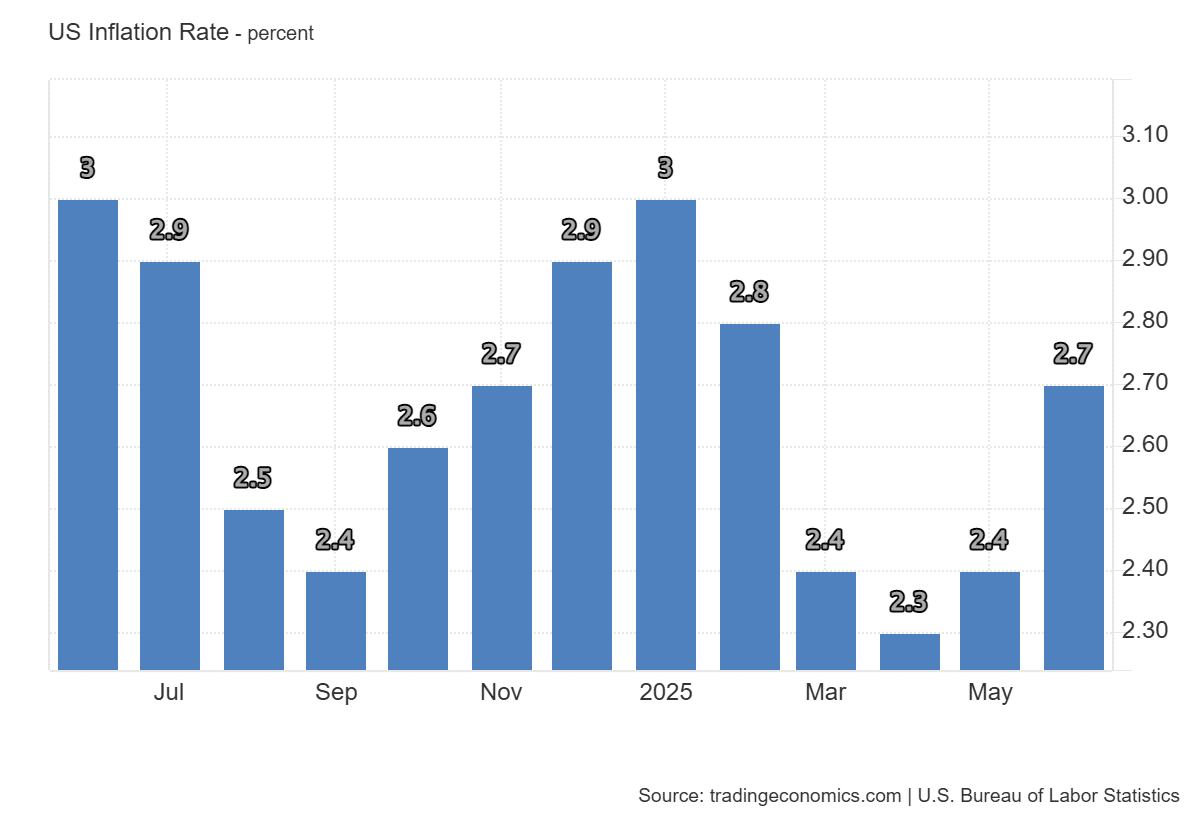
The Consumer Price Index (CPI) for June showed a 2.7% year-over-year increase, reaching a four-month high and marking the first significant 0.3% month-over-month jump this year. Furthermore, this follows a previous monthly increase, breaking the previous trend of lower figures that averaged -0.2% month-over-month.
Simply put, the narrative of decreasing inflation has been challenged. With inflation proving more persistent than expected, the market is now questioning how accommodating the Federal Reserve can afford to be in the second half of the year.
The CME FedWatch Tool indicates that traders are largely expecting the FOMC meeting on July 30th to result in no change to interest rates.
Specifically, there is a 97.4% likelihood that the Fed will maintain rates at 4.25%-4.50%, with only a 2.6% chance of a 0.25% rate cut. This demonstrates a lack of strong belief in immediate monetary easing.
Attention is now turning to how Bitcoin will perform given the current tight monetary policy. Is restrictive policy preventing Bitcoin from achieving further gains?
Bitcoin’s Struggle: Policy vs. Positioning
With the Federal Reserve yet to change course, the next significant boost for Bitcoin is expected to come from government spending measures, such as tariff reductions. Notably, these measures are being introduced around the time of the FOMC meeting.
For example, the U.S. government rolled back import taxes on goods from China in June, providing indirect monetary easing despite the Federal Reserve’s hawkish stance.
The market reacted swiftly. Bitcoin’s Coinbase Premium Index turned consistently positive starting in mid-April, peaking at 0.105 in early June, coinciding with the tariff reduction announcements.
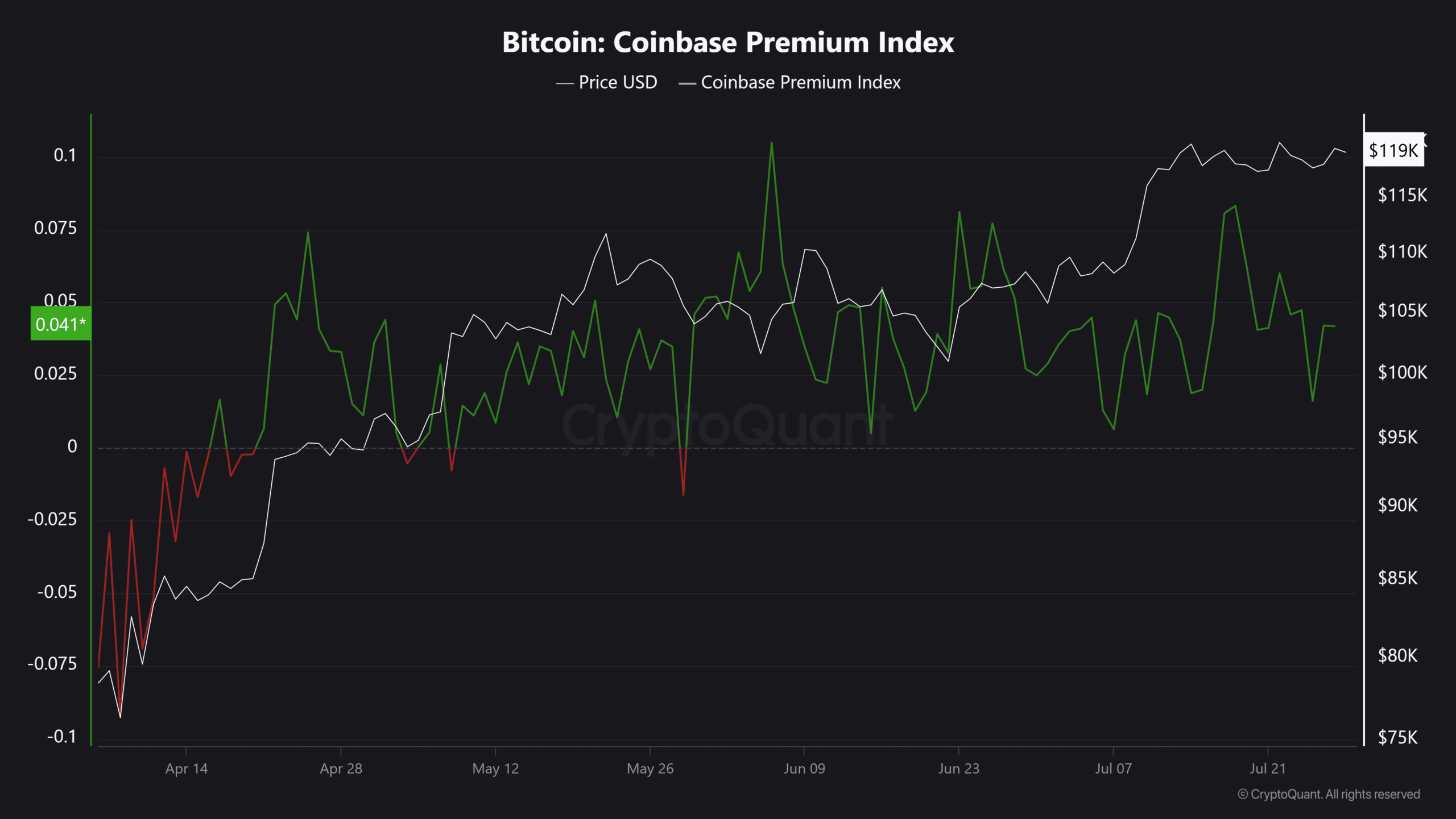
Source: CryptoQuant
The price of Bitcoin responded accordingly.
Bitcoin experienced three consecutive months of price increases, with the $100,000 level acting as a solid support in June. This level fueled a rise to $123,000 by mid-July, resulting in an 11.31% gain for the month.
The current situation favors a potential price surge. While sticky CPI data keeps interest rates elevated, government spending provides support. With $9.5 billion in short positions concentrated at $123,000, Bitcoin is well-positioned for a significant upward move.