

The Department of Public Works and Highways (DPWH) in the Philippines is joining forces with the Blockchain Council of the Philippines (BCP), a group advocating for blockchain technology, to introduce “Integrity Chain.” This innovative platform leverages blockchain technology to enhance transparency, bolster accountability, and foster greater public confidence in national infrastructure development.
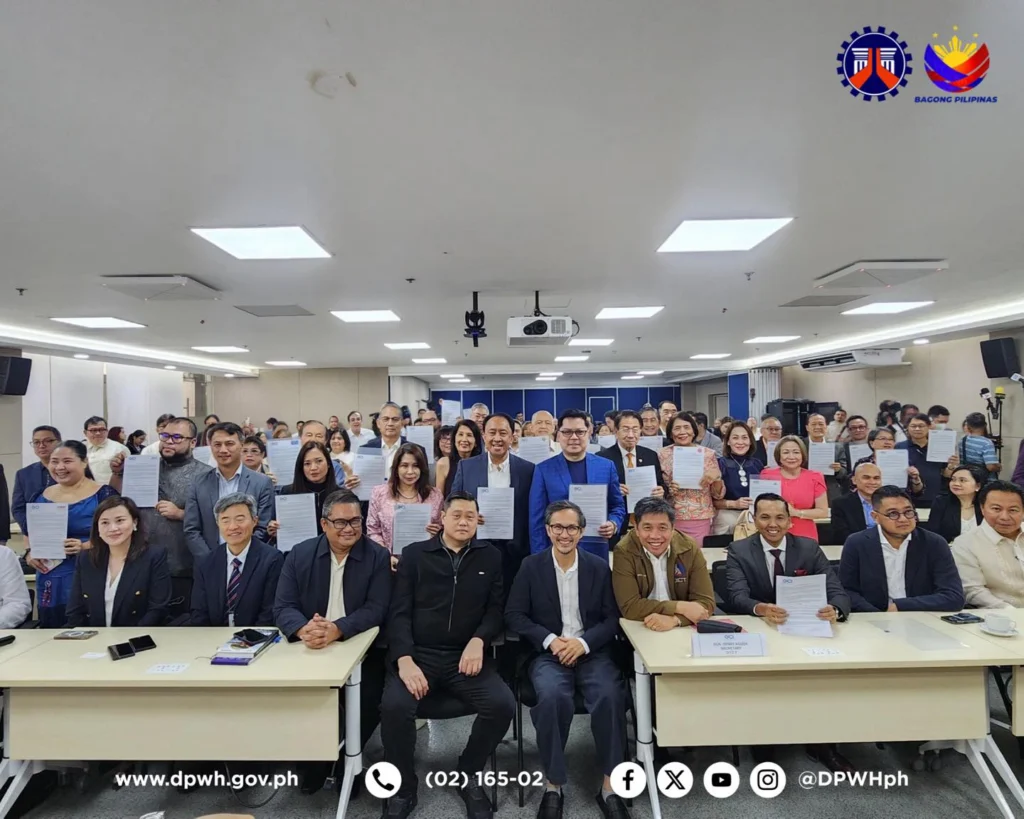
A formal agreement, a Memorandum of Agreement, was finalized on September 30. This agreement sees BCP President Dr. Donald Patrick Lim and DPWH Secretary Vince Dizon collaborating to digitize and protect crucial data. This data, relating to budgets, the procurement process, and significant construction milestones, will be recorded on a secure, unchangeable blockchain ledger, readily available for public access.
Secretary Dizon stated, “By implementing Integrity Chain for our foreign-funded ventures—those receiving Official Development Assistance (ODA)—we actively encourage examination from the private sector, academic institutions, and broader society. This initiative demonstrates DPWH’s dedication to President’s mandate of ensuring openness and responsibility across all projects.”
He further commented, “Speaking on behalf of the President, the Cabinet, and the entire government, we express our gratitude. This is the path forward. From budget allocation to procurement, contract awards, project implementation, monitoring, contractor payments, and final project acceptance—every stage should be visible. Now, everyone can observe.”
‘Everyone should be watching now’
The Integrity Chain initiative is designed to monitor project finances and advancements via a continuously updated public dashboard. It also empowers citizens to provide feedback, report irregularities, and ensures records are tamper-proof, thus discouraging corruption.
Dr. Lim emphasized, “For the first time, the private sector isn’t just asking for integrity – we are actively building the systems to make it a reality.”
As part of this initial phase, the BCP will grant the DPWH a complimentary one-year subscription to Integrity Chain. This includes essential technical assistance, training programs, and robust cybersecurity measures, ensuring full compliance with the Data Privacy Act of 2012.
The launch event, held at the Asian Institute of Management (AIM), saw participation from significant international development and funding organizations. These included the Japan International Cooperation Agency (JICA), Korean Eximbank, Asian Development Bank (ADB), and the World Bank’s Road Transport and Country Operations. These entities are key financial supporters of the DPWH’s “Build Better More” projects, managed under the Unified Project Management Office (UPMO) Clusters, which will be the first to utilize the blockchain platform.
‘Change shouldn’t wait for politics or budgets’
BayaniChain Ventures (BYC) is the company taking the lead in deploying the blockchain platform.
Gelo Wong, Co-Founder and Chief Growth Officer of BYC Ventures, expressed in a LinkedIn post, “The partnership with the Department of Public Works and Highways, and the launch of Integrity Chain led by the Blockchain Council of the Philippines, embodies our core values.”
He added, “For too long, corruption has weighed down our people, eroded confidence, and left communities behind. BYC (BayaniChain Ventures) was founded to prove that technology can prioritize the public good. The initial phase of Integrity Chain, focusing on DPWH’s PHP500 billion ($8.6 billion) Foreign Assisted Programs, is being launched at no cost to the government, funded by us and NGOs, because progress shouldn’t be contingent on political cycles or budget availability.”
“Every decision we make is guided by one question: how will this impact the people? Today, we take another significant stride toward establishing a system of accountability.”
Guardrails of accountability
Dr. Lim described the system as a safeguard. According to a Bitdigest report, Dr. Lim highlighted the issues of “leakages, falsified milestones, and tampered records” that have plagued public works. He believes that by securing every peso and project detail on a widely verifiable ledger, rather than keeping it hidden, they are creating vital safeguards for accountability.
Governance Consultant Ida Tiongson added, “Blockchain embodies governance by design. Its fundamental principles are accountability and transparency, precisely what the country requires. Integrity Chain effectively translates these principles into government operations, guaranteeing that every project has the protective measures citizens deserve.”
Technical foundation
BYC Ventures CEO Paul Soliman explained the technical underpinnings, noting that by “leveraging blockchain technology through Lumen and Prismo, we are going beyond simple digitization – we are securing trust. Every budget allocation, contract, and milestone recorded will be unalterable and permanent. This will enable civic and citizen validation of DPWH projects, for the first time.”
Wong broadened the scope by sharing, “The initiative we are starting with the DPWH is not limited to a single agency. This is progress that paves the way for other government departments, regulatory bodies, and local administrations to adopt blockchain as the foundation of accountability.”
Blockchain as deterrent to tampering
The initiative is particularly relevant in light of recent concerns regarding alleged corruption in flood control projects.
“In the context of the ongoing investigation into flood control projects, blockchain would not only have preserved the integrity of the DPWH’s documents, but also provided investigators and citizens with transparent access to original, unaltered records,” Wong explained in an ABS-CBN interview.
“Every budget allocation, procurement contract, and flood control project detail could have been time-stamped, made permanent, and verifiable by anyone with access. Instead of relying on physical files that are susceptible to misplacement or intentional removal, blockchain ensures a permanent and tamper-proof record of government activities,” he added.
Watch: The Philippines is at the forefront of blockchain tech adoption
title=”YouTube video player” frameborder=”0″ allow=”accelerometer; autoplay; clipboard-write; encrypted-media; gyroscope; picture-in-picture; web-share” referrerpolicy=”strict-origin-when-cross-origin” allowfullscreen=””>