
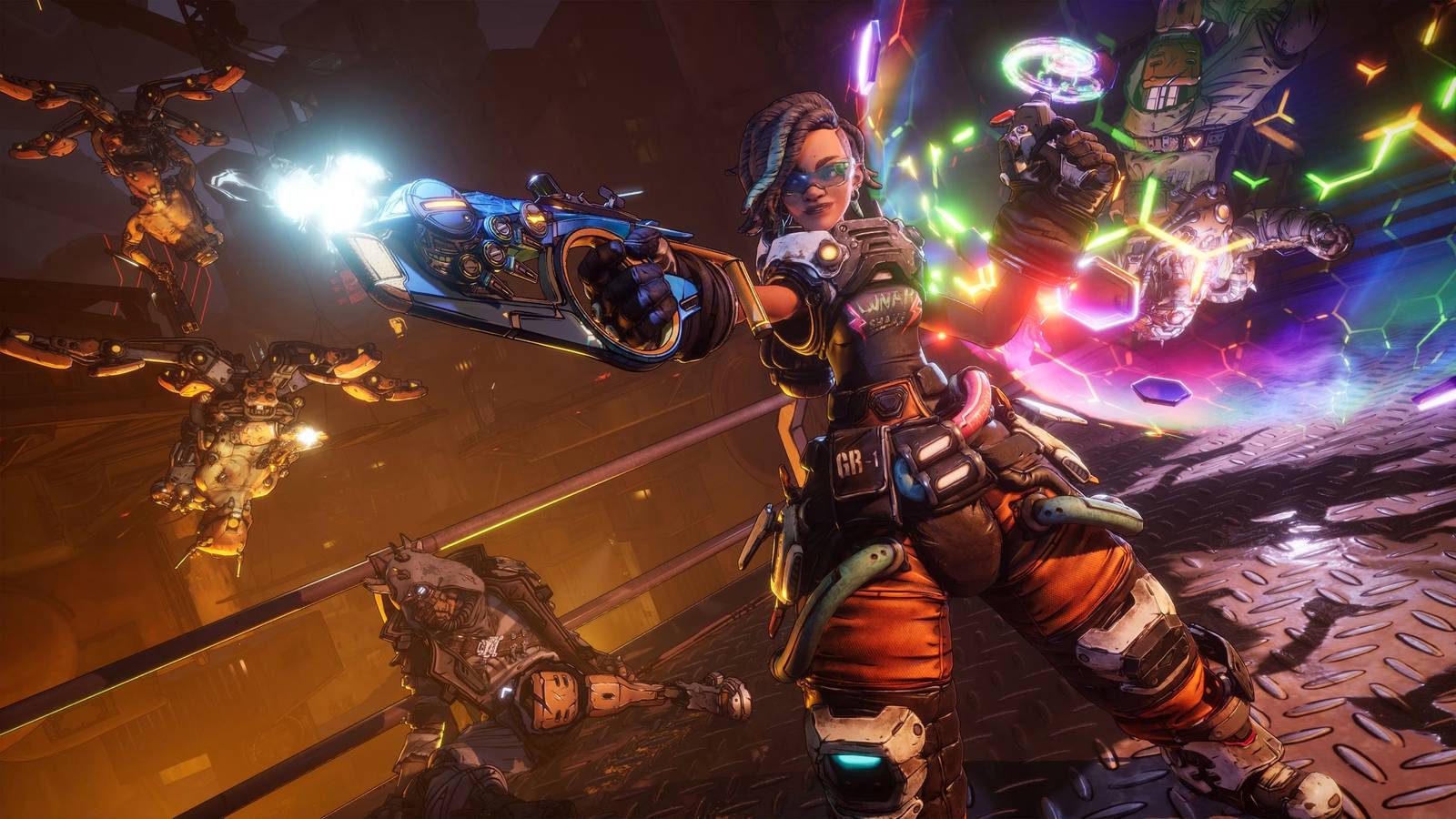
Before even embarking on my journey in Borderlands 4, I committed a significant blunder. Instead of meticulously examining the fresh Vault Hunters of this looter shooter to pinpoint the ideal starting class tailored to my playstyle, I opted to let my gut guide my decision. After brief deliberation, I chose Harlowe, drawn to the combat scientist’s cutting-edge gear. While this selection proved fruitful in constructing a formidable build through her skill tree, it came with a noteworthy drawback: enduring countless hours with the galaxy’s most over-the-top comedian.
That’s both the blessing and the bane of Gearbox’s expansive new shooter. It takes the series’ penchant for excess to another level within a vast open-world setting, amplifying every aspect. If you’re a fan of the gunplay, distinctive loot, or precise sound design that have long been staples of Borderlands, expect these qualities to be showcased at their finest. However, if anything has ever irritated you about the franchise – perhaps relentless, low-quality jokes – be prepared for your grievances to reach epidemic proportions.
After all, would it truly be Borderlands if it wasn’t excessive?
Borderlands 4, taking place on the previously uncharted world of Kairos, centers around a group of Vault Hunters (also newcomers to the series) embroiled in a conflict with the formidable Timekeeper. This oppressive tyrant has seized dominion over Kairos, supported by a network of loyal accomplices overseeing three of the planet’s distinct ecological zones. With the Timekeeper concealed within Dominion City, the stage is set for a revolution. The Vault Hunters must enlist allies throughout Kairos, aiming to systematically reclaim each region.
Echoing the grandiose nature of everything within Borderlands 4, the storyline is suitably epic, providing ample material for an adventure spanning continents. However, its scale doesn’t equate to depth. Rather than leveraging the political intricacies to weave a compelling narrative of resistance against tyranny, Borderlands 4 comes across as a superhero film populated with inconsequential, cartoonish villains, akin to Ronan the Accuser from Guardians of the Galaxy. Although Gearbox has stressed that the story is more “grounded” than the infamous meme-fest that was Borderlands 3, this mainly translates to lengthier dialogues from quest-givers. Ultimately, the conflict devolves into a vague backdrop, enabling players to either project their own real-world frustrations onto it, or dismiss it as pure science fiction escapism.
Despite the narrative’s increased seriousness, Borderlands 4 retains its trademark humor. While the constant barrage of pop culture references and memes has largely subsided, characters still deliver punchlines with the same frequency as in a Leslie Nielsen comedy – albeit with a considerably lower success rate. In an attempt to distance the series from self-parody, Gearbox has misidentified its writing shortcomings. The core issue isn’t the use of memes; it’s the overall lack of finesse.
The humor is now forced to carry the weight of filling the open world’s silence.
Harlowe, as an example, is incessantly interjecting scenes with “Um, THAT sounds wrong!” jokes. I would find myself cringing as catchphrases like “From rip to RIP!” and “Guess all Rippers do bathe in garbage juice!” spewed from my Vault Hunter with the unwarranted confidence of an amateur comedian at an open-mic event. Many of the better jokes are design-oriented, such as a side-mission satirizing Pokémon that involves capturing sentient weapons and battling a duo prepared for trouble. However, the actual written lines rarely hit the mark.
Of course, this isn’t novel for Borderlands. The significant change is that the humor is now forced to bear the responsibility of filling the empty spaces in an open-world setting. It’s here that the project’s sheer magnitude edges toward tedium. Canned one-liners surface with greater frequency, whether I’m eliminating a base camp or simply traversing a field on my hover bike. Quest design suffers similarly due to the expansive scope. For example, the more involved side missions often drag on for 45 minutes, requiring me to bounce between at least six locations each time. Given that fast travel is limited to a small number of silos and safehouses, I end up spending a significant amount of time driving 800 meters to clear out an enemy outpost, speaking to an NPC, and then traveling to another location. Despite the abundance of containers to crack open, there’s a substantial amount of filler in what is by far the longest Borderlands installment. This extended play time is also due to the slow leveling pace, forcing players into lengthy grinding sessions to complete those overstuffed side missions that don’t feel rewarding enough in terms of experience points.
This doesn’t capitalize on the strengths of a franchise known for relatively compact missions ideally suited for casual multiplayer sessions. However, the more time I spent exploring the open world, the more I observed a resemblance to a series that Borderlands once influenced: Destiny. (The narrative of uniting factions bears a striking similarity to Bungie’s looter shooter.) There are bounty boards providing repeatable missions, such as eliminating a certain number of enemies. There are spontaneously occurring boss encounters similar to public events. There’s a weekly activity reset. And you ride a mount which is, in essence, a Sparrow. These elements raise the question of whether Gearbox truly aspired to develop an MMO.
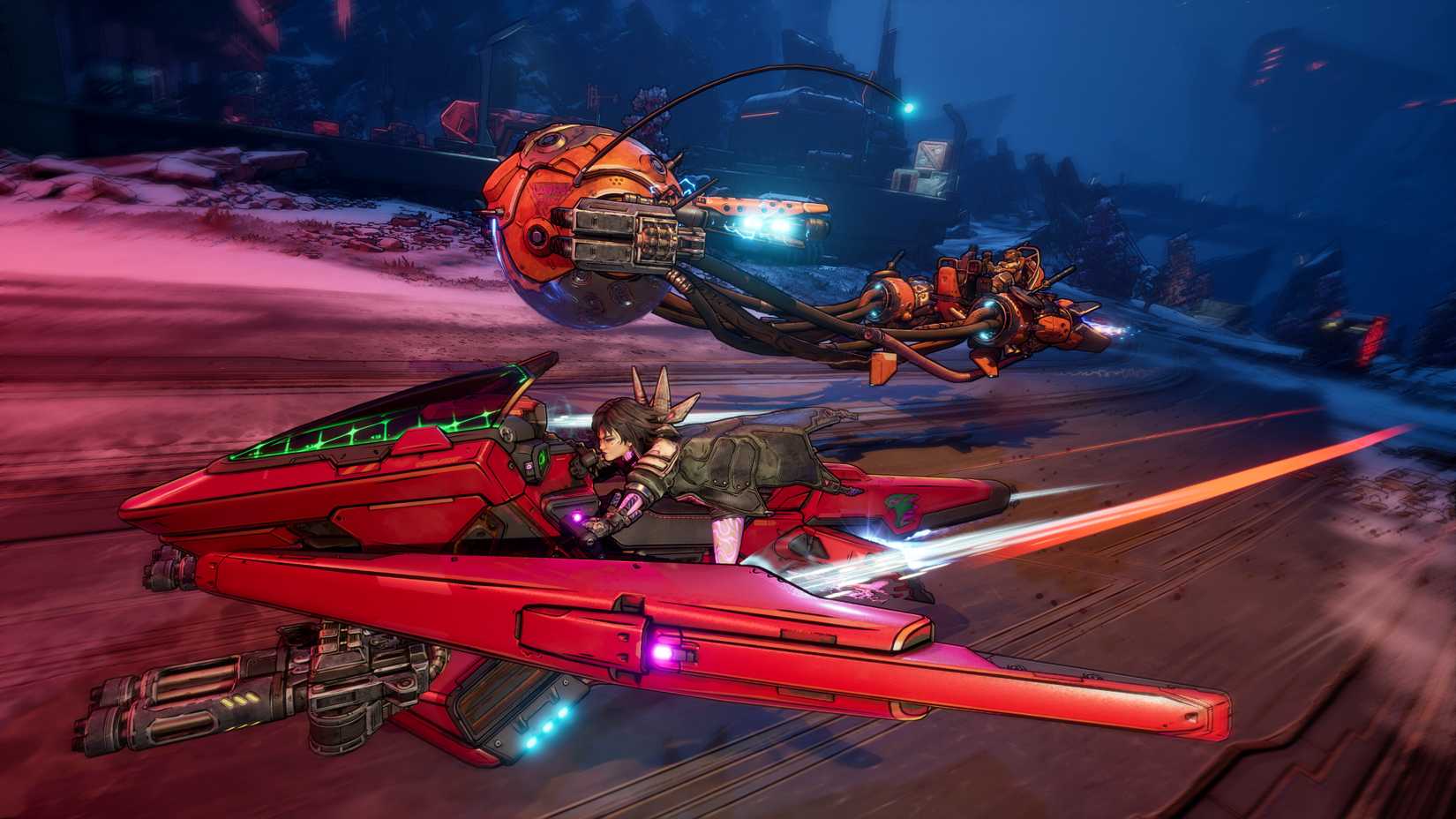
That design choice proves effective in the context where it potentially shines the most. The density of content is optimized for cooperative gameplay, enabling friends to effortlessly transition between skirmishes rather than committing to extended story missions. Rewards are scattered throughout the environment, regardless of whether you’re clearing out a Ripper stronghold in the grasslands, capturing silos in the desert, or simply completing long-term challenges. It also creates a satisfying endgame loop, providing players with abundant rare loot to pursue and challenging bosses to conquer. As with any game of this type, it’s most enjoyable when playing with friends.
Considering Borderlands 4 from this perspective, its penchant for excess becomes a stronger selling point. Similar to a plant flourishing in a larger container, the action RPG systems have expanded to fill the expansive world. The significantly enhanced skill trees enable players to develop distinctive playstyles using a single Vault Hunter. During my time playing as Harlowe, I concentrated on perks that increased my overshield capacity and enhanced my damage output in correlation with it. I ultimately paired this with a modification to my Flux Generator, a disc ball-like ability, reducing the damage I sustained per entangled enemy. As long as I maintained my shields, I was a force to be reckoned with.
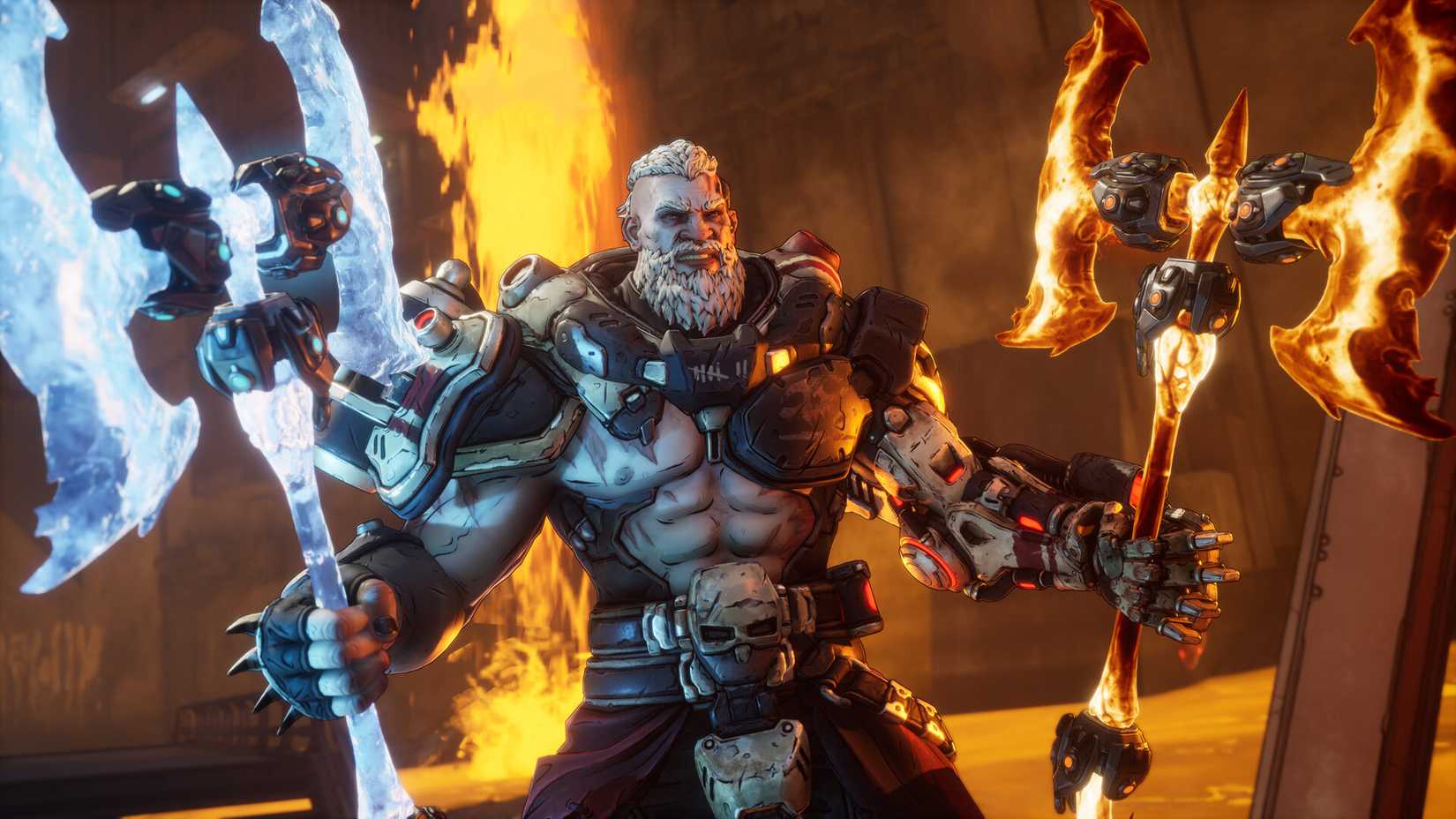
Each Vault Hunter boasts enough uniqueness to be considered a blank canvas primed for customization. Amon stands out as the highlight, capable of hurling fire and ice axes from the get-go. He can then be developed into a tank or a critical-hit machine wielding melee weapons, capable of inflicting burn and weaken effects. These possibilities will undoubtedly spark envy when you join your friends and witness their customizations. During my inaugural cooperative session, I watched in awe as my colleague’s Vex circled the enemy mobs while deploying a squadron of clones. Witnessing this ability interact with my eye-catching Flux Generator created a spectacular display.
The act of moving as these characters feels more fulfilling, which is partially attributable to the scope. To enhance the open world’s traversability, Vault Hunters now possess a hover pack (once again, similar to Destiny) and a grappling hook. Both elements enhance the excitement of repetitive shootouts, allowing me to soar through the air and rain down fire on Rippers while retreating to cover, or use my grapple to seize an explosive barrel and launch it at an enemy. The opportunities to execute impressive feats are magnified, no longer restricted to a single clutch ability activation.
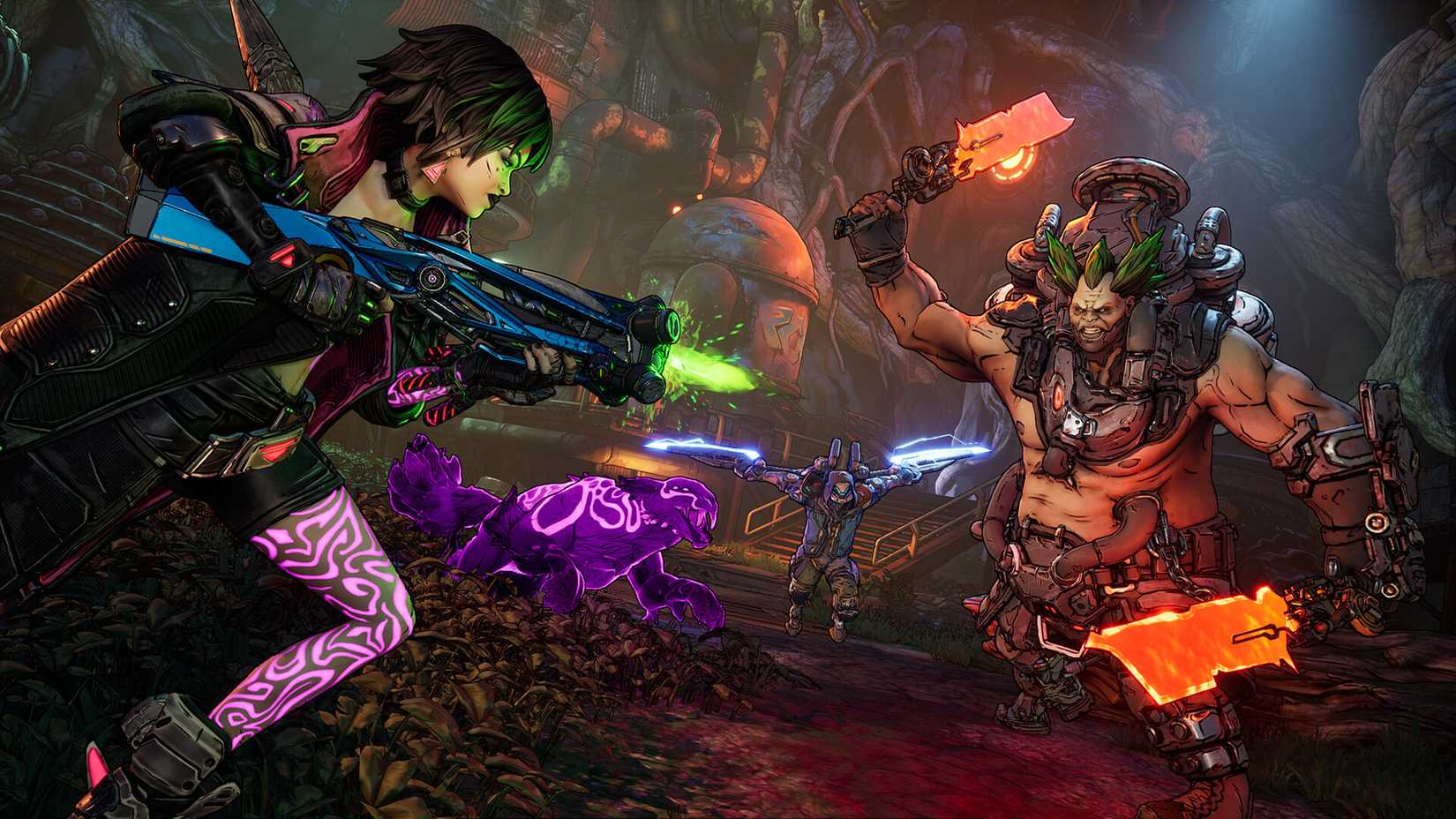
Everything culminates into Borderlands’ most vital ingredient: the endless array of weaponry. The pure joy of the series originates from acquiring a new weapon and discovering its capabilities. No other game matches its arsenal of surprising moments, consistently delivering new content that reinforces the looter shooter mechanics. This aspect is maintained, and even amplified, since there are enough weapons to populate an entire open world. One moment, I was immersed in a revolver capable of emptying its cylinder in a second. The next, I discovered one that fired tagging darts which detonated after a few moments. Whether experimenting with a cryo SMG that functions on cooldown rather than magazine size, or replacing my void grenade with a chain gun that keeps firing as long as I land critical hits, I still feel like a child in a toy store after dozens of hours.
Even when Borderlands 4 becomes tedious – which it often does – that fundamental thrill remains. This is primarily because, despite its lore-heavy storytelling, the series’ most effective communication occurs on a mechanical level. It’s a franchise that plunges you into a wasteland and tasks you with carving out your place among the eccentrics. Everything circles back to this concept, as you develop an identity as much as a playstyle. Borderlands 4 emphasizes this even further by introducing character customization options available through unlockable cosmetics found throughout the environment and via challenge rewards. By the time I breach Dominion’s defenses, I felt like I had found myself, similar to a teen in a coming-of-age film.
Consequently, the main campaign’s repetitive superhero narrative seems particularly weak. Instead of being left to roam canyons, I’m swiftly placed in a position of command. My looting feels more like amassing weapons for a war, rather than figuring out how I’m supposed to defeat tyranny.
It comes as no surprise that the most unforgettable narrative experiences lie within the smaller side quests. In one instance, I aid a sentient rocket plagued by its inability to fly. In another, I inadvertently become a self-help guru for an individual desperately seeking guidance. Numerous smaller stories revolve around anxious oddballs whose struggles have been overshadowed by Kairos’ turmoil.
That’s the true heart of Borderlands 4, even though it’s buried under a sometimes-overwhelming amount of blockbuster spectacle. The world presents a daunting challenge, but building a life for yourself amidst the scrap is always possible. Or, at the very least, cause a little bit of mayhem.
Borderlands 4 is slated for release on September 12th on PlayStation 5, Windows PC, and Xbox Series X. This review was conducted on Windows PC, utilizing a prerelease download code provided by 2K Games. For further details regarding Polygon’s ethical policies, please consult this link.