
While blockchain developers are grappling with scalability issues, one project is distinguishing itself: Caldera (ERA). This platform is emerging as a frontrunner in Rollup-as-a-Service, making it easier than ever to launch Layer-2 chains on Ethereum.
Interested in Caldera and the ERA token? This article provides a comprehensive look at the project’s goals, its main decentralized application (DApp), and a general overview.
What is Caldera?
Caldera is a blockchain initiative focused on simplifying the development and deployment of rollups. Unlike other projects, Caldera champions modular flexibility in development. Each rollup receives its own execution environment, data availability preferences, and a native ERC-20 token for transaction fees. This tailored approach lets projects optimize for cost-effectiveness, speed, and security based on their unique requirements.
Caldera’s core mission is to enable the creation of highly scalable, application-specific networks. The project’s ambition is to scale Ethereum to handle “web-scale” adoption, supporting millions of users. Caldera utilizes zero-knowledge rollup technology to address decentralization, security, and scalability challenges within blockchain, paving the way for smooth DApp development.
Main Benefits of Caldera
- Reduced Transaction Expenses: Layer-2 technology dramatically cuts down on blockchain fees compared to Layer-1 blockchains.
- Enhanced Speeds: Because rollup processing occurs off-chain, block times and confirmations are significantly faster.
- Customized and Optimized Performance: Users can adapt their experience for optimal speed, cost, and other factors.
- Simplified Blockchain Deployment: The platform’s framework significantly simplifies the launching and management of custom blockchains and associated DApps.
- Ecosystem Expansion: Tools are provided to encourage growth and innovation within the NFT, Web3, gaming, and DeFi landscapes.
- Improved Efficiency: Automation reduces the need for intermediaries, resulting in greater efficiency.
Key Features of Caldera
Caldera not only empowers developers to launch high-performance Layer-2 blockchain platforms, but also delivers several other significant advantages. A suite of customizable features has made the project highly popular among Web3 project owners. These include:
- Customizable Rollups: Users have the power to customize aspects of their projects across various areas, including the transaction fee token. Selecting the right fee structure for their application, optimizing block times and limits for optimal throughput and latency, and choosing between various data availability and storage options are all possible.
- EVM Compatibility: Seamless integration with the Ethereum Virtual Machine (EVM) simplifies the process of migrating existing Ethereum DApps.
- Developer-Friendly Resources: SDKs and APIs are provided to streamline the deployment and management of rollups.
- Interoperability: The platform’s interconnected ecosystem promotes interoperability, enabling seamless asset transfers between different rollups.
What is the ERA token?
The ERA token (ERA) functions as the native utility and governance token within the Caldera project. It’s designed to incentivize the community, encompassing developers, users, and the broader crypto sphere. A fixed total of 1 billion ERA tokens were created at launch. The majority of tokens are accessible at the Token Generation Event (TGE). Allocation to investors and the team is subject to a carefully designed multi-year vesting schedule to promote long-term engagement.
The ERA token distribution is divided into these four main categories:
- Retroactive ERA Airdrop: 30% allocated as rewards for developers, early testnet users, and active community members.
- Team & Advisors: 20% allocation, vesting over two to four years.
- Investors and Treasury: 30% allocated to ecosystem funds to promote expansion and foster strategic alliances.
- Ecosystem Incentives: 20% to support liquidity mining programs, governance rewards, and developer bounties.
Caldera (ERA) listed on Binance HODLer Airdrops
Cryptocurrency exchange Binance announced its 27th HODLer airdrop project, the ERA airdrop, allocating 20 million ERA tokens for distribution. According to Binance, ERA trading commenced on July 17 at 15:30 UTC. Initially, spot trading pairs included USDT, BNB, USDC, FDUSD, and TRY pairs.
Find more details about the Caldera (ERA) listing on Binance HODLer Airdrops.
How Caldera (ERA) Works
Caldera introduces a new service model, enabling developers to launch rollups tailored to meet their specific demands without significant engineering investment. The project’s key innovation, the Metalayer, connects various rollups to facilitate resource sharing, communication, and overall ecosystem coordination.
Rollups as the Foundation
This Layer-2 solution aggregates multiple off-chain transactions before finalizing them on the main Ethereum network. This strategy reduces congestion on the main network and provides flexibility for different applications via Zero-knowledge and Optimistic rollups.
Customization and Scalability
Instead of relying on a single, monolithic blockchain, the project enables developers to create optimized, specialized rollups for use cases like DeFi, gaming, or DApps. This customization means that individual rollups can handle specific functions like security or governance for apps. The Metalayer acts as a bridge, integrating customizations to ensure seamless interaction.
Interoperability and Coordination
The Metalayer enables data exchange and communication between different rollups, facilitating effective interaction. This allows users to engage with their rollups as if they were interacting with a unified entity. The Metalayer promotes coordination and resource sharing among rollups, which in turn enhances both scalability and efficiency.
ERA Token
ERA, Caldera’s native cryptocurrency, serves multiple roles within the ecosystem:
- Transaction Fees: ERA is used to pay transaction fees within the Metalayer system for cross-interactions.
- Staking: ERA holders can stake their tokens to help secure the network.
- Governance: Token holders can vote on governance proposals concerning future platform enhancements and treasury management.
What are Rollups?
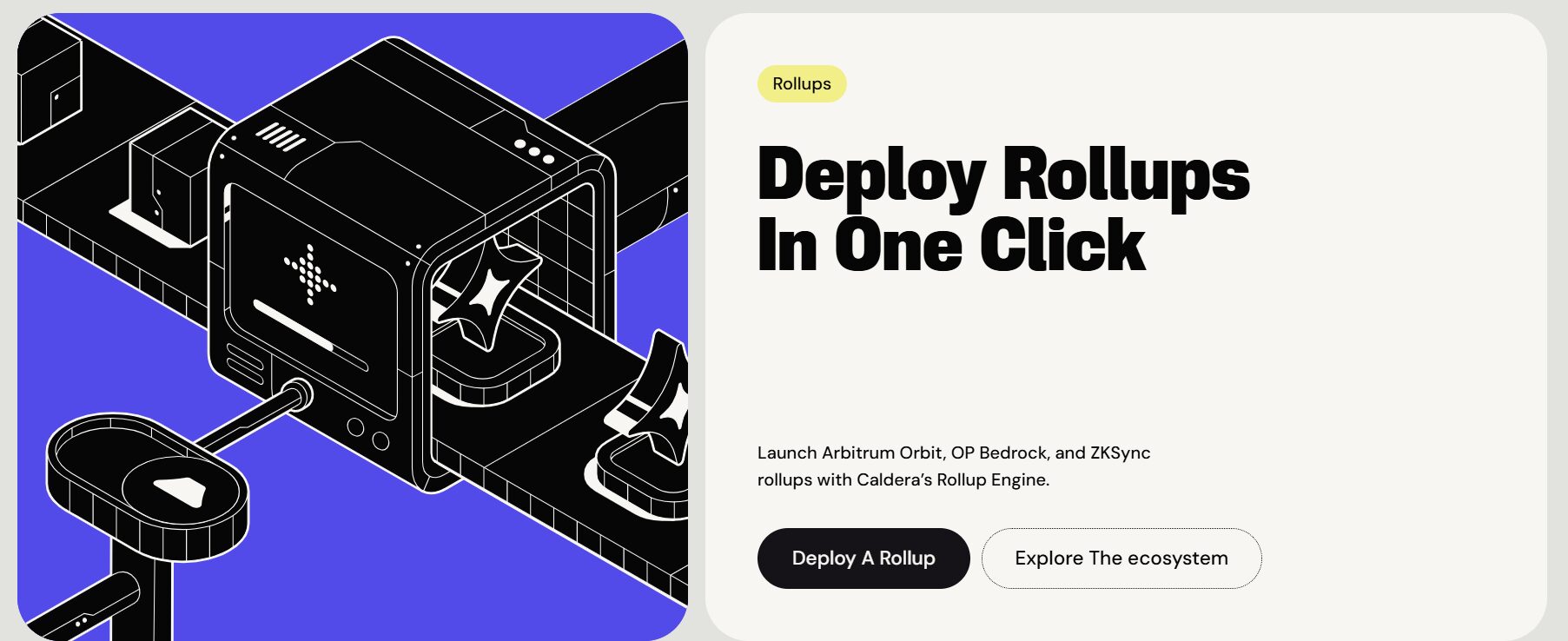
Despite the many benefits, blockchain technology faces a significant scalability challenge. Rollups offer a second-layer scaling solution, processing transactions off-chain before settling them on the primary blockchain. This process speeds up transaction times and significantly lowers costs.
Caldera streamlines this process by providing a platform with a suite of tools and infrastructure for deployment, enabling developers to:
- Easily Create Custom Rollups: The project offers a framework that allows developers to build tailored rollups.
- Access Developer Tools: Caldera provides specialized tools to modernize development through smart contract templates, monitoring dashboards, and security audits.
- Utilize Reliable Infrastructure: The project uses infrastructure specifically designed to support rollup operations, prioritizing security and scalability.
Caldera Metalayer
Metalayer functions as Caldera’s cross-chain interoperability bridge, facilitating interactions within the platform. It serves as a seamless communication feature, removing complexity and simplifying cross-chain experiences for both users and developers.
By offering hassle-free cross-chain interoperability, Metalayer fosters instant liquidity and swift bridging, reducing transfer times from minutes to mere seconds. The platform leverages a settlement layer and intent-based technologies to eliminate complexities and reduce transaction costs. As a result, developers who use the Metalayer ecosystem can reduce upfront and ongoing costs while improving security.
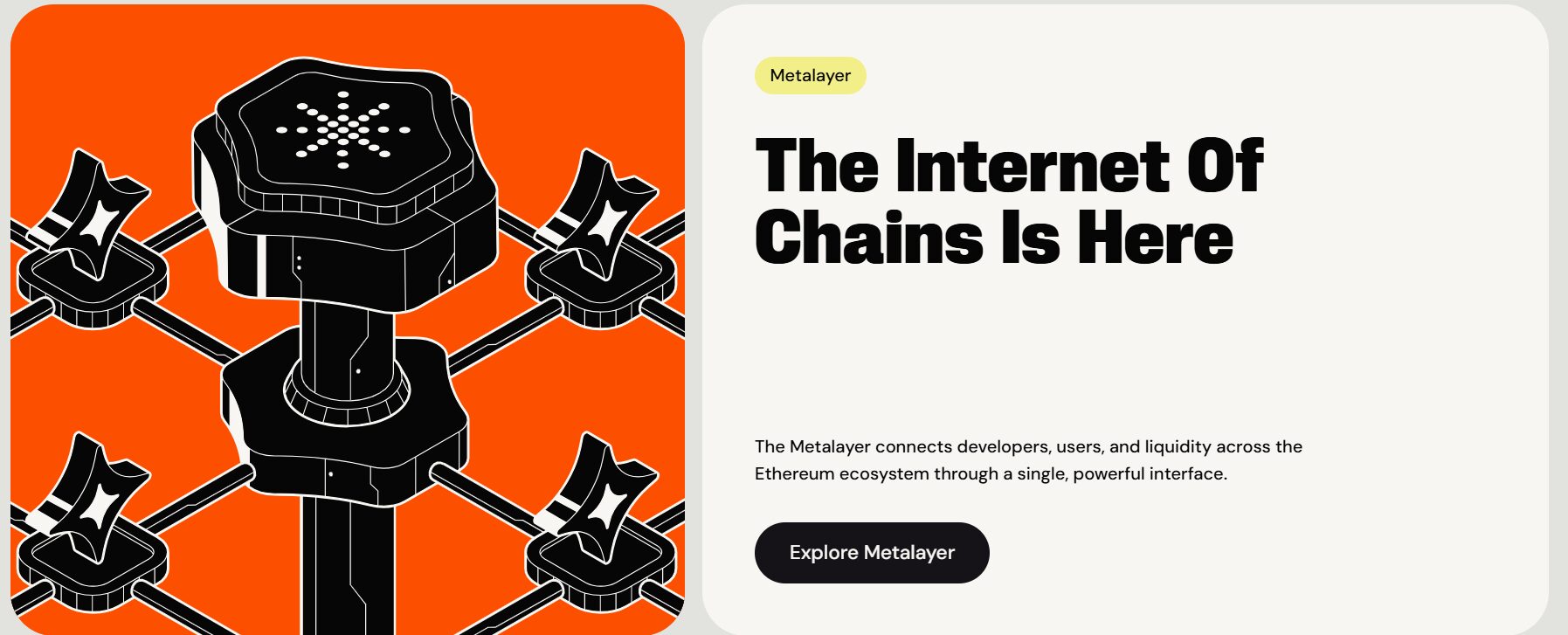
Fragmentation has always been a major issue in the blockchain space, hindering efficient interaction for developers and users alike, making it difficult to move assets across chains, and limiting liquidity. Caldera’s Metalayer provides a solution. This introduces a unified platform integrating different rollups, enabling them to communicate and share resources seamlessly.
The long-term vision includes interconnecting over 10,000 projects through Metalayer, establishing an ecosystem that delivers significant efficiency and scalability. The goal is to evolve the Ethereum ecosystem into a more cohesive, resilient, and user-friendly environment with each new rollup integrated. Developers aim to attract partners and developers to create a future that is seamless, secure, and efficient for decentralized applications (DApps) worldwide.
The Future of Caldera (ERA)
With its rollup engine and ERA token, Caldera is strategically positioned to transform the future of blockchains. By making the creation of customizable, interconnected, and scalable rollups more accessible, the project is set to build a more efficient Web3 ecosystem. The platform’s rollup-as-a-service approach simplifies the development and deployment of decentralized applications (DApps), fostering both user growth and adoption.
Caldera’s long-term vision is a unified, interconnected blockchain where different networks can interact seamlessly, encouraging innovation. The innovative approach to rollup interoperability, combined with a community-driven focus, has the potential to accelerate blockchain adoption. This could be the key to shaping the future of blockchain technology and the ERA token.