
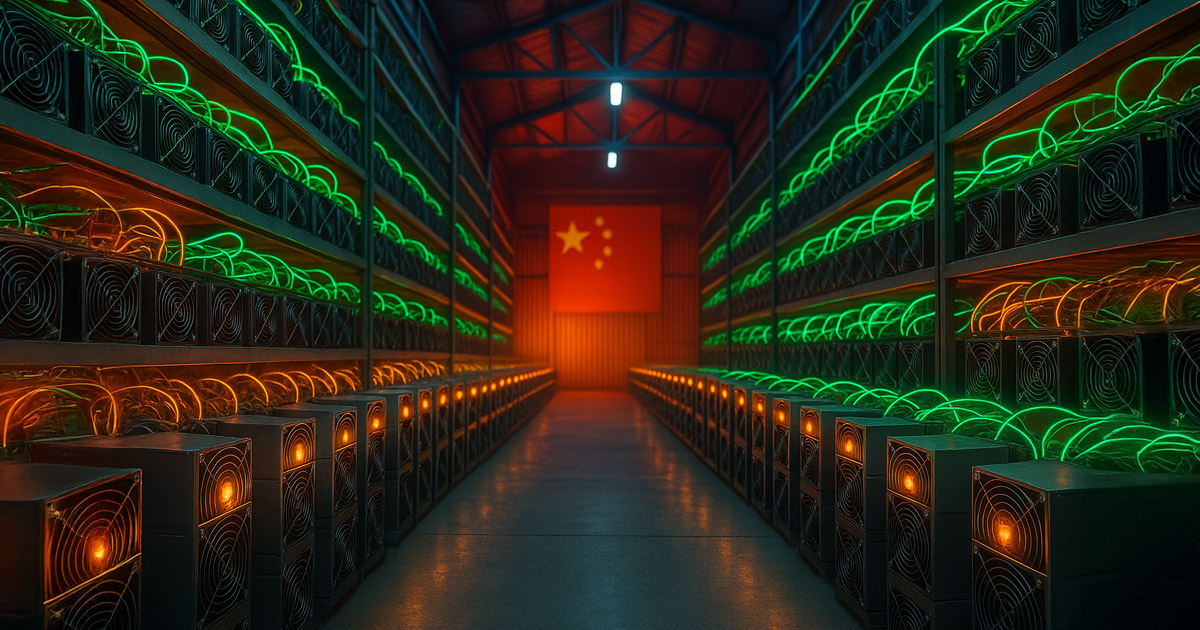

The Chinese Bitcoin mining firm, Cango, has announced a significant increase in its Bitcoin production during the second quarter of 2025. Despite this boost in output, the company experienced a substantial net loss due to increased operating expenses.
According to a company statement released on September 5th, Cango successfully mined 1,404.4 BTC between April and June. This brings their total Bitcoin production since the company’s inception to an impressive 3,879.2 BTC.
Cango reported that the average cost to mine each Bitcoin, excluding depreciation, was $83,091. When factoring in all additional expenses, the total cost per Bitcoin reached $98,636.
This surge in Bitcoin production led to quarterly revenues totaling RMB 1 billion (equivalent to $139.8 million USD). Bitcoin mining activities alone contributed RMB 989.4 million (or $138.1 million USD) to this revenue. The adjusted EBITDA (Earnings Before Interest, Taxes, Depreciation, and Amortization) reached RMB 710.1 million ($99.1 million USD).
However, even with the strong revenue figures, Cango reported a net loss of RMB 2.1 billion (approximately $295.4 million USD) for the quarter. This is a sharp reversal from the same period last year, where the company posted a net profit of RMB 86 million.
During the quarter, the Chinese-based company significantly expanded its mining capacity to 50 EH/s. This was achieved through the acquisition of an additional 18 EH/s. This capacity expansion contributed to a 44% increase in July production, reaching 650.5 BTC compared to the previous month of June.
Commenting on the financial results, Cango’s Chief Executive Officer, Paul Yu, described the quarter as a transformative period for the company’s operations. He highlighted the success of their strategic shift towards an “asset-light” business model. This strategy focuses on acquiring readily usable mining rigs instead of investing in extensive infrastructure, allowing for faster scaling and greater operational flexibility.


The Crypto Investor Blueprint: A 5-Day Course On Bagholding, Insider Front-Runs, and Missing Alpha
Yu acknowledged that while this asset-light approach may lead to higher cash costs per Bitcoin mined, the lower depreciation expenses ultimately offset this difference. This, according to Yu, keeps their overall costs competitive and ensures efficient capital utilization.
US Expansion
Looking to the future, Cango is diversifying its operations beyond China’s borders to mitigate potential energy price fluctuations and strengthen its long-term infrastructure.
In early August, the company acquired a 50-megawatt mining facility located in Georgia, USA. This decision was driven by the availability of cheaper power sources and opportunities for integrating renewable energy solutions.
Cango plans to use this Georgia-based facility as a model for future expansion in other regions. They aim to incorporate renewable energy storage systems and develop a platform that effectively balances Bitcoin mining operations, high-performance computing capabilities, and green-power trading.
Yu stated that this strategic move not only enhances the company’s energy security but also positions Cango to be a competitive player in both the digital asset mining sector and the broader energy markets.