
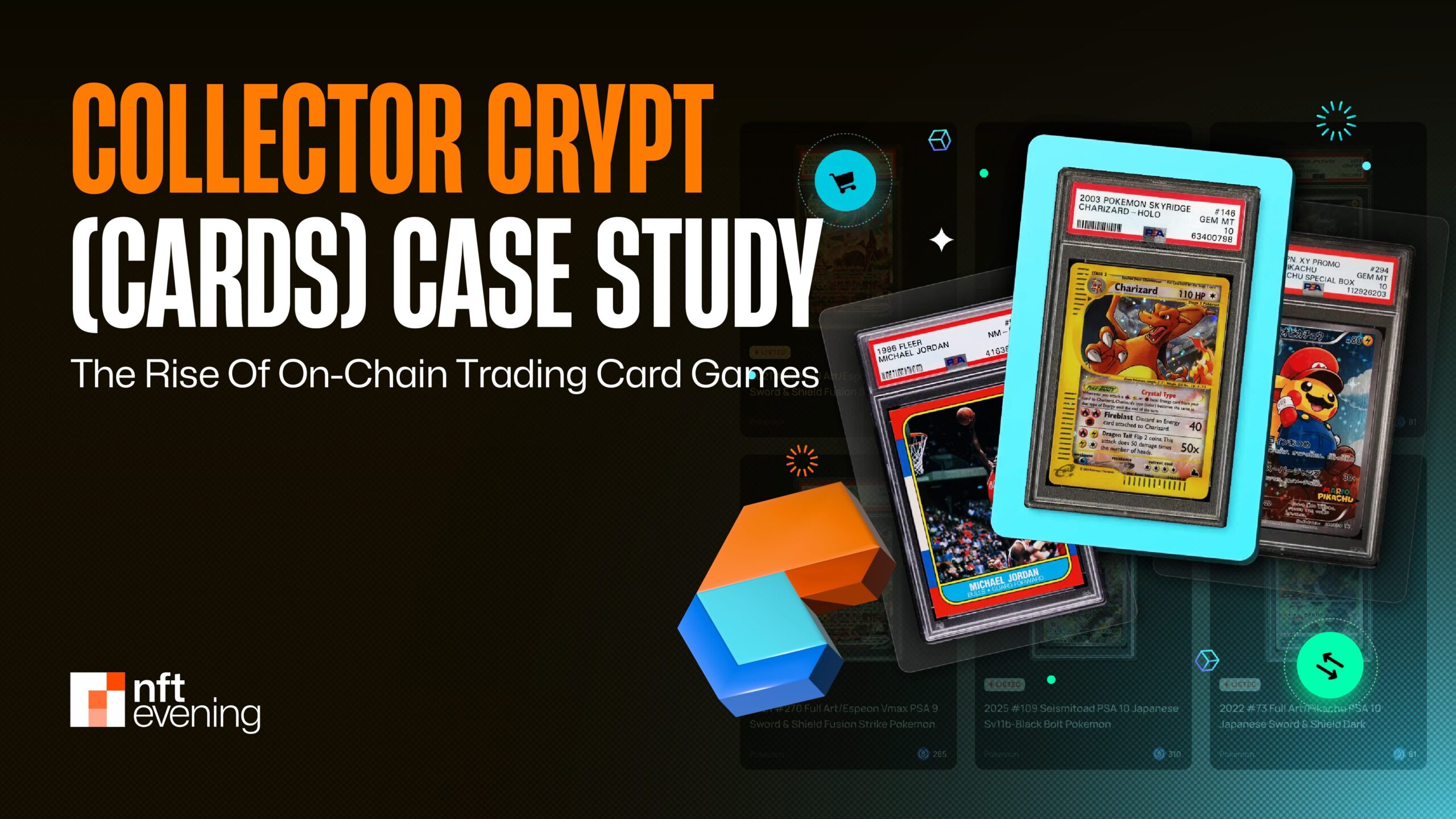
The innovative Collector Crypt platform, powered by its CARDS token, is demonstrating how blockchain technology, game-like “gacha” mechanics, and guaranteed buybacks are revolutionizing the world of Pokémon card collecting and ushering in a new era for digital assets.
Understanding Collector Crypt?
Built on the Solana blockchain, Collector Crypt provides a unique online trading card game experience. Its primary function is to transform professionally graded (PSA/CGC) Pokémon cards into non-fungible tokens (NFTs). These NFTs can later be exchanged for the original, physical card.
The “Gacha” Element Explained
Users engage with the platform through a “Gacha” system, which is essentially a digital version of opening a pack of random cards. This design aims to recapture the excitement and anticipation associated with opening physical card packs. It also introduces a degree of chance and speculation.
How Collector Crypt Functions
Here’s a breakdown of the process: Physical Pokémon cards undergo authentication and are then securely stored in a vault. An NFT is created to represent each individual card. Users then participate in the “Gacha” system, opening a digital “pack” to receive a randomly selected card NFT. They have the option to hold onto the NFT, trade it immediately on the blockchain, or redeem it to receive the actual, physical card.
Learn more: Exploring the Rise of Trading Card Games in the Crypto Space
Image source: Courtyard Pokémon Master Pack
The platform’s appeal and its attractive model stem from its ability to replicate the thrill of opening card packs. Building upon the traditional collecting experience, Collector Crypt introduces instant liquidity and transparent, on-chain trading.
A key differentiating feature of Collector Crypt is its buyback guarantee. For each NFT card minted, the platform commits to buying it back at approximately 85-90% of its real-world market value. Pricing is determined by an oracle that references prices from sources like eBay and ALT. This feature provides users with the assurance that they can quickly liquidate their NFTs without significant losses if they choose not to keep them.
Further Reading: A Comprehensive Guide to NFT Trading Cards in 2025
The Remarkable Growth of the CARDS Token
On August 29, 2025, Collector Crypt launched its native CARDS token following a presale. The token rapidly gained attention due to two major promises:
- A guaranteed buyback floor of 90%.
- A commitment to reinvest platform fees to expand the ecosystem, primarily by acquiring more physical cards for the vault that supports the gacha packs.

Image Source: CARDS
When CARDS became available on decentralized exchanges (DEXs) like Raydium, Meteora, and Poloniex, as well as centralized exchanges (CEXs) such as Binance Alpha and MEXC on September 4, 2025, it attracted a substantial influx of capital. This contributed to a 32% increase in the market capitalization of the on-chain TCG sector in just 24 hours, reaching $87.2 million.
According to CoinGecko, the CARDS token launched with a fully diluted valuation of approximately $67 million. Within a week, this valuation surged to over $600 million, nearly a tenfold increase from its launch value.
Currently, only about 10% of the total CARDS supply is in circulation, leading to potentially significant price fluctuations in the short term.
Revenue from Gacha Mechanics and the Buyback System
During the last two weeks of August and the first week of September 2025 alone, Collector Crypt recorded over $26 million in Pokémon TCG trading volume:
- Over $16 million in the final week of August.
- An additional $10 million in the following week.
Year-to-date, the platform has seen roughly $150 million in total trading volume, with weekly gacha spending averaging approximately $5.7 million over the past month.
The scale of volume occurring on the largest Pokémon x crypto marketplaces is often underestimated.
Courtyard has surpassed $400 million in volume on Pokémon cards alone, and Collector Crypt is nearing $150 million.
One acquaintance invested $15,000 last November and has already seen significant returns… https://t.co/9bbsyUsaH1 pic.twitter.com/X1Nf4eNhZc
— Hunter Solaire ᵍᵐ (@huntersolaire_) September 3, 2025
The “rip-and-trade” functionality (opening packs and instantly selling the cards back) has already generated over $150 million in transactions. Platform fees amount to approximately $666,000 per week, with the majority used to repurchase physical Pokémon cards, maintaining the platform’s liquidity cycle.
Collector Crypt provides enhanced liquidity for collectors and traders through on-chain Real-World Assets (RWAs).
Vaulted cards are tokenized, enabling trading on the Collector Crypt Marketplace, where collectors can open packs with instant buybacks.
With over $70 million in Pokémon pack sales and a record-breaking $5 million…
— Raydium (@RaydiumProtocol) September 2, 2025
The key advantage of this model is speed. Instead of waiting for listings, auctions, and payments (as with platforms like eBay), users can sell cards back instantly. Fees are also generally lower, with eBay charging up to 13.25% on trading cards, while on-chain fees are typically lower and more transparent.
Collector Crypt’s Role in the On-Chain TCG Landscape
The on-chain trading card game sector is becoming increasingly competitive. Here are some notable participants:
- Courtyard (Polygon): A leader in trading volume, reporting $78 million traded in August 2025 and over 3 million NFTs minted. Courtyard offers robust fiat on-ramps and a Web2-friendly user experience. CryptoSlam frequently ranks it among the top NFT platforms by sales. In July 2025, Cointelegraph reported that Courtyard achieved $23.8 million in sales, ranking it third in the NFT market for that month.
- Drip (Ronin): Specializes in livestream commerce, featuring its Jin’s Fortune Spin gacha, which combines live pack openings with instant resale, creating a hybrid of Twitch and eBay for Web3 users.
- Phygitals (Solana): Takes a playful, arcade-style approach, recognized for concepts like the Pokémon 1999 Raticate claw machine and its Pokécoin Market.
- rip.fun (Base): Focuses on real-time pack opening livestreams paired with XP farming to maintain user engagement.
In this competitive environment, Collector Crypt distinguishes itself with its aggressive buyback system and transparent on-chain pricing, making it particularly appealing to collectors who value immediate liquidity after opening packs.
Looking Ahead
The Collector Crypt model highlights three key trends shaping the on-chain TCG market. First, liquidity with guarantees is crucial. Platforms that back their NFTs with transparent buyback floors (such as the 85-90% model) will build trust with Web2 collectors concerned about being unable to sell their cards.
Secondly, maintaining a sense of entertainment is vital for user engagement. Features like livestream openings, mini-games, leaderboards, and “rip-and-resell” options create engaging feedback loops. Courtyard’s consistent volume and Drip’s livestream model illustrate the effectiveness of this approach.
Finally, managing legal and intellectual property risks is essential. Establishing a clear chain of authentication (through PSA grading and reputable market references) is paramount. Media coverage from outlets like Decrypt and Yahoo Finance helps to legitimize the concept of tokenized TCGs, but legal and IP standards need to evolve to keep pace.
If Collector Crypt can maintain its buyback-backed liquidity, offer lower fees than traditional platforms (compared to eBay’s 13.25% fee), sustain high monthly trading volumes, and expand its fiat on-ramps and physical vault reserves, it has the potential to become a significant player in the on-chain TCG market over the next 6-12 months.