
CFTC Aims to Regulate Cryptocurrency Exchanges at the Federal Level
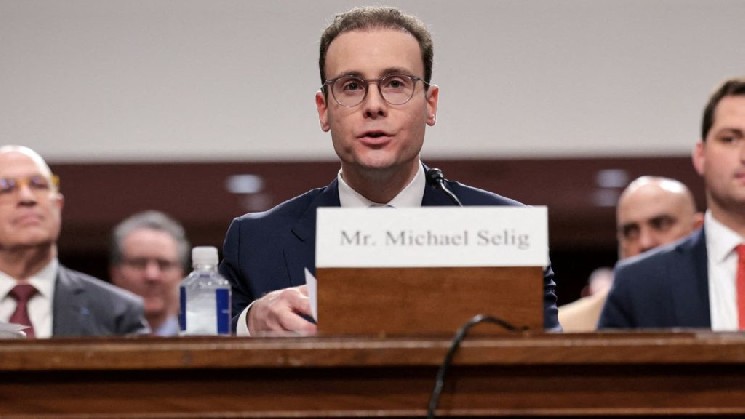
Michael Selig’s remarks are in line with the recent regulatory framework for cryptocurrencies introduced by the CFTC in early October.
Through initiatives named Regulation Crypto Asset Transactions (CTX) and Regulation Crypto Asset Markets (CAM), the commission seeks to establish a federal registration and oversight system for exchanges involved in specific cryptocurrency transactions.
This new framework is tailored for platforms that provide leveraged, margin, or finance-backed cryptocurrency trading for individual investors, enabling these exchanges to function under the supervision of a centralized federal authority.
Selig has voiced his concerns regarding Congress’s inability to enact comprehensive regulations for the cryptocurrency market. He underscored that the CFTC will leverage its current legal authority to take necessary measures.
However, the proposed regulations will not require every cryptocurrency exchange to register with the CFTC. Selig remarked that for a universal federal registration scheme applicable to all exchanges, new legislation from Congress is essential.
Related News URGENT: Major Sell-Off of Two Altcoins Triggered by Binance Hacker
Binance Suffers a Security Breach Resulting in $6.3 Billion Losses
Selig’s comments follow a significant security breach that Binance faced on October 29th.
An official release from Binance on October 30 indicated that the attack’s estimated damages total around $6.3 billion. The exchange noted that, in collaboration with its blockchain partners, roughly $3 billion in assets had been frozen on-chain.
Preliminary investigations by Binance suggest that the attackers may have gained access to the company’s service infrastructure, executing unauthorized withdrawals through a compromised DevOps engineer’s workstation.
According to the exchange, there is no indication that the private keys of the wallets were compromised. Additionally, they assured that any losses incurred by users would be compensated through the SAFU fund and company resources.
Issuers of stablecoins, such as Tether and Circle, also played a role in freezing billions of dollars’ worth of assets associated with the breach.
*This is not investment advice.