
Key Points
- The court’s decision allows Google to continue offering Chrome but places restrictions on exclusive practices and mandates new data-sharing protocols.
- According to the Justice Department, Google leveraged default settings and privileged partnerships to solidify its dominant position in the search engine market.
- Experts suggest that while the remedies aren’t radical, Google’s fundamental advantages remain largely untouched.
In a significant antitrust ruling made public on Tuesday, a U.S. District Judge opted against forcing Google to divest its Chrome web browser. Instead, the judge imposed specific measures designed to lessen the tech giant’s powerful influence over the online search and advertising landscape.
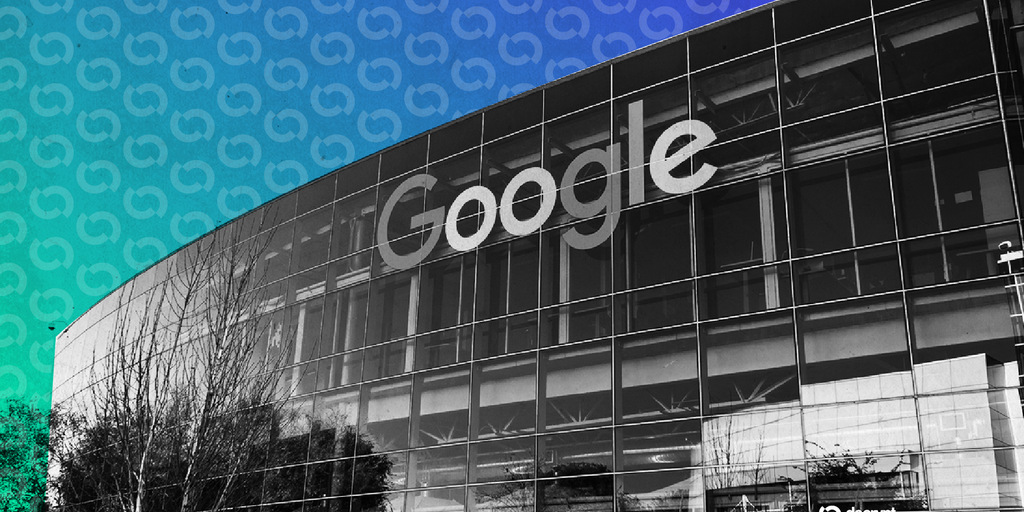
Judge Amit Mehta’s ruling, delivered in Washington D.C., permits Google to retain Chrome, but prevents the company from engaging in exclusive agreements that would benefit its suite of products, including Search, Chrome, Google Assistant, and the Gemini AI application.
The Department of Justice (DOJ) stated that “For many years, Google has facilitated roughly 90 percent of all online searches within the United States. Google has used anti-competitive methods to protect and expand their market dominance in both search functions and search-based advertising.” The DOJ announced its stance in an official press release.
According to the DOJ, Google participated in a series of “agreements designed to exclude competitors,” which effectively controlled how individuals access and navigate the internet. The company allegedly required its search engine to be the pre-selected default option on countless mobile phones and computers.
The Justice Department also stated that the tech giant utilized its powerful position to procure “favorable treatment” for its search capabilities, essentially creating a “self-perpetuating cycle of monopolization”.
Judge Mehta’s order mandates that Google share specific portions of its search indexing and user-engagement data with legitimate competitors. Furthermore, Google must now offer syndication opportunities for both search and text-based advertisements. Detailed order specifics remain unavailable at the time of this report.
Decrypt
has reached out to Google representatives for comments.
Ongoing Implications
The case, initiated in 2020 and involving the majority of U.S. states and territories, resulted in the court determining, in 2024, that Google had unlawfully monopolized search operations which violated the Sherman Antitrust Act. This legislation is intended to prevent any one entity from dominating a market or conspiring to inhibit healthy competition.
This legal judgment coincides with Google’s expanding its influence in blockchain technology by building their own layer-1 blockchain. Google also faces increased competition from companies like Perplexity and OpenAI, which are developing AI-powered browsing tools.
Commentators have suggested that, even with these remedies introducing new responsibilities, Google’s preeminence in the technology sector may render their position almost unassailable.
Ryan Yoon, a Senior Analyst at Tiger Research, stated, “While Google’s Chrome browser retains its distribution advantage and ecosystem integration, data sharing could enable competitors to build better targeting features.” Yoon conveyed his analysis to Decrypt.
Yoon also said that Google’s “core moat” in search and vertical integration “remains intact” to an extent where “meaningful market share shifts seem unlikely”.
Google’s broader focus on crypto and AI suggests it is gearing up for regulated, enterprise-focused infrastructure where “compliance matters more than decentralization,” while betting on “superior data integration” against its AI browser competitors, even if those “could erode their search monopoly,” Yoon said.
‘Milder Corrective Actions’
Andrew Rossow, CEO of AR Media Consulting, expressed that the ruling signifies a “shift that is leaning positively towards market ‘unblocking’ rather than interventionist asset splitting”. Andrew Rossow also relayed his sentiments to Decrypt.
Rossow continued by adding that the case offers “a more realistic litigation and negotiation strategy,” referencing similar anti-trust concerns with corporations such as Meta and Amazon.
He went on to suggest that the law could provide “milder corrective actions” if the major technology platform providers “are reformed through contract and data access regulation.”
In closing, Rossow opined that “Our judiciary must adapt to technology’s unpredictability, rather than attempt to dictate the next market winner.”
Generally Intelligent Newsletter
A weekly AI journey narrated by Gen, a generative AI model.