
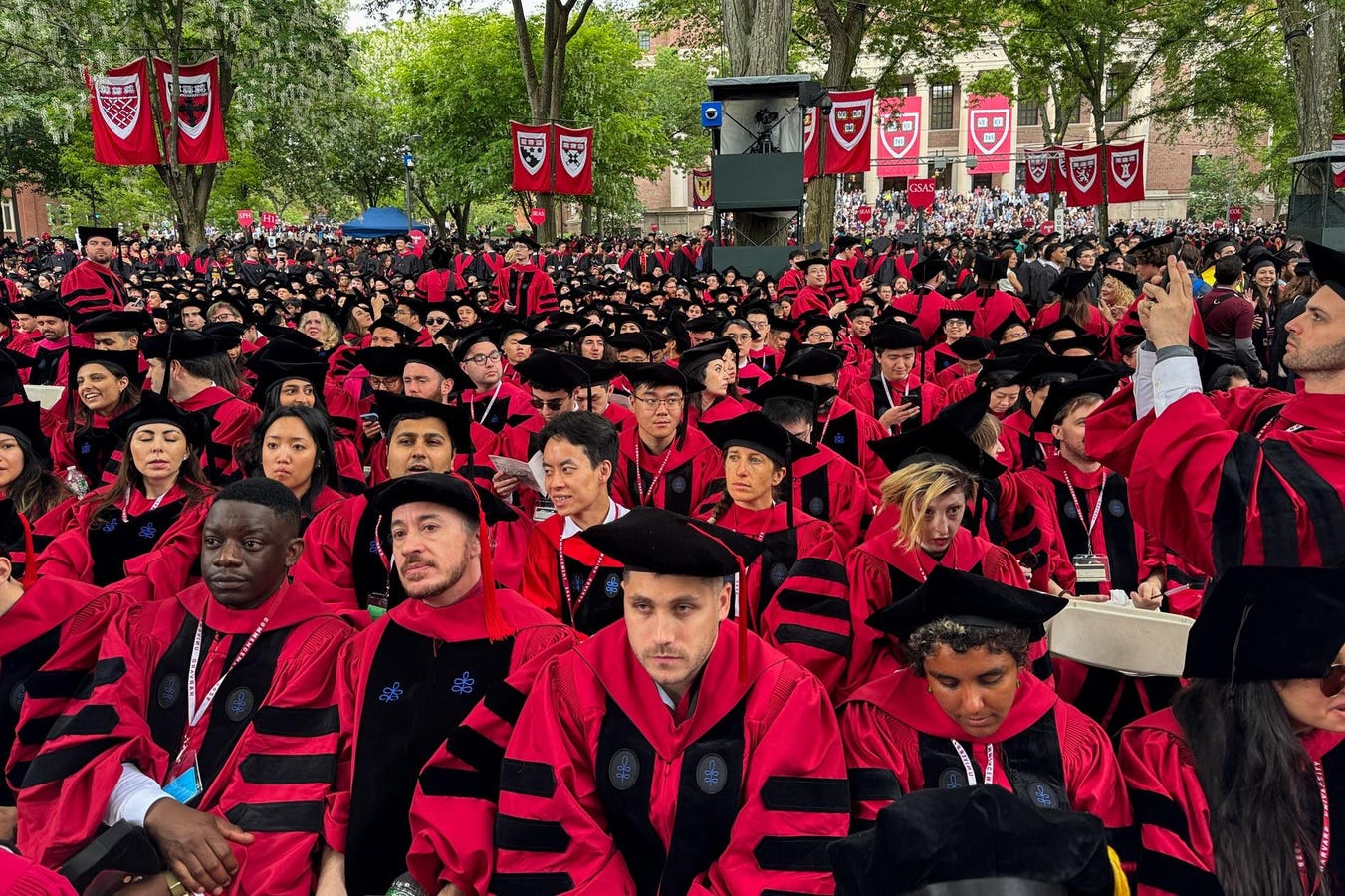
Graduates at the Harvard University commencement ceremony in Cambridge, Massachusetts, May 29, 2025. (Photo by Rick Friedman / AFP) (Photo by RICK FRIEDMAN/AFP via Getty Images)
AFP via Getty Images
Recent reports highlighted Meta’s significant efforts to recruit top AI experts, potentially spending up to $1 billion to attract talent. This move illustrates the intense demand for skilled professionals in the artificial intelligence field. Meta isn’t alone; Amazon is actively seeking AI specialists, advertising three times the number of AI roles compared to Google or Microsoft. These positions can offer substantial compensation packages, with senior roles reaching $263,700 before stock options.
The cryptocurrency sector is experiencing similar competition for talent. While traditional tech hiring slowed in 2024, crypto jobs saw a resurgence, with a 60% increase year-over-year. AI-related postings on LinkedIn also increased by 59%. For recent graduates seeking high-paying, future-oriented careers, these two industries provide excellent opportunities.
However, graduating from a top university alone isn’t enough. Reports indicate that 23% of Harvard Business School MBA graduates are still unemployed three months after graduation. Many entry-level tasks traditionally performed by junior employees are now being automated with Large Language Models (LLMs). Roles like VC Analysts are becoming increasingly automated. This raises the question: what opportunities remain for new graduates?
The Importance of Building Skills
While AI agents are powerful, the demand for skilled engineers remains strong. Both AI and blockchain companies require continuous software development to build new products, experiment with tools, and update systems. Machine learning engineers can earn between $160,000 and $200,000, with about a fifth of job postings offering over $200,000. Blockchain developers typically start around $150,000, and senior roles can reach $250,000, especially for those with specialized expertise.
If you are graduating with a software engineering degree, start building and deploying applications. Participate in hackathons, explore the latest frameworks, and showcase your products directly to potential employers. Every connection you make could lead to future collaborations. Building your network early is crucial.
The open-source nature of the crypto industry makes it accessible. Actively participate in ecosystems and deploy smart contracts and decentralized applications (dApps) to gain practical experience. In AI, develop multi-agent systems using frameworks like A2A or MCP. Practical experience with MCP servers, for example, can differentiate you from other candidates. Focus on creating applications that solve your own problems. This authentic experience is often more valuable than formal qualifications.
The Value of Marketing and Public Relations
While engineers form the backbone of these industries, effective communication is essential. Both AI and crypto companies often struggle to explain their technologies to a broader audience. This creates a need for marketing and PR professionals who can translate complex technical concepts into easily understandable language. This is easier achieved in AI where the product speaks for itself, but vital for crypto companies who are still searching for product-market fit.
Traditionally, marketing roles didn’t require technical expertise. Now, a deep understanding of the technology is expected. Communicators must intimately understand the audience, whether they are crypto natives, cypherpunks, or Wall Street professionals. In AI, marketers need to grasp the nuances of policy, artificial general intelligence (AGI), agents, and alignment. The complexity of this role makes it highly sought after and well-compensated. The position of Head of Marketing in crypto remains one of the most challenging to fill.
The Growth of Non-Technical Roles
Beyond marketing, various non-technical roles are expanding rapidly. Product managers, while often possessing technical skills, primarily focus on creating roadmaps based on user feedback and improving user experience (UX). Policy analysts navigate the evolving landscape of AI regulation and crypto compliance. Ethics specialists ensure AI systems are unbiased and safe. Legal counsel helps companies adhere to new regulations. Event managers coordinate conferences and speaking engagements.
Community roles are particularly important in crypto, where community managers are often among the earliest hires. These roles are ideal for individuals with broad knowledge, strong social media presence, and organizational skills.
Crypto companies depend on their communities for success. This involves moderating online forums, reviewing grant proposals, and managing Decentralized Autonomous Organizations (DAOs). These roles don’t always require a degree but demand strong social skills, sound judgment, and cultural awareness.
Consider becoming an ambassador for a project as a starting point. Many teams reward contributions like content creation, feedback, and lead generation. Gaining internal access makes it easier to transition into business development, content creation, or even technical positions.
The Importance of Public Learning
Both the AI and crypto sectors value individuals who openly share their work and ideas. Whether through GitHub contributions, blog posts, UI designs, or hackathon participation, visibility is crucial.
Companies often hire individuals they’ve observed online for months. A thoughtful post on X (formerly Twitter) can be more impactful than a perfect resume. Formal qualifications sometimes lag behind real-world developments. A graduate actively engaged in the space is more valuable than someone with an advanced degree but limited practical experience.
Organizing local meetups is an excellent way to gain visibility. Many crypto projects offer funding for these events. Attending events in person is always preferable to online interactions. These gatherings provide opportunities to meet potential colleagues, partners, and even co-founders. If you lack a strong network, explore platforms like Crypto Nomads and Luma to find relevant events in your area.
There’s no reason not to be active. You can participate in hackathons, become an ambassador, and engage in online discussions today.
Beyond Traditional Job Boards
Many of the best opportunities in crypto and AI are never advertised on conventional job boards. Hiring relies heavily on networking, and decision-makers are often more accessible than in other industries. The prevalence of remote work makes it difficult to stand out with just a resume.
Instead of solely submitting applications, engage as a peer. Share thoughtful comments on projects that interest you. Founders, engineers, and recruiters are active on platforms like X, Discord, Telegram, and GitHub. The most successful graduates treat themselves as community members first and job seekers second. Contribute something valuable and build relationships.
In short, AI and blockchain are generating some of the most lucrative and dynamic career prospects for new graduates. These fields offer immediate financial benefits and long-term job security. The key is to get involved, share your learning journey publicly, and build connections in these still relatively small and accessible spaces.
These tips should help you secure an interview. Once you reach that stage, come prepared. Many candidates fail to adequately prepare for interviews, wasting everyone’s time. Companies won’t be able to fully educate you during the interview process. Demonstrating your passion for the project is your responsibility and a crucial opportunity.
Action Items
- Choose either AI or crypto and publish something this week (GitHub code, Mirror article, or demo video).
- Join a Discord/Telegram community and answer three questions daily for a week.
- Send feedback to two founders on their product – do not ask for a job.