
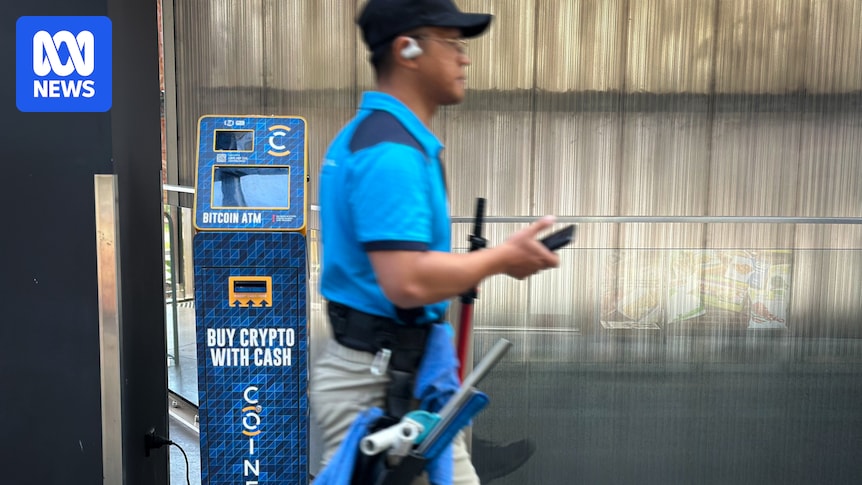
Each year, Australians are losing a significant amount of money, totaling millions of dollars, to fraudulent schemes facilitated through cryptocurrency ATMs. Shockingly, elderly individuals are disproportionately affected, becoming the primary targets of illicit activities linked to these machines.
In response to the escalating problem, AUSTRAC, the nation’s financial intelligence agency, has taken decisive action. They are implementing extensive regulatory controls across the cryptocurrency ATM industry to combat scams, money laundering, and other unlawful practices that have been identified.
Furthermore, the regulatory body has made the decision to deny the renewal of registration for a specific crypto ATM (CATM) operator, signaling a firm stance against non-compliance.
Throughout Australia, cryptocurrency ATMs can be found in various locations, including service stations, convenience stores, supermarkets, and takeaway restaurants, providing easy access for users.
These ATMs enable individuals to exchange physical cash for digital currencies like Bitcoin, which is then transferred to their digital wallets. Some machines also offer the reverse functionality, allowing users to convert their cryptocurrency back into cash.
As traditional banks face increasing pressure to combat scams and money laundering, authorities are cautioning that criminals are exploiting crypto ATMs as a means to circumvent these controls.
Cryptocurrency ATMs: A Hub for Scams and Illegal Transactions
Following a comprehensive three-month investigation involving data analysis from nine different crypto ATM operators, AUSTRAC has officially verified that these machines are indeed being utilized for transactions connected to scams and fraudulent activities.
Reports suggest that the regulatory body successfully traced specific transactions back to scam hotspots situated in regions of Asia and Europe, and also identified connections to organized criminal syndicates.
In an effort to mitigate the financial repercussions of scams, crypto ATM operators will now be subject to a $5,000 limit on both cash deposits and withdrawals.
Moreover, AUSTRAC will enforce stringent “know your customer” protocols, mandate the display of scam warnings, and impose stricter obligations on operators to monitor transactions vigilantly.
These enhanced controls are being introduced concurrently with the release of new data from the Australian Federal Police (AFP), which reveals that Australians are suffering losses of millions of dollars annually due to scams involving cryptocurrency ATMs.
AUSTRAC Chief Executive Brendan Thomas stated, “These measures are specifically designed to safeguard individuals from becoming victims of scams by deterring criminals from directing them towards crypto ATMs. They also aim to protect businesses from being exploited for illegal purposes.”
Brendan Thomas leads AUSTRAC as its chief executive. (ABC News: Daniel Irvine )
“Given the substantial risks and detrimental effects associated with this issue, we firmly believe it is absolutely essential to ensure the cryptocurrency ATM sector adheres to fundamental standards and actively works to diminish the criminal abuse of these machines,” he explained.
“We will remain vigilant in monitoring the effectiveness of these new conditions and will make any necessary adjustments as we proceed.”
As part of this regulatory crackdown, AUSTRAC has made the decision to deny the renewal of registration for Harro’s Empires, a relatively small crypto ATM operator based in South Australia.
Following the agency’s findings regarding persistent risks of criminal exploitation, the company was mandated to cease operations of its four machines.
Mr. Thomas emphasized, “This action establishes a clear boundary and serves as an explicit warning to all digital currency exchange providers who are not fulfilling their obligations under the Anti-Money Laundering and Counter-Terrorism Financing Act.”
Individual Loses $1.4 Million in Devastating Scam
Reports submitted to the Australian Cyber Security Centre reveal that Australians collectively lost a staggering $3 million to scams involving cryptocurrency ATMs in the twelve months leading up to January.
Out of the 150 incidents that were reported, investment scams were the most prevalent (63), followed by extortion emails (35) and romance scams (24). A significant majority of the victims were women aged 51 and over.
However, it is important to acknowledge that the total financial losses are likely to be much higher, as many victims choose not to report these crimes to authorities.
AFP Assistant Commissioner for Cyber Command, Richard Chin, emphasized, “Australia is undoubtedly a prime target due to its high levels of savings and overall wealth.”
“This represents a form of organized cybercrime. These criminals are incredibly well-rehearsed in their scripts and adept at manipulating individuals and exploiting their inherent generosity.”

Richard Chin confirms that at least $3 million was lost in scams involving cash deposits at cryptocurrency ATMs in the year up to January. (ABC News: Daniel Irvine )
Mr. Chin explained that once cash is converted into cryptocurrency and transferred to a digital wallet, recovering those funds becomes virtually impossible.
“I am personally aware of a case involving an elderly man who was caught up in a romance scam, ultimately being persuaded to relinquish $1.4 million,”
he shared.
The scammer instructed the victim to make multiple withdrawals from his bank account and subsequently deposit the money into cryptocurrency ATMs. Unfortunately, the victim’s funds were unrecoverable.
“The money is then routed through a complex web of international money laundering operations, ultimately ending up in the hands of the criminal organizations that orchestrate these scams and operate them on a global scale.”
The Rapid Growth of Australia’s Crypto ATM Market
Australia boasts the third-largest number of crypto ATMs worldwide, surpassed only by the United States and Canada, making it the fastest-growing market in the world.
In 2019, there were only 23 machines operating across the country. Today, that number has surged to over 1,800.
“The sheer pace of this expansion has raised concerns among us,” Mr. Thomas stated.
“We are worried that this rapid growth may be fueled by illicit activities and individuals falling victim to scams.”
“Our concerns extend beyond scam victims; we are also concerned about the potential for drug purchases and other money-laundering activities facilitated through cryptocurrency ATMs.”
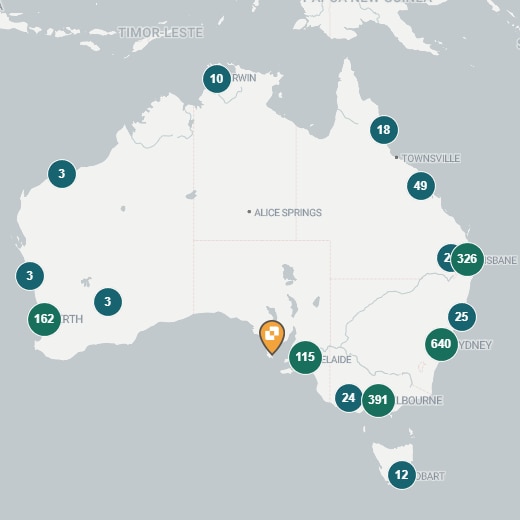
The current count of crypto ATMs in Australia exceeds 1,800. (Source: Coin ATM Radar.)
AUSTRAC estimates that approximately $275 million is processed through these machines each year, spread across around 150,000 transactions.
The vast majority, about 99 percent, involves cash deposits used to purchase cryptocurrencies, with Bitcoin, Tether, and Ethereum being the most frequently acquired.
Based on its analysis, AUSTRAC suspects that as many as one in ten transactions may be linked to illegal activities, including drug trafficking, scams, and organized crime.
“The cryptocurrency industry, as a whole, presents a substantial global risk for money laundering,” Mr. Thomas noted.
“We are witnessing significant sums of money crossing international borders to facilitate drug purchases, and the resulting profits are being siphoned off through scams.”
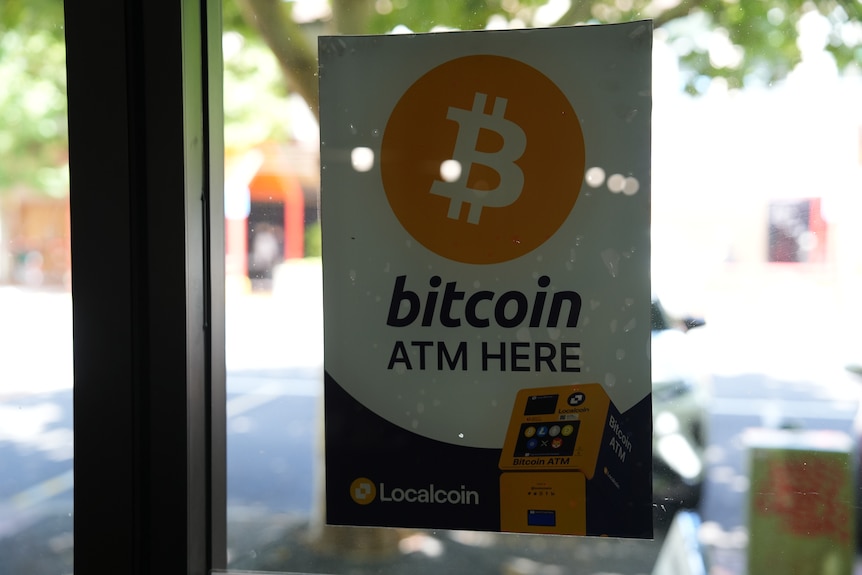
According to Leigh Stark, requests to purchase Bitcoin typically point to a scam in progress. (ABC News: David Sciasci)
Disproportionate Impact on Older Australians
Regulators have expressed significant concern over the age demographics of cryptocurrency ATM users, which closely aligns with the demographic most frequently targeted by international scam operations.
Individuals over the age of 50 account for nearly 72 percent of the total transaction value processed through crypto ATMs.
Specifically, those aged between 60 and 70 comprise 29 percent of the overall transaction value.
These observations are supported by the testimony of a Melbourne gas station employee, who requested anonymity when speaking with the ABC.
The employee stated that he typically witnesses two or three elderly individuals depositing cash into the on-site cryptocurrency ATM each week.
He further noted that, in most cases, these individuals are on the phone, receiving step-by-step guidance from someone on the other end regarding how to use the machine.

Robert was instructed to deposit money into a crypto ATM, falling victim to online scammers. (ABC News: John Gunn)
Most scam victims are initially contacted through online channels. Last year, Robert (a pseudonym used to protect his privacy) unwittingly became a money mule after responding to a work-from-home job advertisement he discovered online.
“They required me to sign a contract and provide personal documents, including my passport, driver’s license, and bank account details,” he recounted.
Initially, he was asked to perform simple online tasks, such as writing product reviews. However, he later received instructions to withdraw funds deposited by his ’employer’ and deposit them into a crypto ATM.
“She told me to take a photo of the ATM once I arrived,” Robert remembered.
“Then she sent back images with instructions on which buttons to press. I had never used one of those machines before, and it took me about half an hour to figure it out.”
He was subsequently directed to open a second account at another bank. Over several weeks, he deposited thousands of dollars into a digital wallet through his local crypto ATM. Eventually, his banks detected the unusual activity.
“They informed me that I might be involved in some kind of fraudulent activity. I was deeply concerned because that’s not the kind of person I am.”
Robert reported the incident to the ACCC’s Scamwatch, where he was advised to cancel all forms of identification and cut off all communication with the scammers.
“I am simply grateful that no further issues have arisen with my identity since then,”
he concluded.
Regulation Struggles to Keep Pace
Crypto ATMs have garnered international attention for less-than-favorable reasons.
In countries such as the United Kingdom and Singapore, they have been effectively prohibited, while other nations impose significant restrictions on their operation.
In the United States, lawmakers are actively considering new legislation to regulate the cryptocurrency industry. Multiple lawsuits have already been filed, one of which involves the state of Iowa suing ATM operators Bitcoin Depot and CoinFlip for $US20 million ($31 million) in damages caused by scam-related losses.
In Australia, AUSTRAC established a dedicated task force last year to investigate the cryptocurrency sector and implemented new compliance requirements designed to prevent misuse.
However, Mr. Thomas admits that current regulations have not kept pace with the industry’s rapid growth.
He has advocated for more comprehensive regulation of the cryptocurrency sector in order to support legitimate operators and safeguard consumers.
“Our task force is dedicated to gaining a thorough understanding of the money-laundering risks associated with cryptocurrency in Australia and is working closely with industry stakeholders to determine the necessary control measures,” he stated.
“More comprehensive regulation of the cryptocurrency industry is essential, enabling its legitimate growth in Australia and ensuring that proper consumer protections are in place.”
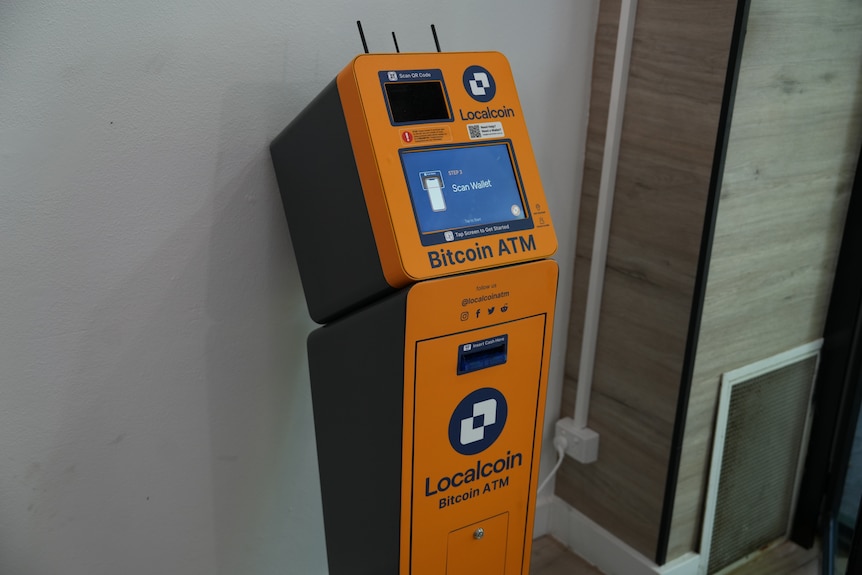
A Bitcoin ATM in Canberra carries the branding of Localcoin. (ABC News: David Sciasci)
Operators Eager to Tap Into Booming Market
In Australia’s rapidly expanding crypto ATM market, global players such as CoinFlip, Localcoin, ByteFederal, and Bitcoin Depot are competing for market share against local businesses.
Operators typically charge transaction fees of up to 20 percent, in addition to other miscellaneous charges.
The Digital Economy Council of Australia (DECA), the industry’s leading trade association, acknowledges that some ATMs are being exploited for scams and money laundering activities.
However, DECA Chairman Paul Derham contends that most customers are legitimate traders who are simply seeking to access digital assets in light of current banking limitations.
“One of the key challenges facing Australians is the difficulty in purchasing crypto assets, as their banks often restrict such transactions,” Mr. Derham explained.
“This leads them to withdraw cash and use a crypto ATM instead,” added Mr. Derham, who is also a lawyer representing several global ATM operators.
Mr. Derham also indicated that while there may be differing opinions, the industry generally does not support the implementation of $5,000 transaction limits, noting that these restrictions would increase compliance costs for businesses.
Additionally, Mr. Derham suggested that customers may circumvent the new conditions by utilizing multiple CATMs.
“The industry would prefer to manage these thresholds independently, employing their own risk-based approach, which they are already legally required to implement,” he asserted.
“For instance, if an individual is considered to be low-risk and has an established history with a CATM provider, they should be granted a higher transaction threshold.”
When asked if the cryptocurrency ATM business model would remain sustainable if these machines could no longer be used for scams and money laundering, Mr. Derham responded, “No one has yet discovered the magic formula to completely eliminate scams. Even Australia’s largest banks have not been able to eradicate the risk entirely.”
“The reality is that certain scams are orchestrated by highly organized international networks, including state-sponsored actors, who are actively targeting vulnerable individuals.”