
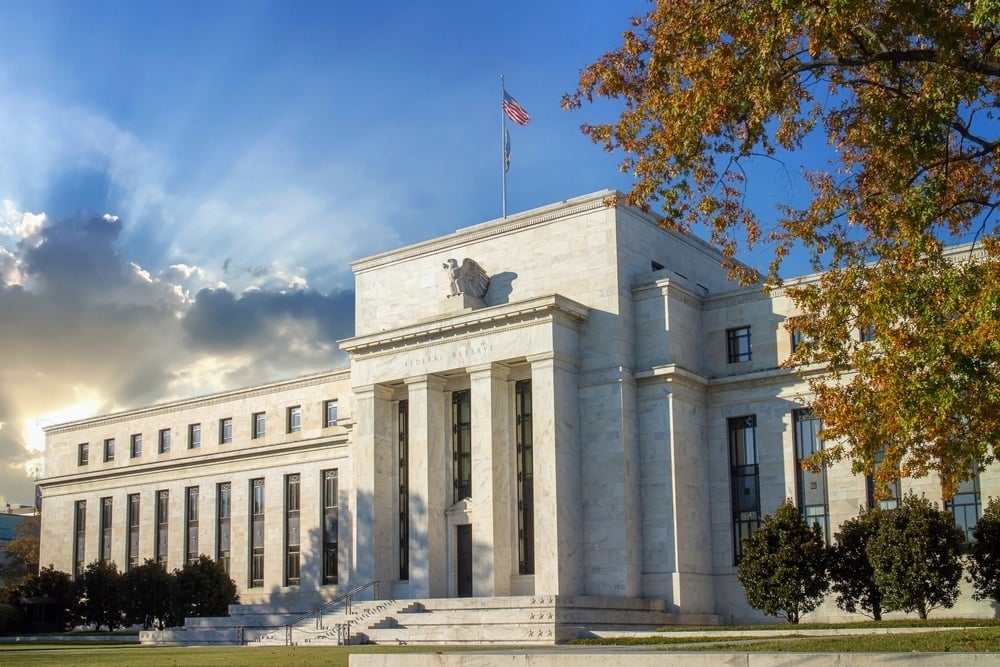
In recent weeks, U.S. authorities have sharpened their focus on the difficulties faced by cryptocurrency companies in securing banking services, hinting at a move away from the widespread “de-risking” that has affected the industry.
On January 23rd, President Trump issued an Executive Order titled “Strengthening American Leadership in Digital Financial Technology.” This order outlines an ambitious plan aimed at positioning the U.S. as a frontrunner in the cryptoasset sector. The EO, which has been widely praised by crypto industry players, emphasizes the need for fair access to banking for digital asset businesses, highlighting that the Trump administration intends to protect and facilitate such access to foster crypto-related innovation within the U.S.
This declaration addresses a persistent issue for cryptoasset companies in the U.S.: obtaining bank accounts. While exceptions exist, most U.S. banks have been cautious about offering services to crypto businesses, fearing increased regulatory scrutiny. They often perceive the expenses associated with managing the risks of banking crypto firms as outweighing the potential benefits.
Consequently, “de-banking” has become common practice in the U.S. crypto sector. Under the previous Biden administration, regulators typically adopted a risk-averse stance, dissuading banks from engaging with crypto businesses due to financial stability concerns. Some within the crypto industry have even alleged that the Biden administration, through a strategy informally known as “Operation Chokepoint,” aimed to hinder the industry by restricting its access to banking. This lack of banking options contributes to the perception among crypto stakeholders that the U.S. has, to date, lacked a welcoming environment for innovation.
The Trump administration’s executive order on digital assets seeks to reverse this trend, aiming to create an environment where crypto companies enjoy easier access to banking services. This perspective is increasingly shared by other policymakers across the U.S. government.
As previously reported, the acting head of the Federal Deposit Insurance Corporation (FDIC) suggested in early January that regulators should adopt a more open approach to banks’ involvement with crypto and avoid actions promoting de-banking. Federal Reserve Chair Jerome Powell stated on January 29th that U.S. banks should be allowed to serve crypto businesses if they can demonstrate effective risk management capabilities.
This increasingly permissive attitude towards banks serving crypto companies is gaining traction in the U.S. Congress, where new leadership in influential committees is working to create a more accommodating banking environment for the industry.
Reports from January 24th indicate that the House Committee on Oversight and Government Reform, having previously released a report on Operation Chokepoint, has sent letters to U.S. crypto companies and industry organizations, seeking information on their experiences with debanking. This aligns with Representative French Hill, the new Chair of the House Financial Services Committee, who has declared that addressing crypto-related banking challenges will be a key priority this year.
In reality, enabling crypto businesses to access banking services will take time, as banks require clearer regulatory guidance on ensuring reliable banking for crypto firms. The crypto industry must also actively foster trust with the banking sector. However, the growing recognition among Washington officials that resolving crypto-related debanking is crucial for enhancing U.S. competitiveness and innovation suggests that tangible progress is genuinely possible.
To delve deeper into the potential impact of recent U.S. policy and regulatory shifts on the relationship between digital assets and banking, explore further details here.
Hong Kong Advances Stablecoin Legislation, Introduces New Sandbox
Over the past few weeks, regulators and policymakers in Hong Kong have advanced significant cryptoasset-related initiatives, solidifying its burgeoning reputation as a vital hub for innovation.
On January 21st, the Bills Committee of the Hong Kong Legislative Council discussed the Stablecoins Bill, legislation designed to establish a comprehensive regulatory framework for stablecoins. Introduced in mid-December, the Stablecoins Bill is anticipated to pass early this year, empowering the Hong Kong Monetary Authority (HKMA) to regulate the issuance of Hong Kong dollar-backed stablecoins, along with other stablecoins marketed and offered to Hong Kong residents.
The HKMA already manages a stablecoin regulatory sandbox, launched last year, which includes local firms including institutions like Standard Chartered Bank. The HKMA utilizes this sandbox to enhance its understanding of stablecoins and inform its future regulatory framework. The consistent progress of the Stablecoins Bill indicates that policymakers and regulators are on track to establish the framework on schedule this year.
Earlier in January, the HKMA announced the launch of a Supervisory Incubator focused on monitoring banks’ utilization of distributed ledger technology (DLT). The HKMA states that this incubator will enable banks in Hong Kong to maximize the potential of blockchain-based products and services by offering a centralized point for supervisory engagement, where the HKMA can provide direct feedback on the adequacy of their risk management controls related to blockchain-based innovations.
The HKMA is relying heavily on a regulatory sandbox model for oversight as it prepares to oversee cryptoasset-related activities. Alongside the Stablecoin Sandbox and Supervisory Incubator, the HKMA also operates Project Ensemble, allowing firms, including financial institutions like HSBC, to get regulatory feedback on asset tokenization projects.
To explore Hong Kong’s ambition to become a leading hub for cryptoasset and blockchain innovation, access our webinar on the topic here.
U.S. DOJ Secures Guilty Plea in Crypto Market Manipulation Case
U.S. prosecutors have obtained a guilty plea in a case related to the manipulation of prices within crypto markets.
On January 21st, the U.S. Department of Justice (DOJ) announced that CLS Global FZC LLC, a cryptoasset market maker, agreed to resolve charges of manipulating crypto trading volumes to defraud market participants.
According to the DOJ, while registered in the United Arab Emirates (UAE), CLS Global provides market-making services to users within the United States. CLS Global has confessed to engaging in “wash trading” on behalf of NexFundAI, a crypto firm offering an Ethereum-based token, as outlined in a federal grand jury indictment.
Wash trading involves an individual or entity purchasing an asset from itself to artificially inflate market demand, causing unsuspecting users to experience losses when the asset subsequently depreciates. The DOJ alleges that CLS Global traders engaged in selling and buying NexFundAI tokens to themselves via the Uniswap decentralized exchange to create the impression of substantial trading volumes and artificially inflate the token’s value.
As a consequence of admitting to fraud and market manipulation, CLS Global has committed to ceasing services to the U.S. and must provide annual certifications to the DOJ affirming its adherence to this prohibition.
In recent years, the DOJ has increased its focus on identifying and prosecuting cryptoasset market manipulation to enhance market integrity.
Jordan Approves a Crypto Regulatory Framework Plan
The Jordanian government has set the country on course for developing a regulatory framework for cryptoassets.
A January 26th report in *The Jordan Times* stated that the cabinet of Prime Minister Jaafar Hassan approved a plan for developing a digital assets regulatory framework. The plan instructs the Jordan Securities Commission (JSC), the securities market regulator, to create a licensing and supervision regime for virtual asset service providers (VASPs) that aligns with anti-money laundering and counter-terrorism financing (AML/CFT) standards set by the Financial Action Task Force (FATF).
This announcement follows a year-long process involving a ministerial committee, including the JSC, the Central Bank of Jordan, law enforcement agencies, and other entities, which studied the digital asset landscape and recommended actions for aligning Jordan’s legal and regulatory framework with emerging international standards.
Jordan’s crypto regulatory framework initiative aligns with other countries in the Middle East, such as the UAE and Turkey, which are actively developing regulatory regimes to attract cryptoasset innovation.
El Salvador to Adjust Bitcoin Adoption Plans Following IMF Recommendations
The El Salvador government has passed a bill to modify the country’s Bitcoin adoption strategy to meet conditions set by the International Monetary Fund (IMF).
Reports from January 30th indicate that the Legislative Assembly of El Salvador overwhelmingly approved a bill, in coordination with President Nayib Bukele, modifying regulations on the private sector’s use of Bitcoin. In 2021, El Salvador made headlines as the first nation to recognize Bitcoin as legal tender, implementing regulations requiring domestic businesses to accept Bitcoin if requested by customers.
The new bill removes this requirement, allowing Salvadorian businesses to voluntarily choose whether to accept Bitcoin.
This legislative change enables El Salvador to comply with the terms of a $1.4 billion loan from the IMF, which had insisted on adjustments to Bitcoin adoption plans. The IMF has repeatedly expressed concerns about the potential impact of rapid and widespread Bitcoin adoption on the stability of El Salvador’s financial system and economy.
India to Revisit Cryptoasset Policy Amid Global Sentiment Shifts
The Indian government has signaled a willingness to reconsider its stance on cryptoassets amid evolving global attitudes towards the technology.
A February 2nd report from Reuters quotes India’s Economic Affairs Secretary, Ajay Seth, stating that India is aware of changing attitudes towards cryptoassets in other countries, particularly in the United States following the election of President Donald Trump, suggesting that India may need to reconsider its existing policy stance given global crypto market developments.
For several years, India has adopted a skeptical view of crypto, at times considering a ban and taking steps to discourage crypto businesses from operating within the country. Unlike neighboring Middle Eastern and Asia-Pacific regions, India has not advanced significant cryptoasset regulatory framework initiatives. Since mid-2024, the Indian government has been developing a policy paper outlining its views on cryptoasset adoption and regulation, but publication has stalled in recent months.
Seth’s statement suggests that the Indian government is prepared to revisit the paper’s content and consider a more open stance toward the technology. While this is not guaranteed, the fact that the government is observing global trends and open to a range of potential outcomes is significant.