
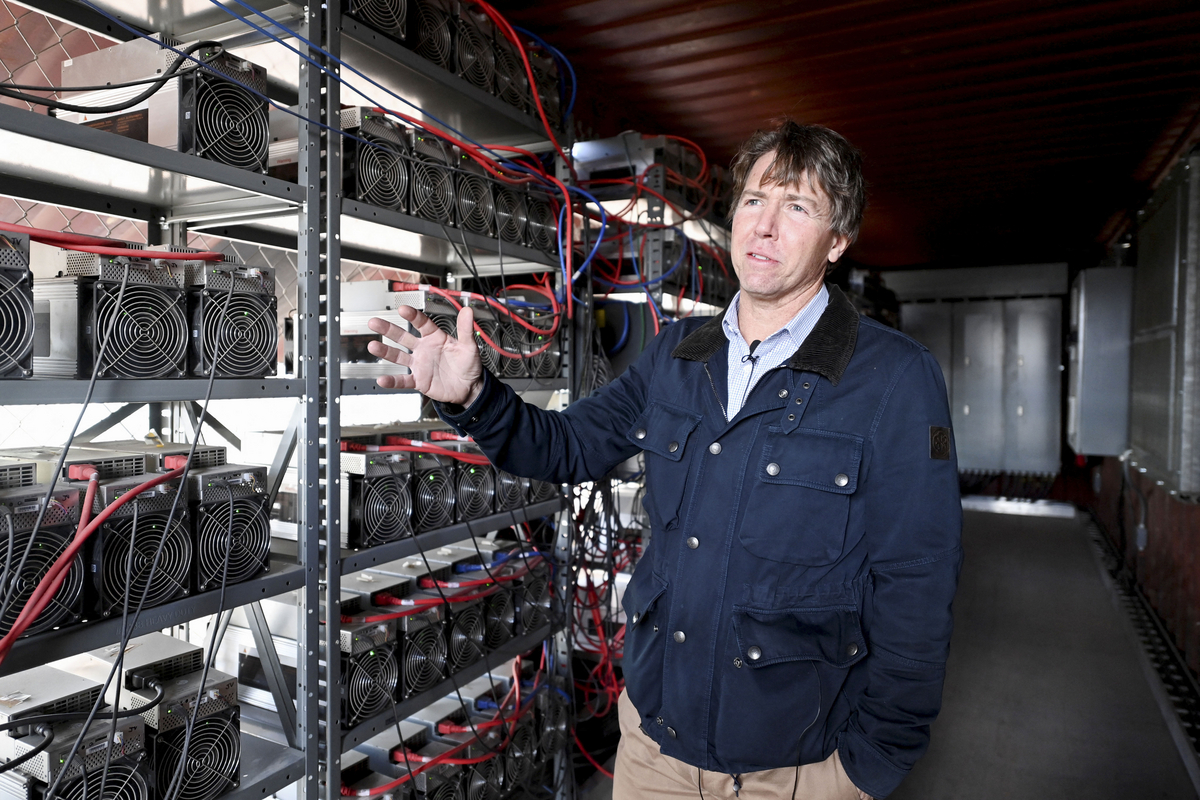
A former executive at a bitcoin mining firm, known for a history of regulatory non-compliance and strained relationships with local residents, now holds a high-level position within the Department of Energy.
Greg Beard, an experienced energy investment professional who previously headed Stronghold Digital Mining until March of this year, has recently been appointed to a key political role in the DOE’s Loan Programs Office.
Beard is part of a new wave of appointees under the current administration focused on shaking up established practices in Washington, D.C., and sources indicate that he is already actively reshaping the department’s operations.
This month, Beard participated in discussions with Bank of America concerning the potential valuation of billions of dollars in DOE loans, a move that some within the department suggest could lead to the sale of these assets and a reduction in the office’s size. He is also reportedly being considered internally to succeed Lane Genatowski, a long-time DOE employee, as the acting Director of the LPO.
Prior to his government role, Beard led Stronghold, a company that powered its bitcoin mining operations in Pennsylvania by burning tires and utilizing waste coal, a lower-quality coal byproduct left over from historical mining activities. Stronghold was acquired by the cryptocurrency firm Bitfarms earlier in the year.
During his time at Stronghold, Beard actively engaged in public relations efforts, highlighting the purported environmental advantages of the company’s operations in interviews with cryptocurrency media.
“We are addressing a pre-existing waste coal issue,” he stated in a 2023 podcast interview. “We genuinely consider ourselves environmental stewards.”
Local environmental advocates strongly disagree with this assessment, arguing that Stronghold’s activities exacerbated existing environmental problems in the area.
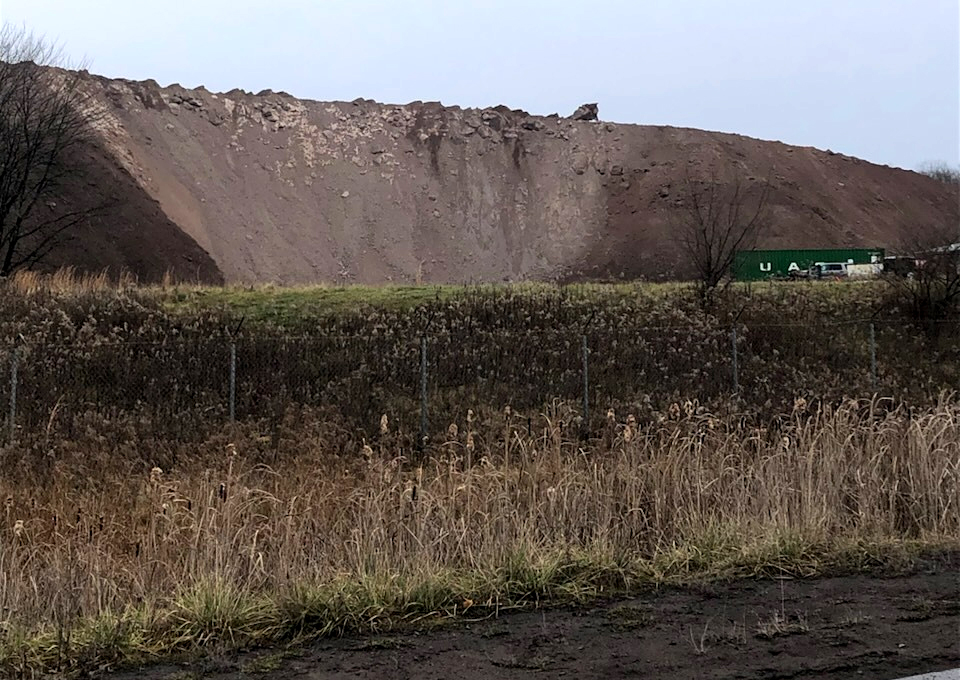
In March, following legal challenges from Earthjustice and the Scrubgrass Creek Watershed Association, Stronghold reached an agreement with the Pennsylvania Department of Environmental Protection to remediate an unauthorized coal ash disposal site, a byproduct of waste coal combustion.
Bill Pritchard, a member of the Scrubgrass association, noted that the coal ash pile had far exceeded its permitted size, growing from an allowed height of eight inches to approximately seven stories tall.
“Stronghold received a permit and was expected to adhere to it. They did not,” Pritchard stated in an interview. “I find it utterly reprehensible. It demonstrates a blatant disregard for environmental regulations.”
A 2023 complaint from Scrubgrass detailed the Pennsylvania DEP’s inspections of the site, revealing repeated violations of air quality and other environmental standards by Scrubgrass, according to the EPA and the Pennsylvania DEP. Additionally, SEC filings from 2023 indicate that companies like McClymonds Supply & Transit Co. and Allegheny Mineral Corp. encountered difficulties in receiving payment for services rendered to Stronghold.
Bitcoin and the Current Administration
Beard’s appointment adds to the growing list of cryptocurrency advocates holding official positions within the current administration.
Commerce Secretary Howard Lutnick, a former crypto investor, recently gave an interview to Bitcoin Magazine on the White House grounds. Several other prominent figures within the administration, including David Sacks, Steve Witkoff, and David Bailey, have significant involvement in the cryptocurrency sector. Sacks is considered the “crypto czar,” Witkoff is an envoy for the Middle East and founder of crypto firm World Liberty Financial, and Bailey recently launched a bitcoin company this month.
Even the new SEC Chair, Paul Atkins, previously served on the advisory board of crypto firm Securitize Inc. and has ties to the bankrupt FTX cryptocurrency platform.
The election of President Donald Trump appears to be creating significant opportunities for the cryptocurrency industry, raising potential conflict of interest concerns for the president, his family, and other high-profile figures associated with the administration.
The $TRUMP memecoin sell-off is facing accusations of pay-for-play access to Trump. American Bitcoin, the mining firm backed by Eric Trump and Donald Trump Jr., recently announced plans to go public. Additionally, the White House established a Strategic Bitcoin Reserve in March.
On Capitol Hill, the Senate recently made progress on groundbreaking legislation to regulate stablecoins, digital currencies pegged to the US dollar. Additional crypto-related legislation may be considered during this session of Congress.
The price of bitcoin has surged since Trump’s election in November. After a dip in February and March, it’s now reaching record high values.
Energy Consumption and the DOE
The process of producing or “mining” cryptocurrencies requires complex calculations and substantial electricity consumption.
Bitcoin’s energy intensity is particularly high due to its reliance on “proof of work,” a transaction validation method. The Energy Information Administration estimated last year that cryptocurrencies could account for more than 2% of total U.S. electricity usage.
Analysts anticipate a significant increase in energy demand in the coming years, driven by factors such as artificial intelligence, cryptocurrency mining, and the broader electrification of the U.S. economy, including electric vehicles and household appliances. A recent report from ICF projects a staggering 25% growth in U.S. power demand by 2030.
During the previous administration, the DOE Loan Programs Office provided financing for a range of emerging energy technologies, including advanced batteries and virtual power plants, aimed at increasing U.S. power generation capacity. These were energy projects that were unable to obtain conventional funding from private sector entities.
The loan office approved approximately $61 billion in loans and loan guarantees, largely concentrated towards the end of the previous administration, prompting criticism from Republican lawmakers. Experts now anticipate a significant reduction in the office’s lending activity.
Meanwhile, advocates for clean energy, including former officials from the previous administration, are questioning Secretary Wright’s decisions regarding personnel appointments, specifically citing the decision to bring on individuals like Beard.
“I think Chris Wright’s actually a genuinely good guy, but then he brings in people like this who do not know how to do debt,” a former DOE official in the Biden administration who was granted anonymity to speak freely told E&E News.
Prior to joining the DOE, Beard worked for a decade at Apollo Global Management, a firm that provides financing to energy companies.
Beard’s connections to the current administration remain unclear. Both Wright and Beard have expressed support for fracking and horizontal drilling techniques, which have revitalized the U.S. oil and gas industry by enabling access to previously inaccessible shale deposits.
Before his appointment to the DOE, Wright led Liberty Energy, a fracking services company. In a 2014 article published in Hart Magazine, Beard predicted significant investments in fracking.
“As an industry, we are going to be spending hundreds of billions of dollars drilling shale,” Beard stated at the time.
Apollo did not respond to requests for comment. The DOE has also not facilitated an interview with Beard or addressed inquiries regarding his background and current role.
Waste Coal
Stronghold operated two power generation facilities that supplied electricity to mine bitcoin on site: one at the Panther Creek Electric Generating Facility south of Wilkes-Barre, Pennsylvania, and the other at the Scrubgrass generating facility in Kennerdell, a small town in a rural area north of Pittsburgh.
In 2023, an article in the New York Times identified both facilities, now part of Bitfarms, as among the largest vertically integrated bitcoin operations in the United States. According to the Appalachian Region Independent Power Producers Association (ARIPPA), the plants currently operate at 80 megawatts and 83 megawatts, respectively.
While some U.S. power plants have a capacity exceeding 1,000 megawatts, the Stronghold plants are considered mid-sized. They are only slightly smaller than some gas-powered plants and benefit from substantial subsidies related to waste coal remediation and electricity generation. These incentives were a critical component of Beard and Stronghold’s business strategy.
“We receive payments per ton of waste coal that we reclaim, in addition to renewable energy credits,” he explained in a podcast interview last year. “We operate a reclamation business where power generation is a byproduct, and we use that power to mine bitcoin.”
Earlier this year, the Federal Energy Regulatory Commission (FERC) took action against Stronghold for violating power rules. Stronghold agreed to pay approximately $1.4 million in penalties and disgorgement.
Experts emphasize the need for proper management of waste coal piles, as untreated piles can spontaneously combust or leach pollutants into groundwater.
Jaret Gibbons, executive director of ARIPPA, highlighted the incentives offered by Pennsylvania for incinerating waste coal.
“The result is usable land free from impurities,” he stated in an interview. “The state has been very supportive.”
“We view these facilities primarily as reclamation facilities, rather than power plants,” Gibbons added.
However, Mike Ewall, founder of the Energy Justice Network, argues that incineration for power generation is the wrong approach.
“Burning it is the worst thing,” he said. “When you burn 100 tons of waste coal, you produce 85 tons of waste coal ash. The idea that we’re cleaning things up and making materials disappear simply isn’t true.”
Burning Tires and Environmental Concerns
Carol Etheridge, a resident living near the Stronghold crypto operation at Panther Creek, reported first detecting the smell of burning tires in 2023.
“I live downwind of the plant,” Etheridge, a member of the Save Carbon County environmental group, said, while making pasta salad in her kitchen. “When they burn tires – tire-derived fuel – we smell burning tires when we step outside our house.”
The issue: Etheridge alleges that Stronghold was burning tires to generate electricity before receiving the necessary permits.
The PA DEP conducted a hearing regarding a proposal to burn tires at Panther Creek in December 2023. The tire-burning plan was approved in May of this year. A complaint from Save Carbon County alleges that the PA DEP was aware of the tire burning activities and failed to intervene.
“These are bad actors. They are not good neighbors,” said Etheridge.
The EPA has stated that tire-derived fuel is a viable alternative to fossil fuels, with comparable pollution impacts. EPA data indicates that sulfur dioxide emissions from the plant increased approximately elevenfold between 2020 and 2023, coinciding with the expansion of the crypto mining operation.
“This is not a battle we are winning right now,” Etheridge concluded.