
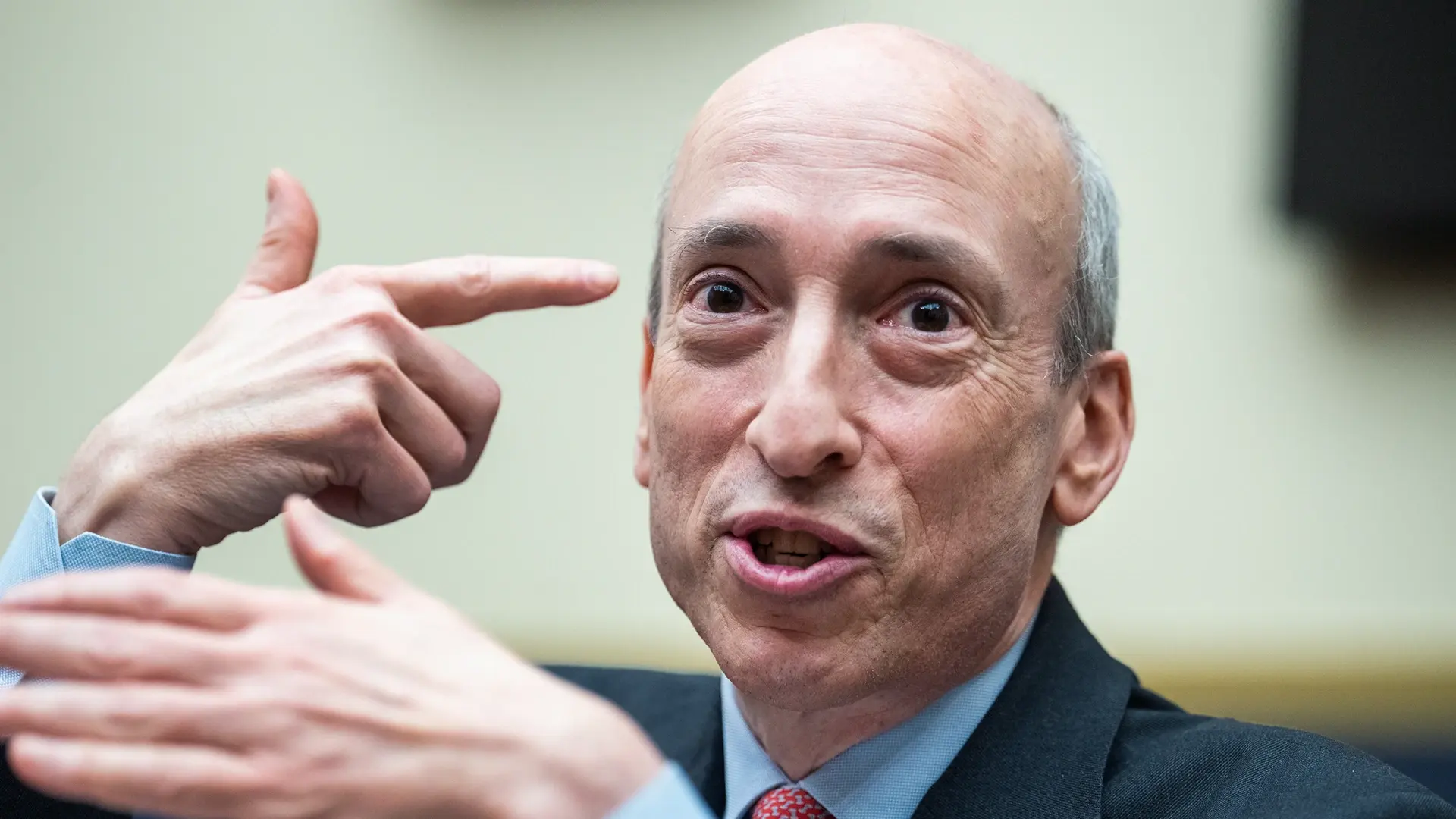
- Former SEC Chairman Gary Gensler stands by the agency’s approximately 100 legal actions targeting crypto companies, asserting that most digital currencies are speculative ventures with significant downside.
- Concerns intensify regarding private discussions between Gensler and FTX’s now-disgraced CEO, Sam Bankman-Fried.
- Current SEC Head Paul Atkins is steering the agency away from extensive litigation toward the creation of definitive regulatory standards for the cryptocurrency sector.
Former U.S. Securities and Exchange Commission (SEC) chief, Gary Gensler, recently stated that he has no regrets regarding the enforcement measures taken against entities operating in the digital currency sphere during his time in charge. According to a CNBC interview, these actions, encompassing nearly a hundred legal battles, were deemed vital for shielding investors in what he characterized as a fraud-prone environment.
Gensler defended his approach by claiming that the majority of cryptocurrencies are fueled by market sentiment and fleeting trends rather than genuine, underlying economic worth. He singled out Bitcoin as a potentially enduring asset, while labeling the remainder of the cryptocurrency market as a high-risk, speculative arena. According to Gensler, his time at the SEC was primarily focused on prioritizing safeguards for investors amidst widespread misconduct within the crypto industry.
Questions Surround Interactions with Sam Bankman-Fried
Gary Gensler’s legacy is being scrutinized due to alleged undocumented meetings with Sam Bankman-Fried, the founder of the now-defunct FTX exchange. Attorney John E. Deaton has publicly questioned why media outlets are seemingly reluctant to delve into these interactions with Gensler. Deaton contends that Gensler engaged in private discussions with Bankman-Fried on at least two occasions, raising potential questions about preferential access to regulatory authorities.
Court proceedings have revealed that Bankman-Fried channeled $10 million to the Biden Administration and donated a total of $72 million to support Democratic campaigns. Deaton referenced unsubstantiated rumors regarding a streamlined registration process potentially tailored to benefit Bankman-Fried’s exchange. He emphasized that these connections merit more thorough examination in any interviews with Gensler.
Diverging Paths: Gensler’s Policies Versus the Current SEC Approach
As previously reported in our earlier article, Gensler’s tenure was characterized by aggressive legal action against leading crypto firms such as Coinbase, Kraken, and Ripple Labs. His exit from the agency in January marked the end of a period defined by stringent regulatory enforcement. This approach faced backlash from prominent individuals like Mark Cuban and Anthony Scaramucci, who argued that the ambiguity of the regulations stifled innovation.
In contrast, the current SEC Chair, Paul Atkins, is prioritizing cooperation and dialogue with the cryptocurrency industry. Under his direction, the SEC has launched “Project Crypto,” an initiative aimed at adapting existing regulatory frameworks to accommodate blockchain-based financial systems. Furthermore, lawsuits against Coinbase and Kraken have been withdrawn, signifying a move away from the enforcement-focused policies of the Gensler era.
Return to Academia and Continued Cautions
Following his departure from the SEC, Gary Gensler has returned to his academic position at the Massachusetts Institute of Technology (MIT). In April, he reiterated his belief that Bitcoin may have long-term viability, but most other cryptocurrencies are unlikely to survive.
His sustained skepticism highlights the sharp contrast between the prior and current SEC leadership. While Atkins is working toward regulatory clarity and fostering collaboration with the Commodity Futures Trading Commission, Gensler continues to assert that rigorous oversight was essential to protect investors from what he believes is a hazardous asset class.