
WASHINGTON — A key Senate vote on a sweeping crypto regulation bill stumbled on Thursday, as Democratic senators joined forces to block the measure after bipartisan talks reached an impasse.
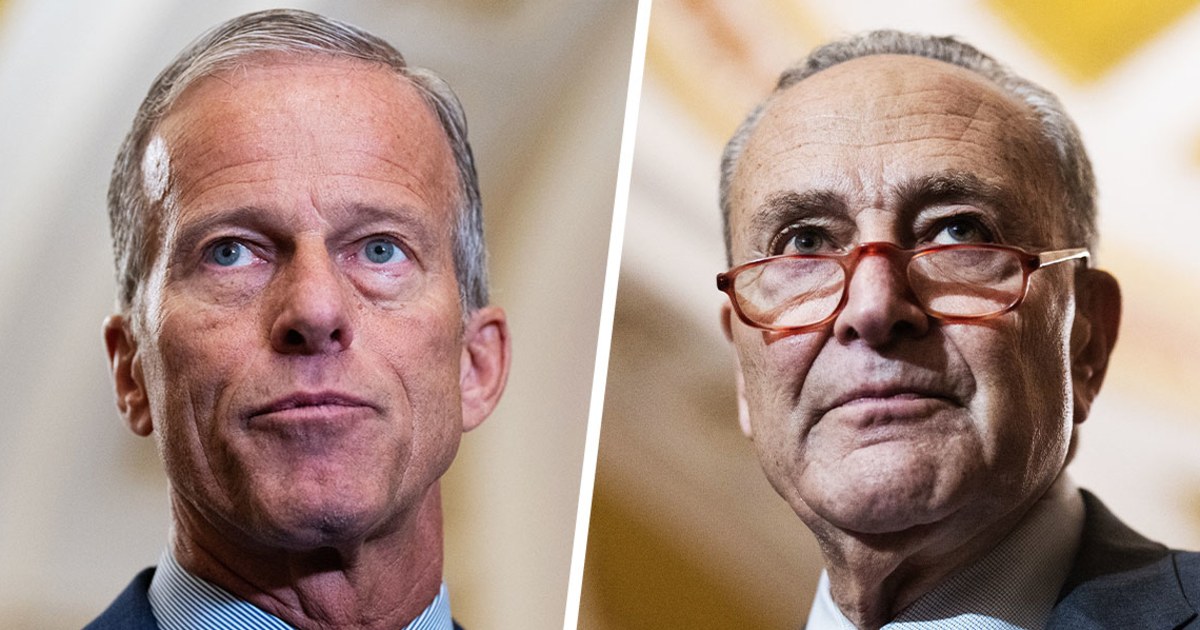
The procedural vote on the GENIUS Act – a proposed framework to regulate stablecoins, digital tokens tied to the value of assets like the U.S. dollar – resulted in a 48-49 tally. Republican Senators Josh Hawley (Missouri) and Rand Paul (Kentucky) sided with the Democrats in opposition. Senate Leader John Thune, from South Dakota, voted against moving forward for procedural reasons, preserving the option to revisit the bill later.
Sixty votes were needed to advance the bill in the Senate, where Republicans currently hold a 53-47 majority.
The GENIUS Act cleared the Senate Banking Committee in April with bipartisan support, including five Democrats. However, after Thune announced swift action on the measure, key Democratic figures, including Senate Minority Leader Chuck Schumer (New York) and Banking Committee member Elizabeth Warren (Massachusetts), reportedly urged fellow Democrats to withhold their support to negotiate additional concessions from Republicans.
Democrats sought explicit safeguards to prevent members of the executive branch, notably including President Trump and his family, from engaging in cryptocurrency ownership or trading, alongside more stringent anti-corruption measures.
Prior to the vote, Senator Ruben Gallego (Arizona), a participant in the ongoing negotiations, proposed a delay until Monday, streamlining procedural steps to maintain the bill’s progress toward passage next week. He requested unanimous consent.
Warren rejected the request, stating she would not vote to advance the bill without updated legislative text reflecting the latest progress in negotiations.
Gallego indicated that a key Democratic provision, aiming to prohibit elected officials from issuing stablecoins, was removed during negotiations due to concerns about its constitutionality.
“Many of us recognized that it presented significant challenges for Republicans. … There were constitutional questions,” Gallego explained.
Changes were incorporated into the legislation at the request of Democrats following its committee passage, including the preservation of state regulatory authority over foreign-issued stablecoins and enhanced monitoring and reporting of suspicious transactions involving stablecoin users, sources familiar with the matter reported.
Following the vote, Thune suggested that Democrats would have had the opportunity to propose amendments to the bill had they allowed it to proceed to the Senate floor.
“If Democrats truly sought further changes, as they claim, they could have introduced those changes on the floor. All they needed to do was vote for cloture,” Thune stated. “Not every bill presented on the floor is in its final form.”
On the Republican side, Hawley expressed discomfort with supporting the bill without a provision prohibiting tech companies from owning stablecoins.
Paul voiced his opposition due to concerns about potential over-regulation.
“I’m generally not a fan of federal regulations, especially initiating a new regulatory framework for a sector that seems to be functioning well without them,” Paul told reporters on Tuesday.
Bipartisan Efforts Stall on Crypto Regulation Bill
Extensive bipartisan discussions among senators focused on cryptocurrency took place, commencing on Wednesday in the office of Banking Committee Chair Tim Scott (South Carolina). Attendees included Senators Bill Hagerty (Tennessee), Cynthia Lummis (Wyoming), Mark Warner (Virginia), Kirsten Gillibrand (New York), Angela Alsobrooks (Maryland), and Gallego, sources with knowledge of the meeting reported.
Hagerty spearheaded negotiations with Democrats who initially supported the legislation in committee but later withdrew their support. These Democrats issued a statement citing “numerous issues requiring attention, including stronger anti-money laundering provisions, concerns regarding foreign issuers, national security considerations, safeguarding the financial system, and ensuring accountability for those who do not comply with the act’s requirements.”
The shift in Democratic support follows an announcement last month that an Abu-Dhabi-backed investment firm will invest billions in the Trump family’s crypto venture, World Liberty Financial. News of the investment sparked criticism from Senate Democrats, who alleged it was “evidence” of the president leveraging his office for personal gain. It also coincides with Trump hosting a $1.5 million-per-plate fundraiser on Monday targeting high-profile crypto investors and tech entrepreneurs.
“The opportunities for exploitation – in which the Trump Administration offers favors to the UAE or to Binance in exchange for their massive payouts – are staggering,” Senators Warren and Jeff Merkley (Oregon) wrote in a letter to the acting director of the Office of Government Ethics. (Binance is a cryptocurrency exchange.)
Warren and Gillibrand co-sponsored legislation introduced by Merkley that would prohibit presidents, lawmakers, and their families from financially benefiting from, issuing, endorsing, or sponsoring crypto assets, including stablecoins. The End Crypto Corruption Act directly targets Trump’s and his family’s crypto ventures, encompassing unconventional crypto endeavors such as Trump’s dinner and private White House tour for major investors in his meme coin, $TRUMP.
Senator Chris Murphy (Connecticut) has joined the growing number of Democrats advocating for legislation specifically targeting meme coins like $TRUMP, introducing a broader proposal, alongside Representative Sam Liccardo (California), to crack down on federal officials using their positions to profit from digital assets.
This counter-messaging effort from Senate Democrats is likely to fail in the GOP-controlled Senate. However, Senator John Kennedy (Louisiana) expressed support for barring “all public officials” from using their positions to profit from cryptocurrency.
The GENIUS Act does not address meme coins, a distinct type of cryptocurrency that derives its value from internet culture rather than from an underlying asset or utility. However, proponents of the legislation assert that it includes protections against money laundering and fraud.
Republicans, meanwhile, engaged in a discussion with tech entrepreneur David Sacks for over an hour on Wednesday, according to multiple senators who attended the briefing.
“We had a productive conversation yesterday,” said Senator Rick Scott (Florida), a supporter of the legislation. “It’s crucial for everyone to understand that trading bitcoin is fundamentally different from stablecoins.” (Bitcoin’s value is not pegged to fiat currency like the U.S. dollar.)
Asked if most members of Congress understand the distinctions between various digital assets and their uses, Senator Jon Husted (Ohio) chuckled.
“That’s an excellent question. I can’t speak for others. I know I’ve invested considerable time in understanding the issue myself,” he said. “Currently, there is no regulatory framework in place. It’s a ‘Wild West’ scenario, and we recognize the need for some security in this space.”