

As blockchain technology and digital currencies expand across the globe, governments are shifting from observing to actively participating. Recognizing the transformative potential of Web3 for economies, governance, and digital frameworks, countries are competing to attract leading innovators.
A new landscape of digital currency technology centers is emerging. These regions are developing clear regulations and encouraging innovation to draw in ambitious developers and enterprises. The United Arab Emirates (UAE), Hong Kong, and Singapore are well-known examples, with numerous other areas poised to lead the next wave of decentralized advancements.
These emerging digital currency hubs share a key characteristic. Can you guess what it is? We’ll reveal it later.
UAE: A Digital Currency Hub with Clear Rules and Global Attraction
Spearheaded by Dubai and Abu Dhabi, the UAE has become a crucial player in the international digital currency market. Dubai’s transformation into a digital currency-friendly location involved implementing key regulatory steps between 2021 and 2022.
Organizations like Dubai’s Virtual Assets Regulatory Authority (VARA) and the Abu Dhabi Global Market (ADGM), established earlier in 2018, provide structured licensing for digital currency exchanges, custodians, and blockchain firms.
Serving as a long-term base for notable figures such as Changpeng “CZ” Zhao, Ola Doudin, and Zach Whitkoff, its supportive business climate and international connections have attracted major digital currency exchanges and ecosystem developers. According to Rachel Pether, regional head at 3iQ, a global digital asset investment manager:
“Having lived in Abu Dhabi for over 17 years, I’ve witnessed its transformation into a premier digital currency hub. Its success is rooted in crypto businesses establishing themselves in Abu Dhabi and a high percentage of professional investors contributing to significant digital currency adoption per capita.”
The UAE is pursuing a comprehensive plan that encompasses capital markets, DeFi, NFTs, and tokenization.
Statistics: About 25.3% of UAE residents own digital currency, placing them among the top globally. The digital currency market in the UAE is projected to generate $395.9 million in revenue in 2025, with a predicted annual growth rate (CAGR) of 4.6% through 2026.
In 2024, digital currency investments in the UAE exceeded $30 billion.
The UAE performs strongly on the global Crypto Adoption Index (50.2/60), excelling in tax benefits (10/10) and innovation.
Digital Currency Taxes: No taxes on trading, earnings, staking, or mining rewards.
Home To: Changpeng Zhao, Binance co-founder; Ola Doudin, BitOasis CEO; Nick Philpott, Zodia Markets co-founder; Zach Whitkoff, World Liberty Financial co-founder.


Singapore: A Stable, Institutional Powerhouse in Digital Currency
Singapore provides a considered approach to regulating digital assets. The Monetary Authority of Singapore (MAS) has created a system differentiating between various types of tokens, licensing payment token services, and establishing clear custody and compliance guidelines.
Around 83% of Fortune 500 blockchain initiatives are based on MAS-approved structures, and BlackRock has designated Singapore as its Asian tokenization center. SWIFT is testing CBDC integrations with Singaporean banks, and the annual Token2049 conference is held here. Notable residents include the founders of Crypto.com: Gary Or, Bobby Bao, and Rafael Melo.
Sky Wee, Managing Partner at Sky Ventures, says: “Singapore has achieved widespread institutional trust unlike any other digital currency hub. It’s not just about being welcoming to digital currency; it’s about building a dependable, credible environment where global institutions feel secure to innovate and invest. This level of trust is intentional.”
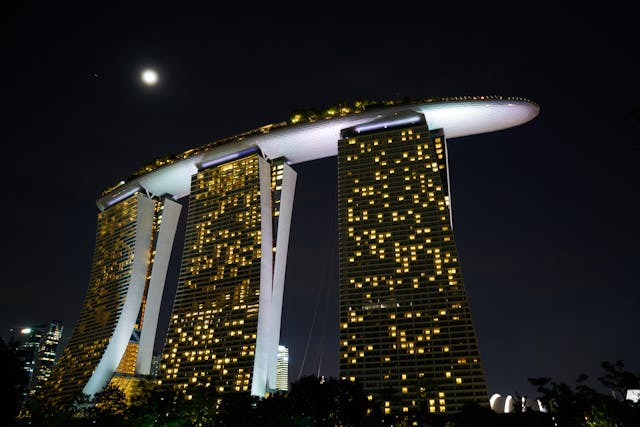
However, MAS has adopted a more cautious stance on retail digital currency speculation following the failures of Three Arrows Capital and Terraform Labs.
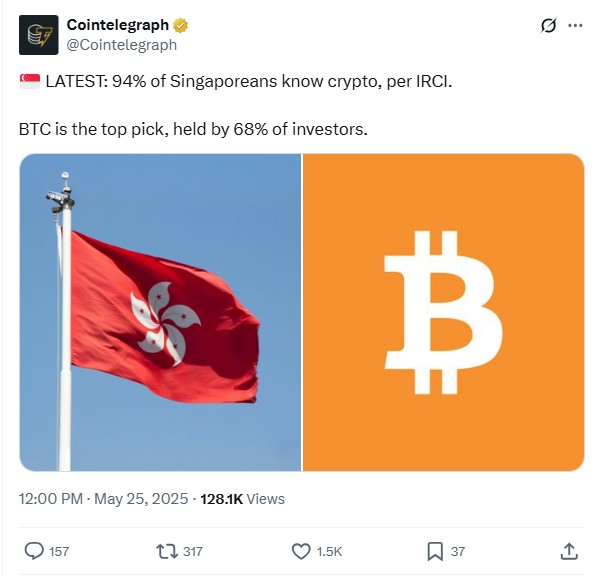
New regulations that took effect at the end of June require entities providing digital token services to overseas clients to acquire a Digital Token Service Provider license, or risk imprisonment, leading Bitget, Bybit, and Tokenize to leave the city-state. The MAS has indicated that licenses will only be granted under “extremely limited circumstances.”
These rules aim to address regulatory loopholes. Nevertheless, Singapore’s infrastructure and tech-savvy culture make it a model for balancing innovation with stability, remaining a hub for institutional platforms, tokenization projects, and blockchain research.
Statistics: One in four adults owns digital currency, frequently using it for payments. Singapore is ranked first globally on various adoption indexes (Henley Crypto Adoption Index score: 45.7/60).
Market revenue is predicted to be approximately $392 million in 2025, growing 4.2% annually through 2026.
An estimated 4.19 million users are expected by 2026, representing 68% digital currency penetration.
Digital Currency Taxes: 0% – no tax on personal digital currency gains, up to 22% if digital currency trading qualifies as “business activity.”
Home To: Crypto.com founders Kris Marszalek, Gary Or, Bobby Bao, and Rafael Melo; Richard Teng, CEO of Binance Asia; Sky Wee, Managing Partner at Sky Ventures.
Read also
Switzerland: The Original Digital Currency Haven
Switzerland was an early leader as a digital currency hub, particularly the region of Zug, known as Digital Currency Valley. Zug was a first-mover in digital currency due to its progressive rules and early embrace of blockchain. In 2016, it started accepting digital currency for public services, signaling its openness to innovation. The Swiss Financial Market Supervisory Authority (FINMA) quickly clarified ICOs and asset categorization.
Ethereum, Tezos, Cardano, and other projects established foundations in the country, which was also home to digital currency figures such as Mihai Alisie, co-founder of Ethereum. Johann Schneider-Ammann, former Swiss economics minister, stated, “We want to be the digital currency nation.”

Zug’s stability, clear legal system, and focus on technology made it a magnet for pioneers, setting a global benchmark for local governance’s role in fostering a decentralized economy.
Today, Switzerland is home to a growing number of regulated exchanges, security token platforms, and digital currency banks. Its reputation for neutrality, privacy, and legal precision continues to attract both startups and multinational corporations focused on financial infrastructure, asset management, and secure digital identities.
Statistics: The digital currency market is projected to generate $446.1 million in revenue in 2025, with a CAGR of 4.6% through 2026, averaging $115.90 per user.
The user base is estimated at 4.03 million by 2026, with penetration growing from 43% in 2025 to 45%.
Zug hosted 512 digital currency companies in 2024, including major projects like Ethereum, Solana, and Cardano, totaling 1,290 companies across Switzerland and Liechtenstein.
Digital Currency Taxes: Capital gains are 0% (exempt for private investors) unless classified as a professional trader. Wealth tax is 0.3%-1% on global assets, including digital currency. However, digital currency income from mining, staking, or other active activities is taxable as ordinary income.
Home To: Niklas Nikolajsen, founder of Bitcoin Suisse (Zug), and Andrey Kurennykh, co-founder and CEO of Tangem.
First digital currency payment at a supermarket in Switzerland – Spar in Zug, impressive implementation by @DFX_swiss. Just scan a static QR code, send sats, immediate and easy registration by the cashier. If enough people use it, it may be rolled out in the whole country. pic.twitter.com/v9N0ZHoDGn
— Rahim Taghizadegan (scholarium.at) (@scholarium_at) April 15, 2025
Gibraltar: Small Territory, Big Digital Currency Vision
Gibraltar has demonstrated that its size is no barrier to influence in the blockchain sector. In 2018, the Gibraltar Financial Services Commission (GFSC) introduced a regulatory framework for distributed ledger technology providers, becoming one of the first jurisdictions worldwide to do so.
This framework requires digital currency firms to be licensed as distributed ledger technology (DLT) providers, ensuring robust risk management, AML controls, and sufficient capital. This provides legal certainty while avoiding overly restrictive rules. Albert Isola, a key architect of Gibraltar’s DLT framework, resides on the “Rock” and is now Minister for Digital and Financial Services.

Combined with a 10% corporate tax rate and no capital gains tax, Gibraltar offers a cost-effective and compliant environment for digital currency businesses to operate and expand. The “Rock” now hosts exchanges, fintech companies, and blockchain service providers. Its legal system, based on English common law, adds predictability for global firms.
Targ Patience, chair of the Gibraltar Association for New Technologies (GANT), says: “Gibraltar pioneered the world’s first regulatory framework for DLT providers, backed by an experienced regulator and a proactive government focused on innovation. We are now making strides in tokenization, DApps, and DAOs. Paired with a strong digital currency community and no capital gains tax, Gibraltar provides a great digital currency ecosystem.”
Stats: Ranked 15th globally with a score of 87.4/100 in the Global Intelligence Unit’s Cryptocurrency Report.
Digital Currency Taxes: 0% capital gains tax and no VAT/wealth/inheritance tax on digital currency. Income tax applies to trading or mining as a business (up to 39%). Corporate tax is 15% on Gibraltar-sourced profits.
Home To: Albert Isola, Minister for Digital and Financial Services.
Malta: The “Blockchain Island” Makes a Comeback
Once celebrated as the “Blockchain Island,” Malta was among the first to propose a comprehensive legal framework for blockchain and digital assets in February 2018. The government introduced three key bills: the Malta Digital Innovation Authority Bill (MDIA), the Technology Arrangements and Services Bill (TAS/ITAS), and the Virtual Financial Assets Bill (VFA).
These bills established what would become the world’s first holistic blockchain legal system, fostering regulatory certainty while encouraging innovation. John McAfee visited the island regularly, and Chun Wang, co-founder of F2Pool, a major Bitcoin mining pool, became a Maltese citizen in 2023.
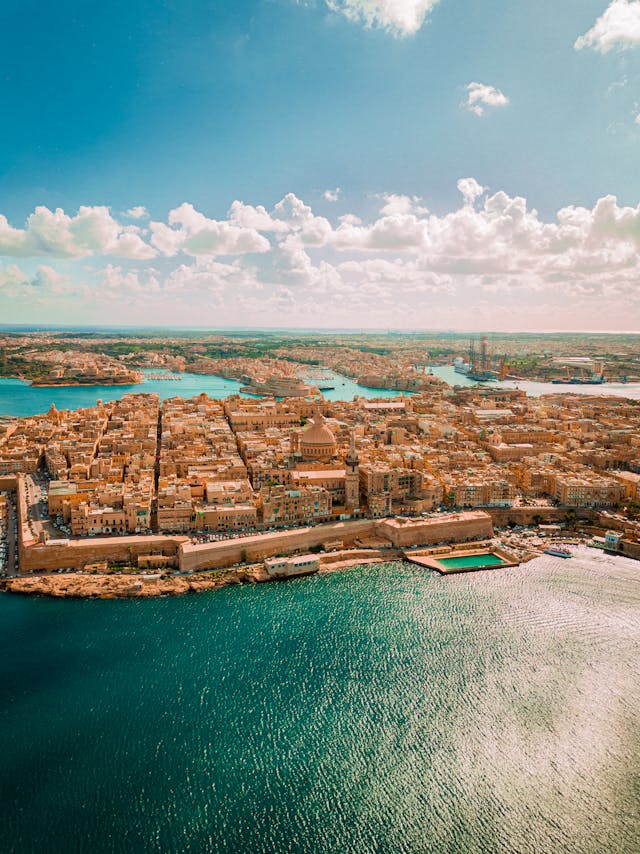
Jean-Michel Azzorpadi, a Maltese blockchain advocate and founder of Kralanx Cyber Security, notes: “Malta is the only EU jurisdiction with a regulatory framework that predates 2025 and is stricter than MiCA, putting the country in a prepared position for some time. Although Maltese banks are still slow to adopt, EMIs (Electronic Money Initiatives) have filled the gap, creating a strong blockchain ecosystem.”
Malta’s EU membership provides access to Europe’s single market, while its flexible approach appeals to mid-sized exchanges and emerging projects seeking credible oversight and European integration.
Statistics: Malta ranks sixth globally in the 2024 Henley Crypto Adoption Index, with strong regulatory support and business presence. The digital currency market in Malta is projected to reach $591,600 in 2025, with a CAGR of roughly 6.4% through 2026; average revenue per user is $12.80.
Digital Currency Taxes: No capital gains tax on long-term digital currency holdings, and occasional trading profits are tax-exempt. Frequent/professional trading and income from mining/staking/trading are treated as standard business income at 15%-35%.
Home To: Chun Wang, co-founder of F2Pool, and Joseph Muscat, former Prime Minister who spearheaded Malta’s 2017-2018 digital currency legislation.
Read also
Sri Lanka: A Budding Digital Currency Hub
Sri Lanka blends a strategic location, skilled technical workforce, and economic efficiency, making it an ideal base for a rising digital currency hub. Situated at the crossroads of Asia and the Middle East, the island nation offers convenient access to significant global markets.
Colombo, its capital, has become an innovation hub with a well-educated, English-speaking workforce and a thriving community of software engineers, blockchain developers, and AI specialists.
Rumors of Binance establishing operations in the country have circulated in Telegram messaging groups. The country’s five-year economic crisis from 2019 to 2024 drove interest in digital currency as an inflation hedge.

Gareth Brawn, founder and CEO of The Coin With No Name, a Solana-based project that powers an AI bot development platform, explains:
“Sri Lanka brings a distinct energy to entrepreneurship. It’s resilient, forward-looking, and untapped. The local startup ecosystem is maturing, supported by government initiatives and increasing foreign investment. By choosing Sri Lanka as our headquarters, we’ve gained operational benefits and contributed to a growing tech economy.”
Statistics: Digital asset revenue is projected at $62.6 million in 2025, with a CAGR of 8.5% through 2026, averaging about $59.1 per user.
By 2026, approximately 1.16 million users (4.6% of the population) are expected to own digital currency.
Digital Currency Taxes: No formal digital currency regulations, but a 10% capital gains tax applies. The central bank warns of high risks and does not recognize digital currency as legal tender, though there are efforts to create a friendlier environment.
Home To: No widely known global digital currency personalities.
Hong Kong: Back in the Digital Currency Game
Hong Kong is re-emerging as a major force in the digital currency sector after regulatory uncertainties. In 2018, Hong Kong’s government released its first virtual asset policy statement, committing to licensing digital asset trading platforms under the principle of “same activity, same risk, same regulation.”
With a licensing framework for digital asset exchanges and custodians, the city is attracting institutional interest and regaining its status as a digital finance hub.
Kumardev Chatterjee, founder of the Global Crypto Forum, says: “Web3 activity in Hong Kong has been growing steadily since 2024, with key developments like the launch of digital currency ETFs and hosting major conferences, such as digital currency Asia and Consensus HK. It has a supportive regulatory environment, with leaders like Johnny Ng and Joseph H. L. Chan.”

Authorities are promoting tokenization projects, including green bond issuances and central bank digital currency infrastructure. Hong Kong’s legal expertise and location near China make it a strategic base for firms navigating the Asian market under an increasingly mature regulatory framework.
Many hope that China will view Hong Kong as a trial ground for digital currency before relaxing mainland restrictions, though this has yet to happen.
Statistics: Digital assets market revenue is projected at $200.7 million in 2025, growing at 4.0% CAGR to $208.7 million in 2026. The user base is expected to reach around 694,000 by 2026 (8.9% penetration in 2025, 9.3% in 2026).
Digital Currency Taxes: 0% capital gains tax on private, occasional digital currency trading; salaries tax applies to digital currency paid as income. Hedge funds and family offices’ gains from digital currency may be exempt under new regulations.
Home To: Yat Siu, Co-Founder, Animoca Brands, Justin Sun, Founder, Tron
What’s the Common Trait of Emerging Digital Currency Hubs?
You likely already noticed, but the main trait shared by emerging digital currency hubs is low or zero capital gains taxes on digital currency. To attract top global digital currency talent, it seems that favorable regulations that balance innovation with consumer protection are beneficial, but having 0% capital gains taxes on digital currency profits is even more effective. The Magazine also covered Portugal, noting that it attracts international talent.
United States: Digital Currency Hubs in New York, San Francisco, and Austin
The United States remains a powerhouse of digital currency development and investment, but policy fragmentation is slowing its progress. Agencies like the SEC and CFTC often disagree on jurisdiction, leaving companies in legal gray areas, hindering growth, or driving operations overseas.
Despite this, cities like San Francisco, Austin, and New York remain innovation hotspots. Startups continue to raise funds, build protocols, and innovate in DeFi, NFTs, and layer-2 scaling.
Global digital currency leaders such as Vitalik Buterin and CZ visit frequently (for different reasons), and it is home to Michael Saylor, Marc Andreessen, Brian Armstrong, and others.
Jonny Fry, CEO of TeamBlockchain, states: “New York will emerge as a leader now that the GENIUS Act has passed [the Senate]. This provides clear regulatory guidance and encourages a surge in stablecoins, supporting the U.S. dollar as the world’s reserve currency.”
With increasing support for bipartisan legislation in Congress, there’s hope that clearer rules will support the country’s technical and entrepreneurial strengths.
Statistics: Digital currency market revenue in the U.S. is projected at $16.1 billion in 2025 (3.6% CAGR through 2026); overall digital asset market revenue is $18.6 billion, the highest globally. The user base is expected to reach 166.7 million by 2026, with penetration rising from 46.4% (2025) to 47.8% (2026).
Digital Currency Taxes: The IRS treats digital currency as property, meaning each sale, trade, or purchase with digital currency is a capital gains event. Digital currency earnings (mining, staking, payments) are taxed as ordinary income.
Home To: Anatoly Yakovenko, Co-Founder, Solana Labs, Hayden Adams, Founder, Uniswap, Michael Saylor, Co-Founder, Strategy, Marc Andreseen, Co-Founder, Andreessen Horowitz, Brian Armstrong, CEO, Coinbase.
Read also