
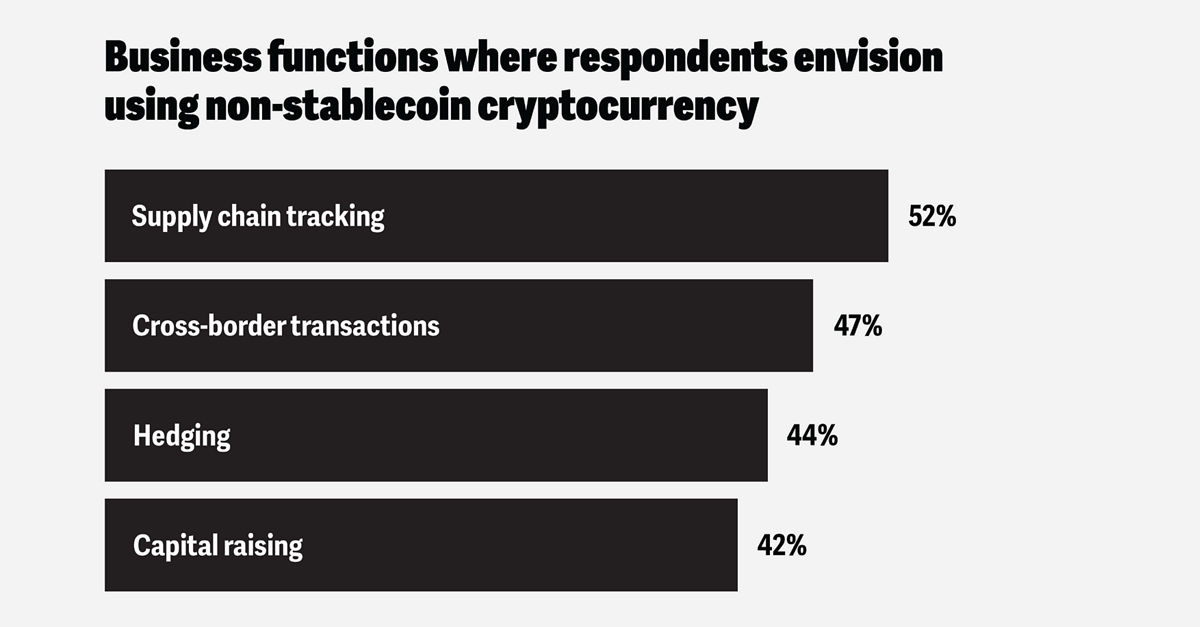
Participants in the study also expressed other points of apprehension. The intricacy of financial record-keeping and oversight (42%) was a major concern, alongside the perceived absence of clear sector rules (40%). Recent developments may have fueled these worries. Near the end of January, the agency charged with policing securities markets initiated a specialized group focused on digital currencies. Shortly thereafter, that group reversed earlier advice related to how digital assets should be recorded in company books.4 Consequently, the body that establishes accounting standards revised its advice concerning digital currency bookkeeping in March.5
Notwithstanding these worries, some surveyed financial leaders showed a willingness to proceed with digital currency investments. Approximately fifteen percent of chief financial officers polled anticipate their financial management divisions are likely to acquire fluctuating-value cryptocurrencies within the coming two years as a component of their overall investing approach. The inclination was even stronger among individuals from firms with annual sales exceeding US$10 billion. Almost a quarter (24%) predicted their finance sections would probably allocate funds to such cryptocurrencies during that period.
Digital currencies like Bitcoin, Ethereum, and other non-stable coins can offer specific benefits for corporate finance managers. They present the possibility of broadening a company’s pool of invested assets. Furthermore, despite the inherent volatility in value, investments in these currencies carry the chance of considerable increases in value – potential profits that could surpass the returns from more conventional investments such as government bonds.