

Listen to a crypto mine in Maynardville, Tennessee at night
This is what the cryptocurrency mine in Maynardville, Tennessee sounds like while running at night.
Brianna Paciorka, Knoxville News Sentinel
- After approximately two years, Diversified Energy ceased operations at a Pennsylvania natural gas well and associated cryptocurrency mining facility, a move state regulators are calling a violation of state law.
- The energy firm, which uses digital currency mining to generate revenue from marginally productive wells, is contesting the state’s claim of abandonment.
- Diversified’s strategy of purchasing and managing aging natural gas wells is sparking environmental concerns regarding potential remediation costs and the escape of methane.
- This situation is intensifying existing worries about the ecological effects of digital currency mining combined with the financial burdens tied to the maintenance of old infrastructure surrounding wells.
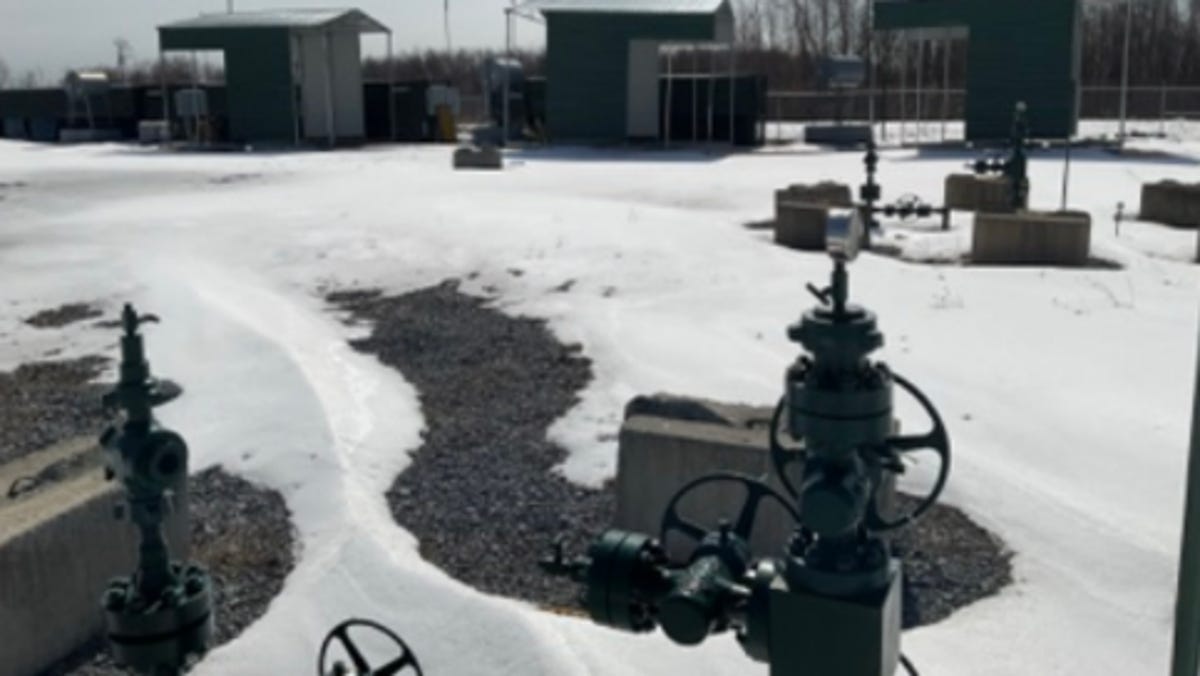
Located just beyond a gated access road within the expansive grasslands situated on public land in northwestern Pennsylvania, an idle natural gas well site has remained untouched for almost ten years. This former fracking area unexpectedly sprang back into action in 2022, producing considerable noise and pollution and startle local inhabitants accustomed to hunting in its tranquil, picturesque setting.
Diversified Energy reactivated the well site, known as Longhorn Pad A, by channeling the natural gas to on-site generators. These generators, in turn, powered supercomputers dedicated to cryptocurrency mining, processing algorithms around the clock. Capital & Main reported in 2024 that the company established this digital currency mining operation in Elk County without first acquiring the required air quality permit from the applicable state agencies.
Now, following a period of just over two years, the organization has disassembled and departed, leaving behind the wells and their corresponding cryptocurrency infrastructure, potentially violating
existing state regulations, according to governmental oversight.
Diversified Energy, which disputes the assessment that it has abandoned the wells, portrays itself as forward-thinking, breathing new life into older, less-productive gas wells that might otherwise be financially unviable. Digital currency facilitates this ambition by enabling the company to commercialize wells lacking the typical pipeline infrastructure necessary for gas sales.
Within a few years, the business has built a wells portfolio larger than any other in the U.S., including many low-yield wells, despite concerns that Diversified may lack sufficient resources to properly seal and decommission all of these wells when they are no longer productive. This situation has increased unease among environmental advocates about who will bear the financial burden of cleanup if the firm abandons them. Sudden shutdowns of crypto mining operations at wellheads introduce new issues, foremost among them the question of what happens when operators decide to move on without properly closing the wells.
Anxiety over the long-term costs to the natural environment has grown in Appalachian and other oil-and-gas producing regions nationwide. Diversified appears eager to extract profits by utilizing remaining gas reserves to power energy-intensive computers. Nevertheless, the company has exhibited less commitment to secure closure, commonly neglecting responsibilities to plug wells to prevent the ongoing emission of greenhouse gasses.
Firms are deemed to abandon wells when they relinquish control by neglecting to plug them once they cease to be profitable. This raises the possibility of prolonged leaks into the atmosphere of methane, which contributes to climate change. Abandoning wells is in direct conflict with the Pennsylvania Oil and Gas Act, pushing closure expenses and responsibility to the state. Pennsylvania, the birthplace of the American oil sector, is estimated to possess 350,000 abandoned and orphaned oil and gas wells, a higher number than any other state. This is responsible for nearly 8% of total methane emissions in the state.
Wells Reactivated in 2022
The wells, which make up the Longhorn A site within rural Horton Township’s state game lands, were initially drilled in 2011 by EQT, another natural gas provider. For years, regulators considered them dormant. Diversified Energy restored activity in December 2022. While the company applied for authorization to use generators to power cryptocurrency mining gear on the site, it did not wait for authorization prior to turning on equipment that was loud and polluting.
Capital & Main revealed in 2024 that the firm was unresponsive regarding the future of the wells, even as inhabitants voiced concerns about noise and threats to wildlife and neighbors. The firm received its permit to operate digital currency mining equipment at the well location in December 2023.
Earlier this year, an inspector from the Pennsylvania Department of Environmental Protection found the cryptocurrency mining equipment gone. Inspection
reports from a March 4 visit revealed empty metallic buildings on the gravel pad.
On March 10, the department issued Diversified a notice of violation for abandoning the well, requiring a response within two weeks.
Daniel O. Frick, a director at Diversified Energy in the Environmental Health, Safety Regulatory Department, suggested in a March 18 email that “technically the site isn’t abandoned” and that the firm intends to resume gas extraction.
Government agencies have also accused the Alabama-based company of breaking the terms of a consent order and agreement when they abandoned Longhorn A. In the 2021 agreement, which company representatives signed upon buying the wells from fracking company EQT, Diversified was expected to decommission these wells and 13 others as they became non-productive.
Diversified Energy didn’t respond to inquiries from Capital & Main.
Environmental Risks: Advocates Voice Concerns
State officials are not the only concerned parties. Environmental proponents have repeatedly warned about the hazards related to Diversified’s vast portfolio of low-yield wells across Pennsylvania, West Virginia, Kentucky, and Ohio. Now, they fear that the company’s abandonment of wells across Appalachia—wells secured for short-term earnings—will leave the public sector responsible for covering costs tied to long-term cleanup and closure.
Charles McPhedran, a senior attorney at Earthjustice (an environmental law nonprofit), stated, “Diversified must not be permitted to simply walk away and let others deal with the aftermath.” In the past, McPhedran urged authorities to deny Diversified a permit for digital currency mining at the site, citing concerns about noise and prior environmental violations.
Dave Gustafson, Deputy Executive Director of the Pennsylvania Game Commission – the agency which oversees and leases state-owned game lands, like the Longhorn A site – said his agency “wouldn’t consider these wells ‘abandoned’,” and that the company has “not expressed their plans to move forward with production, nor have they indicated that they intend to plug the well.”
The Pennsylvania Department of Environmental Protection disagrees.
Tom Decker, a Department representative, stated in an email to Capital & Main, “The wells are not equipped for production. Diversified’s assertion that the wells are still equipped runs counter to the Department’s observations during the recent inspection, and has not been verified by Diversified.”
The department has given the company until September to plug the wells.
Ted Boettner, a senior researcher at the Ohio River Valley Institute (a nonprofit think tank), stated that sealing a well can cost exceed $100,000. Because of this, operators often try to skirt these responsibilities.
He continued, “They operate the well until it generates a few gas puffs, then claim, ‘We’re active again’ and will not need further checks for another 10 years.”
Is Diversified Energy a Model “Built to Fail Appalachia?”
A 2022 report from the Ohio River Valley Institute argued that the company was operating on “a business model built to fail Appalachia,” because it depended on sourcing aging wells from other operators and extracting value until the end of their life cycles, with seemingly not “enough funds to plug its entire inventory of assets.”
Doing this, Diversified has accumulated the largest portfolio of underperforming wells in the Appalachian region. Institute researchers wrote that this could become “a tidal wave of soon-to-be-orphaned wells” dumped on the public.
In the recent months, concerns have been raised about the company’s commitment to well-plugging. Diversified reached a settlement in December related to a class-action lawsuit led by West Virginia landowners, who claimed the company had failed to properly seal wells on their property. Under the settlement, Diversified pledged to decommission nearly 3,000 wells in the region by 2034. In the first two weeks of January, the Department of Environmental Protection hit Diversified with 11 notices of violation for improperly abandoning Pennsylvania shale gas wells.
Boettner stated that the state needs to more rigorously penalize abandoning wells. Without strong enforcement, “We’re going to end up left with plugging all of these wells. There’s nothing preventing them.”
While divesting well pads, Diversified is simultaneously expanding its scope. A few days following inspections at Longhorn A, Diversified announced a major partnership with FuelCell Energy (a fuel cell company) and TESIAC (an energy infrastructure company) to power a growing collection of off-grid data centers using natural gas from fracking wells and coal mines. It is one of many natural gas firms placing significant investment in the upcoming AI boom, potentially prolonging the lifespan of polluting industries.
The Longhorn A well abandonments raise questions about the company’s capability to care for such projects long-term, as a wider data explosion raises worries about air pollution. The company has also applied for grants from the state to plug wells in other Pennsylvania regions, based on Capital & Main records acquired using Pennsylvania’s Right-to-Know Law.
Diversified Energy: In Operation Since 2001
In a 2023 interview with Mountaineer Media, Diversified CEO Rusty Hutson Jr. revealed that he secured his first oil and gas wells in 2001 as a personal investment. He used a home equity loan to finance 35 wells, a package his father (a third-generation gas and oil worker) discovered.
Hutson continued, “We would venture out together in the cold and heat to address leaks and repair the wells. I did that for two or three years before we truly saw growth within the company.”
As Diversified has added new wells to their assets, it has listed asset retirement liabilities on their balance sheets, with a rate lower than industry standards (or estimated plugging and closure expenses) near the end of well lifecycles.
This tactic has alarmed environmental advocates, who fear that the organization is, at best, temporarily sustaining wells slated for decommissioning. At worst, they see Diversified as creating a massive taxpayer liability should it fail.
Yet Hutson is proud of his organization’s unique strategy. Most gas and oil organizations prioritize drilling new assets. Diversified focuses on leftover wells.
He told Mountaineer Media, “Our goal is acquiring established mature production, operating it with increased efficiency, minimizing expenses, boosting output on often ignored wells by allocating time and capital, boosting margins, and issuing dividends to our investors.”
The company only listed on the London Stock Exchange until December 2023, upon going public in the United States on the New York Stock Exchange.
That same day, House Democrats opened a probe into the organization’s practices and emissions.
Members of the House Committee on Energy and Commerce wrote to Hutson, “Diversified Energy is responsible for remediating a substantial share of the country’s aging oil and gas wells, but we are concerned that your company may be vastly underestimating well cleanup costs.” At the time, the company responded that its business model is based on “stewardship,” inclusive of “delivering well retirement and reclamation efforts.”
Boettner has approximated that most of the old wells acquired by Diversified in recent years are “totally uneconomical,” and a report he authored found that more than half could be categorized as “inactive.” In 2022, the company offloaded 2,500 of those in Ohio. In January 2024, the company sold another part of its stake in Appalachia.
Boettner said, “They’re able to maximize gains on these assets due to scale efficiencies. To keep the model working, they have to continue buying wells. This works as long as they are not accountable for those liabilities.”
What’s Next in Horton Township?
Supervisor PJ Piccirillo, who resides in Horton Township and whose territory encompasses Longhorn A, reports not hearing anything from Diversified staff regarding intentions to abandon wells and remove the related cryptocurrency mine. He suspects that the company stopped site operation following the township’s ordinance (created in 2023), which imposes light and noise constraints on Bitcoin mines. Shortly before the state, issued Longhorn A a permit.
He said, “The generators and big tanks have been removed.”
Due to a lack of communication, Piccirillo is worried about future industrial development. In his corner of Elk County, he often sees deserted wells that (as he reported) “I don’t know if anybody knows about.” The township has no jurisdiction concerning well abandonment. Because of that, he can’t act from his