

Two prominent consumer advocacy organizations are strongly advising William J. Pulte, Director of the Federal Housing Finance Agency, to reconsider his recent instruction for Fannie Mae and Freddie Mac to investigate the possibility of including cryptocurrency assets as acceptable reserves when evaluating single-family mortgage applications.
In a formal letter dispatched this past Thursday, the Consumer Federation of America and the National Consumer Law Center voiced their opposition to
“Underwriting protocols for these government-sponsored enterprises must always prioritize the borrower’s capacity to repay the loan and uphold the overall stability and security of the housing finance ecosystem,” the consumer groups articulated. They emphasized that cryptocurrencies, due to their well-documented instability, provide no reliable gauge of a borrower’s enduring financial strength or their ability to consistently meet mortgage obligations.
The groups further warned, “This proposition will subject taxpayers to a greater likelihood of financial losses, potentially unlock avenues for exploitative and hazardous lending practices targeting vulnerable borrowers, and ultimately imperil the security and robustness of the Enterprises along with the wider financial structure.”
Fannie Mae and Freddie Mac are government-sponsored entities, meaning they operate with the backing of taxpayer funds. In 2008, a government bailout was necessary to stabilize these entities and avert a complete meltdown of the housing market.
The consumer advocates further contend that even stablecoins – digital assets marketed as possessing consistent value due to their peg to traditional currencies – have experienced fluctuations in value.
Their letter also voiced additional worries regarding broader risks stemming from concentrated crypto holdings, the absence of stringent regulatory frameworks within the crypto sector, and the proven vulnerability of the crypto market to instances of fraud and cyber theft.
As examples, the consumer protection groups cited the high-profile collapse of FTX, a major cryptocurrency exchange, alongside a February hacking incident attributed to North Korean actors, which represented the largest documented cryptocurrency theft to date. In that attack, Ethereum tokens valued at $1.5 billion were pilfered from ByBit, a cryptocurrency exchange based in Dubai.
The letter’s signatories argued that incorporating cryptocurrencies into federally supported underwriting standards could mistakenly suggest to consumers that these assets are as dependable and secure as conventional reserves, potentially skewing perceptions within the broader mortgage landscape.
“The financial crisis of 2008… was triggered by the widespread approval of predatory and unaffordable mortgages, particularly within the subprime market,” the groups wrote. “Many of the loans that spurred the Great Recession were granted without a sound basis for believing borrowers could meet their financial obligations related to the mortgages; similarly, establishing a system based on crypto-related assets risks expanding the market upon what could prove to be an unsustainable construct.”
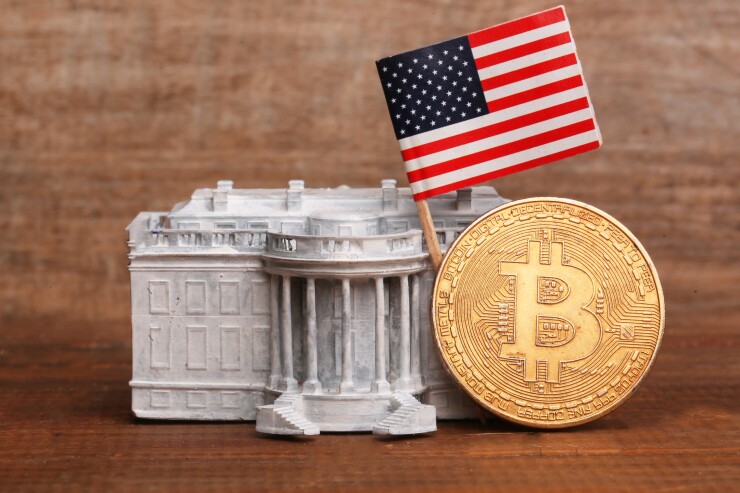
Pulte pushes Fannie, Freddie to count crypto assets
The regulator and conservator of two influential loan buyers with government ties has directed them to look at digital currency’s use in qualifying borrowers.
If specific borrowers seek mortgages using their cryptocurrency holdings as collateral, these groups assert they should seek private non-qualified mortgage lenders willing to shoulder that inherent risk, without taxpayer involvement.
“If crypto investors are seeking tailored mortgage products,” they stated, “that risk should remain in the private market — not in taxpayer-backed institutions.”
Democratic senators recently