
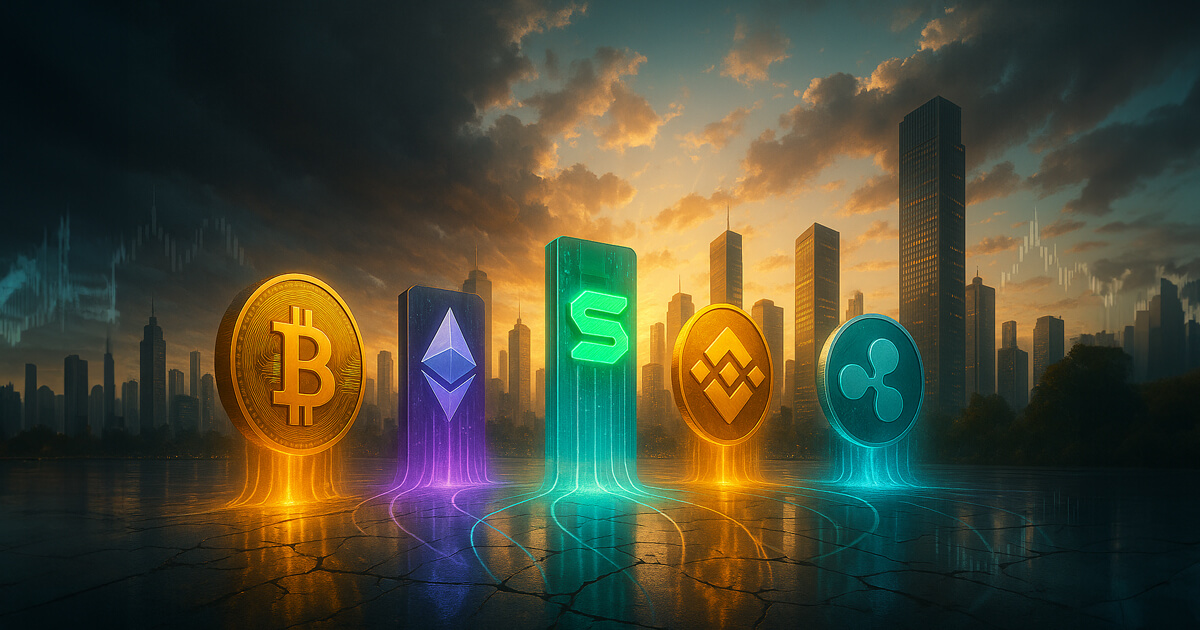

The world of digital assets is defined by cycles of boom and bust. In each phase, new stars emerge, some fade into obscurity, and a select few manage to stage remarkable comebacks.
Assets once deemed worthless can experience a resurgence, propelled by shifts in regulation, advancements in technology, or simply the inherent forces of the market.
These stories of revival, from legal battles to technological innovations and from the ashes of failed exchanges to resilient blockchains, reveal crypto’s unique capacity to rebuild itself.
Here’s a look at five of the most impressive comeback stories in crypto, alongside a few notable failures that never recovered.
No. 5: XRP
The Downturn: Following the exuberance of 2017, XRP faced increased regulatory scrutiny. Major U.S. exchanges removed it from their listings due to the SEC’s protracted legal action, which dampened both market activity and investor confidence.
The Recovery: Judge Analisa Torres’ decision in July 2023, stating that XRP sales through programmatic means did not constitute securities offerings, opened up the U.S. market again. Major platforms like Coinbase and Kraken relisted XRP, and by 2025, the legal case concluded with civil penalties and no viable appeal. The uncertainty that had plagued XRP for years finally dissipated.
Current Status: XRP is trading around $2.40 and holds the #5 position in terms of market capitalization, reclaiming its place among the leading digital assets after being sidelined for half a decade. This resurgence is about more than just price; it signifies a restoration of legitimacy.
Forward Outlook:
- Base Case (6–12 months): XRP maintains its top-five ranking if its on-chain liquidity increases and XRPL’s AMM/DEX infrastructure sees increased use for cross-border transactions. Projected range: $1.60–$3.40, mirroring the broader crypto market’s movement driven by ETF activity.
- Bull Case: Clearer U.S. payment policies and the introduction of an XRP ETP or ETN could drive XRP to $3.50–$5.00, as investment flows shift from speculative meme coins to assets with practical uses.
- Bear Case: If stablecoins become the dominant payment method, XRP could underperform compared to other major cryptocurrencies, potentially falling back to the $1.40–$1.80 range.
Key Factors to Monitor: XRPL transaction volumes compared to stablecoin settlement growth, potential ETP approvals in the U.S. or EU, and the depth of XRP trading on exchanges relative to ETH and SOL.
XRP’s courtroom victory translated into a resurgence in market capitalization. It’s now a top-five cryptocurrency again, supported less by hype and more by the regulatory vacuum in the realm of tokenized payments.
No. 4: Binance Exchange
The Downturn: In November 2023, Binance concluded its long-standing regulatory dispute with a $4.3 billion settlement involving the DOJ, FinCEN, OFAC, and CFTC. Founder Changpeng Zhao pleaded guilty to violating the Bank Secrecy Act and stepped down as CEO, marking the end of one of the most significant enforcement actions in the crypto space.
The Recovery: Two developments in 2025 boosted Binance’s prospects. First, the exchange demonstrated its resilience, reclaiming market share in both spot and derivatives trading by mid-2025 after losing its lead in BTC futures volume to CME in 2024. Second, Trump’s pardon of CZ in October 2025 eased the negative perception surrounding the exchange in the U.S., hinting at a possible thaw in regulatory relations despite the ongoing complexities of obtaining licenses.
Current Status: BNB surpassed $1,000 on September 18, 2025, reaching a new all-time high and visually representing a clear turnaround from legal troubles to renewed dominance.
Forward Outlook:
- Base Case (6–12 months): BNB trades between $800–$1,200, influenced by overall crypto market trends and continued quarterly coin burns as compliance oversight nears completion.
- Bull Case: Progress toward securing U.S. licenses and integrating real-world assets or consumer applications on BNB Chain could push BNB to $1,250–$1,600.
- Bear Case: Renewed enforcement pressure or further loss of futures market share to CME or Bybit could send BNB back to the $650–$850 range.
Key Factors to Monitor: Market share data from Kaiko, progress on compliance monitor timelines, court filings related to U.S. operations, and quarterly BNB burn announcements.
From a period of regulatory challenges to a more positive outlook, the native token of crypto’s most scrutinized exchange has reached a significant milestone.
No. 3: Solana
The Downturn: Between 2021 and 2022, Solana’s reputation declined due to network outages, congestion, and the collapse of FTX. The term “Ethereum killer” became ironic as frequent downtime and excessive venture capital exposure eroded investor confidence.
The Recovery: From 2024-2025, Solana has exhibited improved stability and increased usage. The network has maintained 100% uptime over the past 60 days, with multi-month streaks suggesting significant technical progress. Memecoins have turned Solana into a hub for retail speculation, while tokenized assets (such as equities from Backed and USDY from Ondo) indicate growing institutional interest. The same network that once struggled under heavy load now processes billions in daily transaction volume seamlessly.
Current Status: Solana’s DEX volume has frequently rivaled or surpassed Ethereum’s throughout 2025, with memecoin activity fueling its inherent volatility. SOL is trading near multi-year highs, supported by strong liquidity and a dedicated developer community.
Forward Outlook:
- Base Case (6–12 months): A dual dynamic—memecoins on one side and real-world assets on the other—sustains high throughput and transaction fees. Projected range: $150–$280, influenced by general crypto market trends.
- Bull Case: Adoption of Firedancer, along with institutional inflows into real-world assets from platforms like Backed, Superstate, or Maple, could drive SOL to $300–$420.
- Bear Case: A major network outage or a shift of liquidity back to Ethereum Layer 2 solutions could pull SOL back to $120–$180.
Key Factors to Monitor: Uptime metrics on status.solana.com, progress on the Firedancer project, TVL and issuance of real-world assets, DEX market share versus ETH/Base, and the total amount of stablecoins on Solana.
What started with memecoins is now evolving into something more substantial. Solana’s comeback is transitioning from speculative to structural.
No. 2: Ethereum
The Downturn: The 2016 DAO hack caused a split in the Ethereum community, resulting in the creation of ETH and ETC. This philosophical divide could have potentially destroyed the project.
The Recovery: The Merge in September 2022 solidified Ethereum’s shift to proof-of-stake. The Dencun upgrade and EIP-4844 introduced affordable data availability for rollups, leading to significant growth in Layer 2 solutions. Subsequently, the approval of spot ETH ETFs in the U.S. in 2024–2025 brought the asset into the same regulatory framework as Bitcoin. By 2025, Layer 2 adoption had become essential to Ethereum’s daily operations.
Current Status: ETH has reclaimed the $4,000 level in 2025, with Layer 2 networks handling approximately 80–90% of all ecosystem transactions. Ethereum is now primarily functioning as a global settlement and data layer rather than an independent execution environment.
Forward Outlook:
- Base Case (6–12 months): ETH serves as the core settlement layer, while Layer 2 networks facilitate consumer and DeFi activity. Projected range: $3,200–$5,000.
- Bull Case: Strong ETF inflows and significant growth on Base, Optimism, and other rollups could elevate ETH towards $5,200–$6,500.
- Bear Case: Fragmentation among rollup solutions or market share gains by Solana could pull ETH back to $2,600–$3,600.
Key Factors to Monitor: ETH ETF flow data (Farside, CoinShares), throughput and TVL on L2Beat, blob fees after EIP-4844, and net staking activity.
From a blockchain that once altered its own history to survive, Ethereum is now shaping the future within traditional brokerage accounts and as the foundation for a growing Layer 2 economy.
No. 1: Bitcoin
The Downturn: The “crypto winter” of 2018 and the COVID-19 market crash in 2020 prompted numerous declarations of Bitcoin’s demise. It was written off as a speculative asset that had already seen its best days. Retail trading dried up, miners struggled, and mainstream finance moved on. By late 2020, Bitcoin had been declared “dead” over 400 times. However, despite the pessimism, the network’s robust hashrate and a dedicated community of developers kept it alive.
The Turn: After the 2020 halving, speculative fervor amid the COVID-19 pandemic in late 2020 and into 2021 saw Bitcoin break through previous all-time highs, reaching $69,000. However, the subsequent bear market, worsened by a systemic crash triggered by FTX’s collapse, saw Bitcoin drop below $15,000 once more, and obituaries resurfaced.
But Bitcoin was down but not out. The U.S. spot Bitcoin ETF approvals in January 2024 transformed its image from a fringe investment to a legitimate asset class. This was the result of a decade-long lobbying effort by Grayscale, BlackRock, and Fidelity, creating the largest bridge between the crypto and traditional financial worlds.
Within weeks, billions flowed into the new ETFs, and by mid-2025, BTC had become a standard part of brokerage portfolios alongside assets like gold and the S&P 500. Macroeconomic factors, such as potential interest rate cuts, discussions about de-dollarization, and renewed demand for safe-haven assets, further fueled its growth.
BTC surpassed $100,000 in December 2024 and reached a new all-time high near $126,000 in October 2025 as ETF inflows accelerated. CME’s share of open interest in Bitcoin futures exceeded 55%, signaling full integration with Wall Street.
On-chain data showed that long-term holders continued to accumulate Bitcoin even as ETF issuers, led by BlackRock, built up their spot reserves.
Current Status: Bitcoin is now trading more like a mainstream asset and less like a speculative one. It is included in pension fund allocations, Treasury portfolios, and ETF holdings, governed by regulated custodians and tracked by daily flow data.
The 2024 halving reinforced its supply limits, while the creation of ETFs institutionalized demand. Even skeptics now analyze Bitcoin’s implied yield, futures basis, and ETF premium as if it were a fixed-income instrument.
Forward Outlook:
- Base Case (6–12 months): Positive net ETF buying continues with minor pullbacks, miner supply remains stable post-halving; projected range: $95k–$140k.
- Bull Case: New allocations from pension funds and sovereign wealth funds, combined with lower real yields, could push BTC toward $150k–$200k.
- Bear Case: A pro-cyclical dollar rebound or sustained ETF outflows could drag BTC back to $80k–$105k.
Key Factors to Monitor: Daily ETF flow data, basis spreads between CME and offshore perpetuals, aggregate stablecoin market capitalization as a proxy for global liquidity, and realized volatility versus Nasdaq’s beta.
Bitcoin’s revival marks the point at which the world’s first decentralized alternative to traditional currency became too significant to ignore.
Once dismissed as a fringe experiment, it has now infiltrated Wall Street as a regulated and measurable means of monetary sovereignty, yet still remains ultimately beyond centralized control.
With a value exceeding $2 trillion and widespread adoption ranging from individual wallets to pension funds, Bitcoin remains the truest form of “freedom money.”
Top Crypto Comebacks Ranked
| Rank | Comeback | Type | Defining Moment |
|---|---|---|---|
| 1 | Bitcoin | Institutionalization | U.S. spot ETF approvals transformed Bitcoin into a mainstream asset class. |
| 2 | Ethereum | Technical evolution | The Merge and the expansion of rollup technologies reshaped Ethereum into a global settlement layer. |
| 3 | Solana | Network resilience | Solana’s improved uptime, liquidity, and revival among retail investors defined 2025. |
| 4 | Binance | Regulatory redemption | Recovery after a settlement and CZ’s pardon reinforced the exchange’s global position. |
| 5 | XRP | Legal vindication | Resolution of the SEC lawsuit reopened U.S. markets and validated XRP’s legitimacy. |
Notable Failures in Crypto
STEPN: The Rise and Fall of Move-to-Earn
STEPN’s descent from prominence was rapid.
For a time, it seemed move-to-earn was going to transform the crypto ecosystem with a compelling new use case for NFTs.
User adoption and revenue surged in early 2022 as STEPN’s move-to-earn mechanism spread virally, peaking with over 700,000 daily active users and increased SOL network fees from in-app minting and trading.
At the peak of its popularity, Genesis sneakers sold for thousands of dollars, and the project’s GMT token increased nearly 30x from its initial launch.
However, user retention declined rapidly due to updates designed to combat bots, GST inflation, and regional restrictions.
By late 2022, daily active users and revenue had dropped by over 90% from their highs, sneaker minting ceased, and marketplace activity significantly decreased.
OneCoin: A Cryptocurrency Fraud
Marketed from 2014 to 2017 as a groundbreaking digital currency, OneCoin raised over $4 billion from investors worldwide, despite lacking a genuine blockchain.
Founder Ruja Ignatova, known as the “Cryptoqueen,” disappeared in 2017 as global authorities began investigating the scheme.
Co-founder Karl Sebastian Greenwood was sentenced to 20 years in prison, while Ignatova remains on the FBI’s Most Wanted list.
OneCoin’s collapse serves as a cautionary tale regarding unchecked hype, opaque business practices, and the risks of centralized “crypto” lacking proper cryptographic security.
Mt. Gox: A Resurrection from Ruin
Mt. Gox, which once managed over 70% of all Bitcoin transactions, collapsed in 2014, losing 850,000 BTC and severely damaging public trust.
After years of bankruptcy procedures and legal disputes, repayments in Bitcoin and fiat finally began in 2024.
The slow resolution marked a significant moment in crypto’s legal maturity, with recovered assets exceeding initial expectations and suggesting that even the industry’s worst events can find some form of redemption.
Three Arrows Capital: Failed Relaunch
The hedge fund’s failure in 2022 caused billions in losses across the industry, triggering liquidations at Celsius, Voyager, and Genesis.
Founders Kyle Davies and Su Zhu launched OPNX in 2023, an exchange focused on claims trading, but it faced regulatory challenges and low trading volumes.
The Dubai VARA fined the team in May 2023, Singapore’s MAS issued prohibition orders that September, and activity remained low through 2024 and into 2025 versus its competitors.
Efforts to introduce derivatives and new listings failed to increase market share, with regulatory actions and damaged trust hindering the platform’s growth.
Terra / UST / LUNA: A Structural Collapse
UST lost its peg to the U.S. dollar in May 2022, leading to a rapid collapse as withdrawals from Anchor surged and LUNA’s supply inflated exponentially.
The ecosystem’s value vanished within weeks, and Terra 2.0 with LUNC attempted to restart without an algorithmic stablecoin.
The relaunch failed to gain traction, and most Terra projects either shut down or migrated to Cosmos and other blockchains.
FTX: A Systemic Collapse
As the center of one of crypto’s largest frauds, FTX’s collapse in 2022 erased tens of billions in customer assets and undermined confidence in the sector.
However, by 2024, bankruptcy administrators had liquidated substantial holdings, recovering nearly all verified creditor claims, an outcome considered unlikely by many.
Although the exchange remains defunct, its asset recovery and the criminal prosecution of key figures represented a remarkable legal turnaround, demonstrating crypto’s capacity for both catastrophic failure and structured restitution.
Top Crypto Failures Ranked
| Rank | Failure | Type | Industry Impact |
|---|---|---|---|
| 1 | FTX | Exchange collapse, fraud | Systemic / global |
| 2 | Terra / UST / LUNA | Stablecoin death spiral | Ecosystem contagion |
| 3 | Three Arrows Capital | Fund leverage crisis | Counterparty defaults |
| 4 | Mt. Gox | Exchange hack | Early precedent |
| 5 | OneCoin | Ponzi scheme | Retail-focused |
| 6 | STEPN | App/economy burnout | Niche / limited |
Honorable Mentions
WazirX: Rebuilding Trust in India
Banking access was disrupted in 2022, but INR deposits resumed in 2024 through a new partnership and FIU registration. Spot volumes, INR trading pair liquidity, and on-ramp uptime improved throughout 2024 with maker rebates on INR-USDT pairs.
Achieving a full recovery requires greater INR market depth and stable banking connections over time.
Backpack Exchange: Execution versus Trust
The exchange launched in late 2023, obtained a SOC 2 Type I certification in January 2024, introduced BTC and ETH perpetual contracts under a Bermuda license in April, and implemented live proof-of-reserves in June. Spot and perpetual trading volumes increased, while spreads tightened, and the status page reported no major incidents.
Further progress depends on sustained liquidity among top-tier assets and obtaining licenses in larger jurisdictions.
MANTRA (OM): Pushing for RWA Compliance
Tokenized treasuries and real estate offerings grew from early 2024 into early 2025 with custody attestations and regulator interaction, while secondary trading volumes developed on the project’s platforms.
A true comeback will depend on redemption capabilities during market stress and expanding its licensing presence.
BIO Protocol: Biometric Identity Rails
Following a 2024 audit and a privacy impact assessment, integrations with wallets, exchanges, and dApps increased, attestations grew, and version 2 added revocation and recovery features in February 2025. Remaining areas to monitor include privacy governance and decentralization of attesters.
BIO added revocation and recovery to its attestations in February 2025 and finished the quarter having issued more than 1.8 million cumulative proofs.
Once the market cools down, its participants make careful evaluations, courts issue judgements, clients settle, miners reduce expenses, market makers offer competitive quotes, and trades occur.
The organizations that rebounded are the ones that overcame challenges, adapted, and continued operating. Ultimately, success is determined by market activity and the integrity of the blockchain.