
Exploring Binance: What You Need to Know
Binance is more than just a place to trade digital currencies; it’s a multifaceted platform. Changpeng Zhao (CZ) launched this company in July of 2017. Its name, a blend of “Binary” and “Finance,” reflects its goal of making digital finance accessible to everyone using blockchain technology.
In a short time, Binance has risen to become the leading cryptocurrency exchange globally, measured by trading volume. This rapid expansion is due to its worldwide growth strategy, a wide range of services, and appealingly low fees, drawing in numerous investors around the globe.
However, Binance seeks to be more than a simple cryptocurrency exchange. It has cultivated a complete blockchain ecosystem, highlighted by the Binance Smart Chain (BSC). The BSC is an Ethereum-compatible blockchain designed to support the development of decentralized applications (DApps) and smart contracts.
This alternative blockchain provides faster and more affordable transactions than the Ethereum network, making it attractive to many developers and decentralized finance (DeFi) initiatives. The BNB (Binance Coin), the platform’s own cryptocurrency, is central to this ecosystem.
Today, serving hundreds of millions of users across more than 180 nations, Binance handles over 30% of all crypto market activity each day. Its strong market presence positions it as a key industry influencer, while also attracting significant scrutiny from regulatory bodies worldwide.
Key Features of the Binance Exchange
Binance distinguishes itself from other exchanges with its comprehensive and varied set of features, offering much more than basic cryptocurrency trading. It offers a full ecosystem suitable for both beginners and advanced professional traders.
Spot and Margin Trading Options
Spot trading is the foundation of Binance’s offerings. It enables users to instantly purchase and sell cryptocurrencies at their current market price. The user interface provides two views: a simplified layout with essential tools for newcomers and an advanced version packed with in-depth technical analysis tools, real-time graphs, and customizable indicators.
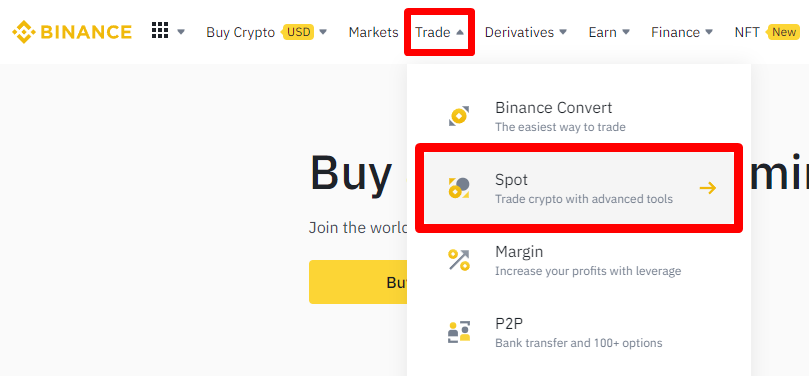
Margin trading gives experienced traders the option to borrow funds to increase their position sizes. Binance offers leverage up to 10x for spot trading with margin, allowing users to potentially amplify their earnings, but also their risks. This tool includes an automated risk management system that closes positions to prevent excessive losses.
Futures and Derivatives Trading
Binance Futures is one of the most used futures trading platforms globally. It offers both perpetual and fixed-term contracts with leverage up to 125x on certain trading pairs. Traders can select from USDT-M contracts (margined using USDT) and COIN-M contracts (margined using the base cryptocurrency), offering great flexibility to match diverse investment strategies.
The platform also offers options on Bitcoin and Ethereum, allowing advanced traders to implement complex hedging or speculative strategies.
Earning Opportunities with Binance Earn
Binance Earn encompasses a suite of products that allow you to generate passive income with your cryptocurrencies. This includes staking, which enables users to participate in transaction validation on Proof-of-Stake blockchains and receive rewards. Binance offers staking options for more than 100 cryptocurrencies, with potential annual yields exceeding 20% depending on the asset.
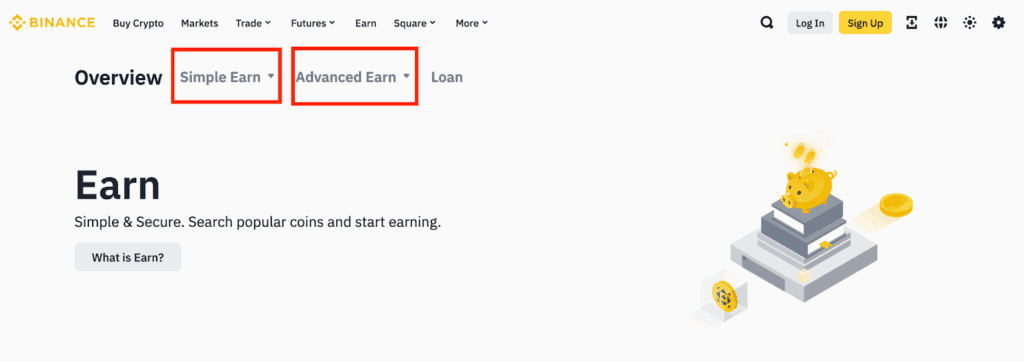
Flexible savings products allow you to deposit cryptocurrencies with no lock-up period, providing the freedom to withdraw funds at any time. Fixed savings products offer enhanced returns in return for committing your assets for a specific period.
Exploring DeFi, NFTs, and Innovative Features
The inclusion of decentralized finance (DeFi) gives users direct access to DeFi protocols from the Binance interface. Binance Launchpad serves as a launching platform for new blockchain ventures, allowing BNB holders to participate in early token sales.
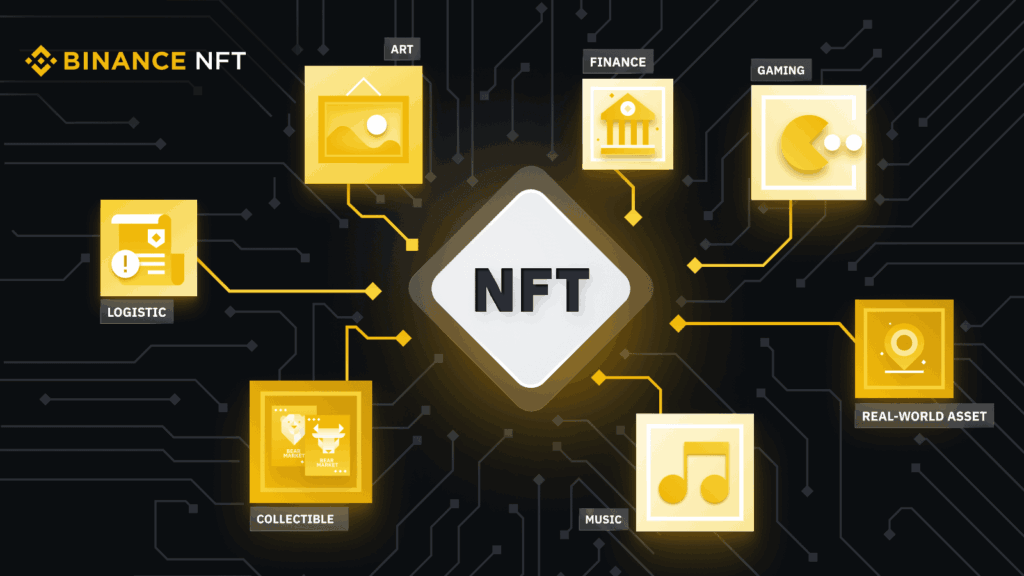
The Binance NFT marketplace provides a platform for buying, selling, and creating non-fungible tokens. Integrated trading bots automate investment strategies like DCA (Dollar-Cost Averaging) or grid trading.
A Wide Selection of Cryptocurrencies on Binance
Binance boasts an extensive selection of cryptocurrencies, offering trading access to over 600 digital assets.
Major cryptocurrencies are, of course, prominently featured on Binance. Bitcoin (BTC) often accounts for over 40% of daily trading volume, and Ethereum (ETH) is the second most actively traded cryptocurrency.
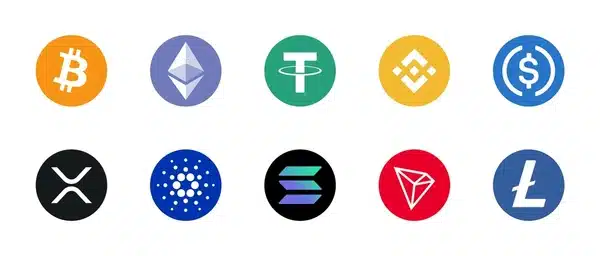
Altcoins like XRP, Solana, Cardano, Polkadot, and Avalanche also benefit from high liquidity on Binance, which leads to tighter spreads and effective order execution.
Access to Emerging Tokens
Binance is known for quickly spotting and listing promising new projects. It offers early access to tokens within the DeFi space, cryptocurrencies focused on gaming and metaverses, and tokens linked to artificial intelligence and Web3 initiatives.
With over 2,000 distinct trading pairs, including options in crypto/crypto, crypto/stablecoin, and crypto/fiat, Binance enables traders to implement advanced arbitrage strategies.
BNB: The Binance Coin
The Binance Coin (BNB) is a vital part of the Binance ecosystem. Currently ranked 5th in market capitalization, valued at over $95 billion, BNB has developed from a simple utility token into a prominent cryptocurrency.

The Uses of BNB
At the heart of Binance and the Binance Smart Chain, BNB serves two crucial purposes. It reduces trading fees by up to 25% when users opt to pay their Binance fees in BNB. Additionally, on the Binance Smart Chain, BNB is used to pay for all transactions, making it a fundamental utility token.
Is BNB a Deflationary Token?
Binance conducts quarterly burns of BNB, permanently removing a portion of the circulating supply. These activities are designed to reduce the total supply from 200 million to 100 million tokens, which could help increase the token’s value over time.
BNB has shown significant growth since its introduction, increasing from a few cents to over $680, driven by the growth of the Binance ecosystem and the advancement of BSC.
Benefits and Drawbacks of Using Binance
Let’s now consider the advantages and areas for improvement of the Binance platform.
Top 5 Advantages of Binance
- 1. High Liquidity : Binance offers the highest liquidity in the cryptocurrency market, with daily trading volumes consistently exceeding $20 billion. This ensures smooth execution of trades, even for large orders, with very tight spreads on major pairs.
- 2. Competitive Fees : Binance offers some of the most competitive fees available. Standard fees are around 0.1% for both makers and takers, with additional savings of 25% when using BNB to pay fees, bringing them as low as 0.075%.
- 3. Comprehensive Ecosystem : More than a trading platform, Binance provides a complete integrated ecosystem for all crypto needs. Users can access everything from Binance Smart Chain and DeFi products to staking, NFTs, and payment services, all in one place.
- 4. Tech Innovation and Security : Binance invests heavily in research and development, frequently offering new features before its competitors. Security measures include two-factor authentication, the SAFU insurance fund, and regular security audits.
- 5. Support and Global Access : With customer service in over 30 languages and availability in more than 180 countries, Binance offers outstanding accessibility, allowing users around the world to use the same services.

Top 5 Disadvantages of Binance
- 1. Complexity for Beginners: Binance’s advanced interface can be daunting for new users. The extensive range of features can create a challenging learning environment, which could increase the chance of user errors.
- 2. Customer Service Issues : Despite its size, Binance can suffer from slow customer service response times, especially during peak trading periods. Users often report waiting several days for a satisfactory response.
- 3. Regulatory Restrictions : Increasing regulatory scrutiny can limit access to certain features based on location. These rules are constantly changing, leading to potential disruptions for users who might find their access changed with little warning.
- 4. Mixed Reviews on Trustpilot : With a rating of 1.6/5 stars on Trustpilot from over 5,500 reviews, Binance’s reputation is mixed. Notably, Trustpilot disabled the TrustScore in 2024 due to concerns about fake positive reviews.
- 5. Risks of Centralization : As a centralized platform, Binance presents certain systemic risks. Users are exposed to possible hacks, bankruptcy, or the freezing of funds by authorities, which contradicts the decentralized principles of cryptocurrencies.
Understanding Binance Fees and Commissions
Spot trading fees on Binance are 0.10% for both makers and takers. Paying fees using BNB can reduce these fees by as much as 25%, effectively lowering them to 0.075%.
VIP Program and Volume Discounts
The VIP program rewards frequent traders with progressive fee discounts. This tiered system has nine levels based on 30-day trading volume and BNB holdings. Here are some examples:
- VIP 1 (≥1M USD + ≥25 BNB): 0.0900% maker / 0.1000% taker
- VIP 3 (≥20M USD + ≥250 BNB): 0.0400% maker / 0.0600% taker
- VIP 9 (≥4B USD + ≥5,500 BNB): 0.0110% maker / 0.0230% taker

Deposit and Withdrawal Costs
Binance does not charge fees for cryptocurrency deposits. Withdrawal fees depend on the specific cryptocurrency: Bitcoin withdrawals cost about 0.0005 BTC, Ethereum is around 0.005 ETH, while Binance Smart Chain withdrawals are just 0.0005 BNB.
Fiat and Bank Card Fees
Fiat deposits via SEPA transfer are free. Credit card purchases incur fees of 1.8%, while fiat withdrawals via bank transfer cost 0.8 euros within Europe.
Fee Comparison With Competitors
| Exchange | Maker Fees | Taker Fees | Crypto Deposit | Fiat Withdrawal | |
|---|---|---|---|---|---|
| Binance | 0.1000% | 0.1000% | Free | 0.8€ | |
| Bybit | 0.2000% | 0.1500% | Free | Variable | |
| Bitget | 0.02% | 0.06% | Free | Variable | |
| Coinbase | 0.40% | 0.60% | Free | 25$ |
Creating a Binance Account: A Step-by-Step Guide
Let’s go through the 5 steps to create a Binance account.
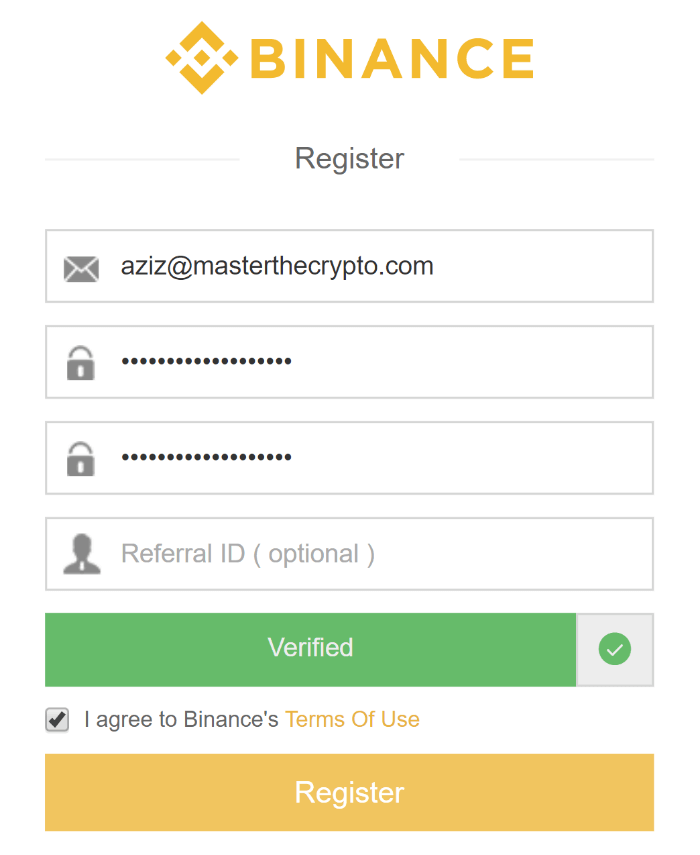
Step 1: Registration Process
Go to the official binance.com website and select “Register.” Provide your email address and create a strong password with at least 8 characters, including uppercase and lowercase letters, numbers, and symbols. You’ll receive a verification code in your email, which you need to enter within 30 minutes.
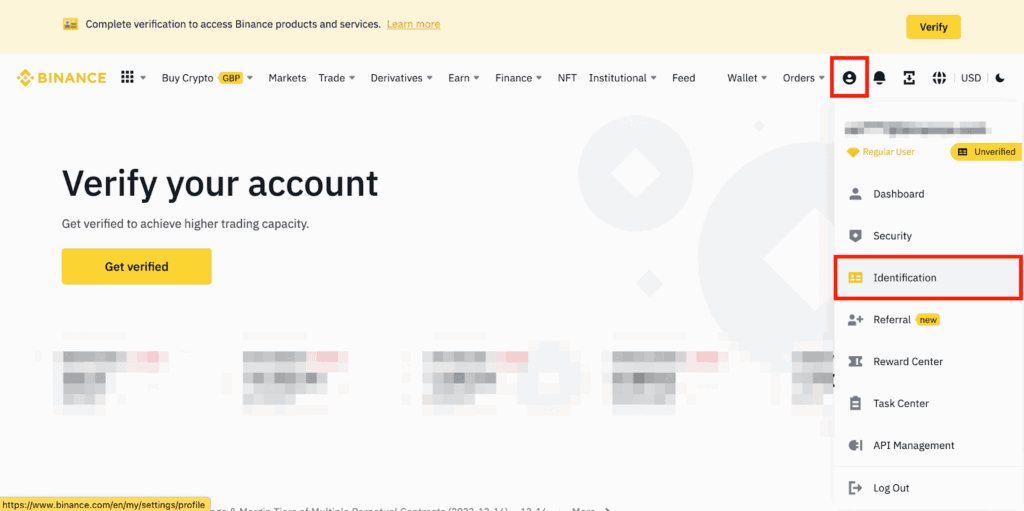
Step 2: Identity Verification (KYC) Process
Completing KYC verification is necessary to access advanced features. Select “Verify now,” choose your country of residence, and complete the form with your personal information as it exactly appears on your official ID.
 Share.