
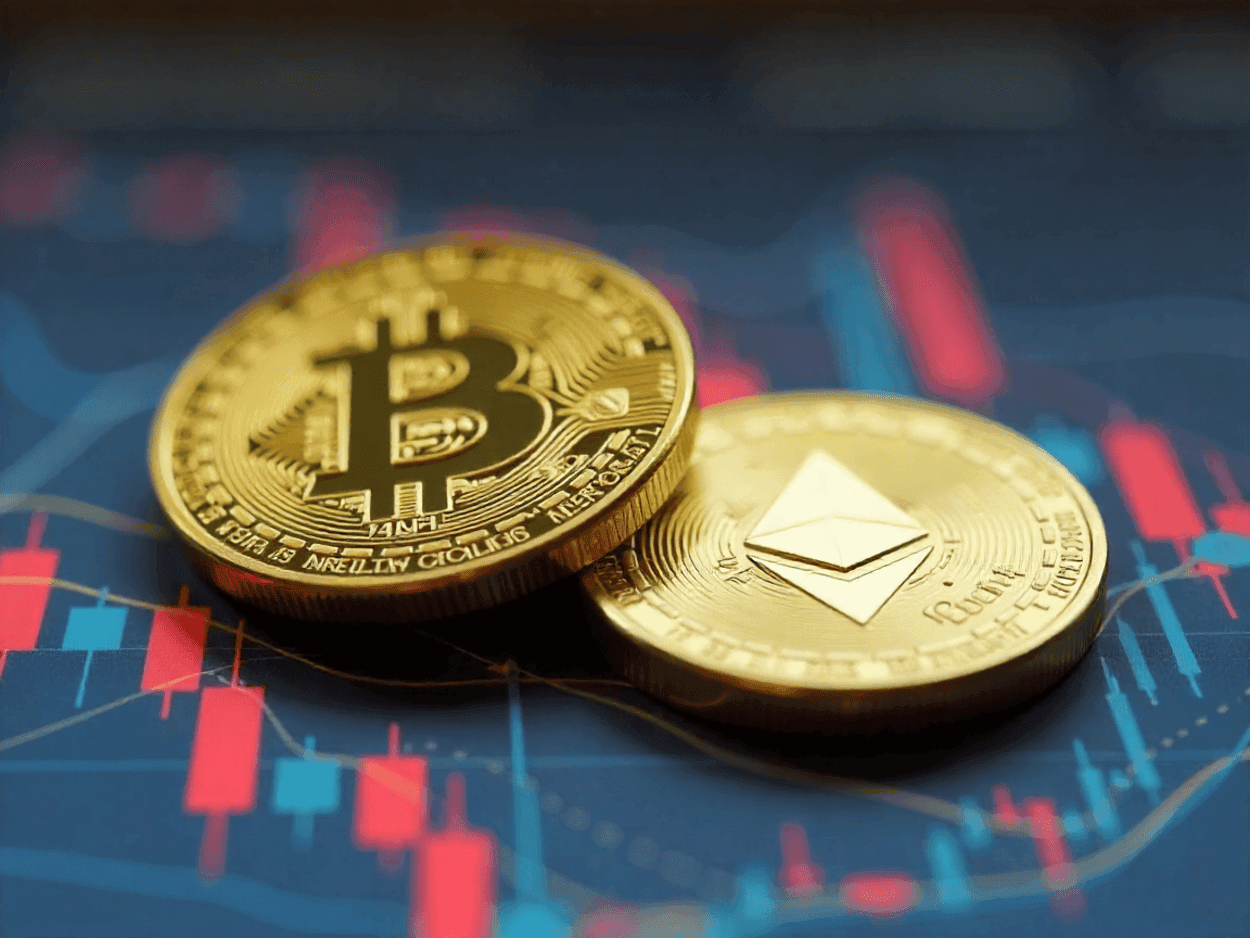
For a large part of 2026, the narrative was straightforward: AI stocks were on the rise, while cryptocurrency struggled. However, July changed everything. Both Bitcoin and Ethereum achieved remarkable monthly gains, surpassing performance from any other significant asset class, as the driving force behind global equities faltered.
Here’s a recap of July’s performance:
| Asset | Performance in July |
|---|---|
| Ethereum ($ETH) | +20% |
| Bitcoin ($BTC) | +9% |
| Russell 2000 | -3% |
| Nasdaq 100 | -9% |
| Chip Stocks | -22% |
Interestingly, the mood in the crypto space wasn’t one of triumph. The Crypto Fear & Greed Index was at 28, firmly in the “Fear” zone, even while Ethereum enjoyed a 20% rise for the month.
July Performance of Bitcoin and Ethereum
Ethereum started July near $1,600 and closed at approximately $1,920 by July 29, marking an approximate 20% increase.
Meanwhile, Bitcoin opened July around $60,000, finishing the month around $64,200, representing a rise of roughly 9%.
These increases weren’t straightforward. Both cryptocurrencies rallied following a lower-than-expected US CPI report in mid-July, faced volatility when spot Bitcoin ETFs ended a week-long inflow streak with a significant one-day outflow of $225 million, and ultimately rebounded once the U.S. ceased airstrikes on Iranian military sites, easing geopolitical tensions.
What stands out is how the month unfolded: while cryptocurrencies absorbed negative news and continued to rise, equities moved in the opposite direction.
Why Did Chip Stocks Plunge 22% While the Dow Rose?
Rather than a risk-off month, this was a rotation.
At the start of July, semiconductor stocks had surged nearly 97% during the year. However, by mid-month, about a third of those gains had evaporated, with selling intensifying in the final week. This downturn wasn’t due to weak demand but rather about the prices investors were willing to pay for impeccable execution.
Three factors contributed to this market shift. Bank of America’s bubble risk indicator for semiconductors reached 0.91, exceeding the Nasdaq 100’s 0.69, as noted by strategist Michael Hartnett, who remarked that such extreme concentration and overbought conditions hadn’t occurred since June 2000. Additionally, Big Tech’s projected capital spending on AI began to seem more like an expense than a potential growth catalyst. Lastly, reports about China’s advancements in memory chips and lithography technology raised concerns about the sustainability of the industry’s competitive edge.
This downturn wasn’t isolated. During the last week of July, South Korea’s Kospi plummeted 10.84% in a single session, with Samsung dropping 13.4% and SK Hynix falling over 14.7%. Japan’s Nikkei 225 also decreased by 3.95%, and Advantest experienced losses of over 10%.
In contrast, the Dow Jones gained 537 points on July 28, marking a third consecutive day of gains, buoyed by robust earnings from companies like Sherwin-Williams and Coca-Cola. Capital did not exit the market; instead, it shifted from crowded sectors, with some funds flowing into crypto.
Why Did Ethereum Outperform Bitcoin by Over 2 to 1?
Ethereum significantly outpaced Bitcoin, achieving a 20% gain compared to Bitcoin’s 9%, driven by concrete factors rather than mere sentiment.
There continued to be institutional demand for Ethereum. Bitmine invested an additional $74 million in ETH during July, as Tom Lee pursued a goal of owning 5% of the total supply. Furthermore, institutional investors began to view ETH as a clearer representation of a crypto market recovery. Sean Farrell from Fundstrat highlighted mid-month that the tactical situation was improving, making ETH more appealing for investments.
This perspective is supported by historical patterns. During the 2022 bear market, Ethereum began to outperform Bitcoin several months before Bitcoin reached its lowest point. Traders believing that this pattern is repeating likely allocated their resources to ETH before the semiconductor sell-off began.
Did the Fed Decision Impact August?
On July 29, the Federal Reserve maintained the funds rate between 3.50% and 3.75% for the fifth consecutive meeting, marking the longest pause since the financial crisis of 2008. The decision passed with a 9 to 3 vote, as Beth Hammack, Neel Kashkari, and Lorie Logan opposed in favor of a 25 basis point increase.
This is key information to consider for August. A three-way dissent is uncommon, and it occurred after prediction markets had factored in roughly a 20% chance of a rate hike—the highest probability seen in this cycle. Chair Kevin Warsh provided little specific guidance, leaving September uncertain.
Cryptocurrency prices remained stable post-announcement, with BTC around $64,268 and ETH near $1,917 shortly after. However, consistent rates coupled with rising yields and a stronger dollar indicate a tighter liquidity situation than what the mid-July CPI data suggested. Standard Chartered maintains a year-end target of $100,000 for Bitcoin, while Polymarket indicates more cautious expectations, projecting BTC to end the year between $70,000 and $75,000 and ETH between $2,000 and $2,250.
Key Takeaways for Investors from July
The significant takeaway is not merely that crypto is making a comeback, but rather that cryptocurrency and AI stocks have diverged as asset classes. For two years, both traded as one liquidity asset. In July, they exhibited distinct behaviors, and an investment strategy incorporating both would have benefitted from this divergence, providing diversification rather than excessive exposure.
This risk is twofold. Should the semiconductor decline evolve into a broader growth concern rather than just a rotation, the newfound independence of crypto could face immediate challenges.