
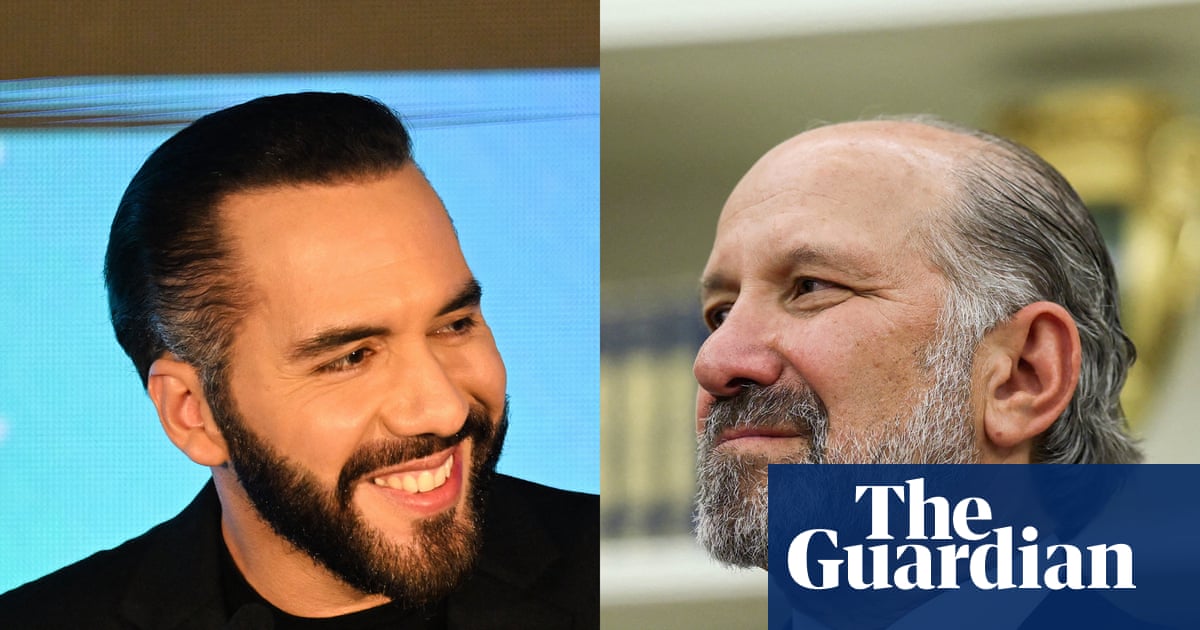
Connections between Howard Lutnick, a Trump administration official, and his family’s business ventures extend into El Salvador. The Central American nation’s leader, Nayib Bukele, has established a relationship with the White House while enacting strict immigration policies. These actions, including the imprisonment of individuals deported from the U.S., have sparked considerable controversy.
El Salvador is also becoming a center for cryptocurrency and digital media, with key figures linked to Donald Trump involved in various profitable projects. Some of these ventures have attracted the attention of regulatory bodies and ethics observers.
Documents from the Securities and Exchange Commission (SEC), the Office of Government Ethics (OGE), and public records in both the U.S. and El Salvador reveal that Cantor Fitzgerald, previously led by Lutnick until recently when management shifted to a team including his sons, possesses a significant stake in the cryptocurrency firm Tether. Cantor Fitzgerald reportedly owns 5% of Tether, has orchestrated investment deals, and acts as custodian for the U.S. Treasury assets generating profits.
The Department of Commerce’s public relations department was contacted by The Guardian for Lutnick’s response to these reported connections, but no statement was received.
A notable Cantor investment involved the purchase of $775 million in shares of Rumble, a video platform aligned with Trump, completed in February. Prior to this deal, Rumble secured an agreement to provide cloud services to the El Salvador government. Bukele’s administration cited “freedom, innovation, and prosperity” as the shared principles underpinning this partnership.
Cantor not only facilitated the Rumble share purchase, allowing insiders to profit substantially, but has also been a long-term investor in Rumble since backing the special purpose acquisition company (SPAC) that enabled the platform to go public.
Tether established a presence in El Salvador in January, attracted by the nation’s favorable tax and regulatory environment for crypto firms. Tether has capitalized on these benefits by investing in real estate in San Salvador, alongside U.S. crypto entrepreneurs and members of Bukele’s family.
Recent reporting from the New York Times indicates that Tether’s previously controversial relationships have become more acceptable in Washington under the Trump administration. However, the extent of the company’s links to El Salvador has not been fully explored.
Cantor and Lutnick’s dealings in El Salvador further highlight the Trump administration’s deepening ties with Bukele’s government, which has imprisoned a significant percentage of its population during a state of emergency, reinforcing Bukele’s authority amid a crackdown on gangs.
These relationships also raise questions about future cryptocurrency regulations, particularly after Tether’s founder, Giancarlo Devasini, reportedly stated that Lutnick would use his political influence to alleviate regulatory scrutiny on the company, which has faced challenges for nearly a decade.
Tether
Tether, known for creating one of the most actively traded cryptocurrencies, has faced scrutiny since its launch in 2014 alongside Bitfinex, a cryptocurrency exchange. Both were founded by Giancarlo Devasini, who has since relocated to El Salvador.
U.S. regulators have increasingly targeted Tether. In October, the Wall Street Journal reported that the U.S. Attorney’s office in Manhattan was investigating Tether for potential sanctions violations, money laundering, and involvement in funding illicit activities.
According to cryptocurrency watchdog Protos, this was the 19th time Tether had faced U.S. government scrutiny, with previous investigations alleging fundamental fraud.
Tether’s main product, USDT, is a stablecoin designed to maintain a value equivalent to the U.S. dollar.
Stablecoins aim to provide a stable asset within the volatile crypto market, facilitating trading, investment, and fund transfers at dollar-equivalent values.
USDT’s dollar equivalence is supposedly maintained by reserves of U.S. dollars or easily convertible assets, allowing holders to convert USDT into dollars at any time. Theoretically, the company generates revenue from interest earned on these reserve holdings.
However, cryptocurrency traders, critics, government bodies, and law enforcement agencies have consistently questioned whether Tether possesses reserves sufficient to back all USDT issued.
In 2021, Tether and Bitfinex agreed to a $42.5 million settlement with the Commodity Futures Trading Commission (CFTC), with Tether contributing $41 million.
The CFTC stated that Tether misrepresented its U.S. dollar reserves from June 2016 to February 2019, falsely claiming it held enough reserves to back every USDT in circulation.
Instead, the CFTC found that Tether relied on unregulated entities and third parties to hold reserves, commingled funds with Bitfinex, and held reserves in non-fiat financial products.
In the same year, Tether paid $18.5 million to the New York Attorney General’s office to resolve a lawsuit that foreshadowed issues similar to those surrounding the collapse of FTX. The Attorney General alleged Tether concealed an $850 million shortfall in its reserves by commingling client and corporate funds.
As part of the agreement, Tether and Bitfinex were not required to admit any wrongdoing.
In January, Protos summarized that the company had repeatedly misrepresented the quality and quantity of its backing.
Tether has also resisted compliance with regulations designed to ensure that stablecoins like USDT have sufficient backing.
Tether is not currently listed on European exchanges because the company has refused to comply with the European Union’s Markets in Crypto-Assets (MiCA) framework, which took effect on January 1. The framework requires stablecoin issuers operating in Europe to obtain authorization as an electronic money institution and to hold at least 60% of their reserve assets in European banks.
Other allegations have investigated Tether’s knowledge and involvement in using the token for illicit activities, such as sanctions evasion and trafficking.
Ricardo Valencia, a professor at California State University, Fullerton, and a former staffer at the Salvadoran U.S. Embassy, commented that the growing relationship between Tether and the Bukele regime was not surprising.
While the Trump regime was exploiting the “crypto gulag horror movie” of Cecot, a destination for summarily deported immigrants, both the U.S. administration and Tether were capitalizing on the fact that “you can pay the Salvadoran government to do shady deals for a fee,” Valencia said.
Lutnick and Tether
The full extent of Lutnick’s relationship with Tether became evident during his confirmation hearings in January, when U.S. Senators, including Elizabeth Warren, sought to uncover how deeply entwined Lutnick’s business affairs were with the cryptocurrency firm.
On January 27, just before those hearings, Warren sent a letter to Lutnick, stating, “Your deep involvement with and support for Tether, a known facilitator of criminal activity, raises concerns about your judgment and ability to put the interests of the American people ahead of your own financial interests.”
During the hearings, Lutnick disclosed that a 2024 agreement provided Cantor with a convertible bond equivalent to a 5% stake in Tether, valued at $600 million. The Wall Street Journal also reported that Cantor “holds most of Tether’s $134 billion in assets, largely U.S. Treasury bills, in exchange for tens of millions of dollars in fees each year.”
The relationship began when Tether faced a severe crisis. After settling with the New York Attorney General and CFTC, Tether’s Bahamian bankers lost their ability to process international payments, isolating them from customers. Reportedly, an investment advisor from their original bank connected them with Lutnick.
According to the Wall Street Journal, Lutnick personally met with Devasini, the Tether founder, in the Bahamas in late 2021 to assess whether the company possessed the assets it claimed to have.
Last July, at a crypto conference, he said that he had demanded, “Show me the money,” and “we found every penny, and they had every penny, but they had it in what I would call some pretty godforsaken places.”
Previous reports have suggested that at times, Tether’s backing included significant proportions of commercial paper, consisting of undertakings from other companies to repay loans at a future date.
Cantor later became Tether’s asset manager. Its position as a primary dealer in the Treasury market allowed for relatively easy asset liquidation. The firm also reportedly acquired business from several crypto-trading firms that were Tether customers.
El Salvador
Even before formally establishing a presence in El Salvador, Tether’s executives apparently wielded considerable influence in Bukele’s administration.
Salvadoran media reports indicate that Max Keiser and Stacy Herbert, U.S. crypto advocates leading El Salvador’s national Bitcoin office, also invested in Bitfinex, the cryptocurrency exchange founded by Tether’s Devasini and whose management overlaps with the stablecoin firm.
In 2023, the Salvadoran newspaper El Faro described the office they run as “Bitfinex’s puppet embedded in the Salvadoran state.”
In the same year, Tether announced a $250 million investment in Bukele’s initiative to harness geothermal energy for Bitcoin mining at a “Volcano Energy” park.
The company also planned to help issue bonds to finance the construction of a Bitcoin city, although this project did not materialize.
More recently, individuals associated with Tether have been acquiring real estate in the country.
According to reports, Devasini purchased a house in San Salvador for $2 million.
He also reportedly acquired a historic hotel building in downtown San Salvador in a joint venture with Keiser. El Faro noted that this purchase occurred after the administration exempted investors in that district from income tax.
Tether’s CEO, Paolo Ardoino, bought two plots of land in the port city of La Libertad, revealing he had become a Salvadoran citizen.
Tether is expected to receive tax concessions for a planned 70-story headquarters tower in San Salvador.
The Rumble deal
In the Rumble deal, which concluded on February 7, Tether Holdings provided $775 million to Rumble, earmarking $525 million for a share buyback and $250 million for growth initiatives, according to the announcement.
Weeks later, Rumble and El Salvador announced a partnership on cloud services infrastructure, despite the country’s separate agreement with Google in 2023.
Market analysts indicate that Tether has become the largest single shareholder in Rumble with more than 20% of the shares.
The deal included limitations on Tether’s influence over Rumble. According to the December 20 press release and SEC filing, Rumble’s existing board and governance structure, including Chris Pavlovski’s super-majority voting control, would remain unchanged, and Tether would hold a minority position without the right to designate board members.
This lack of operational control is not offset by potential short-term profits.
Financial news site Sherwood commented on the Tether-Rumble deal, describing Rumble as “just a really, really bad business,” noting that “in Q3 2023, it lost $29 million on $18 million in revenue, and in Q3 2024 it lost $32 million on $25 million in revenue.”
Sherwood added that Rumble’s “cash and cash equivalents shrank from $218 million at the beginning of the year to $131 million at the end of September” and that “at its current pace the company would be running low on cash within the next 12 months,” given that “despite its revenue growth, Rumble’s losses have grown even faster.”
Rumble’s Trump connection
Tether’s interest in Rumble may be attributed to its alignment with the Trump administration.
The company’s core offering is an “anti-woke” video platform popular among MAGA influencers since 2020, amidst increased content moderation on platforms like YouTube.
Rumble has leaned into an anti-“cancel culture” message, offering deals to right-wing creators such as Andrew Tate, Tulsi Gabbard and Glenn Greenwald, and presenting itself as a cornerstone of an ideologically driven “parallel economy” of pro-MAGA companies advocating “free speech.”
In 2021, its first venture capital funding round was led by right-wing billionaire Peter Thiel and JD Vance’s venture fund, Narya Capital. Vance and Thiel reportedly sold their investments after Rumble went public in September 2022.
In 2022, Trump’s Truth Social platform adopted Rumble’s ad network, as an alternative to Google’s AdSense. At the time, Rumble’s CEO described the ad network’s goal was to counter “cancel culture.”
In 2023, the company signed a “seven-figure” deal with Donald Trump Jr.
Rumble sued the government of Brazil, alongside Trump Media, over a judge’s order that the platform remove accounts supporting Jair Bolsonaro.
On February 12, Pavlovski was given a “new media” seat at the White House’s press conference, telling spokesperson Karoline Leavitt that “Rumble was a victim of censorship at the hands of multiple foreign governments” and asking “what the administration will do to protect U.S. interests and values worldwide.”
Lutnick’s End
Through Cantor, Lutnick was also deeply involved with Rumble.
Under Lutnick, Cantor “made a fortune, thanks to a favorable deal structure,” according to Forbes, after sponsoring the SPAC which took Rumble public.
SPACs allow private companies to avoid the investor scrutiny common with traditional IPOs.
SPAC sponsors generally received stocks and warrants with little downside risk. In the Rumble SPAC, 12 million shares were issued to “Sponsor Related Parties.”
Rumble prospectuses showed that individuals related to Lutnick had also been dealt in, including the Lutnick 2020 Descendants Trust UA (375,000 shares), Allison Lutnick (50,000 shares), and Edith Lutnick (35,000 shares).
Cantor’s holdings report indicates that the company holds 9.3 million Rumble shares, valued at over $120 million.
Lutnick personally owned $1 million to $5 million worth of Rumble stock.
Finally, Cantor was the placement agent for Tether’s buy-in to Rumble, typically attracting fees which Cantor waived.
Rumble
Rumble had several officers who have since served in the Trump administration.
David Sacks resigned from Rumble’s board to pursue a government position, now serving as the Trump administration’s “crypto czar.”
Sacks joined the board after Rumble acquired Callin and Locals, a crowdfunding platform fronted by Dave Rubin that Sacks had backed.
Any share sales he made in the February deal were not subject to insider trading disclosures. However, a filing shows him increasing his shareholding to just over 571,000 shares, a position being worth over $4.2m in the Tether deal.
Ethan Fallang, a former Rumble board member and Narya Capital resigned to work in government. Filings show him owning 27,000 shares.
Although he is not subject to insider trading disclosures, filings show that Trump’s deputy FBI director, Dan Bongino, has maintained his 5.72% share in Rumble since it went public. No OGE agreements or disclosures for Bongino have been made public to date.
OGE disclosures indicate that on the way into their jobs, Bongino’s new boss, Kash Patel, held between $1,001 and $15,000 worth of stock; transportation secretary