
Digital currency has transformed from a niche interest online into a significant presence in the global financial system. With Bitcoin gaining widespread recognition, Ethereum empowering decentralized applications, and digital asset platforms becoming well-known, more individuals than ever are eager to participate. However, entering the crypto space without foundational knowledge is similar to attempting to race a vehicle without knowing how to change gears.
For newcomers, the world of digital currencies can seem like a confusing blend of technical terminology, market excitement, and high-stakes investments. With potential fraudsters and inaccurate information prevalent, having a strong understanding of the ecosystem is not just beneficial but essential.
This resource is designed to help you navigate through the complexities. Whether you’re curious about the concept of a blockchain, concerned about securing your digital assets, or interested in learning responsible trading practices, we’ve got your needs covered. We have gathered some of the finest beginner-level courses—both free and paid—enabling you to learn at your convenience from reliable sources.
Why Learning About Digital Currency Is Crucial for Beginners
Looking ahead to 2025, digital currency isn’t merely a trendy term—it’s a transformative influence redefining finance. With the overall digital currency market capitalization recovering to about $2.8 trillion, as indicated in the Q1 2025 Digital Currency Industry Report from CoinGecko, the digital asset sector is experiencing a comeback, fueled by increased investor engagement and technological progress.
This upturn signifies more than just numbers; it highlights the increasing incorporation of digital currencies across various fields, including finance and supply chain management. As digital assets become more ingrained in daily financial activities, understanding digital currency fundamentals becomes increasingly vital.
The Flourishing Digital Currency Arena: A Contemporary Quest for Riches
The digital currency market’s recent success highlights its underlying possibilities. Bitcoin, the foremost digital currency, has displayed notable price changes, reflecting the market’s unpredictable nature and the potential gains. These dynamics emphasize the importance of being well-informed and ready to adapt in this developing environment.
Furthermore, the expansion of decentralized finance (DeFi) platforms and non-fungible tokens (NFTs) has broadened the application of digital currencies, drawing in a wider audience and encouraging creativity. This shift represents a move from speculative actions to real-world applications, making this an ideal moment to invest in digital currency education.

Career Opportunities: Beyond Just Trading
The digital currency sector provides numerous career options beyond conventional buying and selling:
- Blockchain Designers: Crafting and implementing decentralized applications and smart contracts.
- Digital Currency Analysts: Analyzing market trends to advise on investment decisions.
- Compliance Experts: Making sure rules are followed in accordance with changing regulatory guidelines.
Marketing and Public Relations Professionals: Creating compelling stories within the decentralized sphere. - Client Support Specialists: Supporting user involvement and problem-solving on digital currency platforms.
As the field advances, these roles are becoming crucial to the infrastructure supporting digital assets.
Possible Income: Financial Rewards
Engaging with digital currencies can provide financial benefits:
- Investors: Calculated investments in digital assets offer the potential for substantial returns, although they involve certain risks.
- Traders: Active trading can produce profits by leveraging market fluctuations, requiring a solid grasp of technical analysis and market metrics.
- Professionals: Occupations in the digital currency industry often have competitive salaries, highlighting the need for specific expertise in this growing industry.
These financial advantages emphasize the importance of gaining knowledge and expertise relevant to digital currencies.
The Importance of a Strong Foundation
Before entering the digital currency market, it’s crucial to build a solid educational base:
- Understanding Market Fluctuations: Recognizing the factors that influence price fluctuations aids in informed decision-making.
- Security Awareness: Learning to protect digital assets is essential to avoid losses from hacking or scams.
- Regulatory Compliance: Keeping up-to-date with legal structures promotes responsible involvement in the digital currency arena.
Essential Knowledge Every Digital Currency Course Should Include
Blockchain serves as the core on which the digital currency world is built. It’s a decentralized, unchangeable digital log that records transactions across different systems, ensuring transparency and security. For beginners, understanding blockchain is vital—it’s about more than just digital coins; it’s about the technology that enables decentralized trust, which is what makes digital currencies so innovative.
Every transaction is organized into blocks and sequentially linked, forming a chain. This structure makes sure that once data is recorded, it can’t be changed without approval from the entire network. Learning how blockchain works sets the groundwork for understanding every other part of the digital currency space.

Types of Digital Currencies
The digital currency market encompasses much more than just Bitcoin. Today, there are a large variety of digital currencies, each created for different uses. From digital money and decentralized financial tools to gaming and governance, digital currency has grown into a wide array of digital assets.
An effective course should assist learners in distinguishing between main categories such as:
- Payment Coins – Digital money for transactions (e.g., Bitcoin).
- Stablecoins – Connected to regular currencies to lower instability (e.g., USDT, USDC).
- Utility Tokens – Access to particular features or services within a blockchain (e.g., ETH).
- Security Tokens – Represent ownership of assets or shares, often regulated.
- Governance Tokens – Offer voting powers in decentralized protocols (e.g., UNI, MKR).
Understanding these categories allows new learners to see why various digital currencies exist and how they integrate into larger blockchain systems.
Digital Currency Security and Wallet Administration
Security in digital currency is not optional—it’s necessary. Unlike banking, there’s no support to get back stolen funds. Wallet administration is a core skill for anyone holding digital assets, and courses should not overlook it.
There are primarily two types of wallets:
- Hot Wallets – These are linked to the internet, making them accessible for regular use but more vulnerable to hacks.
- Cold Wallets – These are offline (like hardware wallets), making them more secure for long-term storage.
Courses should also cover how to:
- Protect private keys
- Set up two-factor authentication
- Avoid phishing scams
- Recognize suspicious apps and fake wallets
These basics are essential for protecting your assets and avoiding becoming another cautionary tale in digital currency communities.
Basic Trading Principles
Trading digital currency can be exciting, but it can also be daunting without a solid grasp of the basics. Before looking at charts and platforms, it’s important to understand key principles that guide every trading decision.
Courses should clearly explain:
- Order Types – Market, limit, and stop orders.
- Trading Pairs – How digital currencies are traded (e.g., ETH/BTC, BTC/USDT).
- Candlestick Charts – Visual tools that show price changes over time.
- Volume Indicators – Measures of how much of a digital coin has been traded, which helps identify market trends.
These tools are essential for understanding market movements and creating a basic trading strategy.
Risk Management Strategies
Digital currency markets are known for their instability. Potential profits are large, but so are the risks. Without risk management, a few bad trades can deplete your capital.
A solid course should teach:
- Diversification – Spreading investments across different assets to minimize exposure.
- Position Sizing – Only investing what you can afford to lose on each trade.
- Stop-Loss Orders – Automatically selling an asset at a predetermined price to limit losses.
- Emotional Control – Recognizing the impact of fear and greed and sticking to a plan.
Understanding and implementing these strategies separates casual dabblers from responsible digital currency investors. Fortunately, we have a comprehensive guide on risk management that can be understood quickly and easily to learn how to manage risks in digital currency trading.
Top Digital Currency Courses for Beginners
For beginners, there are many high-quality resources available—many of which are free. In this section, we’ll review the best courses for newcomers, starting with the free options, and then moving on to some premium choices that might be worth investing in if you want to take your learning further.
Free Digital Currency Courses to Begin Your Journey
Moving forward in your digital currency education doesn’t require a large financial investment. Several reliable platforms offer comprehensive, beginner-friendly courses at no cost. These resources provide a strong foundation in digital currency concepts, although they may have limitations in depth or scope. Here’s a list of quality free courses to start your journey:
eToro – Digital Currency for Beginners

eToro’s “Digital Currency for Beginners” course gives a concise introduction to digital currencies, covering topics like blockchain basics, decentralized finance (DeFi), wallet types, market capitalization, and portfolio management, and it is designed for those new to the space.
- Duration: Just over 1 hour
- Features: Interactive quizzes to reinforce learning
- Access: Free and open without needing an account
Limitations: While thorough for beginners, it doesn’t go into advanced trading strategies or detailed technical analyses.
Maximizing Learning: Use this course as a stepping stone to familiarize yourself with basic concepts before exploring more specialized topics.
Udemy – Digital Currency Trading: Intro to Smart Money Analysis

This “Intro to Smart Money Analysis” course introduces learners to smart money analysis in digital currency trading. Taught by Mischa Lominy, an experienced trader with practical advice, it challenges traditional trading methods by highlighting the flaws of news and indicator-based trading, emphasizing the importance of understanding market dynamics.
- Duration: About 2 hours
- Skill Level: Beginner
- Access: Free enrollment
Limitations: The course focuses more on trading philosophies and less on foundational digital currency concepts like blockchain technology or wallet management.
Maximizing Learning: Combine this course with a foundational digital currency course to ensure a solid understanding of both trading strategies and basic digital currency principles.
LinkedIn Learning – Digital Currency Foundations

“Digital Currency Foundations” by Dr. Jonathan Reichental provides a structured overview of the digital currency landscape. The course covers blockchain technology, buying and selling digital currencies, mining processes, and the broader implications of digital currencies.
- Duration: 1 hour and 8 minutes
- Skill Level: Beginner
- Access: Free with a 1-month LinkedIn Learning trial
Certification: Certificate of completion available
Limitations: Access requires starting a free trial, and continued access after the trial requires a subscription.
Maximizing Learning: Schedule this course early in your trial to make sure you complete it. Use the certificate to showcase your new knowledge.
WhiteboardCrypto – YouTube Channel
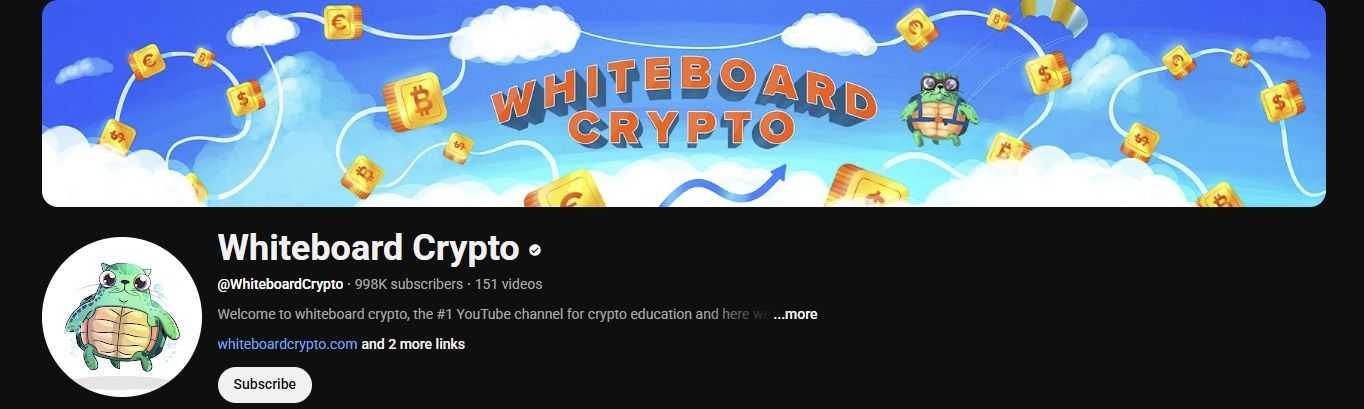
WhiteboardCrypto is a top YouTube channel that simplifies complex digital currency topics, covering a wide range of subjects from blockchain basics to decentralized finance through engaging visuals, analogies, and straightforward explanations.
- Content Style: Short, illustrative videos
- Topics Covered: Proof of Work, DeFi, wallet usage…basically, you name it.
- Access: Completely free without an account
Limitations: The content may seem unstructured, lacking a sequential learning path or assessments, requiring you to create your own learning path, which can be difficult.
Maximizing Learning: Create personalized playlists to organize your learning. Revisit complex topics as needed and engage with the community through comments for additional insights. Also, supplement your learning by opting for some other courses that we have mentioned.
If we are mentioning YouTube, we must also mention the insightful videos on our own CoinBureau channel! Check it out for a wide range of playlists and learning material.
Comprehensive Paid Courses Worth Your Investment
For those ready to go deeper into the digital currency field, investing in a comprehensive course can provide structured learning, expert insights, and recognized certifications. Below are four outstanding paid courses that offer considerable value for beginners looking to improve their digital currency knowledge. Let’s start with the economical option.
Udemy – Digital Currency Trading Investing 101
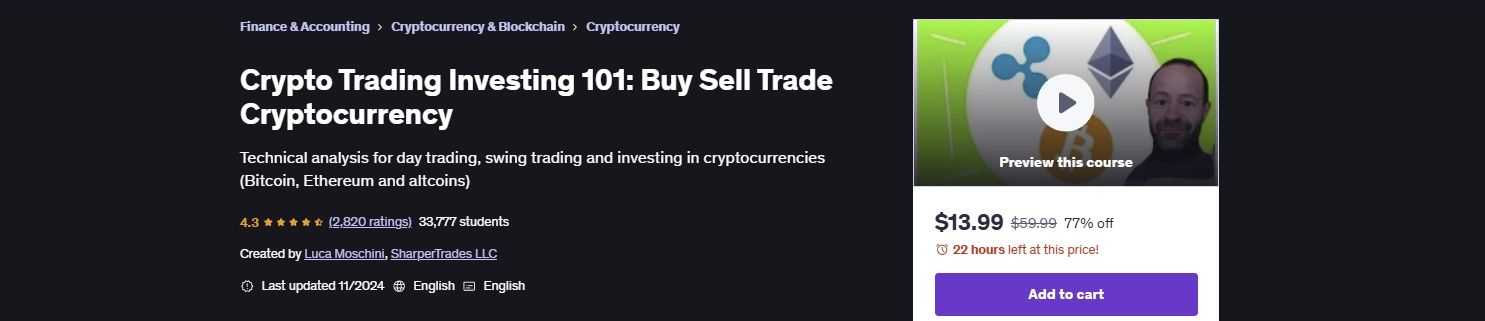
If you want to move beyond the basics and start understanding the specifics of trading digital currency, this course is for you. “Digital Currency Trading Investing 101” is tailored for beginners but looks closely at practical aspects of trading, making it ideal for those serious about entering the markets. The curriculum includes core concepts of blockchain and digital currencies, candlestick analysis, and risk management—essential skills for any aspiring trader.
Price: Typically $59.99, but often discounted (currently $13.99)
Duration: Roughly 7 hours with on-demand video, making it a short and economical option.
Instructor: Luca Moschini, an experienced trader and founder of SharperTrades, LLC
Features:
- Lifetime access to all course materials
- Certificate of completion
- Compatible with mobile and TV viewing
What Makes It Stand Out:
- Focuses heavily on actionable strategies for day trading and swing trading
- Offers real-world examples to help you apply theory to practice
Limitations: While it touches on blockchain basics, the course is more skewed toward trading than technical deep-dives into blockchain or decentralized systems
Tips to Maximize It:
- Pair this with a foundational blockchain or DeFi course if you’re looking for a broader understanding
- Practice along with the course using demo accounts or backtesting platforms
edX – Blockchain Fundamentals (UC BerkeleyX)

This professional certificate program on “Blockchain Fundamentals”, offered by UC Berkeley, delves into the basics of blockchain technology, exploring distributed systems, cryptographic principles, and the mechanics of Bitcoin and other digital currencies. It is designed for serious individuals seeking a balanced academic understanding of blockchain systems and digital currencies.
Duration: 3 months (self-paced); at around 3 to 5 hours per week
Price: About $198 for the full program (currently discounted to $178.20)
Instructor: Taught by faculty members from UC Berkeley, including experts in computer science and blockchain technology.
Features:
- Comprehensive curriculum covering both theoretical and practical aspects
- Hands-on assignments and projects
- Verified certificate upon completion
What Makes It Stand Out:
- Developed by a leading academic institution with a strong reputation in blockchain research
- Balances theoretical knowledge with practical application
Limitations: Requires a commitment to complete multiple courses within the program
Tips to Maximize It: Engage actively with course materials and participate in discussions to deepen understanding.
FutureLearn – Decentralized Finance: Blockchain, Ethereum, and The Future of Banking
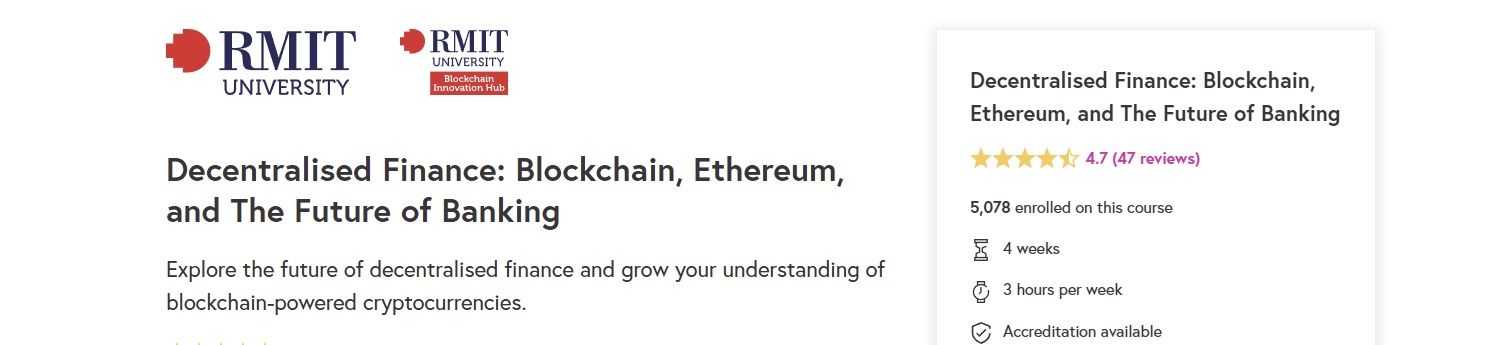
This course on Decentralized Finance offers an in-depth look at DeFi, focusing on how blockchain technology and digital currencies like Ethereum are changing traditional financial systems, covering decentralized exchanges, smart contracts, and the wider implications of DeFi on banking.
Duration: 4 weeks, with an estimated 3 hours of study per week
Price: The platform requires a subscription, but a one-off payment of $79 gives unlimited access to the course
Instructor: Led by researchers from RMIT University, recognized for their expertise in blockchain and fintech.
Features:
- Accredited by The CPD Certification Service
- Interactive learning with real-world case studies
- Digital certificate upon completion
What Makes It Stand Out:
- Focuses specifically on the rapidly evolving field of DeFi