
In brief
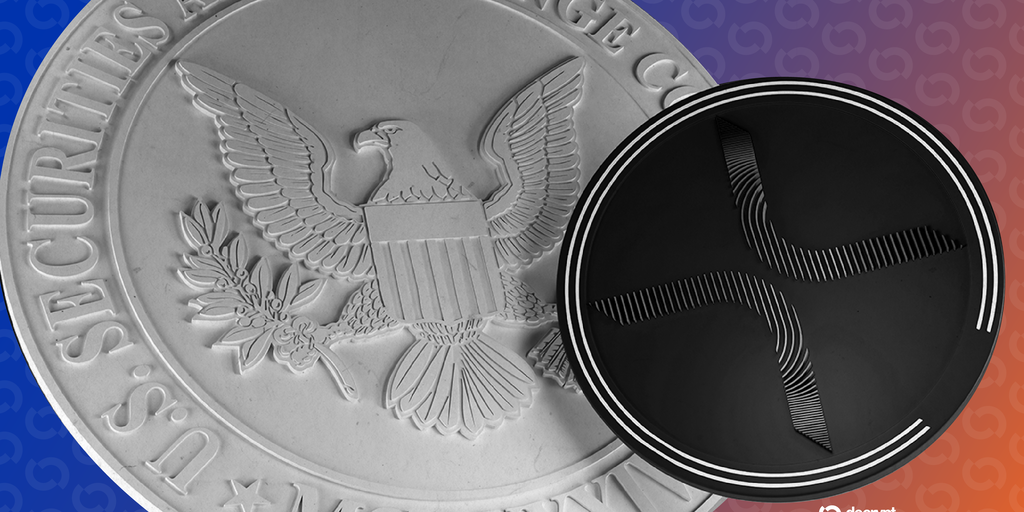
- The Securities and Exchange Commission (SEC) has given the green light for Grayscale’s Digital Large Cap Fund to transition into an ETF, allowing it to be listed and traded.
- This fund mirrors the performance of leading cryptocurrencies, including Bitcoin, Ethereum, Solana, XRP, and Cardano.
- Coinciding with this, other exchange-traded funds focusing on XRP and Dogecoin commenced trading on Thursday.
A crypto asset manager, Grayscale, is launching an exchange-traded fund that reflects the price movements of key digital currencies like XRP, Solana, and Cardano, alongside market leaders Bitcoin and Ethereum. This move comes after the SEC finally granted approval, paving the way for its introduction on the New York Stock Exchange.
The SEC’s official authorization, issued on Wednesday, permits the listing and trading of Grayscale’s Digital Large Cap Fund (GDLC). This decision reverses an earlier suspension from July. The SEC has also endorsed broader listing criteria for products based on commodities, setting the stage for more cryptocurrency ETFs.
Sources indicate that GDLC is anticipated to begin trading on Friday.
GDLC distinguishes itself from spot Bitcoin and Ethereum ETFs introduced last year by tracking an index composed of the top five largest and most actively traded digital assets. According to Grayscale’s official website, Bitcoin accounts for a substantial 72% of the fund’s composition, with Ethereum comprising 17%. XRP, Solana, and Cardano represent 5.6%, 4%, and 1% of the fund, respectively.
Peter Mintzberg, Grayscale’s CEO, expressed his enthusiasm on X, stating that “The Grayscale team is working expeditiously to bring the FIRST multi-crypto asset ETP to market.” He also acknowledged the SEC’s “unmatched efforts in bringing the regulatory clarity our industry deserves.”
Decrypt has reached out to Grayscale for further details but hasn’t received an immediate response.
In related news, ETFs from Rex Shares and Osprey Funds, focusing on Dogecoin and XRP, began trading on Thursday. These funds operate under the Investment Company Act of 1940, adhering to a different regulatory structure than most crypto-based products seeking approval.
The SEC and Grayscale’s relationship hasn’t always been smooth. They were previously in conflict after the SEC rejected several attempts to convert Grayscale’s Bitcoin fund into a full-fledged ETF. Grayscale challenged the regulator in court and ultimately won, a decision that paved the way for the approval of spot Bitcoin ETFs in the U.S.
Nate Geraci, co-founder of the ETF Institute, commended Grayscale on X, acknowledging that “They fought for the industry” and “should also be applauded for laying groundwork here.”
Geraci noted that the SEC’s new rules for commodity-based products align with the core argument of Grayscale’s lawsuit, requiring assets to have futures contracts traded on a U.S. platform with fraud and manipulation oversight.
Grayscale’s legal challenge argued that the SEC’s approval of futures-based Bitcoin ETFs while rejecting spot Bitcoin ETF proposals was inconsistent and unfair, given the products’ similarities, including surveillance-sharing agreements.
Eric Balchunas, a Bloomberg ETF Analyst, suggested on X that Coinbase’s derivatives arm offering futures contracts for 12 cryptocurrencies, including XRP, Solana, and Dogecoin, could set the stage for future ETF approvals.
Kristin Smith, president of the Solana Policy Institute, told Decrypt that ETFs tracking multiple cryptocurrencies simultaneously are a logical progression and provide investors with increased choices.
She stated, “The introduction of diversified crypto ETPs that hold multiple digital assets, including Solana, is the next logical step in the journey to ensure Americans can invest in crypto.”
Jennifer Rosenthal, former Grayscale employee and current chief communications officer at DeFi Education Fund, views the SEC’s recent actions as indicative of the significant transformation in the regulatory landscape surrounding cryptocurrencies.
“It is crazy exciting how far we have come since the lawsuit and subsequent victory,” Rosenthal, who previously headed communications for Grayscale, told Decrypt. “For me, this has always been a conversation about investor choice.”
Daily Debrief Newsletter
Start every day with the top news stories right now, plus original features, a podcast, videos and more.