
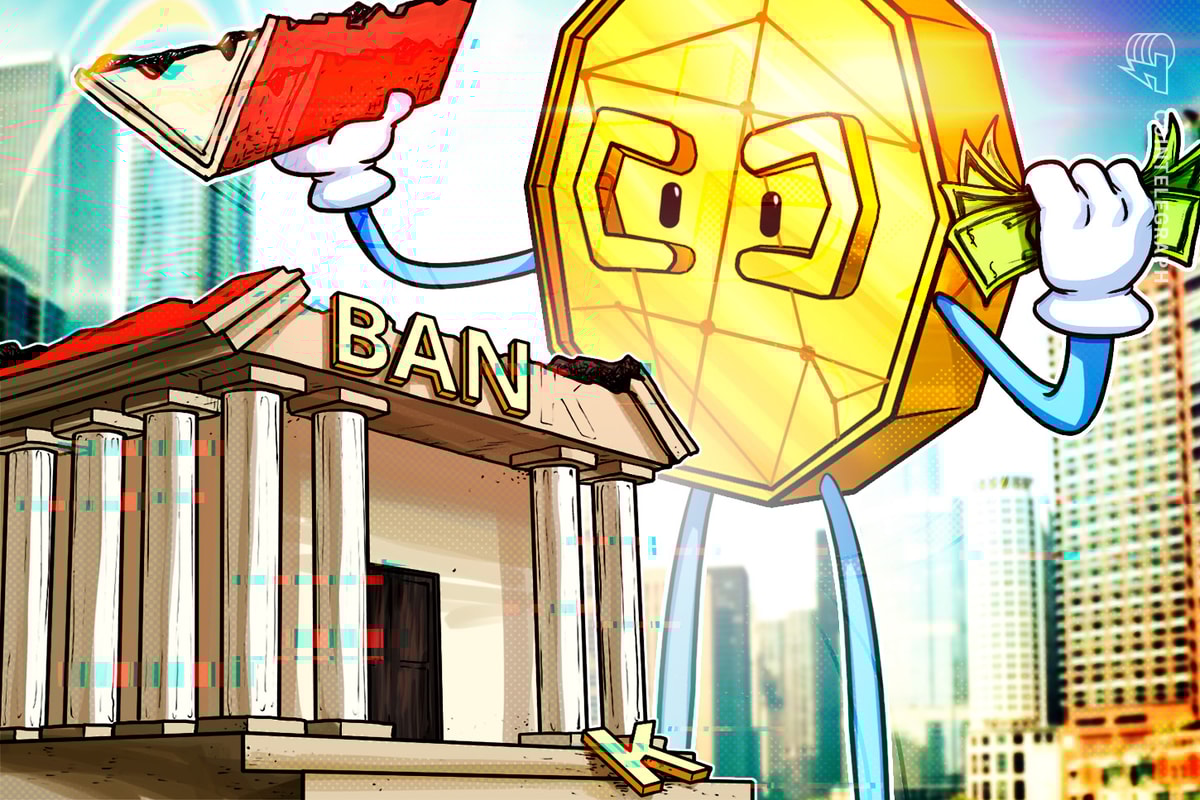
For years, businesses dealing in digital currencies have reported having their bank accounts closed or seeing their access to banking services denied. This practice, often justified as “de-risking,” is seen by many within the cryptocurrency industry as a deliberate strategy to stifle the growth of digital assets, sometimes called “Operation ChokePoint 2.0.”
When Donald Trump, known for his supportive stance towards crypto, won the presidential election, there was widespread hope that this era of debanking would end. His campaign statements and initial policy directions suggested a more welcoming environment for digital currencies, leading some to believe that banks would relax their restrictions on crypto-related businesses.
However, recent events indicate that this practice persists. Just recently, Alex Rampell, a partner at Andreessen Horowitz, cautioned that major banks are implementing what he terms “Operation Chokepoint 3.0” by raising fees for fintech and crypto applications to access account details or transfer funds to well-known platforms like Coinbase and Robinhood.
Adding to these concerns, Alex Konanykhin, CEO of Unicoin, shared with Cointelegraph that American banks are still closing accounts of crypto firms without giving any reasons, even as political pressure mounts to put an end to this trend.
“We have direct experience with this, as Unicoin and our subsidiary companies have been debanked by multiple banks without any explanation,” Konanykhin stated. He identified five financial institutions, including Citibank, Chase, Wells Fargo, City National Bank of Florida, and TD Bank, that have severed ties with Unicoin or its subsidiaries in recent years.
Cointelegraph contacted all of the mentioned banks to request a statement, but no responses had been received by the time of publication.
Related: Trump selects leading economic advisor to temporarily fill crucial US Fed position
Widespread “National Operation”
Konanykhin asserted that Unicoin has been debanked by four banks in this year alone, leading him to believe that “Chokepoint is a nationwide operation of significant scale.” He emphasized that Unicoin is a publicly reporting company with six years of audited financial records and over 4,000 shareholders.
Konanykhin also noted that the debanking campaign has created “extremely disruptive and harmful” conditions for crypto businesses in the United States, depriving them of access to essential financial services and “suppressing the American crypto industry.”
Bloomberg reported on Thursday that President Trump is expected to sign an executive order instructing federal banking regulators to identify and penalize financial institutions involved in debanking activities.
The reported order will mandate that regulators review complaint data, and banks overseen by the Small Business Administration will be required to work towards reinstating clients who were unjustly denied services.
Konanykhin expressed his optimism that President Donald Trump’s proposed executive order to address debanking could offer some relief. “The President understands the difficulties caused by debanking firsthand and seems committed to stopping this type of economic warfare against American businesses,” he stated.
He suggested that ending debanking could assist the US crypto sector in regaining its global leadership position. “Ending the War on Crypto will give the American crypto industry a boost. It could become as influential on the international stage as Hollywood is in entertainment or Silicon Valley in IT,” he observed.
Related: Reports suggest Trump to order investigation into crypto and political debanking claims: WSJ
Crypto Reform Depends on Regulatory Wording
Meanwhile, Elizabeth Blickley, a partner at Fox Rothschild’s Tax Controversy & Litigation Practice, stated that, while Trump has asked agencies and Congress to look into how crypto can be brought into mainstream finance, any significant change will hinge on the exact language used in regulations and laws.
She highlighted the recently signed Genius Act, which gives the Federal Reserve’s Stablecoin Certification Review Committee 180 days to establish a regulatory framework.
Blickley pointed out that many bills in Congress never progress beyond the committee stage and that any eventual legislation will likely face legal challenges from opposing sides of the regulatory debate. “A regulation might appear to comply with the President’s request or a law that has been passed, yet have limited application or uneven consequences simply due to the words used,” she explained.
For now, Blickley believes that banks will likely maintain their cautious approach toward crypto until new regulations clearly reduce perceived risks. “It’s all about helping risk-averse entities and individuals feel that crypto is a safer prospect,” she concluded.
Magazine: Growing numbers of users are experimenting with LSD and ChatGPT