

In what they’re calling “Crypto Week,” legislators in the nation’s capital are preparing to debate and potentially vote on three separate pieces of legislation affecting the blockchain and cryptocurrency sector.
These proposed laws, according to cryptocurrency industry advocates, seek to clarify regulations and foster growth within the digital asset space. Key among them are two bills designed to govern stablecoins and establish a clear market structure for crypto assets. Additionally, lawmakers are considering a measure to prevent the creation of a U.S. central bank digital currency (CBDC).
Support for these initiatives spans the political spectrum, with both Democratic and Republican representatives contributing amendments to the bills. Major cryptocurrency exchanges, including Coinbase, have significantly increased their lobbying efforts to promote the passage of this legislation.
With Congress poised to address these three significant bills during Crypto Week, here’s a breakdown of what’s being considered and the potential consequences for the crypto industry.
House Financial Services Committee
“Crypto Week” Targets Passage of Three Key Bills
The House Financial Services Committee announced that Crypto Week would commence on July 14th. The focus is on these three bills:
The Digital Asset Market Clarity Act (CLARITY Act)
Introduced by Representative French Hill (Republican) in late June, the CLARITY Act aims to create a regulatory framework for digital assets. This involves clarifying the roles of the Securities and Exchange Commission (SEC) and the Commodity Futures Trading Commission (CFTC) in overseeing this sector.
Industry stakeholders have long argued that the “Howey Test,” a legal precedent stemming from securities laws of the 1930s, is outdated and inappropriate for regulating digital assets. They contend that the SEC should not apply this test or exert jurisdiction over the crypto space.
The CLARITY Act proposes exemptions from SEC registration requirements for investment contracts involving digital commodities operating on established blockchains that meet specific criteria.
The legislation defines “mature” blockchains as networks with a digital commodity “substantially derived from the use and functioning of the blockchain.” These networks must be free of user restrictions and limit ownership by single entities to less than 20%.
The bill would grant the CFTC “exclusive regulatory jurisdiction” over crypto transactions. Crypto exchanges and brokers would be required to register with the commission, subjecting them to regulations regarding record-keeping, reporting, antitrust considerations, and other compliance requirements.
The Guiding and Establishing National Innovation for US Stablecoins Act (GENIUS Act)
The GENIUS Act, perhaps the most anticipated of the three bills, seeks to establish a comprehensive regulatory framework for stablecoins.
Introduced by a bipartisan coalition of legislators in February, shortly after President Trump took office, the bill reached the House after a bipartisan vote in the Senate on June 17th.
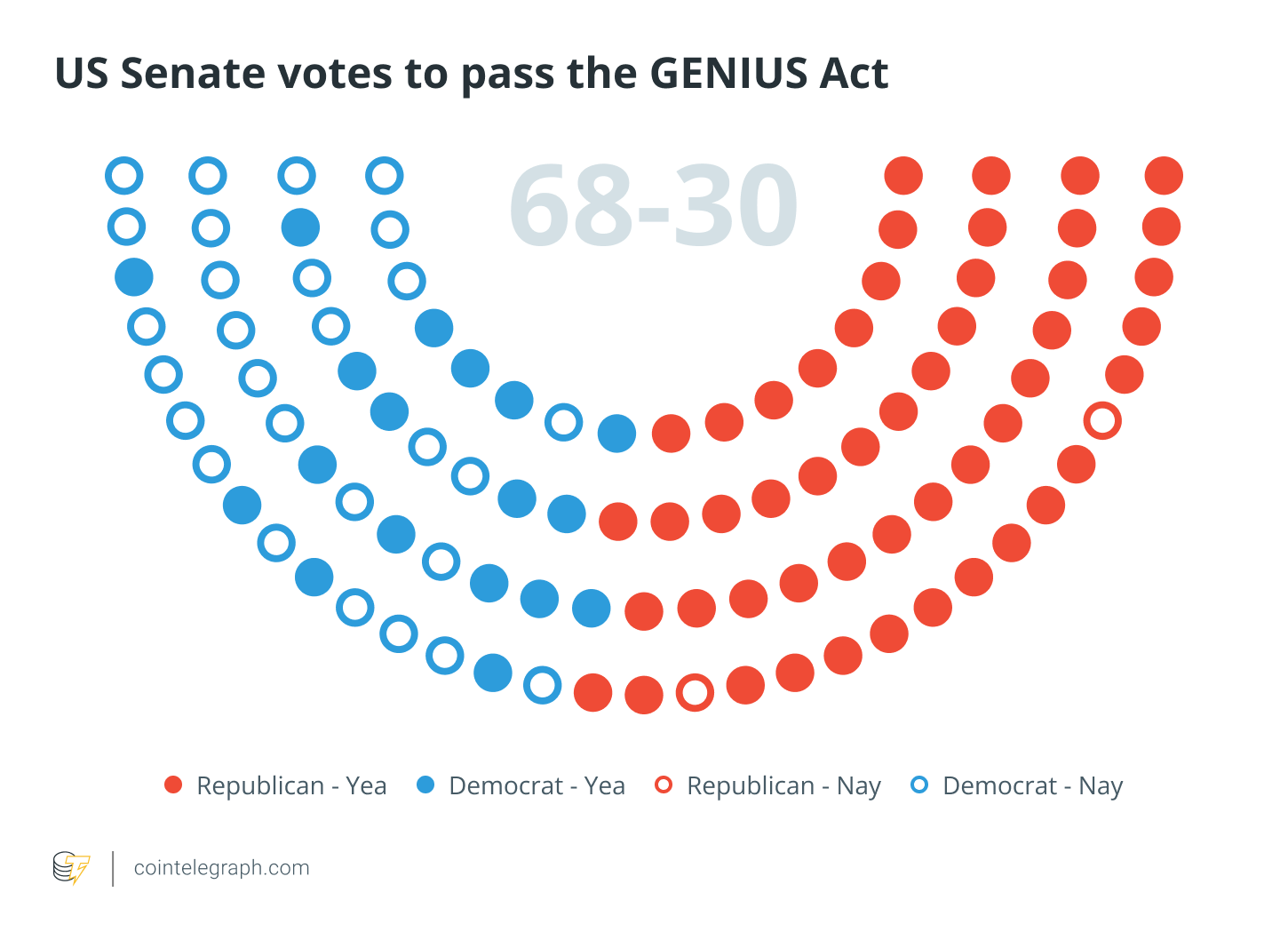
The GENIUS Act defines the types of entities authorized to issue stablecoins and stipulates that “issuers must maintain reserves backing the stablecoin on a one-to-one basis using U.S. currency or other similarly liquid assets, as specified.”
Related:
GENIUS Act could strengthen dollar power, write ‘rulebook’ for global financial system
The bill also subjects stablecoin issuers to the Bank Secrecy Act and establishes procedures for the event of an issuer’s insolvency.
Anti-CBDC Surveillance State Act
Representative Tom Emmer (Republican) introduced the Anti-CBDC Surveillance State Act on March 6th. The bill aims to prevent the Federal Reserve from issuing a central bank digital currency (CBDC).
Framed as a measure to protect citizens’ privacy, the act would prohibit the Federal Reserve from issuing a CBDC, either directly or through a third party. It would also prevent the Fed from using a CBDC to influence monetary policy, reserving the authority to issue a digital dollar solely for Congress.
According to the House Committee on Financial Services, organizations supporting the bill include the Blockchain Association, the Digital Chamber of Commerce, and various banking industry lobbies.
Will These Crypto Bills Become Law?
Given the often-slow pace of legislative action in Washington, passing three significant bills in a single week is a challenging prospect, especially considering the economic implications of these measures.
Major crypto companies, such as Coinbase, have been actively lobbying for their passage. On July 7th, Stand With Crypto, a grassroots lobbying group initiated by Coinbase, sent a letter to lawmakers signed by 65 executives from various crypto firms, urging support for the CLARITY Act.
Related:
Coinbase crypto lobby urges Congress to back major crypto bill
On July 9th, Coinbase CEO Brian Armstrong posted a message endorsing the CLARITY Act, stating that “America is ready for crypto.”
However, sentiment on Polymarket, a prediction market, suggests a more cautious outlook. Participants in the “Clarity Act signed into law in 2025?” market currently give the bill a 52% chance of passage.
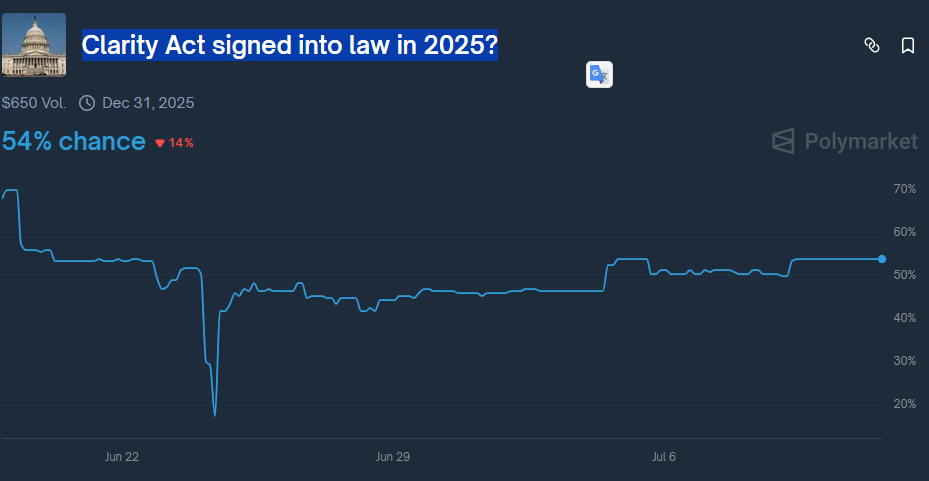
Polymarket
The CLARITY Act has also been criticized by lawmakers and consumer advocacy groups as a “crypto cash grab” that would allow companies to avoid SEC regulation.
Americans for Financial Reform (AFR) described the bill as “a massive deregulatory bill backed by a gusher of campaign cash and lobbying muscle from ultra-wealthy venture capital firms and crypto billionaires. The bill will enrich them at the expense of consumers, communities, and financial stability.”
The AFR also expressed concerns about potential conflicts of interest related to Donald Trump’s crypto investments and noted that the bill lacks provisions addressing corruption and ethical issues.
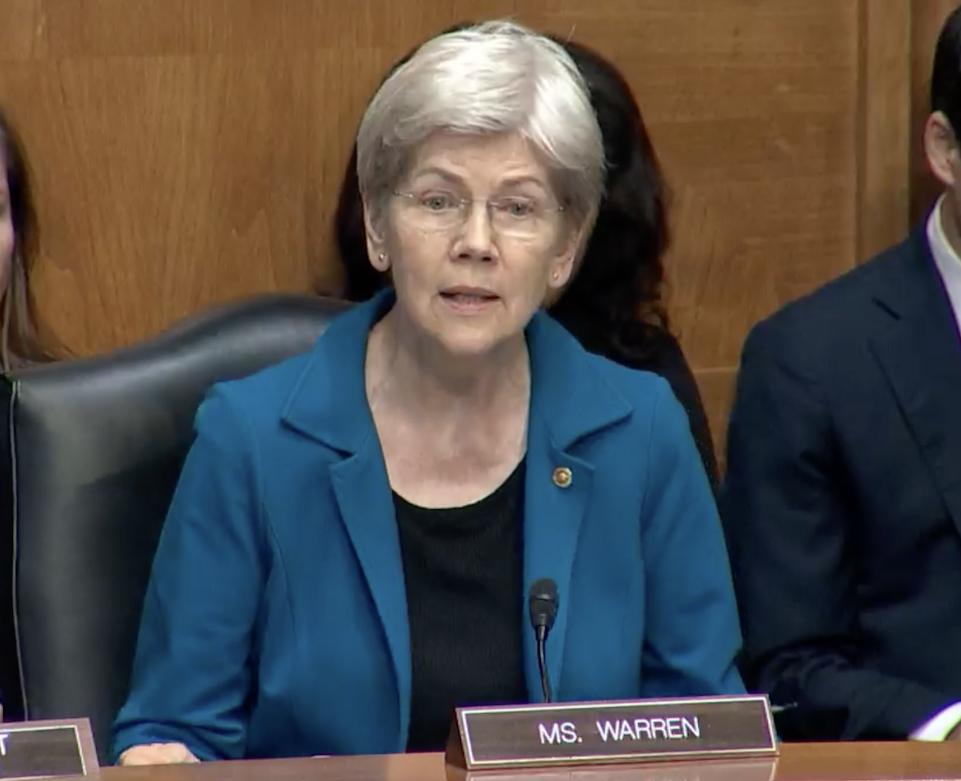
Senator Elizabeth Warren, a vocal critic of cryptocurrency, has also voiced opposition to the bill, arguing that it would enable major corporations to circumvent SEC oversight.
“Under the House bill, a publicly traded company like Meta or Tesla could simply decide to put its stock on the blockchain and — poof! — it would escape all SEC regulation,” said Warren.
Senate Banking Committee
In contrast, the GENIUS Act has undergone more extensive debate and revision in both the House and Senate. Senator Cynthia Lummis, a sponsor of the bill, stated that the Senate has significantly improved the legislation to address Democratic concerns regarding terrorism financing and money laundering.
When the bill passed the Senate in mid-June, Democratic Senator Kirsten Gillibrand said it “targets illicit finance, places limitations on Big Tech, puts in place ethical guardrails, and strengthens national security.”
Concerns remain regarding the potential impact of the act on dollar dominance and treasury markets. Despite these concerns, prediction markets are optimistic, with Polymarket participants giving the bill a 92% chance of becoming law this year.
The Anti-CBDC bill is still under discussion. The House Committee on Ways and Means and Oversight Subcommittee announced a July 16th hearing on “affirmative steps needed to place a tax policy framework on digital assets.”
This hearing is expected to address issues relevant to Emmer’s Anti-CBDC bill.
Whether pro-crypto lawmakers can pass three pieces of legislation in a single week remains to be seen, but even if they fall short, the focus on cryptocurrency in the near future seems assured.
Magazine:
Inside a 30,000 phone bot farm stealing crypto airdrops from real users