
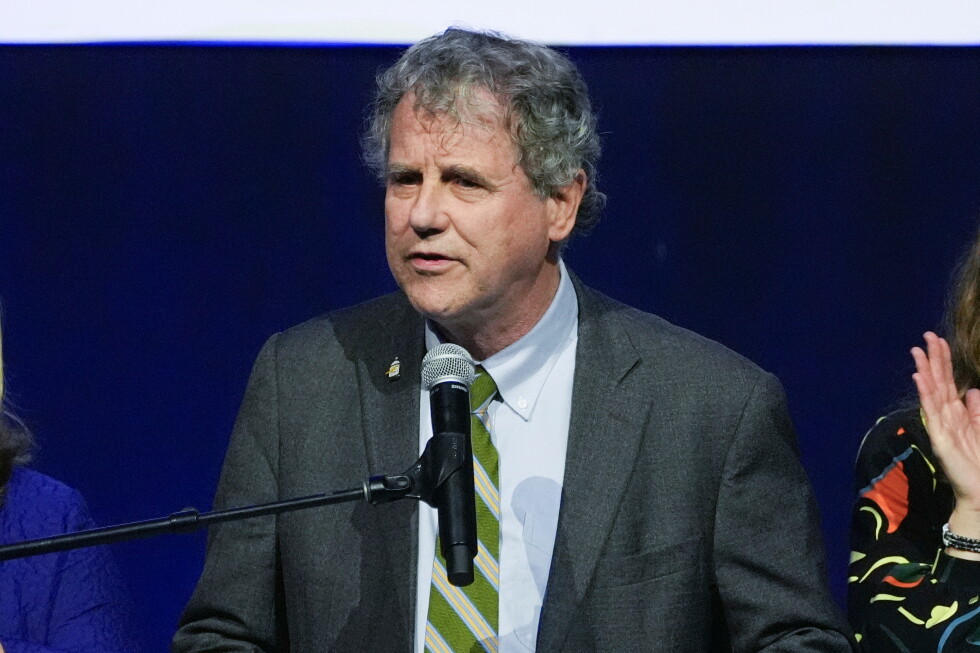
COLUMBUS, Ohio (AP) — Amid the scenic mountains of Jackson Hole, Wyoming, the cryptocurrency sector marked an unprecedented beginning to the year on Capitol Hill. Its objectives were advancing through Congress at an extraordinary pace, and one senator was quick to explain why.
During an August panel, Sen. Tim Scott, the chairman of the Senate Banking, Housing and Urban Affairs Committee, was asked about the significant progress being made.
“I must say,” Scott, a Republican from South Carolina, replied. “Thanks to all of you for removing Sherrod Brown,” referring to the Democrat from Ohio who was defeated in the 2024 Senate race by Republican Bernie Moreno.
Applause and laughter filled the room. “In reality, the industry backed Bernie Moreno’s campaign,” he added, as captured in a video from the Wyoming Blockchain Symposium.
In the 2024 election cycle, crypto advocates invested over $40 million in that race—surpassing their expenditure in any other Senate contest by more than four times. Brown had long been a staunch critic of digital currencies, having led the committee from 2021 to 2025 while the Democrats were in power. The funding directed toward Moreno, a business leader, communicated a clear message: oppose crypto, and the industry will take action against you.
Brown is attempting to make a comeback bid for a fourth term next year, and Democrats are optimistic about their prospects with the absence of Republican President Donald Trump at the top of the ticket. However, crypto is poised to invest even more this cycle and is benefiting from a Congress that has become increasingly supportive, especially without Brown.
“We witnessed the challenges faced in the previous administration,” said Brian Armstrong, CEO of Coinbase, America’s largest cryptocurrency exchange, in a statement to The Associated Press. “We will ensure that doesn’t happen again.”
A Supportive Congress for Crypto
In a notable turnaround from the skepticism seen during Democratic President Joe Biden’s administration, Congress has rapidly embraced the cryptocurrency sector this year, likely influenced by record campaign contributions in the last election.
Legislators have enacted laws providing new regulations and consumer protections for stablecoins, cryptocurrencies typically pegged to the U.S. dollar to reduce volatility. An even larger initiative focusing on the regulation of digital assets has also been progressing in Congress.
From the White House, Trump has aligned himself completely with the crypto sector, advocating for the U.S. to become the “crypto capital of the world.” His family has also benefited financially, holding significant stakes in World Liberty Financial, a venture that launched its own stablecoin earlier this year.
Proponents argue that the new regulations will enhance oversight and introduce consumer protections, which could help legitimize an industry historically fraught with volatility and controversies—from the collapse of FTX to the conviction of its founder, Sam Bankman-Fried.
“Every day, Americans lose money in crypto scams and schemes,” Brown remarked in a 2023 statement following Bankman-Fried’s conviction. “We need to address these abuses and cannot allow the crypto industry to write its own regulations.”
As Senate committee chair, Brown was a vocal antagonist of the crypto movement, raising concerns about digital currencies facilitating money laundering. He conducted numerous hearings on various cryptocurrency-related topics, from consumer harm to the potential for financing illicit activities.
Despite the significant funding aimed against him, Brown stood his ground during the 2024 election, ultimately losing to Moreno—who has connections to the crypto space—by a narrow margin of over 3.5 percentage points.
“The outcome of Sherrod Brown’s race demonstrated that opposing crypto is politically risky,” Armstrong told the AP. “There’s no support base for that stance.”
Political Landscape Altered by Crypto Funding
During the 2024 elections, the crypto industry allocated over $130 million across congressional races, including $40 million in Ohio and $10 million each in Arizona and Michigan. Their campaign advertisements rarely referred to cryptocurrency directly, focusing instead on boosting their preferred candidates — a strategy that proved successful.
“Washington received a clear signal: being anti-crypto could jeopardize your political career,” stated Armstrong in a social media post after Brown’s defeat.
This cycle, Brown’s perspective on crypto has shifted.
“Cryptocurrency is now part of America’s financial landscape,” Brown commented in a statement. “I aim to ensure that as more individuals adopt cryptocurrency, it creates opportunities for Ohioans without exposing them to undue risks.”
It remains uncertain whether Brown will again face targeted efforts. Political action committees supporting crypto are amassing hundreds of millions, many maintaining strong connections to Trump and conservative lawmakers.
Brown is likely to contend with Republican Sen. Jon Husted, who filled Vice President JD Vance’s seat. Husted has shown consistent support for the crypto industry, backing the GENIUS Act, which regulates stablecoins.
The majority of the funds that targeted Brown last year originated from Fairshake, a super PAC associated with Coinbase and others, which reported having $141 million in cash reserves as of July, exceeding its spending during the previous election cycle.
Coinbase and Fairshake have claimed to support candidates from both political parties as long as they are pro-crypto. They have yet to disclose their intentions regarding Brown.
“Last year, voters clearly indicated that Sherrod Brown and Elizabeth Warren’s agenda did not align with Ohio values,” remarked Fairshake spokesperson Josh Vlasto. “We will continue to promote pro-crypto candidates and challenge anti-crypto figures, both in Ohio and across the nation.” Warren is a Democratic senator representing Massachusetts.
Fairshake is not acting alone.
Crypto entrepreneurs Tyler and Cameron Winklevoss have initiated a $21 million organization to support crypto-friendly Republicans. Additionally, another group, the Fellowship PAC, has committed to investing $100 million in the upcoming election cycle.
An Emerging Crypto Voting Bloc
Supporters of cryptocurrency assert that heightened voter engagement, rather than just financial contributions, is behind their increasing political influence.
“A considerable number of individuals desire to see cryptocurrency regulations enacted in America, and they are users of crypto themselves,” said Armstrong.
A significant portion of the American population perceives cryptocurrency investments as hazardous. According to a Pew Research Center survey, 55% of U.S. adults view cryptocurrency as a “very risky” investment.
While a relatively small fraction of American adults currently own cryptocurrency, younger men under 50 are particularly inclined to invest in it. Approximately 1 in 4 men in that demographic identifies as cryptocurrency owners, as per Gallup polling from June. Furthermore, they show greater openness to future purchases: only 44% express disinterest in ever acquiring digital assets, a stark contrast to the more pronounced skepticism found among older men and women of all ages.
This enthusiasm, combined with substantial industry funding, has significantly shifted the perception of crypto from a niche innovation to a formidable political entity now firmly integrated into the country’s financial and political frameworks.
—-
Contributions from the Associated Press writer Linley Sanders in Washington aided this report.