
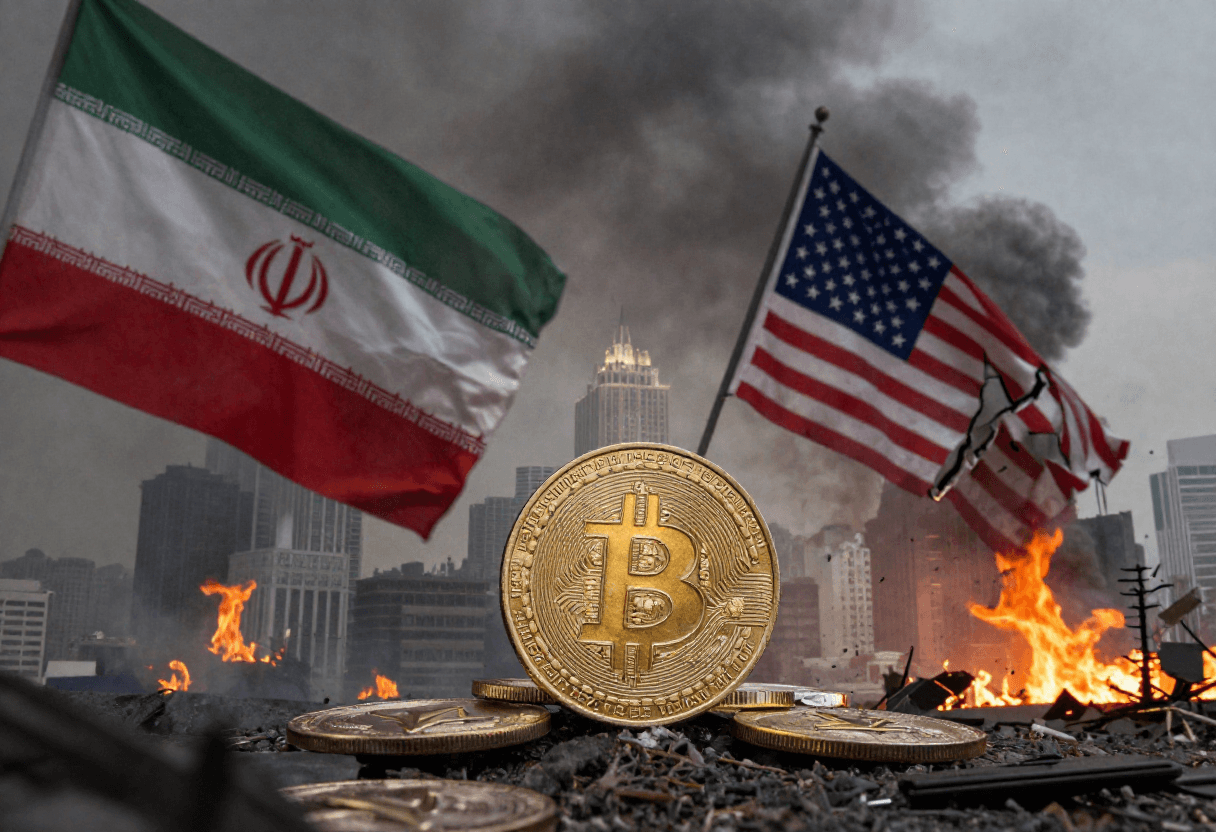
This weekend, the cryptocurrency market is displaying unexpected behavior: it’s largely stagnant. In light of the latest bout of U.S. strikes on Iran and Iran’s announcement of closing the Strait of Hormuz, Bitcoin ($BTC) has shown minimal movement. Here’s today’s detailed look at the crypto news and why the bitcoin price seems unfazed by this significant geopolitical crisis.
Current Bitcoin Price
The current BTC price hovers around $63,900, reflecting a slight decrease of approximately 0.3% over the past 24 hours, but it remains up by around 2% for the week. Ethereum ($ETH) is trading at approximately $1,803, while XRP is at $1.09. Solana ($SOL) rests near $76.60 and Dogecoin ($DOGE) sits around $0.073. The overall market valuation is close to $2.28 trillion. As oil, stock, and bond markets are inactive for the weekend, Bitcoin serves as one of the few assets reacting in real-time to the recent geopolitical escalation, with oil prices expected to respond more fully when trading resumes on Monday.
Recent Developments Between the U.S. and Iran
The situation escalated on July 7 when U.S. Central Command announced attacks on over 80 sites within Iran in response to assaults on commercial vessels near the Strait of Hormuz, accompanied by renewed sanctions on Iranian oil exports. On July 8, President Trump stated that the memorandum of understanding and the ceasefire with Iran was “null and void.” The conflict intensified over the weekend, with Iran’s Islamic Revolutionary Guard Corps closing the Strait of Hormuz following a warning shot fired at a ship using an unauthorized route—this is significant, as the strait is a crucial chokepoint for global oil supplies.
Crypto Market Reaction to U.S.-Iran Strikes
Initially, the crypto market exhibited a traditional risk-averse response. Following Trump’s declaration of the ceasefire’s end, Bitcoin’s value dropped by 2.5%, with altcoins suffering even greater losses as around $450 million in leveraged positions were liquidated. Altcoins were hit hardest, with $350 million of the total liquidations linked to altcoin pairs. However, by July 9, the sentiment shifted, leading Bitcoin to increase by 1.2% to $63,000, while ether gained 0.75% and Nasdaq 100 futures also rose as markets remained unaffected by U.S. airstrikes on 90 Iranian military installations.
Why Bitcoin Is Overlooking Geopolitical Tensions
The primary change lies in how traders perceive the conflict now. Current market analyses indicate that investors have shifted their focus from framing Middle East tensions as specific crypto events to considering them as influences on interest rates—particularly whether escalating oil prices might reignite inflation and maintain higher interest rates. Consequently, Bitcoin has begun to align more closely with short-term Treasury yields instead of traditional hedges like gold or crude oil. Interestingly, gold prices have dropped even amid rising tensions, suggesting a potential shift towards Bitcoin as a more rate-sensitive investment.
What Should Crypto Investors Monitor Going Forward?
Investors are currently focused on the $60,000 threshold. Maintaining this level through any further tensions would bolster the notion of “Bitcoin as a rate-sensitive asset,” whereas a significant drop could suggest that the current stability is temporary. Sentiment has improved, as evidenced by the Fear and Greed Index recently escaping the extreme fear territory it occupied for 40 consecutive days, yet this appears more as a recovery than a strong conviction. The greater concern lies with Monday’s oil market opening, as crude will likely adjust to the recent Hormuz closure and may ripple through the crypto market today.