
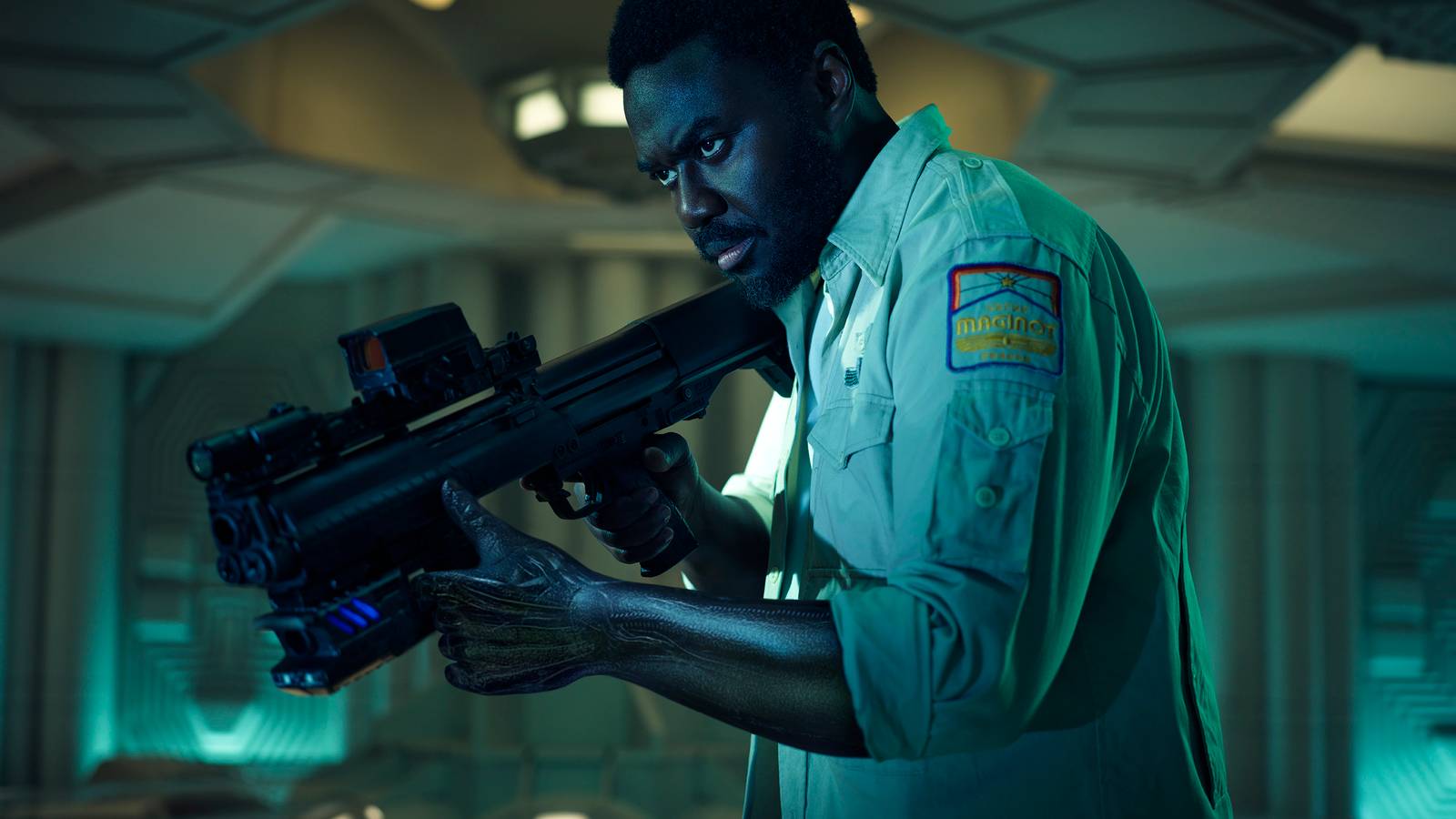
Babou Ceesay’s portrayal of Morrow in FX’s new series, Alien: Earth, has captivated audiences since his initial appearance. As the 46-year-old British actor brings to life the franchise’s first-ever composed cyborg, Morrow is revealed as the sole survivor of the ill-fated USCSS Maginot, which crash lands on Earth in the show’s gripping opening scene. Driven by a singular, unwavering purpose, Morrow is determined to recover the extraterrestrial beings pilfered from his destroyed vessel, no matter the cost.
Ceesay described his character’s state of mind to a media outlet, stating, “It borders on a kind of dark, zen-like awareness.”
Noah Hawley, the creative mind behind Alien: Earth, shares this perspective, viewing Morrow as a figure who operates according to his own personal code of ethics.
Hawley notes, “The concept of a Ronin-like figure always appeals to me. He is an unpredictable element, pursuing his unique objectives, yet his allegiance remains steadfast.”
In episode 5 of Alien: Earth, viewers discover that Morrow is deeply indebted to the powerful Weyland-Yutani Corporation. Yutani, the corporation’s namesake, rescued him from a difficult childhood and replaced his paralyzed arm with a state-of-the-art robotic prosthetic. As the season unfolds, audiences will see how these loyalties shape Morrow’s actions, as his schemes to undermine Weyland-Yutani’s rival corporation begin to materialize.
Morrow is portrayed as a character willing to employ any means necessary to achieve his goals, even resorting to blackmail and murder. He justifies these actions in service to a powerful corporation, one that fans of the Alien franchise know is notoriously corrupt. Hawley explains that this willingness to do anything makes him so appealing to watch.
“We are often drawn to villains who adhere to a strict moral code,” Hawley suggests. “There’s a certain allure to that: Yes, they might commit violence, but they are honest about their intentions. That’s where Morrow exists for me.”
With three episodes of Alien: Earth remaining, it remains to be seen whether Morrow will maintain his own moral standards. Ceesay joined an interview to discuss Morrow’s complex past, insights into one of his most captivating statements, and more.
Note: This interview has undergone editing to ensure clarity and conciseness. Additionally, you can access the complete interview with Noah Hawley here.
Interviewer: You’re embodying the Alien franchise’s first cyborg. What shaped your approach to the role? Were you influenced by other famous cyborgs in popular culture?
Babou Ceesay: My discussions with Noah focused on emphasizing that Morrow, despite being a cyborg, is fundamentally human. He has objectives, feelings, vulnerabilities, and the full spectrum of human experiences and abilities.
While I explored other cyborg portrayals, I ultimately drew inspiration from real-world figures. Neil Harbisson, a colorblind artist, considers himself a cyborg. He uses a device implanted in his neck that translates colors into vibrations and sounds, which inspires his artwork. His perspective on transcending human limitations resonated with me.
Morrow remains human but possesses capabilities beyond normal human limits, granting him an advantage. I pondered the psychological effects of such enhancements and decided he would only use them when absolutely necessary.
He isn’t entirely mechanical; he wishes he were.
Interviewer: Your character often appears detached, yet episode 5 offered a glimpse into his inner world, revealing the loss of his daughter during his mission. How does this event define Morrow?
This revelation is now central to understanding the character. As a parent myself – my daughter even played the younger version of the character – it’s deeply moving. The question of whether he could have saved her haunts him.
His grief over her loss is compounded by the impossibility of reaching out to her. If he fails in his mission, her death will have been in vain, further fueling his determination. That moment was pivotal for me.
Interviewer: Do you attribute Morrow’s cold demeanor more to his human or robotic aspects?
I believe it stems primarily from his human side. He acknowledges he’s not entirely a machine. While enhanced, he still possesses human emotions. He longs for the unemotional efficiency of a machine. He strives for a dark, detached enlightenment.
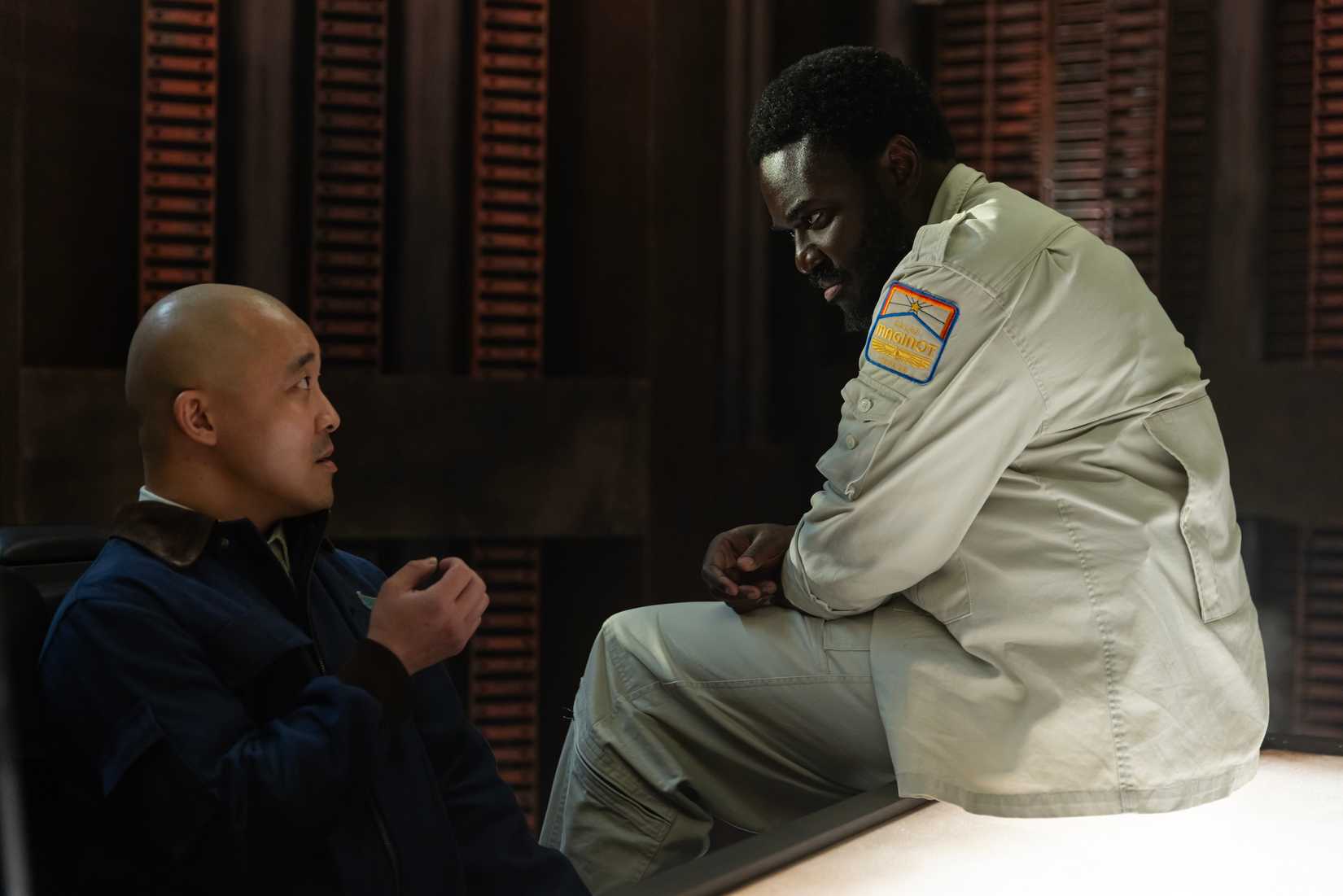
Interviewer: Morrow shares an interesting dynamic with the Hybrids, both being part-human, part-machine. Does he feel any connection with them?
There has to be some connection. In his eyes, they retain human consciousness, as does he, yet they are physically enhanced to the fullest extent. There’s a degree of empathy, perhaps envy, a desire to emulate them further.
Ultimately, his priority remains his mission, and if the Hybrids can aid him in achieving it, he will utilize them.
Interviewer: Much discussion has centered around Morrow’s question to the Hybrids: “When is a machine not a machine?” What does it mean to you?
I considered it from the perspective of purpose. Numerous interpretations exist, but posing a riddle prompts thought. To me, it suggests a machine ceases to be a machine when it fails to fulfill its intended function or when it develops consciousness. A myriad of explanations are possible.
However, by posing that question and observing the response, he attempts to gain insight into its thought processes, to establish a connection. It’s an opening, a way to bridge the gap, but also something far more profound.
It serves as more than just an icebreaker.
Interviewer: Your bond with Yutani is also captivating. She rescued you from the streets, and decades later, your devotion to the corporation remains unwavering. How did you conceptualize this relationship?
It boiled down to a single question: What would compel someone to leave their child on Earth at age 11, knowing they’d be 76 upon their return? It would require either profound affection or an overwhelming sense of duty.
Yutani embodies a tremendous debt of gratitude. As Morrow says, he was “a feral, palsied boy on the streets, with a useless arm.” What level of indebtedness does that create? What became of his biological mother? What does Yutani represent to him? There’s a palpable sense of obligation. I’d eagerly explore this further in future seasons, should the opportunity arise.
Alien: Earth broadcasts every Tuesday at 8 p.m. EST on FX and Hulu.