

Recent trends indicate a substantial increase in institutional investment in Ethereum, suggesting a fundamental shift in market perception. Evidenced by record inflows into exchange-traded funds (ETFs) and considerable movement of Ethereum out of centralized exchanges, ETH is solidifying its reputation not only as a technological platform but also as a legitimate asset class for institutional investors.
This analysis examines the significant developments, provides data-backed insights, and explores their potential impact on Ethereum’s price trajectory and position within the broader cryptocurrency landscape.
Unprecedented Investment in Spot ETH ETFs
Ethereum spot ETFs are emerging as a popular avenue for investors, with recent data reflecting significant interest. ETH ETFs have rapidly attracted substantial institutional capital, achieving record-breaking numbers.
According to ChainCatcher, during the week ending July 11, 2025, ETH ETFs experienced net inflows of $908 million, representing the largest weekly inflow since their inception. This marked the ninth consecutive week of inflows, signaling consistent and growing interest from institutional allocators.
Source: CryptoQuant
Data analysis suggests that institutional interest in Ethereum is increasing at a rapid pace. BlackRock’s ETHA ETF alone attracted $675 million in inflows during the week ending July 11, bringing its total assets under management to $6.29 billion and establishing it as the leading ETH ETF. Fidelity’s FETH followed with a noteworthy $87 million in net inflows during the same period.
Ethereum ETF again $19,000,000 $ETH inflow.
Fidelity keeps on buying Ethereum👇 pic.twitter.com/QqtSsrdupm
— Ted (@TedPillows) February 20, 2025
According to CryptoSlate data, the cumulative inflows into all Ethereum ETFs exceeded $5 billion on July 11. This milestone was achieved in just 12 trading sessions, surpassing analysts’ expectations. This rapid growth highlights Ethereum’s increasing appeal to asset managers and its growing significance in institutional investment strategies.
Source: CryptoQuant
The increasing flow into ETH ETFs suggests that Ethereum is gaining recognition as an institutional-grade, programmable asset. These figures demonstrate a substantial interest from both retail and institutional investors. With a weekly inflow rate of 1.6% of total ETF assets under management, Ethereum is currently attracting more capital compared to Bitcoin ETFs, which typically see flows around 0.8%.
For more: Altcoin ETFs After Solana – XRP, ADA, AVAX Next in Line
Decreasing Centralized Exchange Holdings & Whale Accumulation
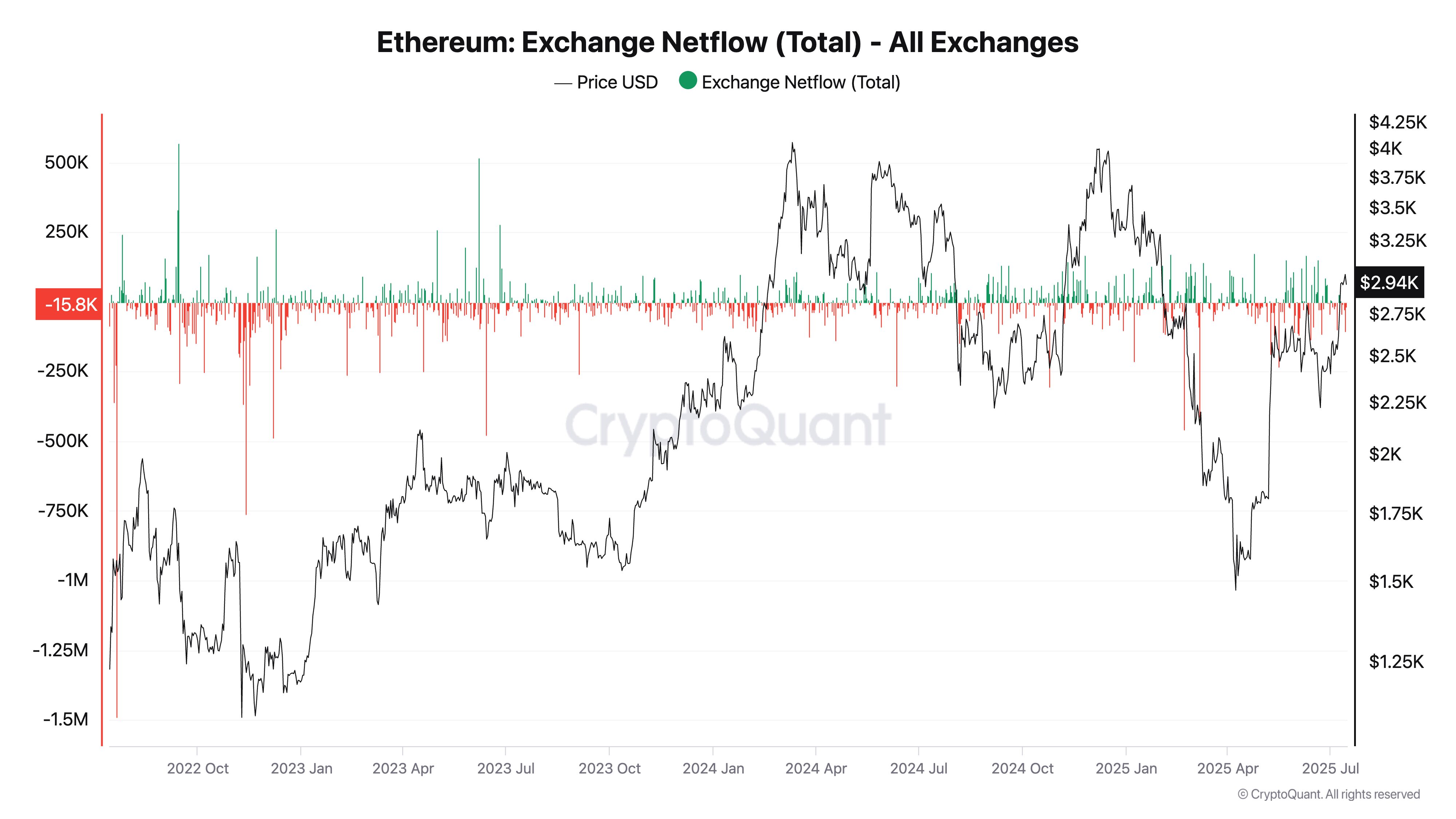
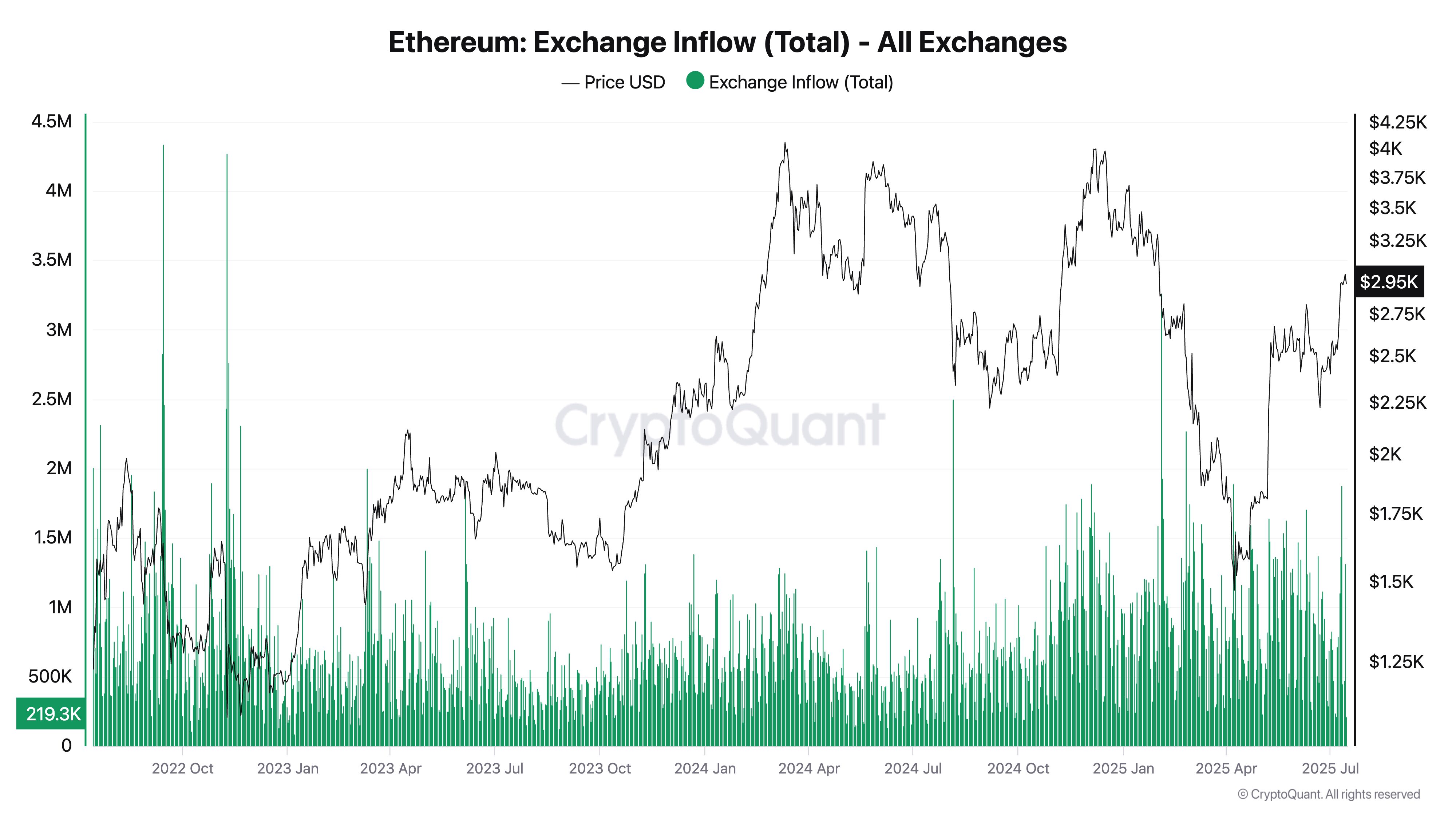
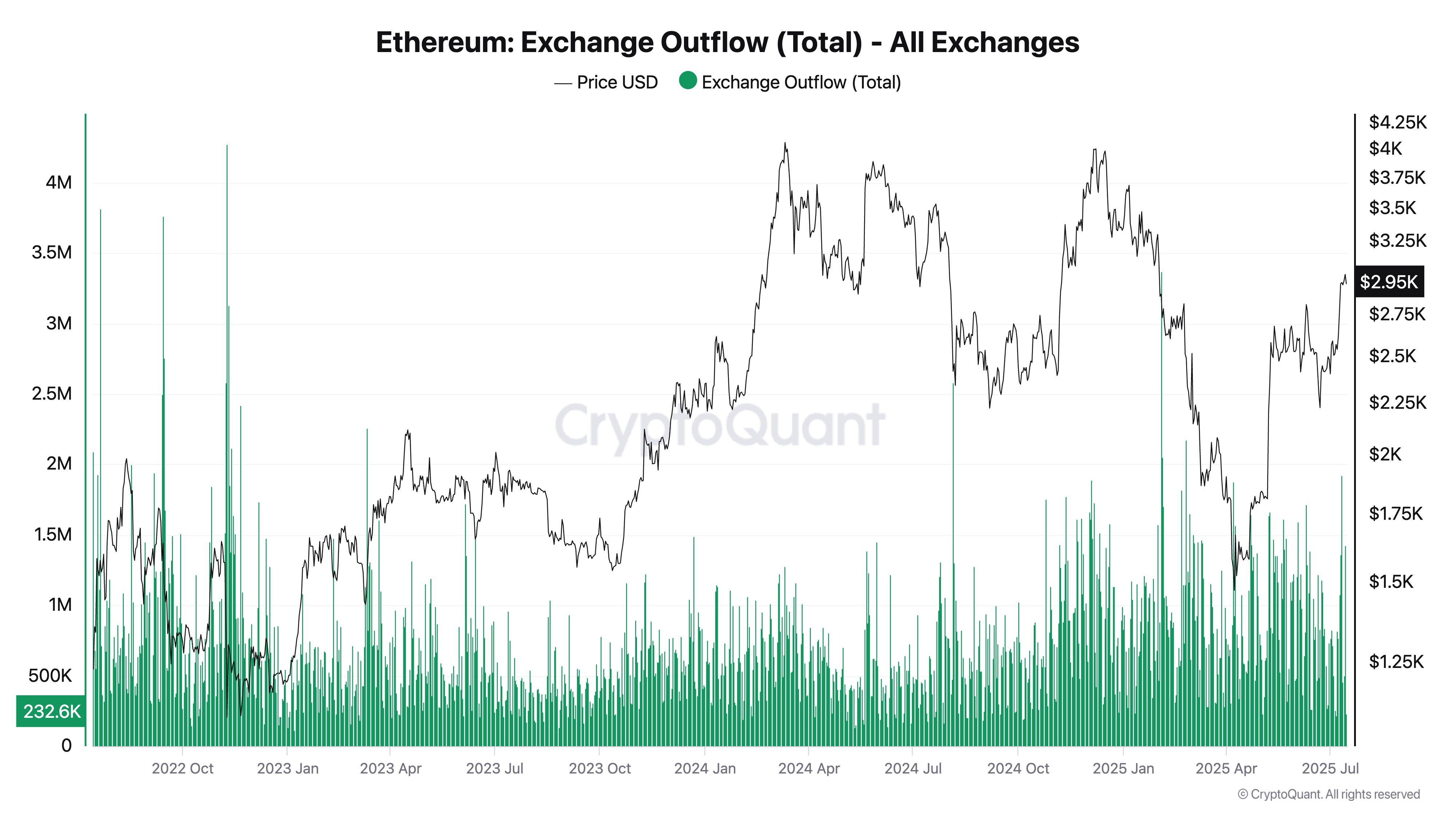
Beyond ETF trends, blockchain analysis reveals accumulation patterns among long-term holders and large investors. On July 11, $206 million worth of ETH was withdrawn from centralized exchanges, according to AINVEST. This is a classic signal of long-term holding and staking activities.
Blockchain data monitored by Bitget indicates that one large wallet (address 0x1fc7) removed 6,989 ETH (approximately $17.5 million) from Binance over three weeks. TradingNews reports that large holders now possess a total of 26.88 million ETH, representing 22% of the total circulating supply. Data from Glassnode indicates a single-day accumulation of 871,000 ETH by large holders, a level unseen since 2017.
Source: CryptoQuant
These trends indicate that large holders are taking long-term positions in anticipation of future price increases, moving ETH to secure wallets and smart contracts. This behavior suggests a strong long-term outlook and a reduced intention to sell in the short term.
Decreases in exchange balances typically point to reduced selling pressure. Increased exchange outflows coupled with rising balances in whale wallets indicate conviction-based accumulation. This reduces the available supply and tends to drive prices higher in the medium term. The combined effect suggests that large holders are positioning for a long-term uptrend and are removing ETH from exchanges where it could be sold quickly.
For more: Tokenized Stocks vs ETFs: Which One Wins in the Long Run?
Source: Nansen
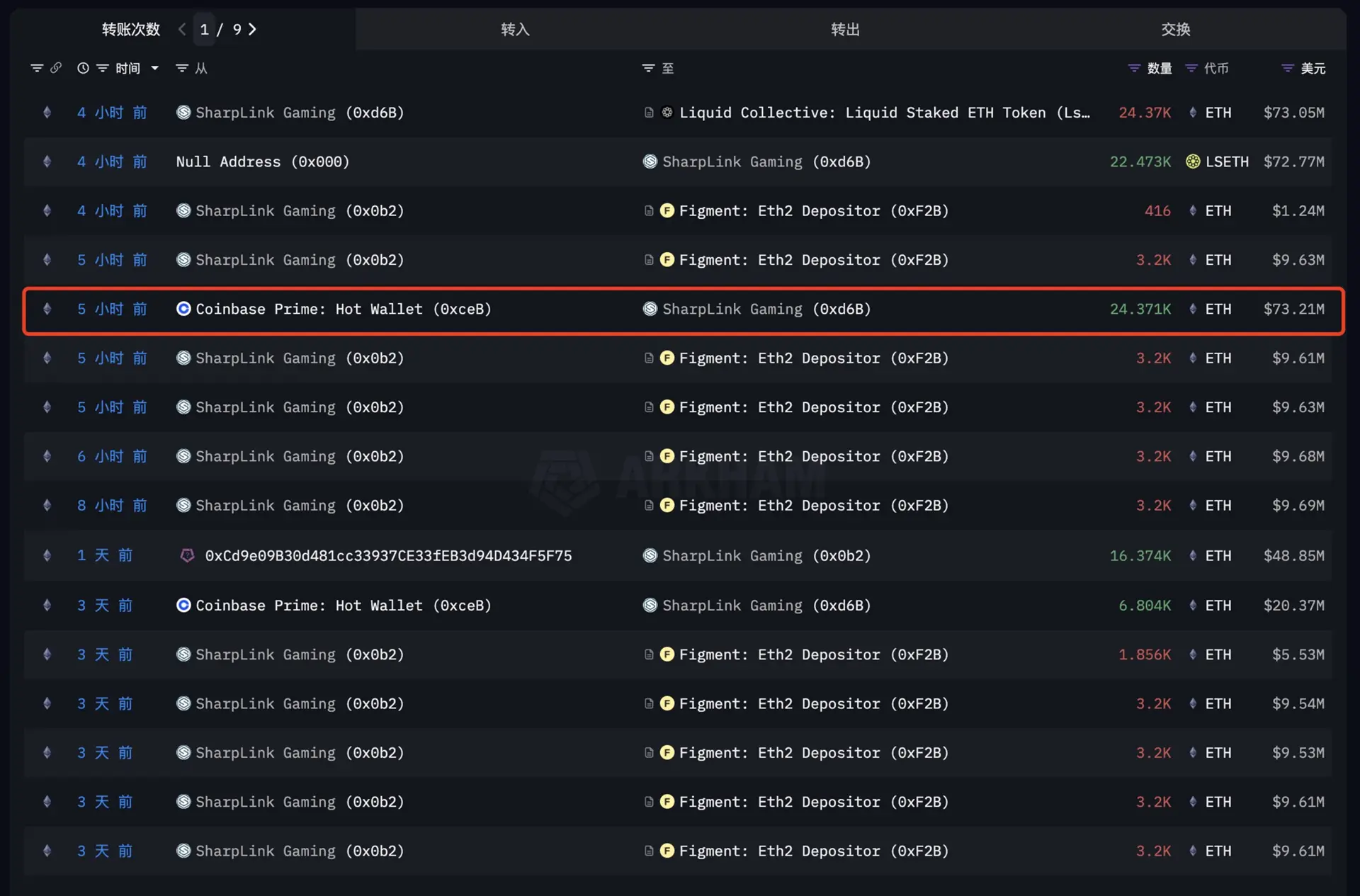
SharpLink Gaming has rapidly become a significant institutional player, holding approximately 270,000 ETH—a total surpassed only by the Ethereum Foundation. Over five days, it acquired 60,582 ETH (roughly $180 million) and added 16,374 ETH (about $49 million) in a single day via OTC and direct deals. With an average acquisition cost of $2,667–$2,695, SharpLink’s holdings now have an unrealized gain of about $81–92 million. The company uses ATM equity financing to fund ETH purchases and earns staking rewards—approximately 3.5% APY, or roughly 220 ETH/month—improving capital efficiency. This aggressive accumulation coincides with a 60% stock price increase last month and reflects a broader institutional trend treating ETH as a treasury asset, not just a speculative token.
Analysis of Key On-Chain Metrics and Price Movement for Ethereum
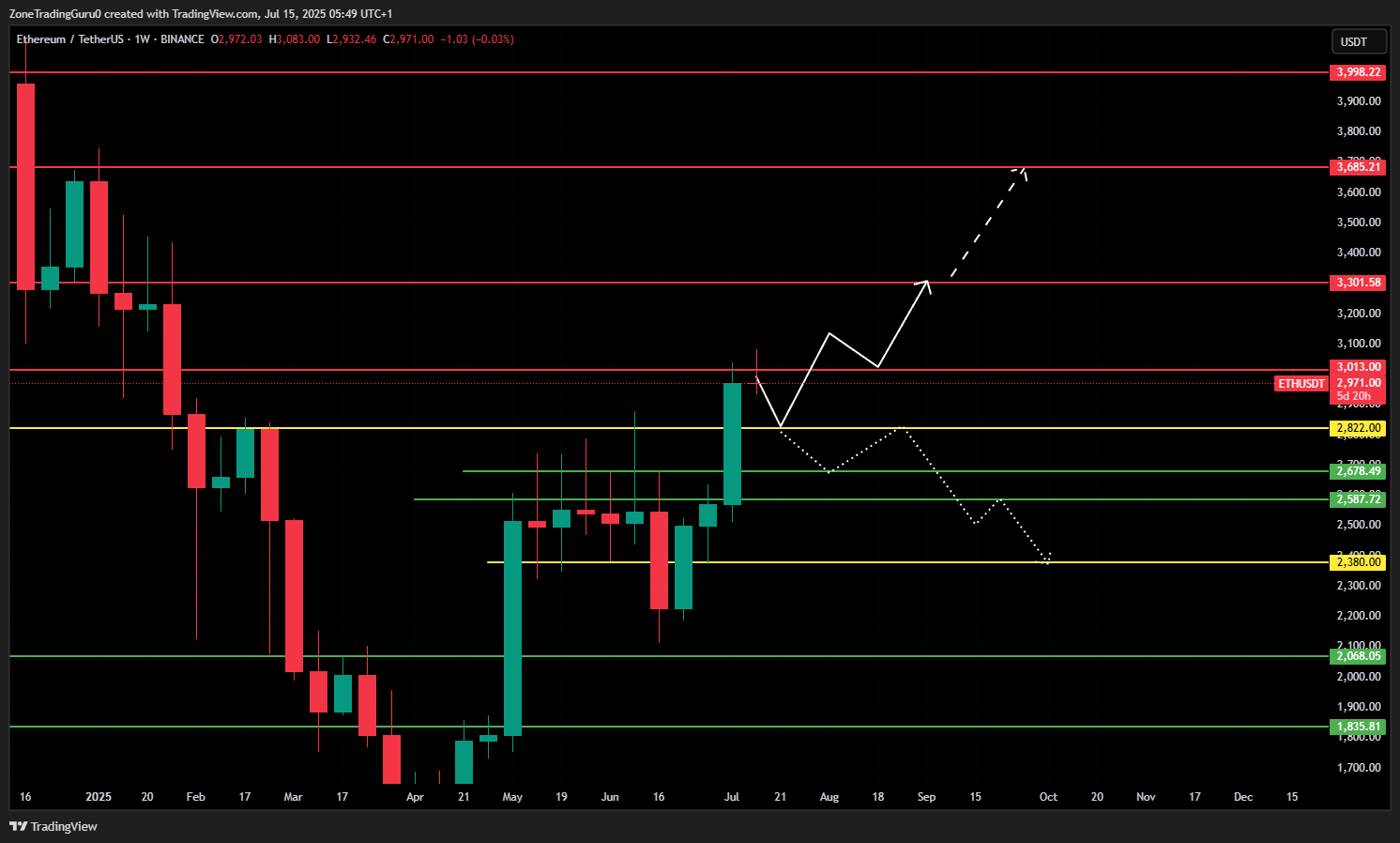
Ethereum has recently broken through a resistance point at $2,822 and is nearing another resistance around $3,013. There are two potential scenarios: ETH could pull back to test support at $2,822 before rising further, or it might directly breach $3,013.
If ETH moves past $3,013, the subsequent key resistance areas will be $3,301.5 and possibly $3,685.2. However, failure to break out could lead to consolidation between $2,822 and $3,013, awaiting additional market signals. Dropping below this range could push ETH toward support levels at $2,678 and $2,587, or in a more bearish case, down to the crucial $2,380 level.
Source: Tradingview
On-chain indicators suggest a strong bullish sentiment for ETH. The volume of ETH held on centralized exchanges has decreased to levels not seen since 2018. This signifies a substantial decrease in potential selling pressure as more tokens are moved into secure storage or staked. Data from CoinLaw indicates that over 3.8 million ETH has been removed from exchanges, reinforcing the trend of long-term accumulation.

Activity among major holders supports this trend. The number of wallets holding over 10,000 ETH has increased by 5–11% year-over-year, with a significant spike of 871,000 ETH accumulated in one day—levels not observed since 2017. Additionally, on-chain data reveals a robust support area between $2,513 and $2,536, where approximately 3.45 million ETH is held.
This suggests that many investors are experiencing moderate profits and are unlikely to sell at current levels. Ethereum’s underlying network is also becoming stronger: daily active addresses are up by 16%, transaction volume has risen by 12%, and nearly 30% of the total ETH supply is now staked. These metrics indicate a tightening supply and growing confidence from both retail and institutional participants.
Overall, ETH is in a technically critical position, with on-chain fundamentals supporting a bullish outlook. Whether the price confirms the breakout or consolidates further, Ethereum is underpinned by accumulation, utility, and long-term capital commitment.
Investment Strategy Implications
The current market behavior could signal the beginning of a prolonged capital shift, where Ethereum becomes the focal point of institutional investment away from Bitcoin and other risk-sensitive assets. Several factors are contributing to this shift.
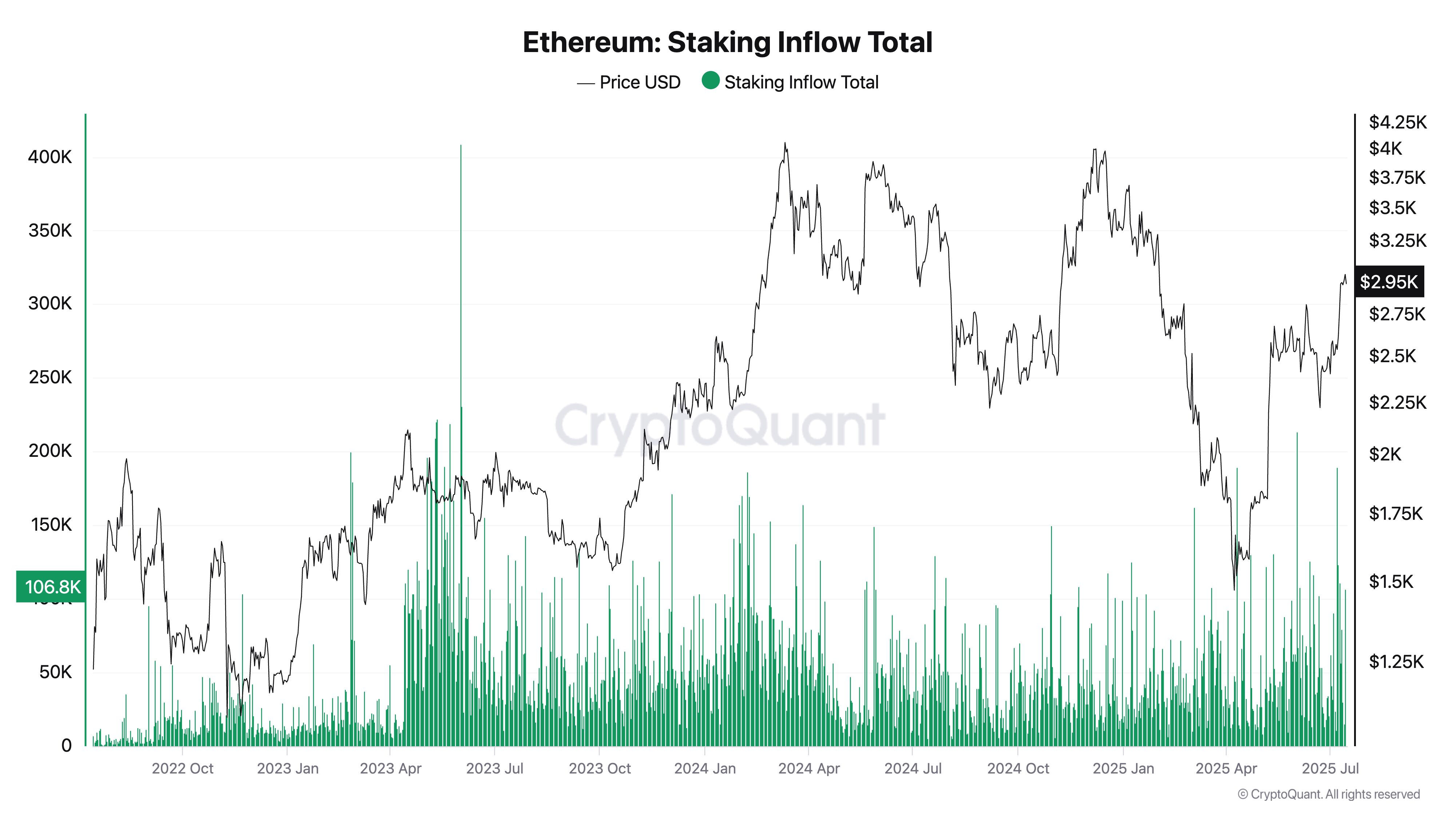
Firstly, following the Ethereum 2.0 upgrade and the Pectra upgrade, Ethereum offers programmable yield that powers decentralized finance (DeFi), liquid staking tokens (LSTs), and new restaking protocols.
Source: CryptoQuant
Secondly, Ethereum’s protocol inherently supports staking, allowing investors to earn yield by holding ETH in validator networks. This enhances capital efficiency over the long run.
Thirdly, regulatory conditions have improved with the approval of spot ETH ETFs, reducing uncertainty and legitimizing ETH within traditional financial spheres.
Fourthly, Ethereum is capturing a growing share of ETF inflows compared to Bitcoin, indicating a rebalancing of crypto allocations by large institutions. Data from CryptoQuant shows that many large holders are moving ETH to cold wallets rather than deploying it in yield-generating strategies, which is typical behavior in preparation for long-term holding. Collectively, these trends suggest that Ethereum is transitioning from a speculative trading asset to a foundational layer in the digital economy, a transformation that is increasingly reflected in capital flow data.
| Metric | Recent Value | Interpretation |
| Spot ETF inflows | $900M+/week | Institutional conviction accelerating |
| Exchange outflows | ~$200M–$400M/week | Reduced sell-side liquidity |
| Whale holdings | 26.88M ETH (~22%) | Long-term accumulation peak |
| Price trend | Above all major EMAs | Medium-term bullish breakout setup |
| Volume | $44.7B/day | Broad participation resurgence |
In summary, Ethereum is experiencing a significant capital inflow cycle. The traction of ETF products and accumulation by large wallets at levels comparable to 2020, along with favorable technical signals, indicate that ETH is positioned for a structural uptrend rather than merely a speculative surge.
If current momentum and macro conditions remain stable, Ethereum could potentially retest or even surpass its previous all-time highs in the coming months.