

We’re excited to share the commencement of the second phase of the Decentralized Nodes
Program!
The engagement from the Polkadot network and broader community has been truly remarkable
once again. We’ve received a substantial 188 submissions, covering 256 Polkadot nodes and
530 Kusama nodes, marking increases of 6% and 17% respectively from the initial cohort.
After careful assessment, we’ve approved 104 Polkadot nodes originating from 63 distinct
operators, alongside 210 Kusama nodes supported by 69 operators. These selections took
effect on March 17, 2025, and this second cohort’s operation will continue until July 17,
2025.
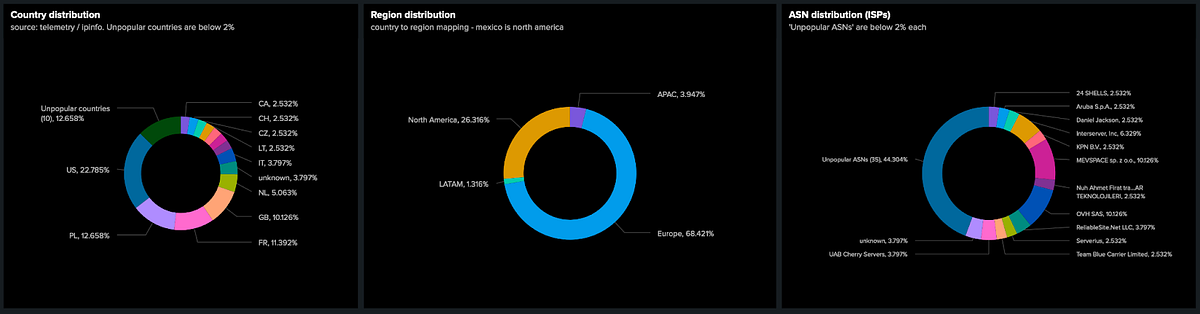
The primary objective for this group is to broaden the variety of nodes involved and,
subsequently, enhance the diversity of the active sets. Numerous blockchain technologies
are hindered by validators concentrated in particular geographic areas or relying on the same
hosting service. This introduces vulnerabilities and weakens resilience. Polkadot and Kusama
are also susceptible, but the evolving Decentralized Nodes program is designed to address
these shortcomings.
Therefore, operators prepared to host nodes in underserved locations and those utilizing
less common service providers were prioritized. Preference was also given to those choosing
to self-host their nodes. Furthermore, we aimed to reduce the prevalence of AMD CPUs by
encouraging the deployment of Intel processors.
Beyond these considerations, we maintained similar selection criteria as the first cohort:
node specifications and performance, operator technical competence, and ecosystem
alignment, for which we provided applicants with
detailed selection guidelines. We also reviewed the performance of existing nodes and operators from Cohort 1, while
offering incentives to new participants to encourage wider involvement. One key change from
the previous cohort is that operators could apply with a maximum of 2 Polkadot nodes and 5
Kusama nodes, with applications evaluated holistically per network.
The majority of submissions were of exceptional quality, which made the evaluation process
rigorous but ensured the selection of top-tier nodes and operators. The goal of
diversification has largely been achieved, as indicated by the data presented in the
following visualizations.
Polkadot Cohort 1 distribution