

Instead of public exchanges, large cryptocurrency transactions often happen behind the scenes. Think of over-the-counter (OTC) crypto trading as a private, discreet method. Like buying property directly, it lets big players trade huge volumes without affecting the overall market price, keeping things quiet and away from standard exchanges.
Regular cryptocurrency exchanges suit smaller traders, but wealthy individuals and institutions often choose OTC crypto platforms for their privacy and flexibility. This article explains OTC trading and helps you see if it’s suitable for your needs.
What Is OTC Trading in Crypto?
Imagine you’re a major crypto investor placing a huge order on an exchange. Suddenly, the whole market knows about it! Prices fluctuate wildly, bots jump ahead of your trade, and your order struggles to complete. Standard crypto exchanges aren’t designed for traders of your magnitude.
In cryptocurrency, over-the-counter (OTC) trading is a special way to buy and sell crypto assets directly between parties, not on traditional exchanges. This private setup caters to high-volume deals where traders value privacy and avoiding market disruption from massive orders.
Crypto OTC platforms act as intermediaries, facilitating these deals. They ensure significant transactions happen smoothly and discreetly, avoiding major price swings. By keeping these large trades under wraps, they minimize price slippage and prevent unwanted public attention.
How Does Crypto OTC Trading Work?
In traditional OTC markets, the trader sets prices for assets like currencies or securities. But in crypto OTC, the platform acts as a matchmaker, connecting buyers and sellers. They cater to individual needs regarding crypto quantity and pricing.
Before the deal, both parties discuss terms like price, settlement methods, and timing. Once agreed, the broker acts as a referee, ensuring a secure transaction and settlement. This can involve meetings, escrow services, and reverse transfers.
The OTC Trading Process
OTC Bitcoin trading starts with counterparties agreeing on price and terms, either directly or through a broker. This avoids market impact from the large trade, as details remain private.
- Initiate Contact: A trader reaches out to an OTC desk or exchange to discuss their intentions and see if there are compatible parties.
- Discuss Terms: The OTC expert guides traders to agree on details like prices, volumes, and settlement, ensuring clear communication to avoid misunderstandings.
- Verify Identities: The OTC desk confirms identities using procedures like Know Your Customer (KYC) verification to ensure proper documentation.
- Negotiate Details: The OTC desk helps buyers and sellers finalize the deal, adjusting any conditions and ensuring mutual agreement.
- Execute the Trade: The OTC platform facilitates the transaction, coordinating the exchange of payments and assets per the agreed terms.
- Settle the Transaction: Both parties complete payments or bank transfers as agreed.
- Confirm Completion: The OTC platform verifies that each party received what they agreed to and provides final documentation.
Types of OTC Trading
There are different types of crypto OTC trading, each with unique features and benefits. Here are some common options:
Broker-Facilitated OTC Trading
Here, the broker acts as the go-between, connecting buyer and seller for efficient and private high-value trades. Brokers use their networks to find the best prices and facilitate quick settlements. Many broker OTC platforms offer tailored services and insights to help users make informed choices. Popular platforms include Coinbase Prime, Kraken OTC, Binance OTC, and Bitstamp.
Peer-to-Peer (P2P) OTC Trading
P2P OTC crypto trading lets traders transact directly, cutting out the intermediary. Escrow services address security concerns. This model attracts traders seeking privacy and flexible payment options. Cryptocurrency exchanges that offer P2P OTC trading include OKX, Paxful, Binance P2P, and KuCoin.
Crypto OTC Trading Desk
Crypto OTC trading desks leverage their network to help clients execute large digital asset transactions. The desk quotes a price to a potential buyer or seller. If accepted, they match them with a counterparty and assist through settlement. This provides high-volume traders, like wealthy individuals, a seamless process that bypasses the public order book.
Traders like OTC desks because they offer benefits not found on regular exchanges. An OTC desk can tailor services to enhance a trader’s experience, addressing specific strategies and requirements. They also offer professional advice and support for complex investment decisions.
Principal vs. Agency Desk in Crypto OTC Trading
In OTC Bitcoin trading, you can choose between a Principal OTC desk and an Agency OTC desk. Here’s how they differ:
1. Principal OTC Crypto Trading
In this model, the OTC desk buys or sells cryptocurrency on behalf of the client using its own funds. The desk assumes the market risk, including price fluctuations during the trade. If a client orders 1,000 BTC, the desk buys it with its funds and delivers at the agreed price, regardless of price changes during the contract.
2. Agency OTC Crypto Trading
Here, the OTC desk acts as an intermediary, waiting for the customer to pay for the ordered cryptocurrency. The desk matches the buyer’s order with the seller’s, so the customer bears the risks. If prices change unfavorably, the buyer must adjust the offer. The desk charges a facilitation fee, unlike in the Principal model.
OTC Trading vs. Regular Exchange Trading
| Feature | OTC Platform | Regular Exchange |
| Definition | Crypto is traded directly between two parties, without an exchange | Centralized platform where crypto is traded between buyers and sellers following rules. |
| Users | Institutions and high-net-worth individuals | Market makers, retail and institutional traders, and authorized users |
| Trading hours | 24/7 | 24/7, limited in some exchanges |
| Price discovery | Direct negotiations between counterparties | Based on supply and demand, or multiple users’ prices. |
| Transparency | Low, prices are known only to the parties | High, trades are shown publicly and monitored in real-time. |
| Liquidity | Based on the size and frequency of trades | Can be higher due to a large number of users. |
| Regulation | Minimal, as there’s no central authority | Some follow government regulations. |
| Transaction speeds | Fast, as they’re completed directly | Can be slower due to price matching and network delays. |
| Cost | Typically higher since there’s no price competition | Lower, due to price competition and volume discounts. |
| Accessibility | Institutions and high net-worth individuals | Accessible to retail investors. |
Advantages of Using OTC Trading Platforms
Does an OTC trading platform have an advantage over a regular cryptocurrency exchange? OTC trading attracts clients dealing with high-volume trading because they can execute transactions at agreed prices without price slippage. As more institutions enter the crypto space, OTC platforms offer the required competitive edge.
On traditional centralized exchanges, large trades can cause price movements. OTC trading provides a more controlled environment for large-scale trades without significant market volatility. Depending on the platform, OTC Bitcoin trading offers flexible payment methods like bank transfers, token swaps, or stablecoin payments.
Here are reasons people prefer OTC crypto exchanges over traditional ones:
1. Privacy and Anonymity
OTC crypto trading offers high privacy because transactions only involve the parties involved. Details about price and volume remain confidential. This discretion is appreciated by traders and parties engaging in large-scale crypto trades.
2. Price Stability and Reduced Slippage
OTC crypto trading often costs less than regular exchanges because users don’t pay as many fees. A crypto OTC platform is a cost-effective option for most traders. A large transaction on a centralized exchange can cause price slippage. OTC desks conduct trades privately, minimizing market impact and ensuring favorable prices.
3. Access to Liquidity
While some exchanges struggle with liquidity for large orders, OTC desks can handle significant transactions in full. Large-scale users don’t need to break up orders, avoiding delays or losses from price surges.
4. Customized Services
OTC platforms can tailor their services with desired settlement options, trade facilitation, and other needs. This customization sets OTC markets apart. Traders can negotiate directly, ensuring terms match their risk management and financial goals, unlike in the regulated crypto market.
Risks and Challenges of Crypto OTC Trading
OTC crypto deals have advantages, but also risks and challenges, especially because of a lack of standardization and regulation. Choose a reputable crypto OTC platform to minimize these risks:
1. Counterparty Risk
Counterparty risk is high in OTC trading because the market isn’t regulated. Do due diligence because the other party could default or encounter financial difficulties, delaying or stopping the transaction.
2. Regulatory Compliance
The crypto market is unique and evolving. Regulatory agencies try to keep pace, but different jurisdictions have varying policies, creating uncertainty. Some countries introduce new crypto regulations that others don’t appreciate or impact the legitimacy of transactions.
3. Fraud and Scams
The lack of regulatory oversight in the OTC crypto market allows bad actors to introduce scams. With little disclosure, investors can’t verify the performance or authenticity of counterparties and platforms, increasing vulnerability to fraud. Users also face risks from cyber threats and software vulnerabilities.
4. Market Manipulation
OTC trading occurs outside public markets, allowing actors to manipulate prices of assets during trades. This can lead to price slippage, where prices change abruptly and differ from the agreed-upon amount. This is relevant during volatile market conditions where delays can cause price changes.
5. Limited Price Transparency
Unlike public exchanges with order books, OTC platforms lack transparency. This makes it hard for users to determine fair prices, especially quoted prices. Conduct research to find a reputable platform with reliable pricing and clear communication.
Top OTC Trading Platforms for Cryptocurrency
As OTC crypto trading becomes the preferred method for large transactions with minimal market impact, you can negotiate directly with your counterparty and bypass the regular crypto exchange. Here are leading OTC Bitcoin platforms in 2025:
1. AlphaPoint
AlphaPoint is a provider of centralized cryptocurrency exchange software and a robust OTC crypto trading platform. It offers high liquidity for institutions and high-net-worth individuals, custom real-time prices to facilitate large volumes without slippage. The platform supports over 100 cryptos and allows users to trade on credit. Users have 24/7 support, plus KYC, AML, and 2FA security features.
2. Gemini
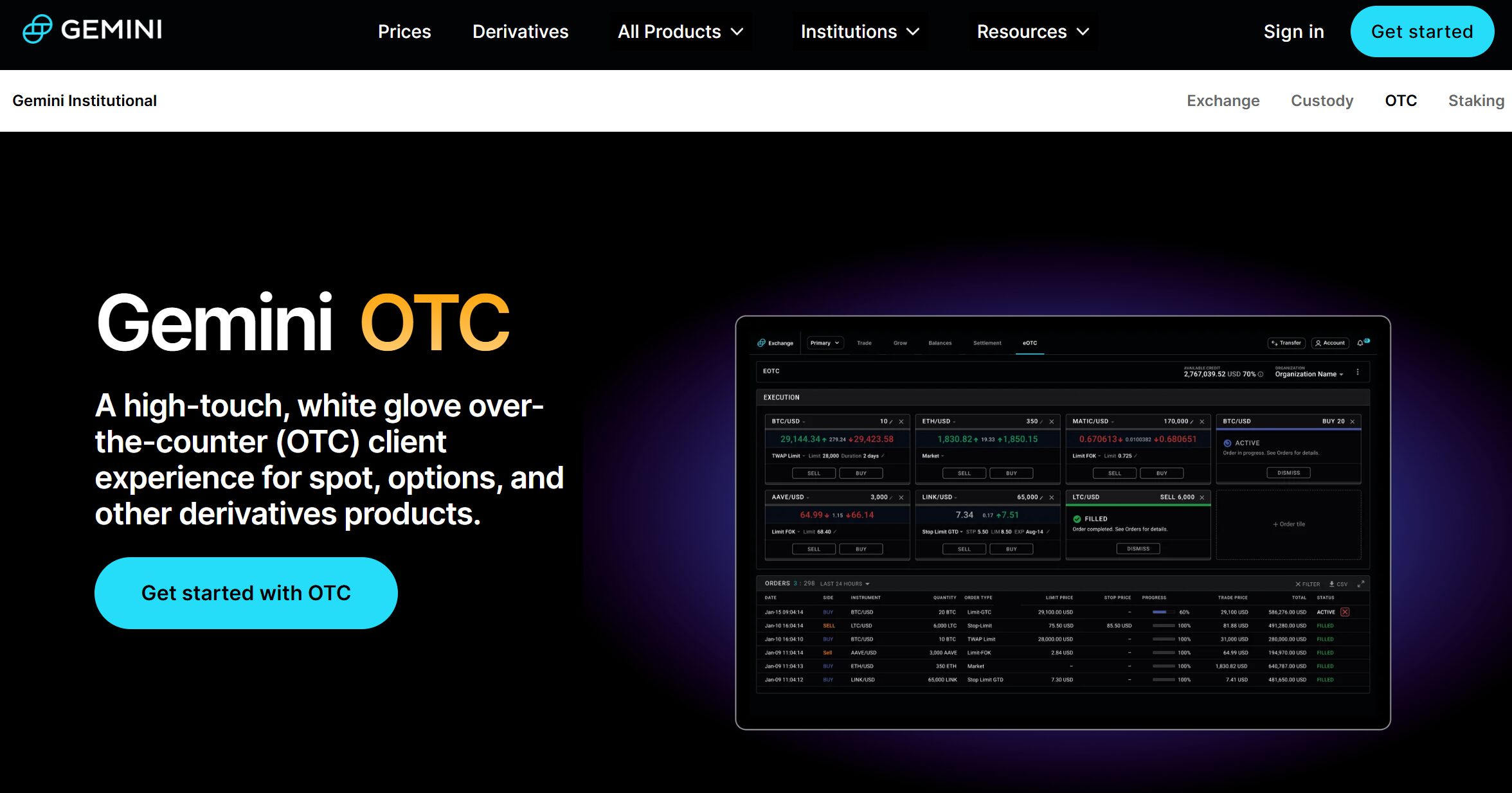
Founded in 2014, the Gemini OTC platform is open to institutional traders and facilitates high-volume trades with multiple supported assets. Gemini facilitates discreet and efficient trading using order routing and advanced liquidity pools. The platform operates in 70 countries and 50 US states, and is licensed by the New York Department of Financial Services (NYDFS). Security is a priority at Gemini, with 24/7 customer support and competitive pricing. It supports BTC, ETH, USDT, XRP, ADA, SOL, DOT, LINK, UNI, MATIC, BCH, LTC, XLM, and over 70 others.
3. Crypto.com
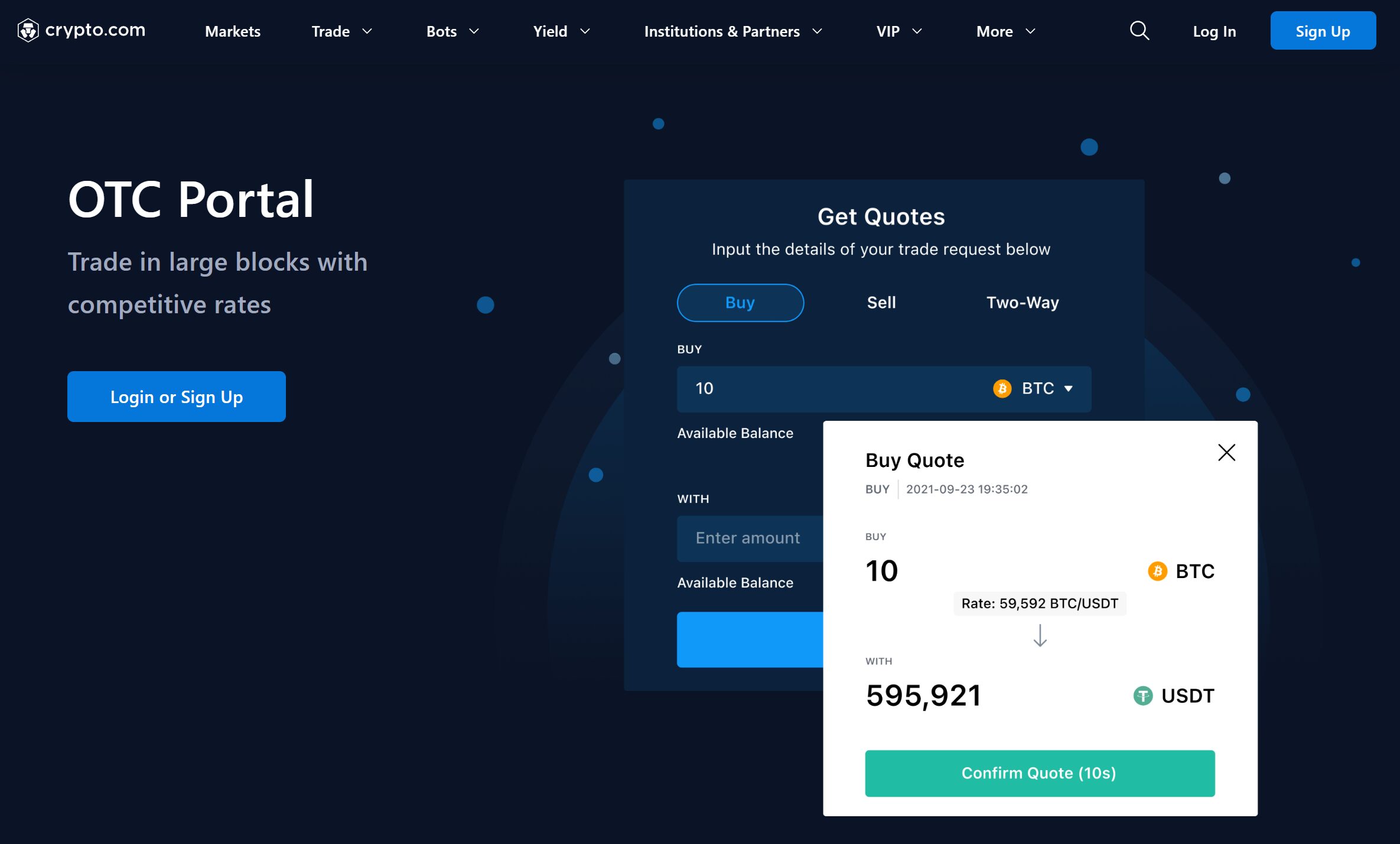
Crypto.com OTC is a hybrid exchange with various trading options. Its OTC branch is known for its user-friendly engine, which provides instant quotes. Users can set trade value limits for a better experience. The platform supports over 100 trading pairs, providing liquidity. Crypto.com has a market-making service and VIP program for high-volume traders.
4. Coinbase Prime
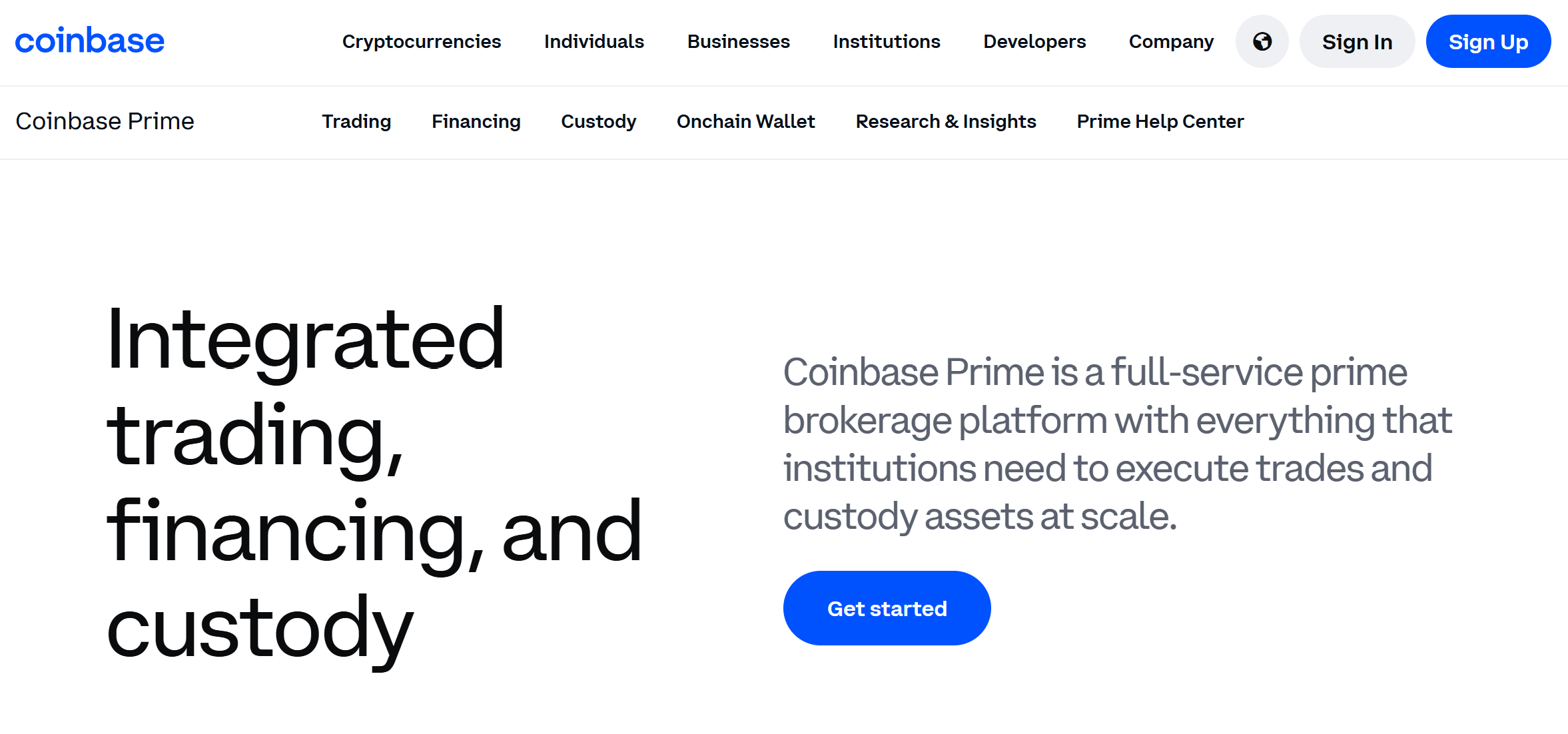
Coinbase Prime OTC Trading has advanced features like the regular Coinbase exchange. It supports over 200 digital assets, making it easy to find trading pairs. Coinbase Prime is popular with crypto startups seeking global reach, and offers bulk trading and premium custodial services. The platform provides hot and cold storage services and on-chain wallet services with multi-currency support.
5. Bitpanda

Bitpanda is a platform for crypto and securities that also provides OTC crypto solutions exclusively to Bitpanda Wealth customers. The platform personalizes this service for clients with relationship managers and for transactions exceeding EUR 500,000. Wealth Club members access integrated wealth management, OTC trading, and regulatory trust through licenses. Bitpanda’s OTC services cater to high-net-worth individuals and institutional investors.
6. Kraken
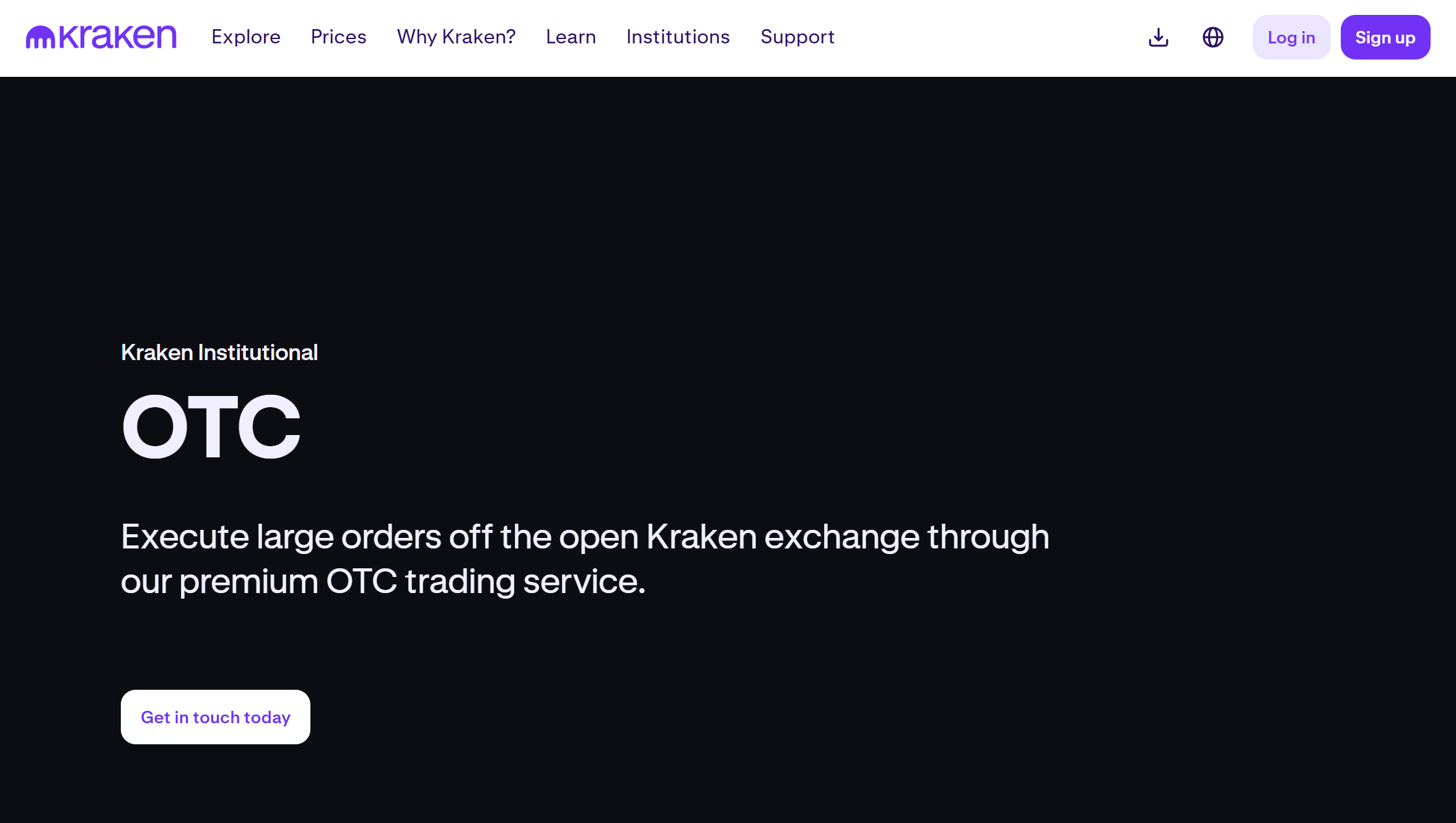
The Kraken OTC platform offers advanced trading features similar to those on the Kraken exchange. The OTC has an intuitive interface, making it easy to use for both beginners and experienced traders. It is ideal for institutions entering the crypto business. Users can enjoy tailored services, and the platform’s liquidity enables quick trades. Apart from flexible payments, the Kraken OTC platform offers spot, margin, derivative, and futures trading.
How to Choose the Right OTC Trading Platform
When choosing an OTC trading platform, make sure you get it right to mitigate the risks of a typical crypto trade. Not all platforms are equal, so selecting the right one involves considering your trading goals. Here are fundamental factors to prioritize:
Choose Based on Reputation
Focus on the reputation of your OTC partner. Look for a service provider with a track record of executing trades quickly, safely, and efficiently. Research the platform’s background and read customer reviews for issues. A good platform has positive reviews and a solid market presence, protects investors, and complies with regulations.
Prioritize Security
Security is crucial when selecting an OTC partner. Choose a service that implements military-grade security, including cold wallet storage, multi-layer encryption, and user authentication. Also consider partnering with OTC companies that have active insurance policies to cover assets in case of a security breach.
Ease of Use
Using an OTC Bitcoin service shouldn’t be complicated. An excellent platform offers an intuitive interface, making trades hassle-free. Also, there should be a trading guide, educational resources, and 24/7 support. Consider an OTC provider that adapts quickly to regulations and changing market conditions for seamless trades.
Understand Liquidity Access
A good OTC platform should have a solid liquidity pool to ensure trades aren’t delayed. Good liquidity prevents price fluctuations and slippage. Research carefully to ensure your platform has sufficient liquidity.
Conclusion
OTC crypto trading is essential for large transactions, offering benefits like reduced market impact, privacy, and deep liquidity, making it ideal for wealthy individuals and institutions. It also provides tailored services.
However, OTC trading has risks. Do due diligence, choose reputable platforms, verify counterparties, and understand regulations to trade safely. Use this guide to navigate the OTC market and make informed decisions.
FAQs
What are OTC deals in crypto?
In crypto, OTC deals refer to transactions executed directly between parties without going through a public exchange. Instead, there is an intermediary called an OTC desk.
What is the best OTC crypto exchange?
Choosing the best OTC exchange depends on liquidity, supported cryptos, and security. Coinbase Prime is ranked highly due to its institutional-grade security, making it a favorite for institutional investors and professionals.
How do you trade with OTC?
Trading with an OTC platform involves direct interaction between the buyer and seller through a platform or broker, rather than an exchange. This includes asking for a quote, negotiating terms, executing the trade, and settling the transaction.
Which crypto is the most traded OTC?
Bitcoin is the most popular crypto in the OTC market due to its capitalization and liquidity, making it preferred by governmental and institutional investors. Ethereum also features prominently due to its role in decentralized finance (DeFi) applications.
Is OTC trading profitable?
OTC trading has the potential to be profitable, but it comes with risks and challenges. While privacy and flexibility are advantageous, you must avoid counterparty risks. You must also perform your calculations accurately to avoid manipulation and guarantee a profit.
Is OTC trading legal?
OTC crypto trading is legal in most countries as long as the platforms operate within applicable regulations. Look for an OTC desk that implements KYC and AML verification procedures and complies with regulations.