

While Bitcoin’s fluctuating price captures attention, the true story of BTC is revealed by analyzing the data directly from its blockchain. Forget simple price charts; on-chain analysis delivers a clear picture of supply levels, demand forces, and how investors are acting in real-time. By understanding this data, both short-term traders and long-term investors can better predict upcoming market movements, track what big players are doing, and build investment strategies based on solid evidence.
Want to learn more? Watch this informative YouTube video: Mastering Bitcoin On-Chain Data
Understanding Realized Price and MVRV Z-Score
On-chain data refers to the publicly accessible record of every transaction on the Bitcoin blockchain. Unlike conventional financial markets where much activity is hidden, Bitcoin offers complete transparency. Every transaction, every wallet movement, and all network activity are open for analysis. This allows investors to spot important trends, pinpoint accumulation opportunities, and identify potential turning points in price.
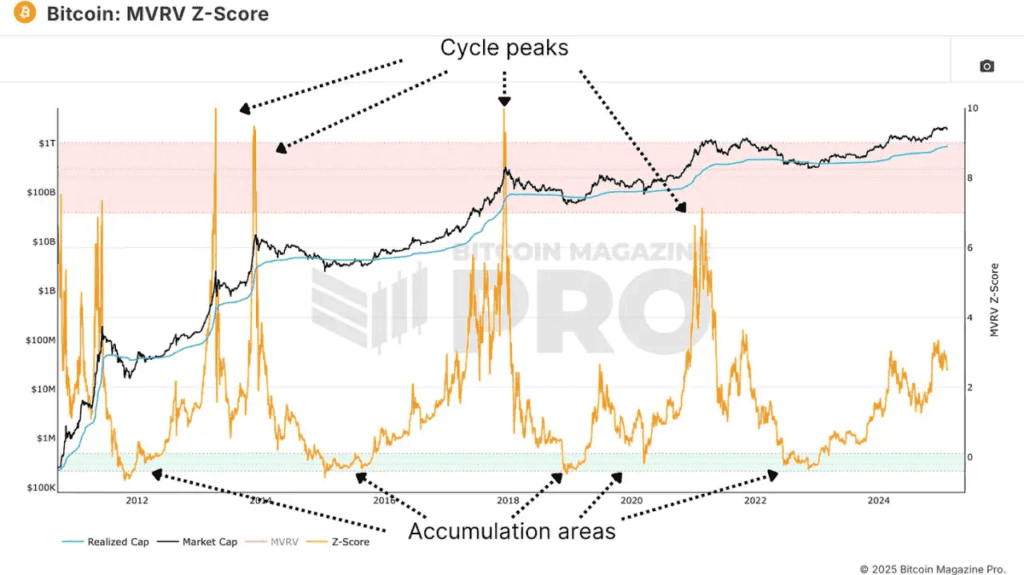
One of the most important on-chain metrics is Realized Price. This represents the average price paid for all Bitcoins currently in circulation. Unlike traditional investments where determining the average investor’s cost is difficult, Bitcoin allows you to see whether most holders are currently making a profit or experiencing a loss.
To get even more value from the Realized Price, analysts use the MVRV Z-Score. This indicator measures the difference between Bitcoin’s market value and its realized value, adjusted to account for Bitcoin’s characteristic volatility. Historically, low MVRV Z-Scores have indicated good buying opportunities, while high scores (entering the red zone) suggest the market may be overvalued.
Keeping an Eye on Long-Term Holders
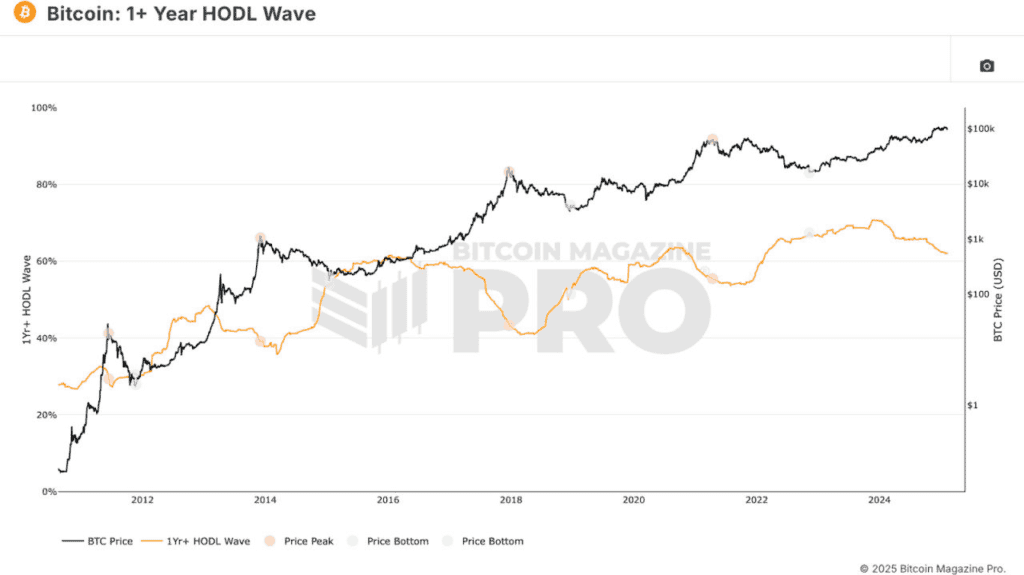
Another important indicator is the 1+ Year HODL Wave. This tracks Bitcoin addresses that haven’t moved their coins in at least a year. An increasing HODL wave suggests that investors are choosing to hold onto their Bitcoin, reducing the available supply and potentially driving prices upward. When this wave starts to decrease, it could indicate that holders are taking profits, potentially leading to a price decline.
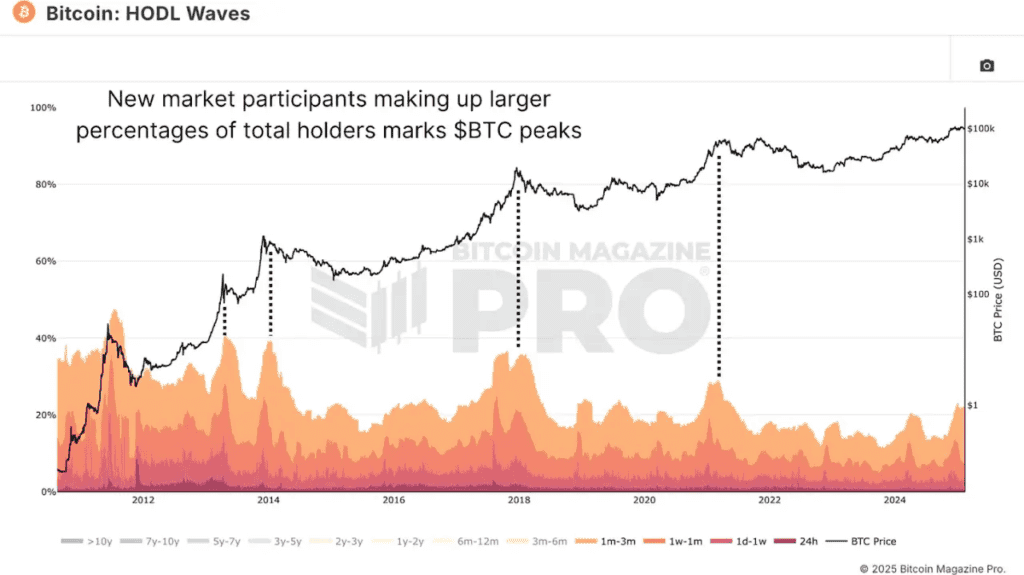
HODL Waves provides a detailed overview of Bitcoin ownership broken down by age. Focusing on the segment of new market entrants (those holding for 3 months or less) can reveal typical retail investor involvement. High levels of short-term holders often coincide with market peaks, while low levels can indicate optimal buying opportunities.
Detecting Large Investor Activity
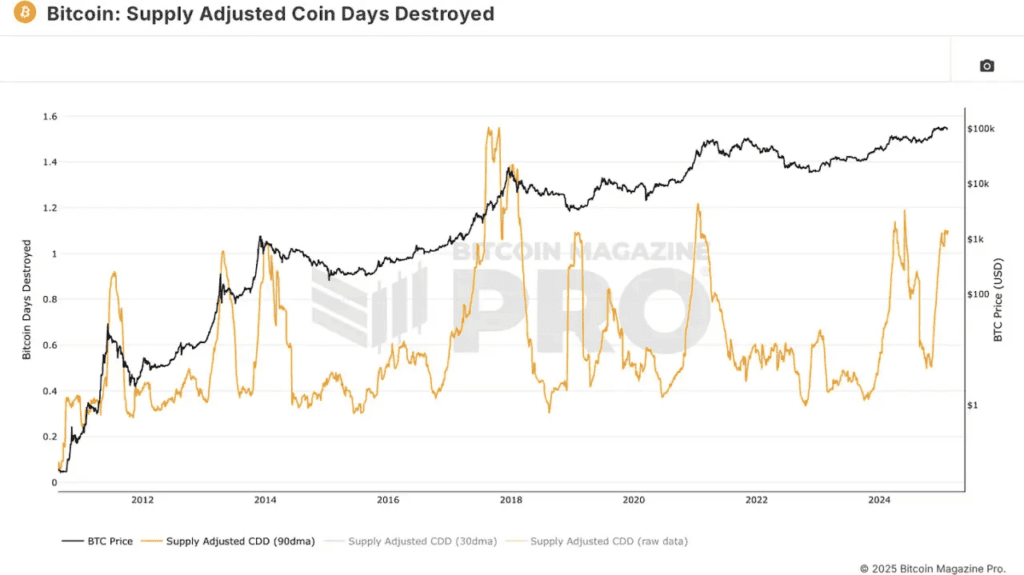
Supply Adjusted Coin Days Destroyed measures the total amount of BTC moved, giving more weight to coins that haven’t been touched in a long time. It then adjusts this data based on the total Bitcoin supply at the time. For example:
- 1 BTC held for 100 days → 100 Coin Days Destroyed
- 0.1 BTC held for 1,000 days → 100 Coin Days Destroyed
This is incredibly helpful for spotting activity by whales (large holders) and institutions who might be taking profits. Sudden movements of long-dormant coins often indicate that big players are selling their holdings. Historically, spikes in this metric have often aligned with significant market peaks and troughs, confirming its usefulness in analyzing market cycles.
Understanding Realized Gains and Losses
The Spent Output Profit Ratio (SOPR) reveals whether Bitcoin transactions are generally profitable. A SOPR above 0 indicates that the average Bitcoin being moved is being sold for a profit, while a value below 0 suggests the average sale is at a loss. Traders can watch for SOPR spikes to identify periods of excessive profit-taking (euphoria), while declines in SOPR often accompany market bottoms (capitulation).
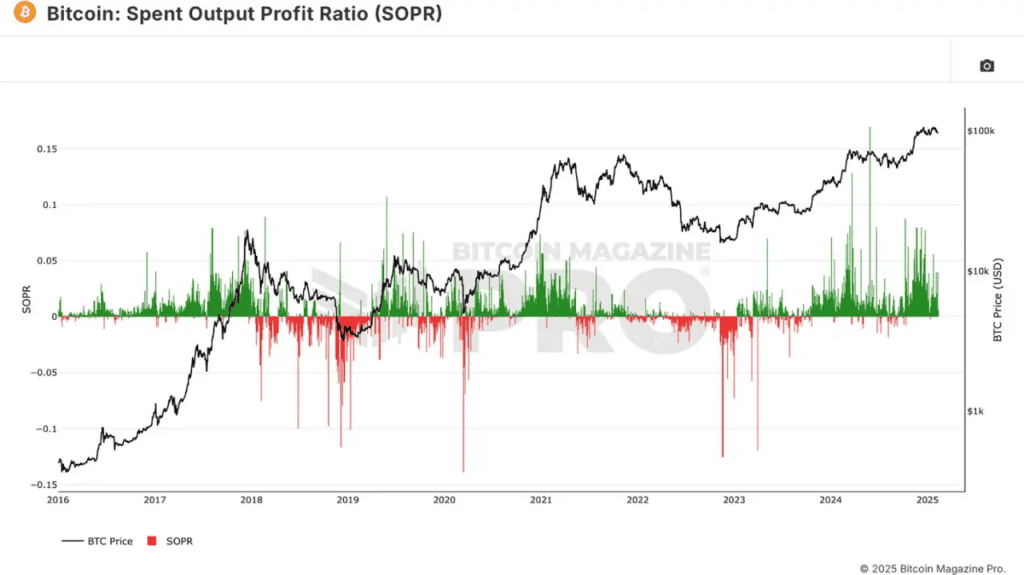
Relying solely on one indicator can be risky. For better accuracy, investors should look for multiple on-chain indicators to align.
For example, consider when:
- The MVRV Z-score is in the green zone (suggesting undervaluation)
- SOPR indicates significant realized losses (suggesting capitulation)
- HODL waves show fewer short-term holders (suggesting selling exhaustion)
Historically, this combination has often marked ideal buying opportunities. Similarly, when planning to take profits, look for the opposite signals from these metrics, indicating potentially overheated market conditions.
Conclusion
Bitcoin’s on-chain data offers a transparent and up-to-the-minute view into the market’s inner workings, giving investors a significant advantage. By monitoring supply dynamics, investor sentiment, and cycles of accumulation and distribution, Bitcoin holders can improve their chances of success over the long term.
Access live data, charts, indicators, and in-depth analysis to stay ahead of Bitcoin’s price movements at Bitcoin Magazine Pro.
Disclaimer: This information is intended for educational purposes only and should not be interpreted as financial advice. Always conduct thorough research before making any investment decisions.