
The concept of digital, borderless money started with Bitcoin, giving individuals financial freedom. Ethereum innovated with smart contracts, empowering developers to build new applications. Building on these innovations, Binance emerged, not only as the largest global cryptocurrency marketplace by trading volume but also as the creator of its own comprehensive ecosystem and digital asset, Binance Coin (BNB).
BNB transcends the typical cryptocurrency role. It is the engine powering smart contracts, offering reduced transaction expenses, facilitating NFT and DApp functionalities, and maintaining the Binance digital world. The coin’s rapidly expanding usefulness makes it a vital component of the crypto landscape. This guide explores BNB, explaining its core features, its significance, and how you can engage with it.
What Is BNB?
Binance Coin, symbolized as BNB, is the official digital currency of the Binance exchange, strategically designed to improve trading and offer increased benefits to those who use the platform. Due to Binance being the largest crypto exchange worldwide in terms of the quantity of trading activity, BNB has become central to its entire infrastructure. People who own BNB can use it to invest and perform trading operations, enhancing its purpose within the crypto sector.
The success seen by BNB can be largely associated with its close relationship with Binance, as well as its wide variety of utility features throughout the ecosystem. This incorporates NFT markets and the growing decentralized finance (DeFi) market, making BNB an important coin within the crypto world.
History of BNB and BSC
BNB was established by Binance founder, Changpeng Zhao, originally deployed as a token on the Ethereum network back in 2017 through an initial coin offering (ICO), listed at only $0.10. It has since progressed to being a top ranking crypto asset, based on market capitalization. The ultimate goal was developing a token that would provide discounts on trading fees within the Binance online trading platform.
Following the creation of Binance’s blockchain, known as Binance Chain, developers moved BNB Coin onto that blockchain, marking it as the major digital asset. In 2020, the token was transferred again following the launch of Binance Smart Chain (BSC). BSC offered a faster and more economical framework created to power smart contracts and decentralized applications. Later on, in 2022, Binance rebranded the entire ecosystem as the BNB Smart Chain.
Presently, the BSC ecosystem covers a range of chains including the BNB Smart Chain, BNB Greenfield, BNB Beacon Chain, and opBNB. In the beginning, the BNB Beacon Chain worked with the BNB Smart Chain using a dual-chain framework. The Beacon Chain was important for ecosystem management through its stakers and validators who voted on new rules and updates.
What Is the BNB Chain?
The BNB Chain is a decentralized blockchain solution within the Binance network structured to focus on the Web3 economy and its related infrastructure. The protocol comes with a number of advanced resources and capabilities for its users. It promotes the examination of DeFi applications as well as gives the tools for developers to build extensive decentralized applications (DApps).
The digital currency was initially known as Binance Chain. However, BNB coin was transferred from Ethereum in 2019 to become the main cryptocurrency of BNB Chain. The original BNB Chain is now known as the BNB Beacon Chain. Progress continued for Binance in 2020, when Binance Smart Chain became BNB Smart Chain. The new network works in tandem with the BNB Beacon Chain. BSC has brought more advanced features, including smart contracts that are compatible with EVM, leading to an increase in usage of decentralized apps and related services.
BNB Chain vs. Binance Smart Chain: What’s the difference?
Source: Binance
Cryptocurrency users that may be new to the crypto sector could use the names Binance Smart Chain (BNB Smart Chain) and Binance Chain (BNB Chain) interchangeably; however, they have different functions within the Binance infrastructure:
- Consensus Mechanism: The BNB Chain runs on the Delegated Proof of Stake (DPoS) consensus model, in which a user recommending a valid block can become a validator. In contrast, Binance Smart Chain uses the Proof of Staked Authority (PoSA) model, which requires users to stake their online identity.
- Cross-chain Compatibility: While BNB Chain and Binance Smart Chain function independently, they are compatible with each other. This allows people to easily transfer their digital coins across networks or use other decentralized exchanges to convert to a separate chain.
- Smart Contract Functionality: BNB Chain was not designed to work with smart contracts. Binance Smart Chain was specifically designed to resolve this. BSC has incorporated the Ethereum Virtual Machine (EVM), meaning that it can support Ethereum DApps and smart contracts.
- Gas Fees: BNB Chain has a reputation for very low trading costs, making it a strong selection for users looking for affordable transactions. Binance Smart Chain offers even less gas fees among blockchains using smart contracts, making it an attractive choice for users and developers.
- Use Cases: BNB Chain is used to send and receive BNB tokens, create tokens, mint digital coins, and build trading pairs with various assets. Binance Smart Chain makes it easy to send and receive BNB and BEP-2 tokens, examine transaction histories, stake BNB tokens to earn block rewards, and act as a validator on BSC.
BNB Chain vs. Ethereum: What’s the difference?
BNB and Ethereum are compatible; however, they vary in other areas:
- Transaction Speed: Ethereum-based operations take more time due to market conditions, the amount of network traffic, and gas fees paid, with processing taking one to five minutes. BNB transactions are normally processed within five minutes.
- Transaction Fees: With an average cost of $0.01 per transaction, costs on BNB are less than on Ethereum. This is largely based on the faster consensus mechanism and network architecture. ETH costs can become particularly expensive during peak transaction times and can be greater than $100 per transaction, specifically when complex smart contracts are deployed.
- Consensus Mechanism: The Ethereum blockchain transitioned from a Proof-of-Work (PoW) consensus mechanism to a Proof-of-Stake (PoS) consensus mechanism with the “The Merge” in 2022. This allows users to stake ETH in order to validate transactions. BNB uses Proof of Stake Authority (PoSA), which combines Proof of Stake and Proof of Authority to allow for fast speeds, lower energy usage, and BNB staking.
- Scalability: Ethereum has experienced scalability issues, with throughput averaging 13-15 transactions per second, versus BNB, which has better scalability, averaging 40 transactions per second and the possibility of exceeding 1500 TPS.
- Use Cases: BNB shifted from its initial use as a transaction fee token for the Binance exchange into a general purpose asset for the BNB Chain. It encourages token sales and purchases on Binance. Ethereum started as a “World Computer” that can run different applications. Now, it supports more advanced uses, incorporating NFTs, DeFi, and similar applications.
How Does the BNB Chain Work?
BNB Chain is an open-source, decentralized, permissionless blockchain. The platform enables people with tech skills to take part in the network. The network is fully transparent. The developers had the intent of developing an infrastructure that would promote adoption of blockchain and cryptocurrency technologies.
1. Proof of Staked Authority (PoSA)
BNB Chain uses the Proof of Staked Authority (PoSA) consensus model, which combines components of Proof of Stake (PoS) and Proof of Authority (PoA) to achieve better transaction speeds and less network costs. PoSA is strategically created to join the strengths of both models, building a hybrid system.
2. Validators
The Proof of Staked Authority consensus model relies on validators selected by BNB stakers. They are very important for the development and validation of blocks on the BNB Chain. They also collect BNB transaction costs as a reward. The PoSA system provides near-instant finality, enabling validators to confirm transactions and list them within a block in real time. A validator has to meet staking requirements by owning an amount of digital coins and being a well-known participant within the network.
3. Transaction Fees
Transaction costs related to BNB Chain operations are charged in BNB Coin. The transaction fees are lower when compared with other blockchains. Fees are used to compensate validators who maintain the security of the network and confirm transactions. The specific amount payable is determined by network congestion and how complex transactions are.
4. Burn Mechanism
The BNB Coin burn is a highly anticipated event that is important for Binance’s long-term plan. This includes enhancing the token’s value and usefulness. The process involves a commitment to value appreciation by scarcity to facilitate stability. By permanently eliminating a part of BNB tokens that are available for use, the coin becomes more scarce and more valuable.
5. Ethereum Virtual Machine (EVM) Compatibility
Given that it is a universal language making the development of DApps easier on nearly all blockchains, EVM compatibility has become important for emerging blockchains. EVM compatibility enables support for smart contracts without making significant modifications, lowering development time and effort.
6. Smart Contracts
DApp developers have the ability to use the smart contract support feature on the platform to create automated interactions between DApps and their respective users. BNB Chain-based smart contracts use a universal programming language that allows them to work with other blockchains, leading to cross-chain interoperability. Network designers have made optimizations to handle larger transaction volumes and enhance competitiveness.
7. Decentralized Apps (DApps)
The BNB Chain hosts different decentralized applications (DApps), like decentralized exchanges (DEXs), money lending systems, social media platforms, and NFT marketplaces. Well-known DApps are money market protocols, such as Venus, and decentralized exchanges (DEXs) like PancakeSwap.
8. NFTs
BNB Chain users are able to experience a simple and easy process that mints NFTs of varying formats for different uses, whether it’s giveaways or selling them on NFT marketplaces. The BNB Chain supports the development of NFTs in differing formats, like JPG, PNG, GIF, WEBP, MP4, and MP3.
9. Tokenization
Tokenization of assets into Real World Assets (RWAs) is becoming more common in blockchain. It provides a secure and efficient option for managing and sharing value digitally. BNB Chain comes with an easy-to-use system for converting real-world assets into digital tokens.
Advantages & Disadvantages of BNB Coin
The popularity of BNB Coin comes from its connection with Binance, a popular cryptocurrency exchange. With the successes of entities, there can also be related challenges. The advantages and disadvantages of BNB are described below:
Advantages
- Lower Transaction Fees: Reduced transaction fees are significant in the BNB ecosystem, specifically when the token is used on the Binance platform. Users see big discounts by storing tokens in their digital wallets.
- Utility Token: As a native token of the online exchange, BNB is important for performing varying functions like paying trading fees, reserving hotels, and engaging in token sales.
- Faster Transactions: BNB Coin transactions occur quickly due to the high throughput potential of the Binance blockchain, making it easy to quickly transfer digital coins.
- Binance Launchpad: BNB coin holders get a chance to see early investment opportunities and token sales via the Binance Launchpad.
- Decentralized Exchange (DEX) Integration: BNB Binance is used as gas fees on most DeFi and DApps platforms.
- Strong Community Support: BNB coin has built a strong user base that supports further development and use.
- Token Burns: By doing periodic token burns that take out a part of BNB coins that are in circulation, the platform uses a deflationary system to support the value of the token over a long period of time.
Disadvantages
- Centralization Concerns: People relate BNB to the successes of cryptocurrency exchange Binance. However, the platform’s centralized nature has often raised some questions about the token’s decentralization. The community has been worried about what may happen if the online exchange suffers challenges or breaches.
- Market Dependency: The worth of BNB token relies significantly on the online exchange, which may become problematic if unfortunate events may influence the exchange.
- Limited Use outside Binance: Outside the online trading platform, BNB has not yet built as many use cases compared with competing cryptocurrencies.
- Price Volatility: BNB coin can be vulnerable to regular fluctuations, like all cryptocurrencies.
- Regulatory Risks: The legal environment around crypto is constantly changing, posing challenges to the growth seen by BNB coin.
What is BNB Used For?
Source: Coolwallet
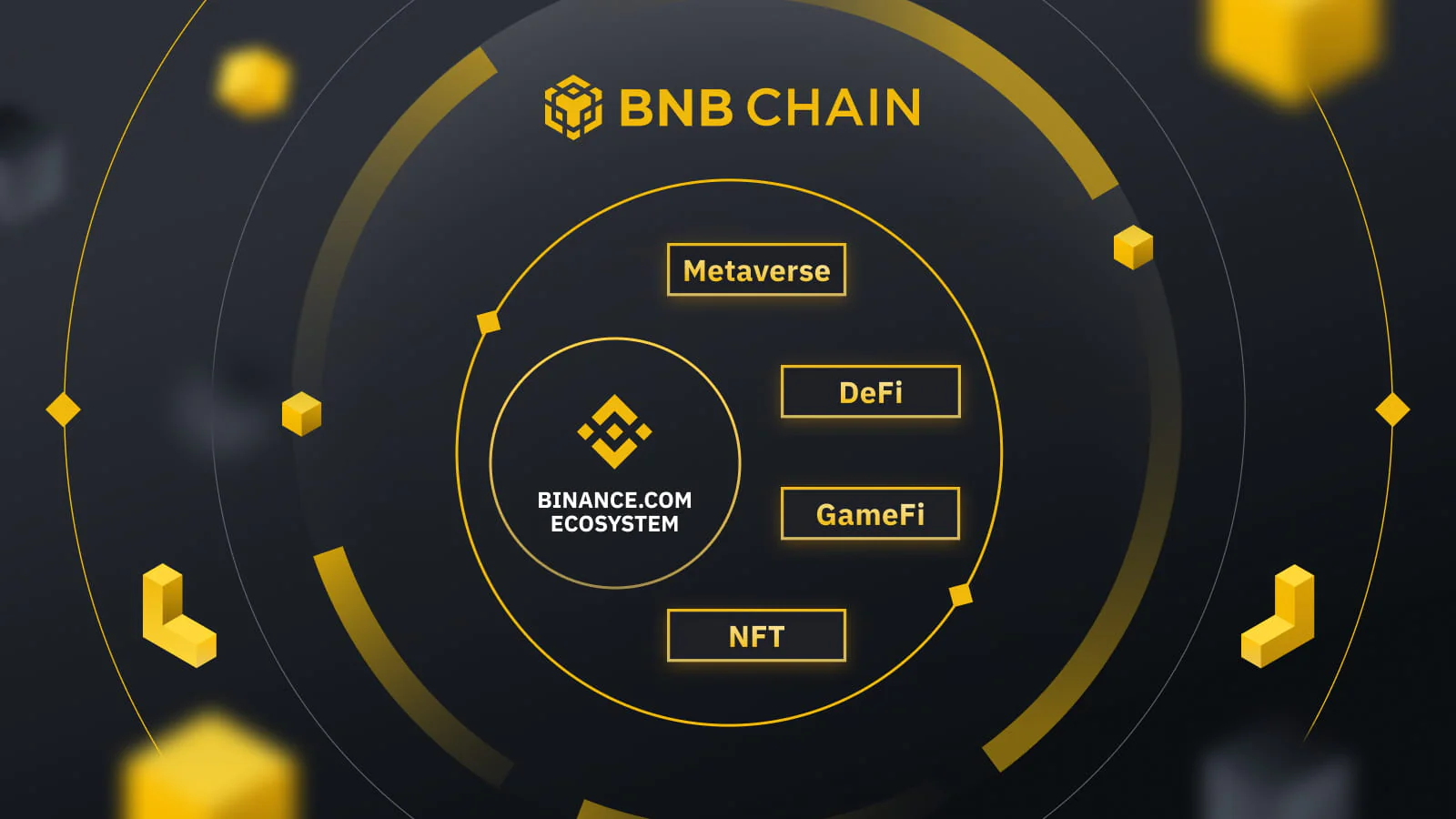
BNB Binance coin was initially created to discount transaction costs on the Binance online exchange. It has since evolved to cover many functions within the Binance ecosystem and outside of it. This incorporates payments, supporting token sales, and supporting different DApps, liquidity provision, and games. Some major uses for BNB Coin are covered below:
DeFi
The BNB token is important for the BNB Chain DeFi platforms, and the leading use cases for the token are as follows:
- Transaction Fees: Users will have to use BNB to cover transaction fees when engaging with the BNB Chain network.
- Exploring DApps: BNB Holders can use the token to pay transaction fees in over 5,000 DApps supported by the network, like finance, games, and NFTs.
- Earn Through DApps: The majority of DApps supported by the network offer opportunities for yield farming in which rewards are distributed with compatible tokens or BNB.
- Staking and Governance: BNB Coin holders can stake the coin to help secure the network and validate transactions. Rewards can be earned in return. Users staking coins are also able to engage in governance responsibilities, such as voting on the future path of the network.
- Liquid Staking: The Binance Chain ecosystem allows staking via derivatives like clisBNB and slisBNB. This will provide greater APY due to differing incentives. By committing LSTs into other DeFi platforms, users can see greater returns.
- Restaking: Owners of BNB can restake their Liquid Staking Tokens (LSTs), like slisBNB, through restaking protocols to collect further yields.
- Decentralized Exchange (DEX) Fees: Users will need to have BNB Coin to be able to interact with supported DEXs, like PancakeSwap, when paying transaction costs.
CeFi
Besides being an important feature of the decentralized finance ecosystem, BNB is also useful in centralized finance settings when performing CeFi functions.
- Trading Fee Discounts: When holding BNB, users can see fee discounts on Binance, the crypto exchange. Over time, this can add up, specifically based on trade volume.
- Exclusive Token Sales: BNB Coin is the main token on the BNB LaunchPad, providing coin holders early access to blockchain plans before they are released to the general public.
- Liquidity and Lending: With Binance Liquid Swap, BNB holders can pool their coins to provide liquidity to lending systems and earn yield from this. Furthermore, they can lend tokens directly via Binance Launchpool and collect greater rewards supporting new plans.
- BNB Vault: BNB holders can stake their tokens on differing Binance products using the BNB Vault yield aggregator. The most common of these include Binance Launchpool and Simple Earn Flexible.
- Promotions: BNB holders have the opportunity to benefit from differing promotions, incorporating clisBNB and slisBNB, with Megadrop and HODLer Airdrop.
PayFi
Payment Finance, or PayFi, refers to integrating blockchain into payment solutions, providing instant settlements for transactions. BNB is playing a role in enabling PayFi cases, providing fast, secure, and economic transfers:
- Shopping and Spending: Binance Pay allows for online shopping when paying with BNB. Users can make seamless payments on a growing amount of eCommerce platforms, incorporating Shopify and others.
- Travel and E-commerce Payments: Platforms, like Travala.com, use BNB for payments for travel, hotels, flights, and other platforms that take BNB payments for online payments.
- Entertainment and Services: BNB holders can participate in P2P games and differing entertainment on the Binance blockchain for a chance to collect BNB rewards.
- Financial Services: BNB Coin is the backbone for many financial services, incorporating loans, investments, and payment services using BNB.
Where to Get Binance Coin (BNB)?
You can acquire the BNB token in different ways, such as through centralized exchanges like Binance, Coinmama, and Coinbase or peer-to-peer services. There are a few easy options to obtain BNB coin:
1. Wallets
Digital wallets, such as Trust Wallet, let you buy BNB Coin with physical currency or by debit/credit card on online exchanges. There are various processors and also ways to trade digital assets on the Binance Exchange. As such, your first step is downloading an online wallet that supports BNB Binance.
2. Centralized Exchanges (CEXs)
You are able to buy BNB tokens from the Binance Exchange or other centralized exchanges that are compatible with it. The BNB exchange is compatible with a variety of trading pairs for BNB at more favorable prices compared with other centralized exchanges.
3. Earn BNB
You have the ability to collect BNB by performing work for crypto-paying companies or locating possibly harmful bugs on chain. You are able to join the Simple Earn program and qualify for more rewards from different mechanisms, like Launchpool, Megadrop, and HODLer Airdrop. Users have the ability to maximize their BNB earnings and collect rewards by locking BNB and performing Web3 quests or collecting rewards.
4. Receive BNB from Your Peers
You can accept BNB tokens from people that you know by sharing your cryptocurrency wallet with them. In another case, you can use Binance P2P to receive BNB coins directly to your digital wallet address from people you know via differing payment plans.
5. Staking Rewards
You can get Binance Coins as staking rewards by committing BNB Coins to the Binance exchange. You may also pay someone to stake your coins on your behalf, acting as a validator on BNB Chain. When staking BNB tokens, you support the BNB Chain ecosystem by serving as a validator node. In return, you can get paid in BNB tokens.
6. Decentralized Exchanges (DEXs)
A number of decentralized exchanges (DEXs) are compatible with the BNB Chain, from which you can buy BNB coins. All that you need is a compatible Web3 wallet like MetaMask to link to the DEX to exchange crypto for BNB. There are different DEXs on the Binance Chain for buying BNB.
How to Purchase BNB in 2025
Binance coin is a top-five cryptocurrency based on market capitalization, showing that it is a valuable digital asset in the market. The best place to buy BNB in 2025 is an online crypto exchange where you can ensure security and get a competitive price.
Buying BNB
- Step 1: Choose a Platform: You can select an online platform such as Binance, Coinbase, KuCoin, or others that offer security, low transaction fees, and preferred payment plans. You can also try a range of decentralized exchanges (DEXs), such as PancakeSwap, among others.
- Step 2: Create an Account and Verify: Go to your platform of choice or download their App. Register to create a personal account. When choosing a centralized exchange, you will likely have to verify your identity by finishing a KYC process.
- Step 3: Deposit Funds: A number of exchanges enable you to deposit fiat currencies by debit/credit card or bank transfer. You also have the ability to deposit a cryptocurrency in order to buy the required BNB.
- Step 4: Buy BNB: After making the required deposit, navigate through the App to the trading section and select BNB. You have the ability to choose your preferred trading pair or payment option. Enter the quantity of BNB you need to buy and confirm your order.
- Step 5: Withdraw or Store BNB: You can keep BNB in your exchange wallet if you need to trade immediately. If not, move and transfer it to a secure personal wallet.
Selling BNB
It is also simple to sell BNB. The procedure is outlined below:
- Step 1: Select Your Blockchain Network: Begin by picking the blockchain used to sell BNB tokens. Options include Binance or other platform that meets your particular needs.
- Step 2: Enter Amount of BNB: Within the platform, go to the trading area, select SELL, and enter the number of BNB to sell. The platform shows how much currency you can expect to receive.
- Step 3: Complete KYC Verification: If you use a platform that is highly regulated, you’ll need to complete KYC verification, which may depend on your region.
- Step 4: Choose the Fiat Payout Method: Enter your card or bank details. Be sure that you have provided the correct information.
- Step 5: Confirm Transaction: Check the information that you have entered and click Confirm. Then, transfer the BNB to the wallet address. Within a number of minutes, expect to receive your payment.
How to Store BNB
There are differing methods for storing your Binance Coin. In cases where tokens are being stored for long periods of time, a hardware wallet like Ledger or Trezor will offer the most security. An alternative option is using a software wallet such as MetaMask or Trust Wallet for increased convenience. An outline of options to secure your tokens is provided below:
- Hardware Wallets: Hardware wallets, for example, Ledger or Trezor, remain primarily offline. As such, they are very resistant to both hacking and malware. They come with a number of security protocols, making them a good selection for long-term BNB holdings.
- Software Wallets: Popular for their usability, software wallets are useful for users engaged in trading or for making transfers. Consider using secure digital wallets such as Trust Wallet and MetaMask for enhanced interaction on the BNB Smart Chain.
- Binance Exchange: Traders can consider the Binance Exchange Integrated wallet. You may need to use a strong password as well as allow for two-factor authentication for increased security.
- Important Considerations: No matter how you intend to secure your BNB tokens, it is very important to have a secure backup for your wallet’s seed phrase. You should always check URLs to be sure that you’re using legitimate platforms and not counterfeits.
- Private Keys: Keep in mind that users of self-custody wallets are fully responsible for the safety and security of their respective private keys and digital coins.
The Future of BNB Coin
The future of BNB depends on the growth of the Binance infrastructure, continued adoption, and the result of regulations. With the platform working on an L2 system and the change of many functionalities to the BNB Smart Chain, the future is bright.
Binance is taking steps to address security concerns and scams. BNB may also face competition from rising cryptocurrencies. Market sentiment and overall resilience is something that will affect the direction of BNB.
Conclusion: Is BNB a good investment?
BNB could greatly increase its utility throughout the Binance environment. Continuing the expansion of decentralized apps (DApps) and Binance Blockchain illustrates the potential of BNB to play a major part in crypto going forward. Expanding the ecosystem sets a solid foundation for sustained demand. This makes it a viable, long-term investment.
Furthermore, Binance Coin’s ranking as a top-5 cryptocurrency showcases the confidence that investors have in it. The token has a diverse range of applications as well as widespread use. BNB also has the support of market experts. Nonetheless, users should be observant and assess the markets before making long-term investments.
FAQs
Where to buy BNB safely?
When using a debit or credit card, users have the ability to buy Binance coins from centralized online cryptocurrency exchanges, incorporating Coinbase and Binance. In order to make a purchase, users must make an account and set up a BNB wallet.
How much is $1 dollars in BNB?
According to CoinGecko, BNB current price is BNB . Meaning that 1 USD equals around 0.001 BNB.
Is BNB also Bitcoin?
Binance Coin (BNB) and BTC are not the same thing. Bitcoin is the original cryptocurrency on a blockchain. BNB is a crypto coin on the Binance blockchain. Both of these serve differing needs.
Why is BNB so popular?
BNB’s popularity comes from its close relationship with Binance, a popular online cryptocurrency exchange. In addition, it maintains and secures the BNB Chain. The token provides staking rewards and the possibility of passive income. BNB owners can access a digital library of crypto plans created on the BNB Smart Chain.
Who created Binance Coin (BNB)?
Changpeng Zhao founded the Binance cryptocurrency exchange, and thus created Binance Coin (BNB). The token was created in 2017 for discounted fees, but now includes varying utilities.