
Web3 finance is revolutionizing how everyday crypto enthusiasts interact with advanced financial instruments. Platforms like Dolomite are at the forefront, offering versatile tools that bridge the gap between digital asset owners and lenders/borrowers.
This article delves into Dolomite (DOLO), exploring its mission to make financial operations and cryptocurrency activities accessible to everyone.
What is Dolomite?
Dolomite functions as a decentralized cryptocurrency exchange (DEX) and money market, providing users with the ability to borrow and lend cryptocurrencies. This platform focuses on facilitating efficient cryptocurrency borrowing, lending, and trading.
Built on Arbitrum, an Ethereum Layer-2 scaling solution, Dolomite distinguishes itself through its unique Dynamic Collateral System. Unlike other Web3 money markets, it allows users to borrow funds while still utilizing their collateralized assets for activities such as voting or staking. Furthermore, Dolomite features a virtual liquidity system that integrates DEX capabilities like yield farming, and supports partnerships with various DeFi platforms.
Adam Knuckey and Corey Caplan created the Dolomite crypto project, launching it in 2019. Their inspiration came from frustrations with existing exchanges, citing slow processing times and limited coin support since 2015. Identifying an opportunity, they collaborated to build an exchange that met their needs. After their initial DEX attempt failed, they successfully secured $2.5 million in investment from Draper Goren Holm and other firms to develop Dolomite.
Dolomite’s decentralized money market prioritizes DeFi user needs, providing several key functionalities:
- Over-Collateralized Loans: Enables borrowing by providing collateral valued higher than the loan amount.
- Margin Trading: Provides traders with borrowed capital to potentially enhance trading returns.
- Spot Trading: Enables users to directly trade cryptocurrencies with one another.
- Virtual Liquidity System: Enhances capital efficiency and potentially lowers borrowing rates.
Pros
- Wide Asset Support: Supports a wider array of cryptocurrencies as collateral compared to similar platforms.
- Composability: Seamless integration with other DeFi protocols expands its potential applications.
- Security Focus: Dolomite’s smart contracts undergo thorough testing to minimize potential technical vulnerabilities.
Cons
- Limited Liquidity: May experience reduced liquidity and trading volume compared to larger platforms.
- Centralized Control: Its 2/3 multisig admin control introduces a degree of centralization.
- Newer Platform: Being relatively new, it has a limited operational history.
How Dolomite works
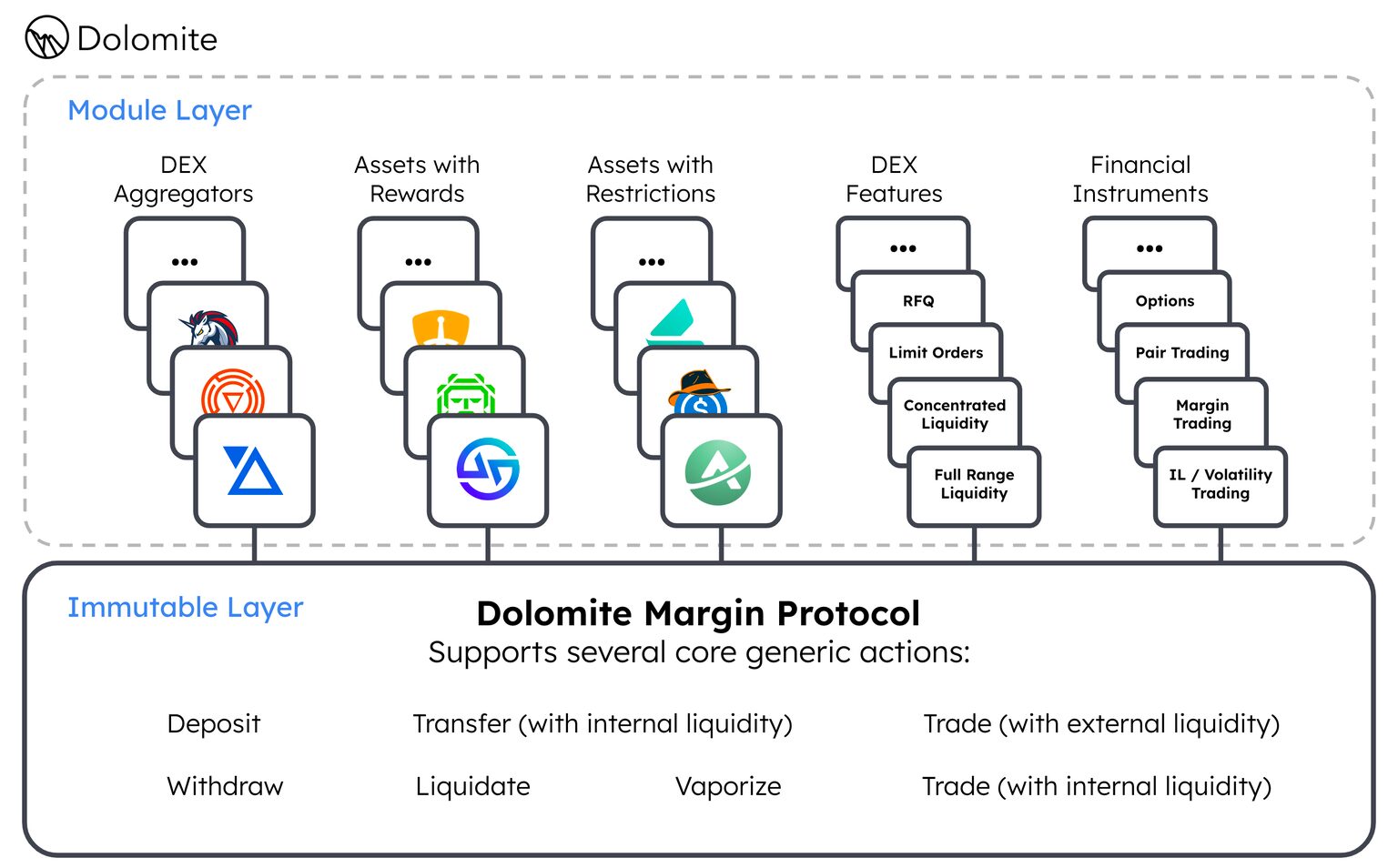
Dolomite’s architecture uses a two-part modular design to ensure a user-friendly interface, facilitate asset management, mobile app integration, and exceptional capital efficiency. The core layer sets the parameters for security protocols and manages smart contract routing. Smart contracts automate tasks like liquidating accounts, depositing funds, and executing trades. The modular design adapts to different user needs and is updated to include new assets and functionalities. Its features include:
- Integrated DEX and Lending Protocol: Dolomite merges the functionalities of a DEX and a lending platform. This allows users to easily transition between spot trading, margin trading, and over-collateralized lending.
- Broad Token Support: Supports more than 1000 assets, including staked LP tokens and yield-bearing tokens, enabling portfolio diversification.
- Capital Efficiency through Virtual Liquidity: Users can deposit assets, earn yield, and engage in other trading activities, maximizing potential income streams.
- Modular Architecture: Composed of a mutable module layer and an immutable core layer, allowing adaptability to emerging DeFi trends while maintaining foundational stability.
Dolomite Tokens
The Dolomite project utilizes three distinct tokens:
- DOLO: A standard ERC-20 token serving as the foundational currency of the Dolomite ecosystem.
- veDOLO: Obtained by staking DOLO tokens, this vote-escrowed token allows users to participate in community governance or be used as an NFT. Users can regain their DOLO tokens early by paying a fee.
- oDOLO: Used to reward liquidity providers for supporting the ecosystem, and can be paired with DOLO to acquire veDOLO tokens at a discount. This encourages long-term platform participation and provides liquidity providers with a voice in community governance.
This token system fosters self-sustainability by aligning incentives across users and promoting platform growth.
What is DOLO?
DOLO, the ERC-20 native token of Dolomite, underpins incentives, governance, and liquidity provision within the project. This utility token powers lending pools and performs other essential ecosystem tasks. It’s also the primary token traded by users on exchanges.
DOLO supply and tokenomics
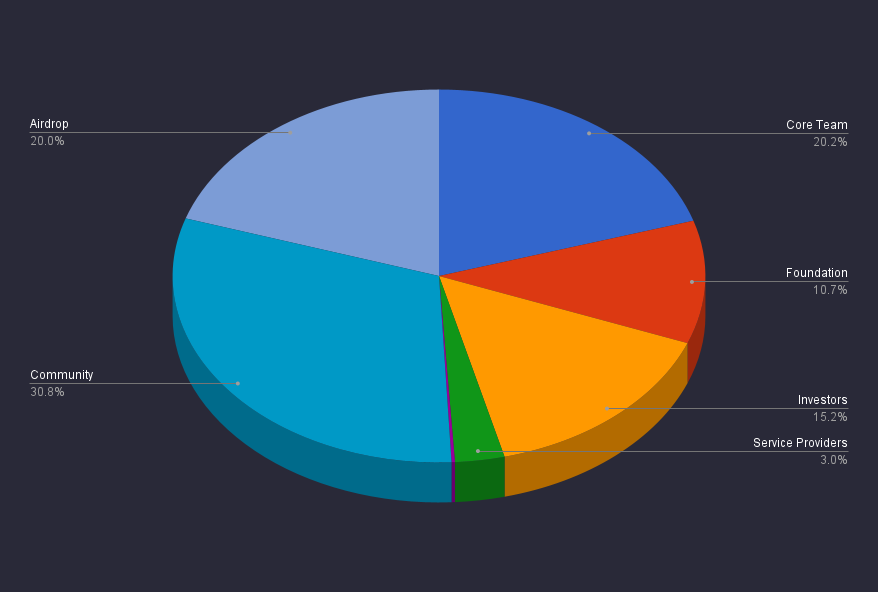
DOLO has a fixed supply of 1 billion tokens, with tokenomics designed around a cycle involving DOLO, veDOLO (time-locked), and oDOLO (incentive) tokens. The allocation includes a 3% annual inflation rate until 2026 to fund platform growth and liquidity incentives.
The token distribution plan is as follows:
- Community: 50%
- Core team: 20%
- Foundation: 10%
- Investors: 16%
- Service providers: 3%
- Advisors: 1%
What makes Dolomite’s architecture special?
Dolomite’s highly modular architecture combines a flexible, mutable layer with a secure, immutable core. This dual approach promotes capital efficiency. The immutable core ensures security, while the mutable layer adapts to functional expansion and market changes through Smart Collateral and Automatic E-Mode for dynamic LTV adjustments. This architecture maximizes capital by supporting multi-model decentralized trading and cross-platform interoperability, improving trading depth and lending yields.
How does Dolomite enable capital efficiency?
Decentralized exchanges using automated market makers (AMMs) face challenges in attracting sufficient liquidity providers, leading to capital inefficiencies. Unlike order book systems or centralized exchanges that directly match buy/sell orders, AMMs can struggle with optimal liquidity usage, leading to lower utilization rates.
Dolomite addresses these inefficiencies with its capital efficiency model. Its Dynamic Collateral system allows users to leverage assets as collateral while retaining the asset’s utility, preserving DeFi-native rights even after providing liquidity.
By automating arbitrage and position management, Dolomite reduces capital requirements by up to 97%. Its virtual liquidity system minimizes manual adjustment costs and impermanent loss. This model benefits liquidity providers with higher profits, promoting a fairer and more efficient decentralized finance market.
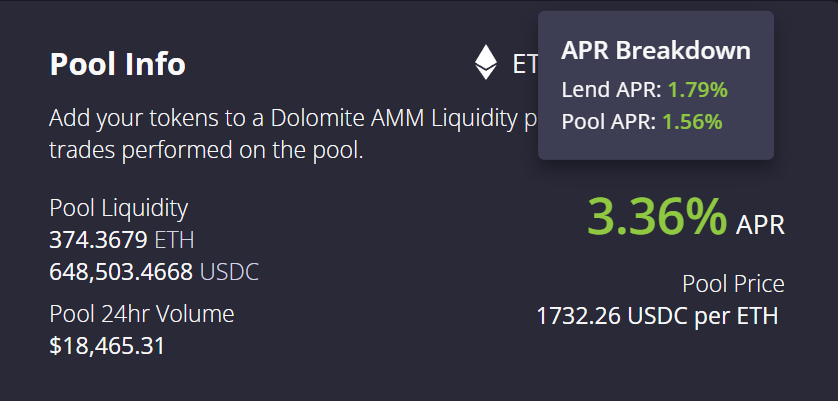
Dolomite enables capital efficiency by allowing users to earn swap fees at the same time as lending yield
How to use Dolomite to earn money?
Dolomite streamlines money market functionalities into a single interface, offering various features and trading products like liquidity provision, lending, and leveraged trading. Users can implement different strategies to optimize the capital efficiency of their crypto assets. Ways to earn money using Dolomite include:
1. Arbitrage by trading DOLO
Arbitrage trading exploits temporary price differences between exchanges, allowing profits by buying low and selling high:
- Identify Price Discrepancies: Monitor crypto exchanges for price variations.
- Execute Simultaneously: Buy DOLO on the exchange with the lower price and sell it on the one with the higher price.
- Account for Fees: Factor in trading and gas fees to ensure profitability. Consider exchanges with low trading fees.
- Repeat the Process: Maximize profits by repeating the process whenever price differences arise.
2. Earn by staking DOLO
Stake DOLO on platforms like Bybit Launchpool or Binance Simple Earn to earn rewards. Dolomite also offers staking and yield farming programs.
- Acquire DOLO: Buy and deposit DOLO tokens into a crypto exchange account.
- Select a Platform: Choose between participating platforms such as Bybit Launch, Binance Simple Earn, or Dolomite.
- Subscribe to a Product: Navigate to the platform’s “Earn” section and select the appropriate DOLO token.
- Enter Amount and Confirm: Input the desired amount of DOLO tokens to stake.
- Earn Rewards: Await rewards and track results in your “Earn” dashboard.

3. Yield Farming
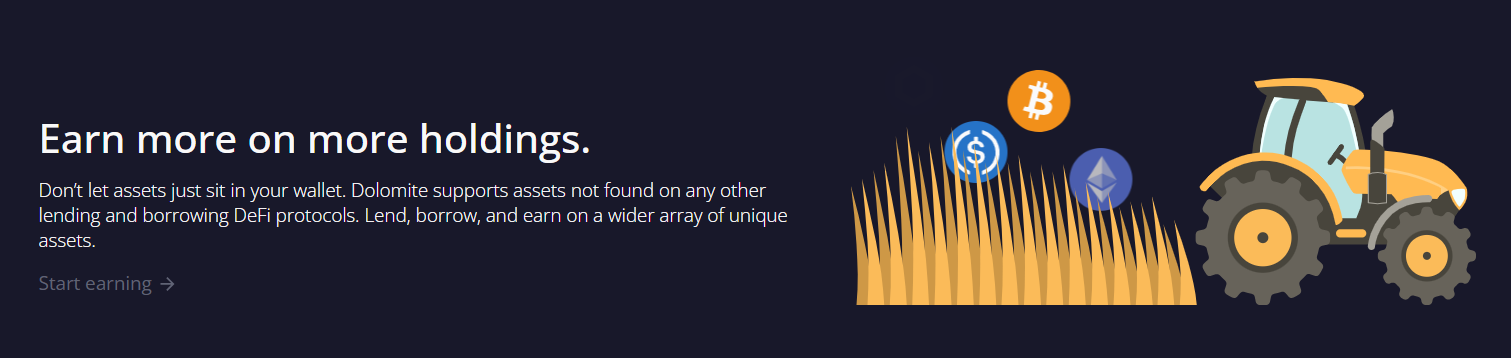
Yield farming on Dolomite involves earning interest through margin lending, providing liquidity to liquidity pools, and leveraging the Arbitrum network. Utilize lending or farming with leverage to potentially increase earnings.
- Provide Liquidity to AMMs: Earn trading fees by providing liquidity to AMM pools.
- Margin Lending: Earn interest by providing capital to users borrowing assets for margin trading.
- Leverage Farming: Amplify potential profits and manage risk by utilizing leverage in yield farming strategies.
Conclusions
Dolomite uniquely blends features to stand out from conventional DeFi lending protocols, preserving DeFi-native rights while maximizing asset efficiency. The DOLO token, while volatile like other crypto assets, is driving market excitement.
The project prioritizes capital efficiency, offering a new approach within the DeFi space. Dolomite’s future depends on its ability to navigate DeFi regulations, build a strong community, and attract users. Addressing liquidity limitations and moving towards a more decentralized model could potentially transform the DeFi landscape.
FAQs
Where can I buy Dolomite (DOLO)?
DOLO is available on crypto exchanges such as MEXC, Binance, Bitget, Bybit, KuCoin, and BingX. KYC verification may be required on these platforms.
How much is Dolomite (DOLO) worth?
As of September 12, 2025, Dolomite (DOLO) is priced at DOLO, according to CoinGecko data. The total supply is around 998,289,199, with a circulating supply of 385,530,741.
What is Dolomite used for?
Dolomite (DOLO) is a governance token facilitating over-collateralized loans, margin trading, spot trading, and other financial activities.
Is DOLO worth investing in or holding?
The suitability of DOLO as an investment depends on your DeFi knowledge and experience. The platform is tailored to experienced DeFi users familiar with crypto borrowing and margin trading. Given the inherent risks of DeFi, assess your risk tolerance and gain a thorough understanding of the landscape before participating.