

The Abu Dhabi Agriculture and Food Safety Authority (ADAFSA), the regulatory body overseeing agricultural practices in the Emirate of Abu Dhabi, UAE, has declared a prohibition on the use of farmland for cryptocurrency mining operations.
Individuals or entities found in violation of this regulation will be subject to a fine of 100,000 AED (approximately $27,229). Furthermore, according to the recent announcement, ADAFSA will implement measures including the suspension of municipal services, the seizure of all cryptocurrency mining equipment, and the disconnection of the farmland’s electricity supply.
ADAFSA explained that the utilization of agricultural land for crypto mining is inconsistent with the region’s established “sustainability” initiatives and conflicts with the current regulations governing land usage.
“Such activities are not in accordance with the permitted economic uses as defined by the authority and are, therefore, not authorized on farmlands,” the statement clarified.
The environmental implications of crypto mining remain a subject of ongoing debate. Critics express concerns regarding its potential adverse effects on the environment, while proponents emphasize the potential of vertically integrated mining operations to utilize excess energy and repurpose waste resources.
Related: Bitcoin mining difficulty reaches new all-time high amidst centralization concerns
Research Suggests Potential Environmental Benefits of Crypto Mining
Cryptocurrency mining is a highly competitive sector characterized by tight profit margins, motivating miners to actively seek out the most cost-effective energy sources to minimize operational costs.
Renewable energy sources, encompassing hydroelectric, geothermal, and recycled energy from industrial operations like flaring excess gas or capturing methane from waste sites, accounted for over 50% of the power used in Bitcoin (BTC) mining in 2023.
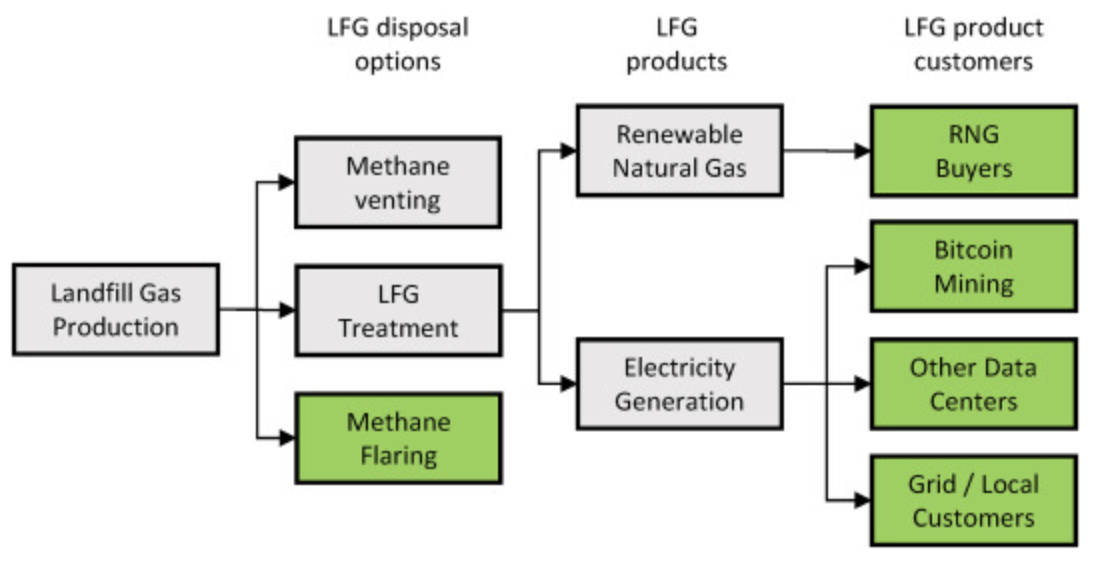
In August 2024, a research paper titled “An integrated landfill gas-to-energy and Bitcoin mining framework” was published, outlining the potential of proof-of-work (PoW) mining to transform methane gas into usable energy.
Researchers investigated landfill-gas-to-energy (LFGTE) systems, which extract methane gases from landfill waste to generate electricity, thereby capturing the harmful greenhouse gas and preventing its release into the atmosphere.
These findings are consistent with previous research, including a 2023 study titled “Bitcoin and the Energy Transition: From Risk to Opportunity,” which suggested that mining could potentially reduce global emissions by up to 8% by 2030.
Despite these potential benefits, critics continue to assert that mining activities pose ecological risks. U.S. lawmakers have advocated for the Environmental Protection Agency (EPA) to implement regulations to restrict mining operations.
These regulations may include measures aimed at reducing air and water pollution, mitigating greenhouse gas emissions under existing U.S. laws, and addressing noise pollution generated by mining facilities.
Magazine: Bitcoin mining industry ‘going to be dead in 2 years’: Bit Digital CEO