
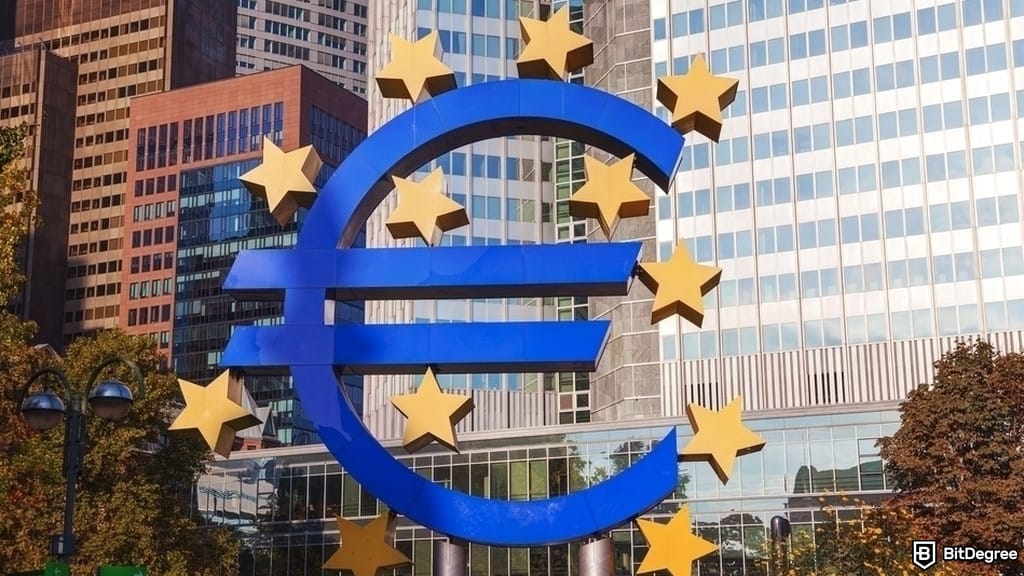
The central bank for Europe, the ECB, is moving forward with its investigation into a possible electronic version of the euro.
As part of the preparation efforts, the ECB has formalized collaborations with several tech businesses to help lay the groundwork for the necessary infrastructure.
An initial group of seven companies has been chosen, with plans to add more. These organizations will provide assistance in various fields, encompassing the detection of fraudulent activities, ensuring secure transactions, and creating the essential software for a digital form of currency.
Did you know?
Subscribe – We publish new crypto explainer videos every week!
What is Monero? XMR Animated Explainer

Among those chosen is Feedzai, a company specializing in the utilization of artificial intelligence to detect and prevent potential fraud. Also participating is Giesecke+Devrient, well-regarded for their expertise in the realm of digital security solutions.
CEO of Giesecke+Devrient, Dr. Ralf Wintergerst, has verified their company’s participation in strategizing and formulating what is being designated as the Digital Euro Service Platform. The ECB has emphasized that all endeavors will adhere to EU regulations and will be under the direction of its Governing Council.
Currently, these recently established agreements empower the ECB and its collaborators to commence with planning and outlining the necessary technical procedures, without the obligation of committing to full-scale development or financial expenditures. These arrangements provide adaptability, enabling the project’s scope to be adjusted based on future legal rulings.
The services in development also feature an “alias lookup,” a function that would facilitate users to send and receive funds without needing the recipient’s detailed banking credentials.
ECB Executive Board member Piero Cipollone recently indicated that a digital euro is not anticipated to be introduced before mid-2029. Want to know the reasons why? See the complete report here.