
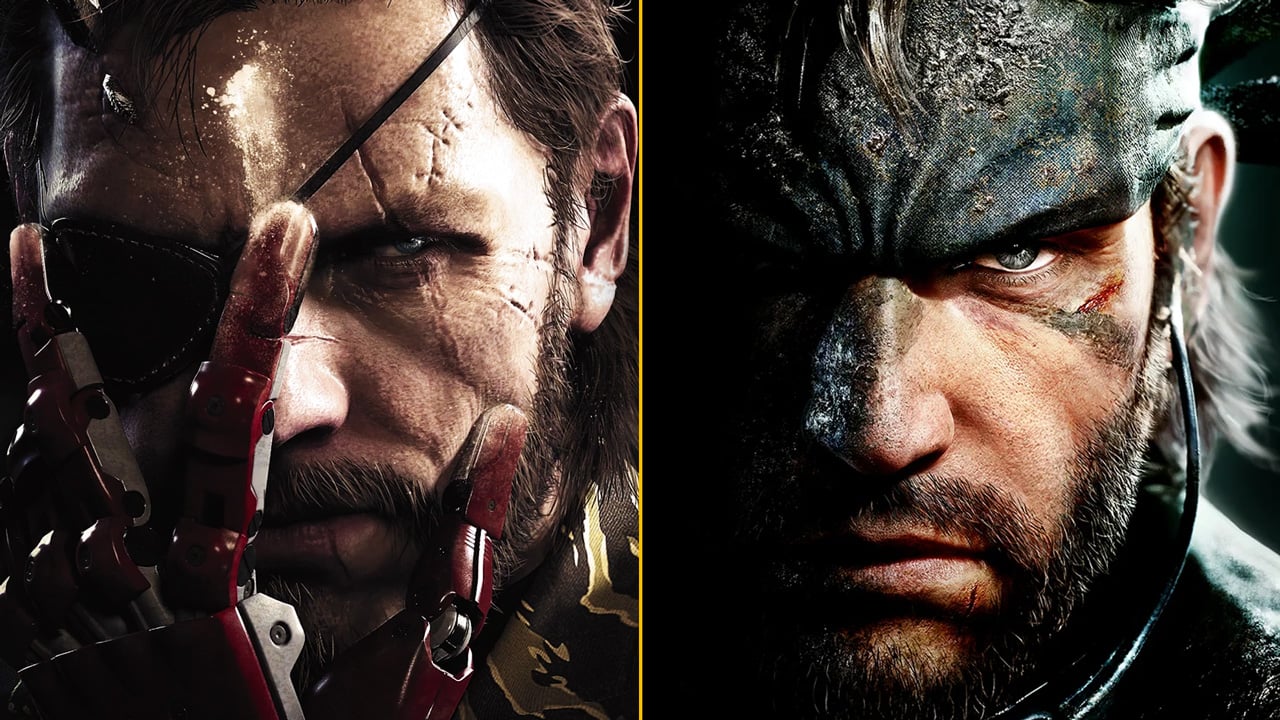
I’m definitely not the only one who believes that Metal Gear Solid V: The Phantom Pain had some of the best stealth mechanics the series has ever seen. Were those mechanics supported by a story and level design that truly highlighted them? In my opinion, probably not, but it’s undeniable that MGSV offers incredibly smooth gameplay. And let’s not forget, that plot twist was absolutely fantastic.
When Metal Gear Solid Delta, the remake of 2004’s Snake Eater, was revealed, many loyal MGS followers hoped its gameplay would mirror that of MGSV, perhaps even running on the admired Fox Engine.
But here’s the truth: that’s simply not the case. As I hinted in my review, Delta plays remarkably similar to the MGS3 experience you likely remember from its previous releases. Furthermore, it operates on Unreal Engine. Based on my experience, this works quite well. I encountered very few technical problems while playing a pre-release build provided by Konami. I wasn’t distracted by the graphics engine; instead, I was completely absorbed in the game.
Now, let’s dive into the moment-to-moment gameplay and analyze Delta, comparing it to both The Phantom Pain and the original Snake Eater as it exists within the current Master Collection.
Movement and Shooting
Delta and MGSV have a very distinct feel in terms of movement, although it does seem like there’s a similar animation foundation underneath. Delta possesses a more deliberate pace. In MGSV, Venom Snake’s movements are somewhat crisper (not in a negative way, but his movements have a kind of sharp urgency not found in Delta). If you compare animations side-by-side, you will notice similarities, but from my perspective, both visually and from my 30 hours of playing Delta, the remake has a smoother feel even compared to the impressive, and somewhat faster, gameplay of MGSV.
Unlike MGSV, Delta lacks a dedicated sprint option. Snake’s maximum speed is achieved by simply pushing forward on the analog stick (or the W key on a keyboard) without using the stalking stance. In my view, adding a sprint feature wouldn’t have been suitable for the remake, as the environments are somewhat limited in size. They feel as dense and vibrant as you’d expect a jungle to be, but even compared to MGS4, these environments are more compact. It is, after all, a PS2-era game!
Snake’s forward roll, a classic move from the older MGS games, makes its return and functions as you likely remember. You can roll into enemies to inflict damage. Rolling is key for non-lethally damaging certain bosses, particularly Volgin if you’re trying to avoid “killing” him.
Snake now has the ability to hop over waist-high obstacles, a feature borrowed from MGSV and not available in the original.
An incredibly specific, nearly inconsequential change for dedicated MGS enthusiasts (like myself) is that pressing yourself against an open locker door won’t automatically close it. Is this a major issue? In this game, no. The jungle doesn’t feature many lockers. However, if we ever see a Delta-style remake of MGS2, I’d strongly advocate for keeping that quirk in the game.
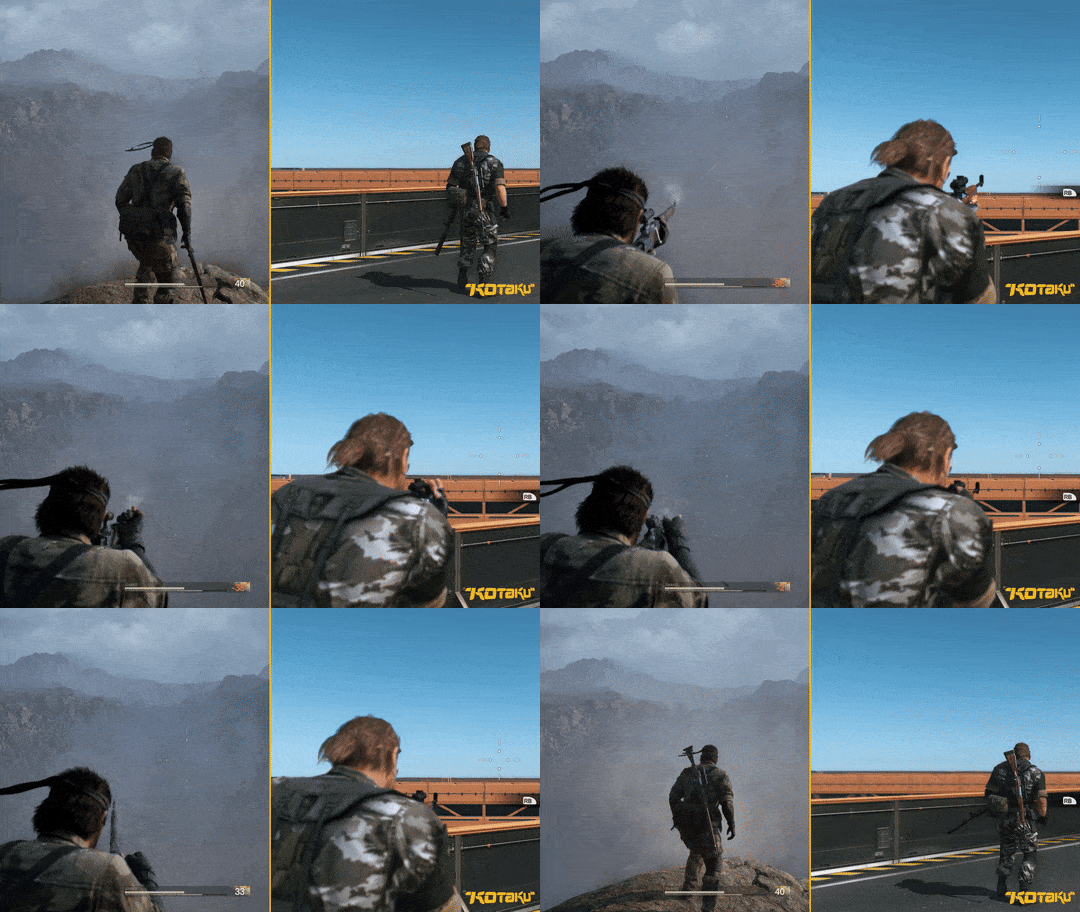
Comparing gunplay is a tricky business, as MGSV boasts a vastly different collection of weapons with varying ammo capacities, even within similar categories. Additionally, MGSV allowed for weapon upgrades to enhance performance. No such mechanic exists in Delta. What you find is what you get.
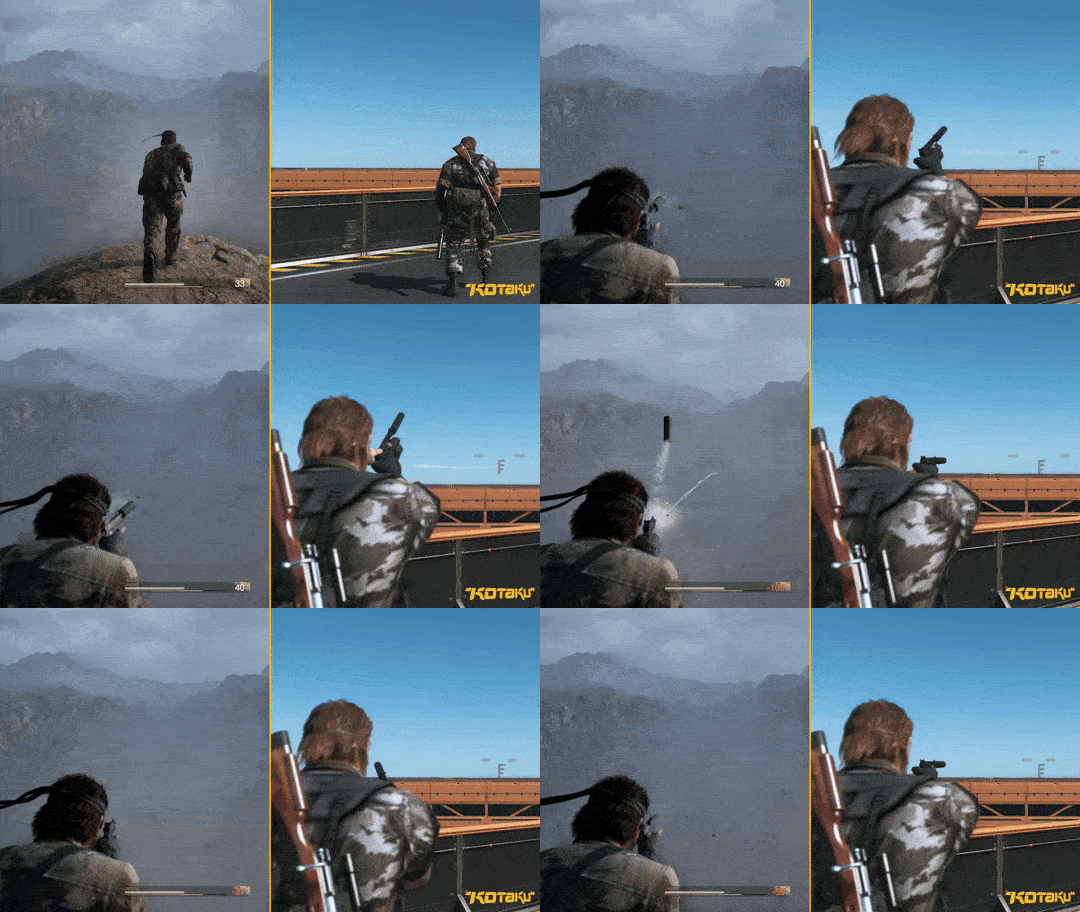
Delta’s shooting mechanics feel like a blend of the typical over-the-shoulder perspective found in most third-person shooters today and the original Snake Eater. You can change the camera angle to the left or right on the fly, similar to MGSV. The speed of shooting feels slightly closer to MGSV, but this is only on a surface level. Ultimately, it retains the pacing of Snake Eater, and you’ll need to experience it firsthand to fully grasp what I’m describing. This will become most evident if you’re detected and forced to shoot your way out of a situation.
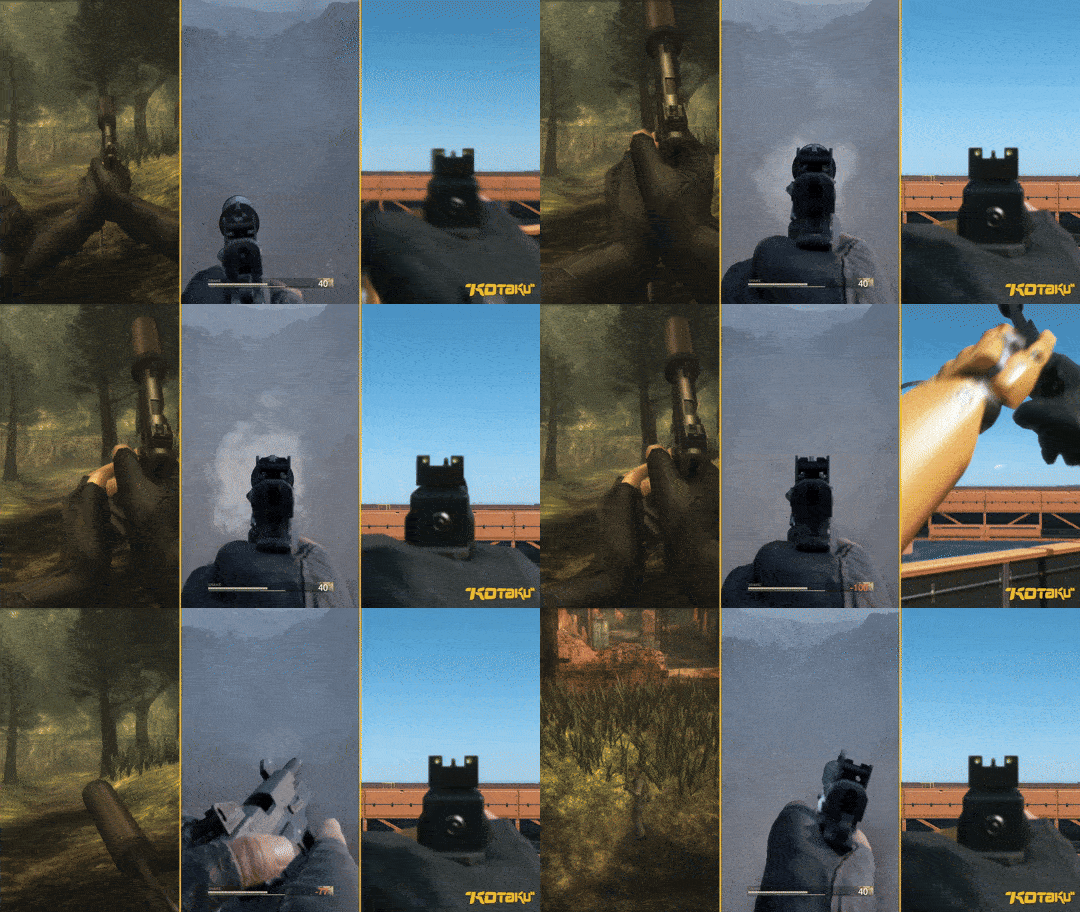
One gameplay adjustment Delta makes compared to the original relates to how the tranquilizer pistol works. There’s a notable bullet (or dart) drop over distance, significantly reducing its effectiveness. This is a welcome change, as the tranquilizer gun, while important for the series’ commentary on violence, could often make it too easy to quickly subdue numerous guards, lessening the sneaking experience. In Delta, you’ll need to get closer to enemies to put them to sleep without doing elaborate calculations to compensate for dart trajectory. This leads to a more challenging and absorbing experience.
Close-Quarters Combat (CQC)
MGS3 introduced CQC to the franchise, enhancing how you engage in and disengage from combat. Before this, Snake’s combat repertoire was limited to a simple punch-punch-kick combo and the ability to flip an enemy or grab them in a chokehold, from which you could knock them unconscious through strangulation or snap their necks.
MGSV expanded CQC considerably, adding various new actions such as throwing an enemy against a wall, stealing their firearm, or becoming a Neo-esque force of nature against multiple enemies with rapid punches when surrounded. In Delta, the classic punch-punch-kick combo returns with three presses of the melee button. Admittedly, it feels somewhat awkward being mapped to the right trigger on a controller, but that button serves as your CQC command here, just as it does in MGSV.
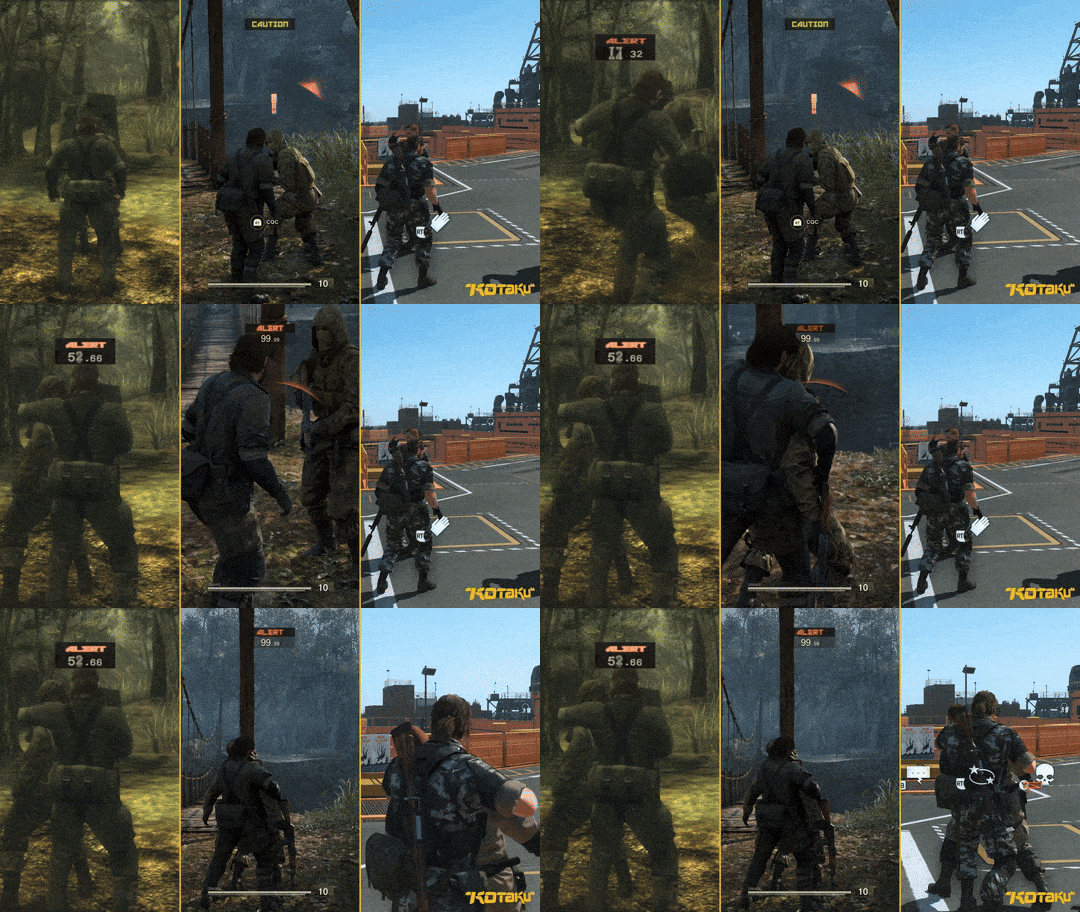
Snake’s moveset otherwise appears identical to the original (based on my 30 hours of playtime). You can grab enemies with similar speed and motions; you can throw an enemy to the ground by combining the CQC button with a directional input. This feels easier to perform in the remake than in the original. However, holding enemies up at gunpoint is noticeably trickier. You need to be very close to do it. I didn’t attempt to hold up many enemies during my playthrough as I often wasn’t close enough and ended up getting spotted. Perhaps with additional playthroughs I’ll become more accustomed to it, but it feels harder than it did in the original, and even compared to MGSV.
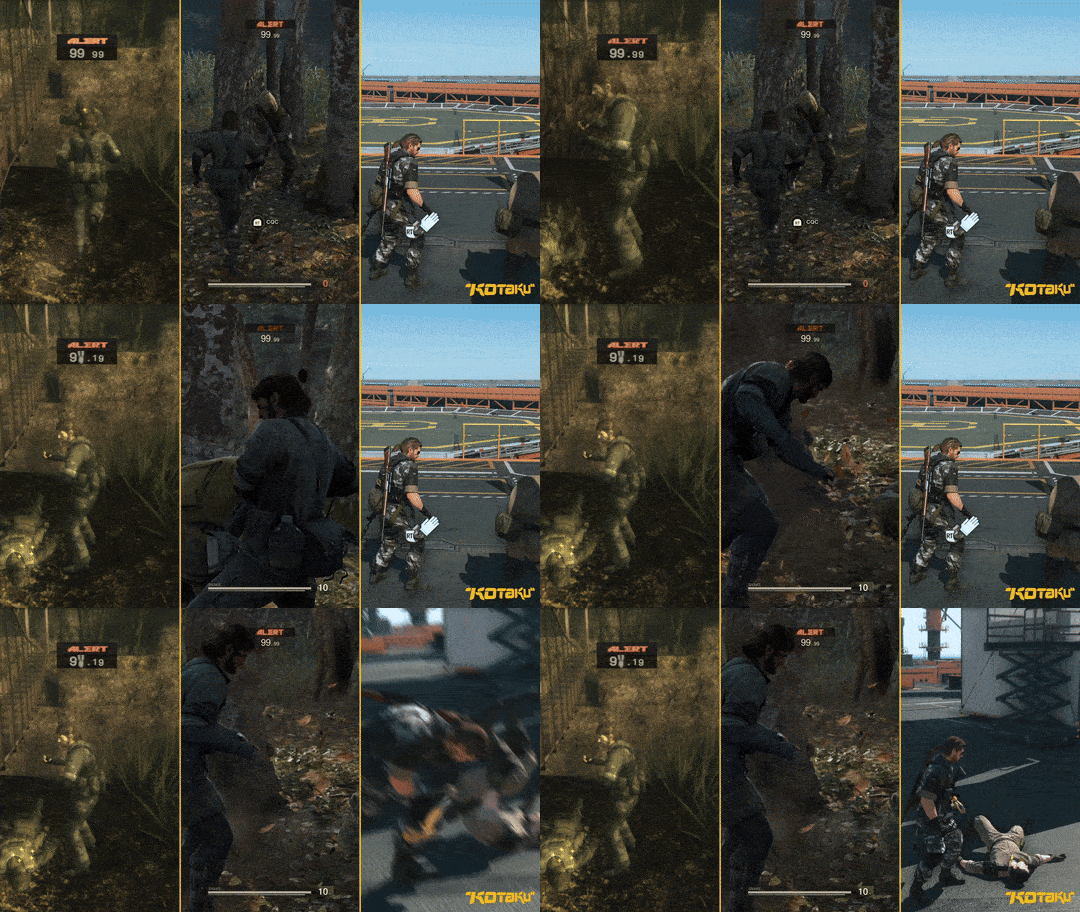
CQC in Delta remains faithful to its original counterpart. While there is some added visual flair in the animations that can sometimes feel different, Snake generally grabs and throws enemies at a pace similar to the original Snake Eater.
It feels like Snake Eater, it tastes like Snake Eater (with a bit of hot sauce)
While Delta has clearly taken inspiration from MGSV, and perhaps even borrowed some animations, the overall experience of playing this remake almost never feels like Phantom Pain. Yes, Snake can now crouch walk and transition to crawling, capabilities absent in the original Snake Eater, but otherwise everything feels like an enhanced version of the original. It’s not a perfect replica, and includes its own distinct touches.
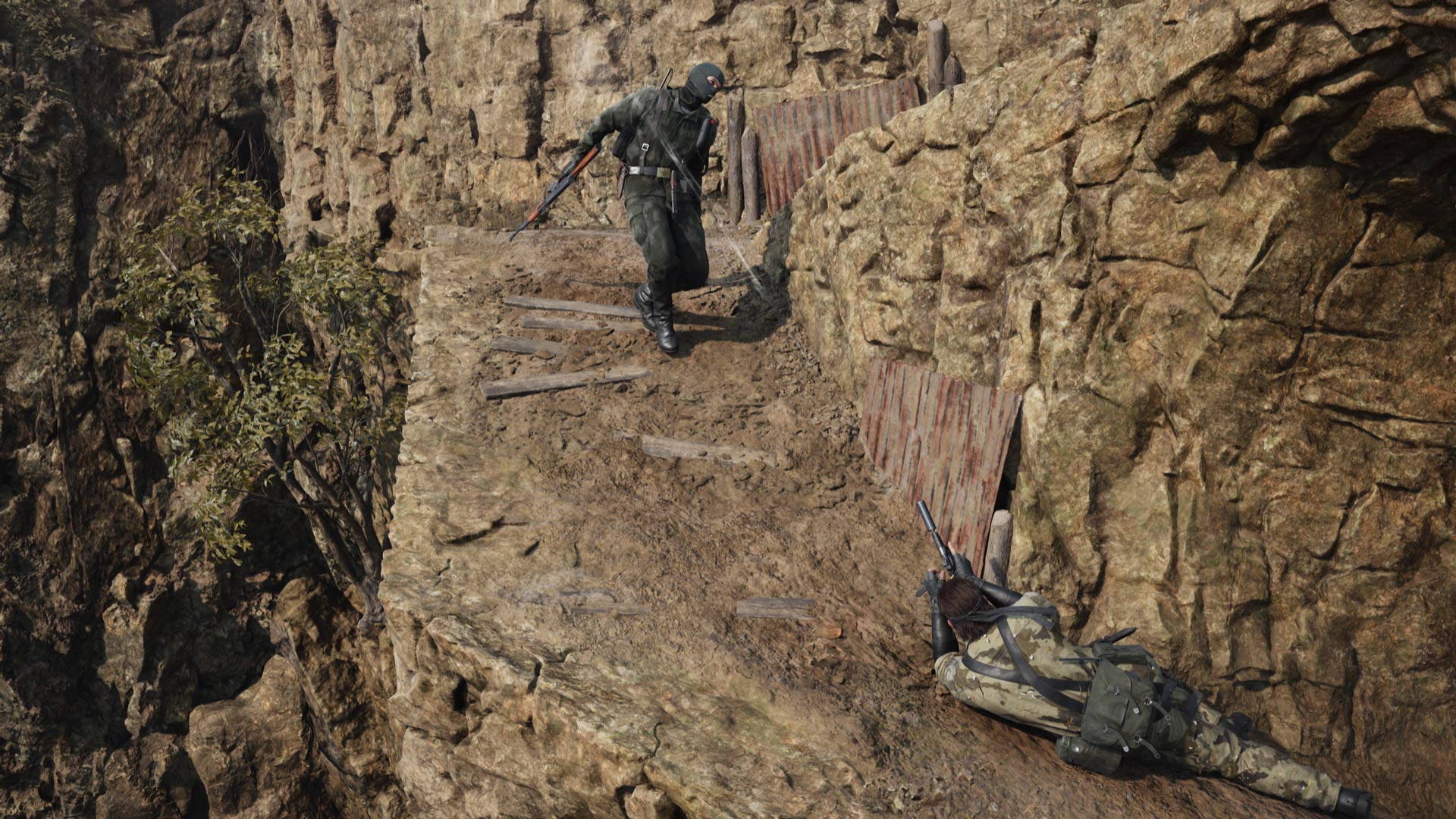
In my experience, Delta also feels significantly closer to its original counterpart during combat encounters. Phantom Pain is quicker, more responsive, and conceived as a modern third-person shooter. The new camera style in Delta might make things easier (veterans should likely start on Hard mode, as I noted in my review), but you’re still in a difficult position when enemies detect you and begin to multiply. Just as in the original, it is difficult to shoot your way out of situations. MGSV, in my experience, allowed you to become a more significant threat if you chose to be. Delta, however, seeks to maintain the feeling of being outnumbered and outgunned from the original.
Delta’s new additions to the Snake Eater formula feel naturally integrated within its roots, adding gentle modern enhancements. This is not a Snake Eater mod of MGSV. So, if you’re like me and appreciate the 2000s-era MGS experience, prepare yourself for a highly satisfying modern reimagining of a legendary stealth game.