

A recent assessment from the International Monetary Fund (IMF), released on July 15th and available
here,
suggests that El Salvador’s reported increases in its
Bitcoin reserves are likely due to internal consolidation
rather than new acquisitions. This analysis focuses on the management of El Salvador’s Bitcoin assets.
Specifically, a clarifying note within the IMF report states:
“Increases in [El Salvador’s] Bitcoin holdings in the Strategic Bitcoin Reserve Fund reflect the consolidation of
Bitcoin across various government-owned wallets.”
This statement contrasts with previous announcements from El Salvador’s National Bitcoin Office, which has
indicated ongoing
daily
Bitcoin purchases by the Central American nation.
The IMF’s report follows
earlier
recommendations that El Salvador should cease Bitcoin purchases as a condition of a $1.4 billion loan.
The report further asserts that “the overall stock of Bitcoin held by the public sector has remained unchanged
since program approval” and advocates that “efforts should continue to keep the public sector’s holdings of
Bitcoin unchanged.”
Publicly available
data indicates that El Salvador holds over 6,200 BTC, valued at more
than $738 million. This substantial holding positions El Salvador as one of the world’s leading sovereign
holders of cryptocurrency.
El Salvador’s Efforts to Address Bitcoin-Related Concerns
The IMF report also acknowledged steps taken by El Salvador to mitigate risks and enhance oversight related to its
Bitcoin strategy.
The report indicates that El Salvadoran authorities have pledged to limit further investment in Bitcoin and improve
transparency surrounding their cryptocurrency operations.
This commitment means the
Nayib Bukele administration will release quarterly
financial reports for entities involved in Bitcoin activities, including Chivo, CEL, LaGeo, and Fidebitcoin.
Furthermore, all
Bitcoin
transactions are expected to be integrated into the country’s macroeconomic and fiscal reporting.

Additionally, the IMF will receive regular, signed statements detailing the Bitcoin holdings within the public
sector.
The IMF further noted:
“Work is underway in enacting a comprehensive framework for managing government-owned Bitcoins and other crypto
assets, with the aim of strengthening governance, transparency, and accountability as well as defining the
role of the Bitcoin Management Agency, AAB.”
The IMF also stated that the government, under President Nayib Bukele, is proceeding with its plan to discontinue
public sector involvement in the Chivo wallet project.
According to the financial regulator, a strategic plan for
privatizing
Chivo has been released, and discussions with potential buyers are in progress. The goal is to complete
the sale by July 2025.
Finally, the report highlights ongoing efforts to revise the country’s legal structure governing digital assets.
The IMF is providing guidance to ensure El Salvador’s regulations align with international best practices,
particularly regarding asset security, segregation, and compliance with anti-money laundering (AML) and
counter-terrorism financing (CTF) regulations.
The cryptocurrency community continues to monitor El Salvador’s Bitcoin investments, recently reporting an
all-time
high of $760,075,734, with 30 BTC added over the past month.
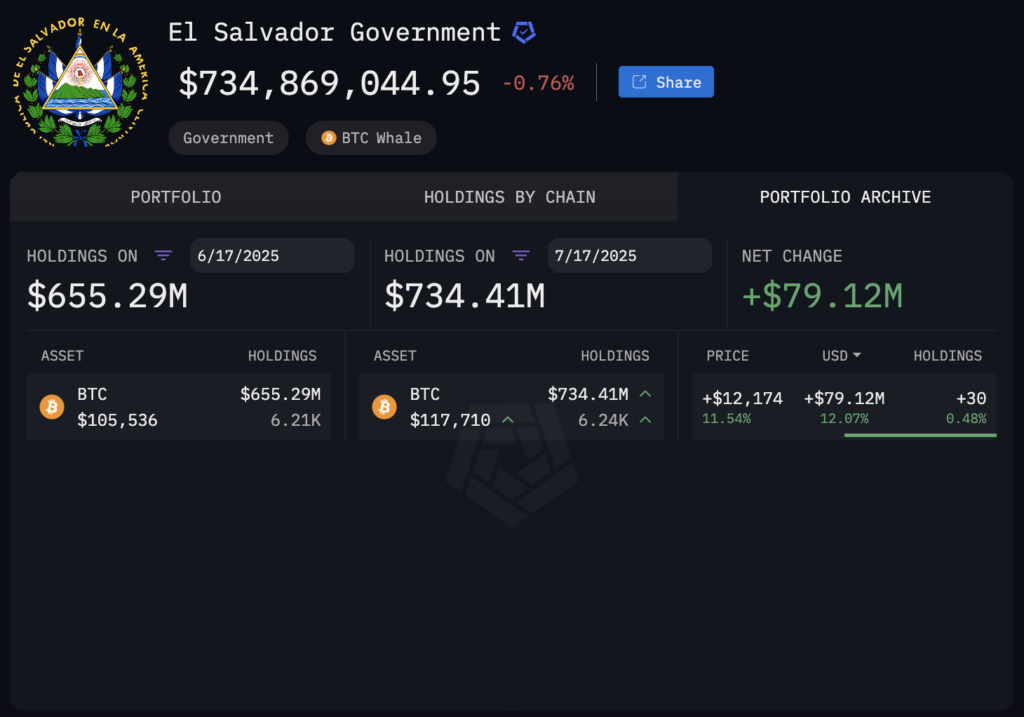
Salvador holdings (Source: Arkham)