
Four Similar Characters Facilitate the Attack’s Concealment
The situation became precarious when individuals sought to raise transaction fees using the Replace-By-Fee (RBF) method. Instead of raising the fee on their original transaction, victims could unintentionally sign a replacement transaction, thereby permitting the transfer of their own bitcoins to the assailant.
The ruse extended further. Perpetrators created receiving addresses with the last four characters resembling the intended recipient, reducing the chances of a quick address check revealing the deception. One fraudulent transaction even featured a zero fee, seemingly enticing the victim to initiate the necessary fee adjustment for the theft to occur.
Developers received two separate reports. On October 11, user dannydeezy reported an incident of transaction substitution, although the mechanics of the fee-increase process were not entirely clear. On October 18, Raju-K12 disclosed a loss of funds after agreeing to a fee increase, confirming that the attack was not merely theoretical.
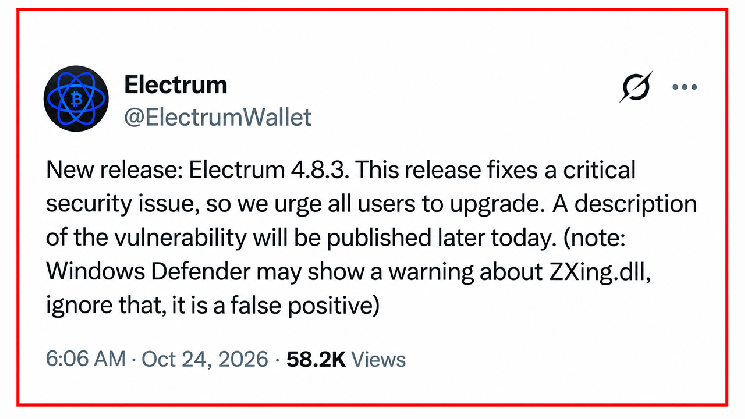
Electrum 4.8.3 Prevents Transaction Substitution
The update, introduced through commit 90fe308, mandates that Electrum validate signatures for unconfirmed transactions that access coins belonging to the wallet. Transactions flagged as fraudulent, due to invalid signatures, are denied entry into the wallet’s local history. Users utilizing versions below 4.8.3 are advised to download the update only from electrum.org and to verify its cryptographic signatures.
Until an upgrade is performed, users should meticulously review every destination address and payment amount before signing, particularly during fee adjustments. Those who connect exclusively to trusted, self-hosted Electrum servers are shielded from this specific server-based attack.
This incident highlights an intriguing contradiction: a wallet built to safeguard private keys could still be exploited to request a seemingly valid signature for a payment that the owner never intended to authorize.