

The digital currency arena could be on the cusp of its first sustained expansion phase. This potential shift is driven by increased investment from larger institutions and the creation of diverse trading instruments within the Web3 ecosystem, making investments in digital assets more readily available.
Certain market watchers are suggesting the emergence of a crypto “supercycle.” This concept challenges the traditional four-year cycle often associated with Bitcoin BTCUSD halving. This hypothetical supercycle anticipates a sustained increase in digital asset values, extending beyond the previously observed timeframes.
Regarding Ether  ETHUSD, the second-largest cryptocurrency, a “supercycle” could be fueled by growing integration of blockchain technologies by traditional financial institutions, according to BitMine Immersion Technologies, a prominent corporate holder of Ether.
BitMine, which holds a significant corporate stake in ETH, identifies “Wall Street’s deeper engagement with blockchain” as a primary catalyst for Ether’s potential upward trajectory.
However, despite the optimistic outlook concerning a potential supercycle, not all analysts within the financial industry share this particularly bullish view for Ether’s value.
Citigroup, a U.S.-based investment bank, has projected an Ether price target of $4,300 by the end of the year. This figure is substantially lower than Ether’s record high of $4,953, reached on August 24th.
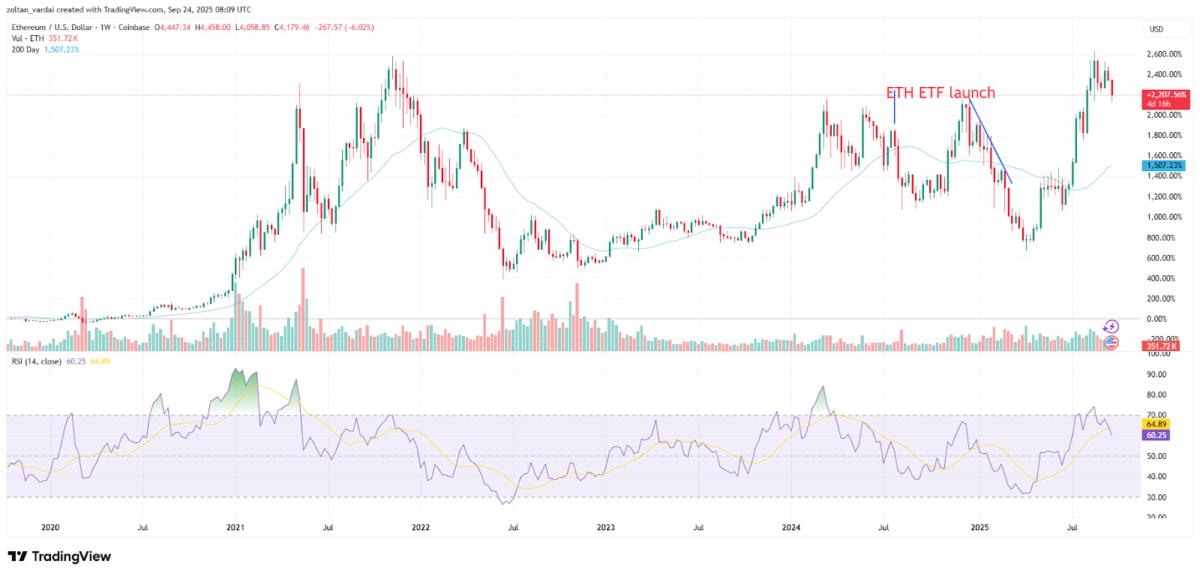
“Current prices appear elevated compared to estimated activity levels, possibly influenced by recent buying momentum and excitement surrounding real-world applications,” Citi stated in a note distributed on Monday, as reported by Reuters.
Over the last six months, Ether’s value has increased by approximately 108%. At the time of this writing, it was trading at $4,177, according to data from TradingView.
The Role of AI Agents
BitMine further believes that growing integration of AI agents could function as another driving force for a potential Ethereum upswing.
AI agents will necessitate a “neutral infrastructure” such as a public blockchain which could, in turn, stimulate a broader range of applications on Ethereum, the most extensive smart contract platform.
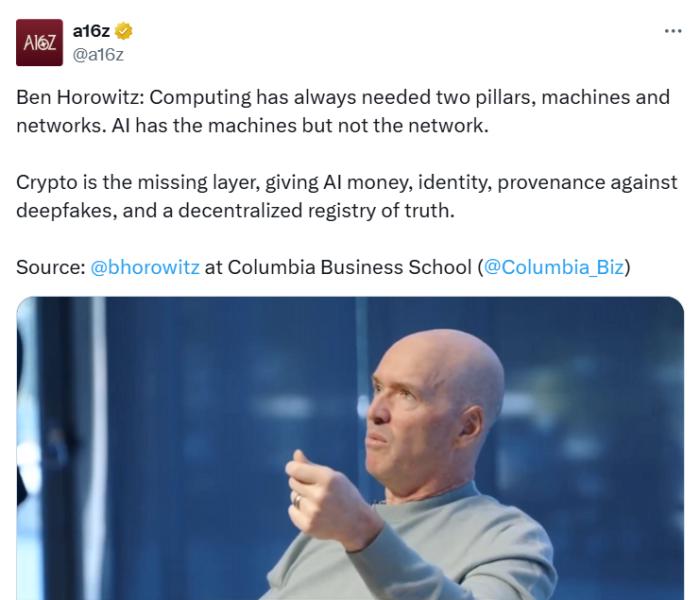
“For AI to achieve its full potential, it needs to function as an economic player. This means AI agents require the ability to make purchases and receive payment,” according to Ben Horowitz, a co-founder and general partner at the venture capital firm Andreessen Horowitz (a16z).
“AIs are not permitted to possess credit cards,” Horowitz stated in a post on social media Tuesday. “Crypto acts as the economic network for AI”, he emphasized.
“Conventional credit cards are not optimized for AI-driven transactions. Consequently, crypto, as the native currency of the internet, becomes the logical solution.”
AI agents are software entities designed to automate and execute defined tasks on the behalf of users.
Decentralized on-chain agents have the capability to engage with blockchain protocols which facilitate functionalities like trading, exchanging tokens, handling portfolios and interacting with decentralized finance platforms.
Multiple large fintech enterprises are currently investing in AI agents. On September 2nd, PayPal Ventures spearheaded a Series A funding round for Kite AI, a provider of decentralized AI infrastructure. The investment of $18 million brought the total funding secured to $33 million, Cointelegraph reported.