


Ethereum’s recent struggles to keep pace with Bitcoin’s performance have sparked renewed discussions. The core question: what factors are supporting Ethereum, and where is the demand truly originating?
Samson Mow, a well-known Bitcoin advocate, suggests that a significant influx of approximately $6 billion from South Korean retail investors is currently bolstering what he terms “Ethereum treasuries.” These are companies accumulating ETH as a strategic asset on their balance sheets, mirroring MicroStrategy’s well-known approach with Bitcoin. Mow made this assertion in an October 5
post
on X (formerly Twitter), alleging that “ETH influencers” are actively targeting South Korean retail traders, enticing them with the promise of the next big “strategy play.”
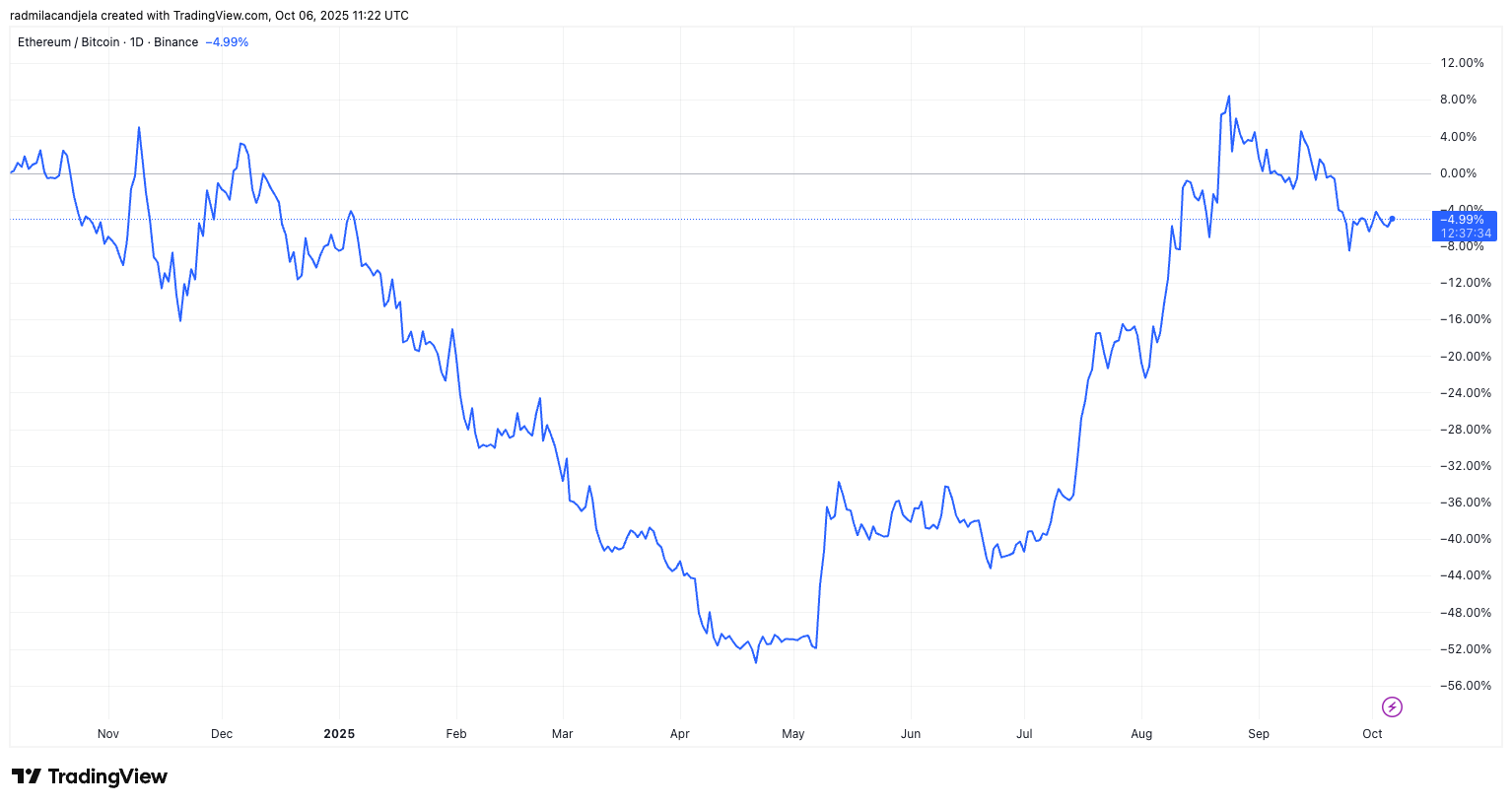
According to CoinMarketCap data from October 6th, Ethereum has experienced a decline of roughly 1.9% in the last 24 hours. Furthermore, it has underperformed Bitcoin by approximately 5% over the past month. Mow posits that this weakness highlights the fact that short-term retail enthusiasm, rather than strong institutional backing, is primarily responsible for maintaining Ethereum’s current valuation.
Data sourced from the Strategic ETH Reserve indicates that 67 distinct entities, including companies like BitMine and SharpLink, collectively hold approximately 5.49 million ETH, representing a total value of roughly $25 billion, or 4.5% of Ethereum’s total circulating supply.
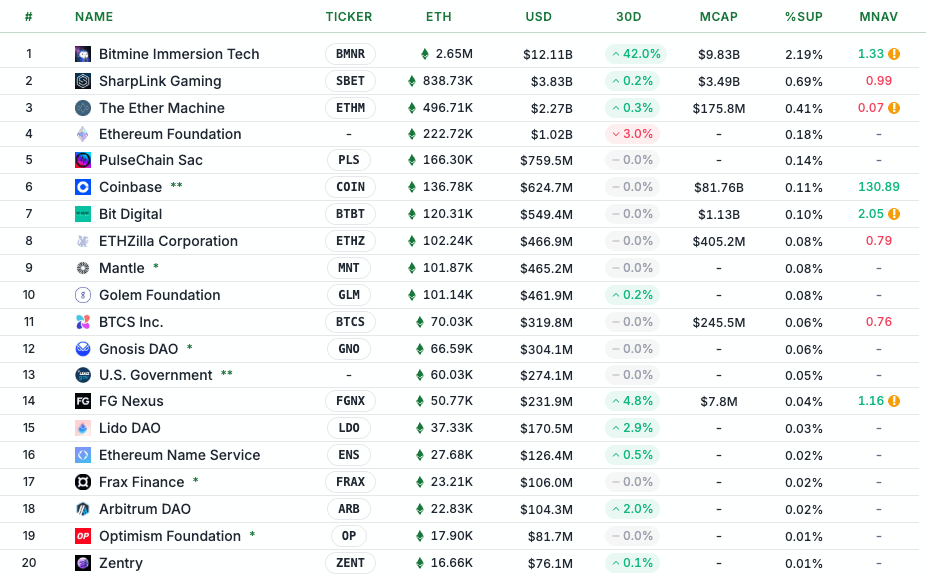
ETH Reserve)
Mow attributes a significant portion of this Ethereum exposure to South Korean retail investors, often referred to as “seohak gaemie” within the country. He claims that these investors have channeled approximately $6 billion into companies holding Ethereum as a treasury asset. He further suggests that promoters have been actively marketing these companies as the “next MicroStrategy,” thereby attracting traders seeking an easy parallel to the strategy of corporate Bitcoin accumulation:
“Many of these investors have zero idea about the ETH/BTC chart and think they’re buying the next strategy trade.”
He cautions that enthusiasm built upon a foundation of limited financial understanding could potentially backfire, particularly as Ethereum continues to underperform Bitcoin in terms of relative price movement.
Ethereum’s price action reflects these concerns. Despite periods of increased investment and renewed efforts to promote the asset, ETH has consistently remained below its previous all-time high of $4,946 and continues to show weakness compared to Bitcoin. The ETH/BTC ratio has decreased by over 5% in the past year, reinforcing the perception that a considerable portion of the market support for Ethereum is fueled by narratives and speculation rather than fundamental growth or widespread institutional adoption.
Mow’s critical perspective aligns with viewpoints expressed by Andrew Kang, co-founder of Mechanism Capital, who has also raised concerns regarding the underlying financial rationale behind Ethereum-based treasuries. Kang has cited projects like Tom Lee’s BitMine as prime examples of “undisciplined treasury models” lacking the robust financial structure typically observed in successful Bitcoin-holding organizations. “The technical indicators for Ethereum are currently bearish,” Kang stated, adding that Ethereum’s long-term trading range could potentially remain between $1,000 and $4,800 unless a substantial shift occurs in its fundamental underpinnings.
Kang concludes that Ethereum’s current valuation “stems primarily from a lack of financial understanding,” drawing a parallel between its speculative momentum and the historical price surges experienced by XRP. He argues that while retail-driven hype can sustain a significant market capitalization for a period of time, it does not represent a sustainable foundation for long-term growth: “The valuation derived from financial illiteracy is ultimately finite.”
Whether the demand from Korean retail investors will become a durable and structural support for Ethereum, or whether it represents a final surge of enthusiasm for a narrative that is losing momentum, remains to be seen. The answer may depend on how long the “ETH treasury” narrative can continue to outpace the reality reflected in Ethereum’s market performance.