

Jakarta, Pintu News – Looking ahead to 2025, the blockchain space is set to evolve beyond speculation, with genuine user adoption and groundbreaking technology leading the way. Diverse blockchain networks, from fundamental layer-1 architectures to optimized layer-2 scaling solutions, are vying for user attention by offering affordable transactions, smooth integration into established platforms, and thriving decentralized finance (DeFi) and NFT ecosystems.
This article highlights the top 5 blockchains experiencing the most rapid growth in active users, based on insights from a Cointelegraph analysis.
1. Solana
Solana stands out as a high-throughput layer-1 blockchain, employing a proof-of-history (PoH) consensus mechanism. It is designed to power large-scale decentralized applications (DApps) and digital marketplaces.
Related Reading: Is a 40% Price Surge and New All-Time High Possible for Solana (SOL)?
- Monthly active users: 57 million
- Fully Diluted Valuation: $107.2 million
- Token trading volume (30 days): $284.2 billion
Key Growth Factors: Solana’s expansion has been fueled by thriving DeFi and NFT activity, a surge in high-speed memecoin trading, and the introduction of the Firedancer validator client, which improved network stability and attracted institutional investment.
Challenges: Past network outages have eroded user confidence. Solana also faces concerns regarding its level of centralization and stiff competition from layer-2 solutions.
2. Near Protocol
Near Protocol is a layer-1 blockchain utilizing a thresholded proof-of-stake (TPoS) consensus mechanism. Its core focus is on scalability, providing user-friendly developer tools, and integrating AI functionalities to enhance decentralized application capabilities.
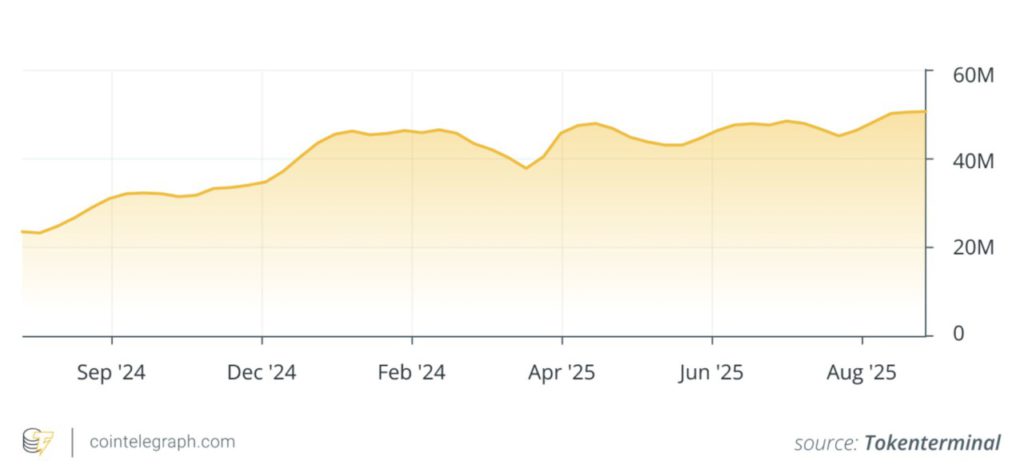
- Monthly active addresses: 51.2 million
- Fully Diluted Valuation (FDV): $3.1 million
- Token trading volume (30 days): $7.8 million
Key Growth Factors: Integration of AI to empower user-controlled agents and intent-based actions, low transaction fees coupled with a commitment to carbon neutrality, and strategic alliances, such as its collaboration with EigenLayer, aimed at improving transaction finality. Expansion of its ecosystem within DeFi and the gaming sector is also contributing to its growth.
Challenges: Competition from faster layer-1 blockchains and layer-2 solutions, susceptibility to price fluctuations despite its growing user base, and potential security risks related to the complexities of sharding.
3. BNB Chain
BNB Chain, backed by Binance, is a layer-1 blockchain providing infrastructure for DeFi, NFTs, and DApps, while maintaining full compatibility with the Ethereum Virtual Machine.
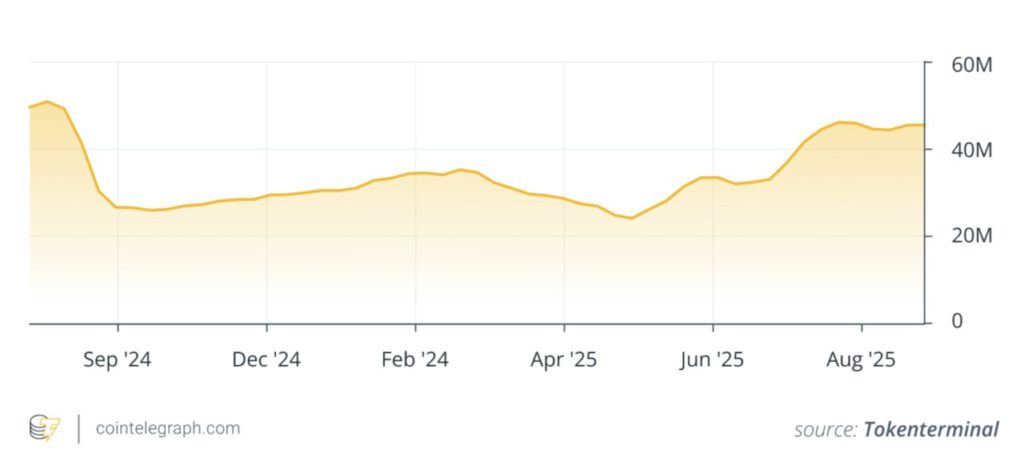
- Monthly active addresses: 46.4 million
- Fully Diluted Valuation (FDV): $121.2 billion
- Token trading volume (30 days): $56.1 billion
Key Growth Factors: A reduced block creation time of just 0.75 seconds, combined with AI integration to promote data ownership, have driven increased adoption.
Challenges: Concerns regarding centralization due to its direct association with Binance and mounting pressure from increasingly stringent global regulations.
4. Base
Base is a layer-2 Ethereum blockchain incubated by Coinbase, utilizing optimistic rollup technology. Its primary focus is on providing affordable DeFi solutions, user-friendly applications, and seamless integration with both the broader crypto ecosystem and mainstream services.
Related Reading: Top 5 Memecoins by Market Capitalization Right Now!
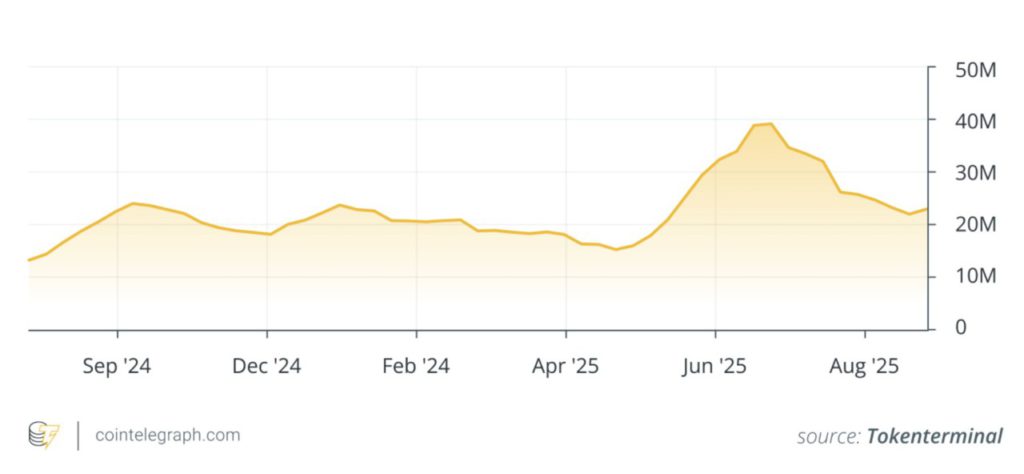
- Monthly active addresses: 21.5 million
- Fully Diluted Valuation (FDV): $2.92 billion
Key Growth Factors: Exceptionally low transaction fees (averaging $0.01), seamless onboarding facilitated by Coinbase’s vast user base of over 100 million, inflows of stablecoins, and strategic collaborations focused on the development of consumer-facing DApps.
Challenges: Potential for network congestion due to high activity levels, reliance on Ethereum for underlying security, and regulatory compliance risks given its status as a relatively new ecosystem.
5. Tron
Tron is a high-performance layer-1 blockchain specializing in decentralized content sharing and integration with Telegram, with a focus on ultra-low-cost stablecoin transactions.
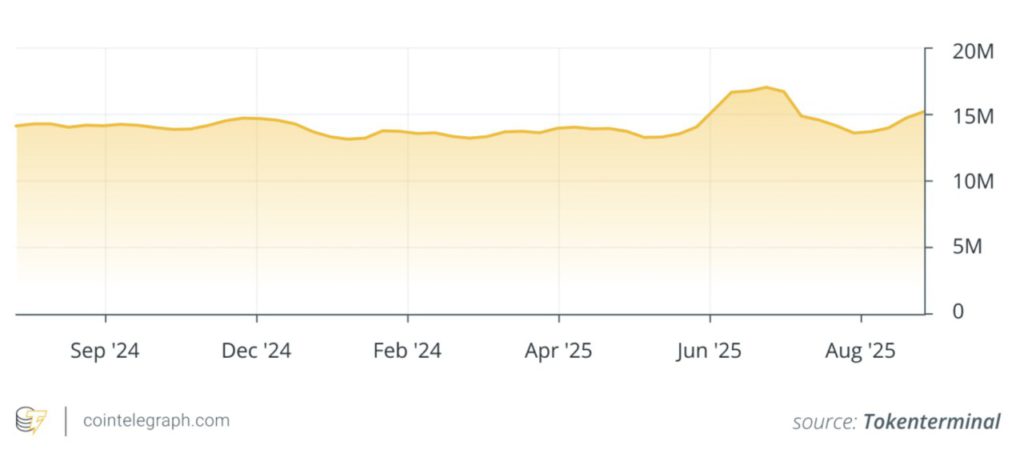
- Monthly active addresses: 14.4 million
- Fully Diluted Valuation (FDV): $33.5 billion
- Token trading volume (30 days): $51.7 billion
Key Growth Factors: Near-zero transaction fees, the integration of AI, seamless cross-chain functionality, and strategic partnerships with entities like Rumble Cloud.
Challenges: Ongoing concerns about global regulatory pressures and the potential risks associated with centralization.
Stay informed about the latest developments in the crypto world. Follow us on Google News for breaking crypto news, project updates, and insights into blockchain technology. Expand your crypto knowledge from the ground up with comprehensive resources at Pintu Academy, and stay ahead of the curve with real-time market data, including Bitcoin price today, XRP coin price today, Dogecoin, and other crypto asset prices, available on Pintu Market.
Enjoy a streamlined and secure crypto trading experience by downloading the Pintu crypto app from the Google Play Store or App Store now. Elevate your trading with Pintu Pro’s advanced charting tools, diverse order types, and portfolio tracker, accessible through our web trading platform.
*Disclaimer
The purpose of this information is to enhance reader understanding. Pintu gathers this information from reputable sources, maintaining independence from external influences. Please be aware that past asset performance does not guarantee future results. Crypto trading carries inherent risks and volatility; always conduct thorough research and use risk management strategies before investing. All buying and selling bitcoin and other cryptocurrency investments are undertaken at the reader’s sole discretion and risk.
Reference: